How FIIs Use Indian Derivatives to Influence Nifty and Bank Nifty: Hidden Market Moves Explained

The Indian derivatives market has grown rapidly in recent years—and at the center of this action are Foreign Institutional Investors (FIIs). These global financial giants move thousands of crores in and out of Nifty and Bank Nifty futures and options every week, often shifting the market’s direction without warning.
Understanding how FIIs operate can give retail traders a powerful edge. Let’s break down how they use the derivatives market to influence price action—and how you can read their signals.
What Are FIIs and Why Do They Matter?
Foreign Institutional Investors are large global funds—pension funds, hedge funds, mutual funds—that invest in emerging markets like India. Their trades often run into thousands of crores, and because of their volume, they can shift short-term trends, especially in index-based instruments.
FIIs and Index Futures: Setting the Direction
One of the most powerful tools in the FII arsenal is the index future—primarily Nifty and Bank Nifty.
- FIIs build long positions in Nifty futures ahead of expected positive news
- They short Nifty futures during global uncertainty or to hedge cash market holdings
- Sharp buildup in open interest (OI) with price movement often indicates their directional bias
How FIIs Use Options to Trap Retail Traders
Options give FIIs the flexibility to create complex strategies like straddles, strangles, and spreads. They often use:
- Heavy Call writing at resistance zones to cap upside
- Put writing to show strong support around a key level
- Buying deep OTM options as insurance or to trigger volatility
Watch the changes in option chain data during key events like RBI policy, Fed rates, or expiry days—FIIs often lead the game.
Tracking FII Data: Where to Look
You can’t trade like an FII, but you can follow their trail. Use these tools:
- NSE FII Derivatives Statistics
- Daily Open Interest and Long/Short buildup analysis
- FII-DII cash market flow (available on Moneycontrol, NSE, etc.)
Platforms like Trendlyne, QuantsApp, and StockEdge also provide FII-specific derivatives data in visual format.
How Retail Traders Can Use This Information
Here’s how smart retail traders can decode FII signals:
- Check if FIIs are net long or short in index futures before major moves
- Use option chain analysis to spot resistance and support zones based on FIIs' strikes
- Avoid trading against the FII trend on volatile days
Conclusion: Don’t Follow the Herd—Follow the Footprints
While retail traders often chase news or indicators, FIIs are already positioned based on anticipated outcomes. By reading derivatives data and aligning your trades with institutional footprints, you can trade smarter—not harder.
The derivatives market in India may be vast, but with the right insights, even retail traders can find an edge.
Keep Reading: More Personal Finance Insights
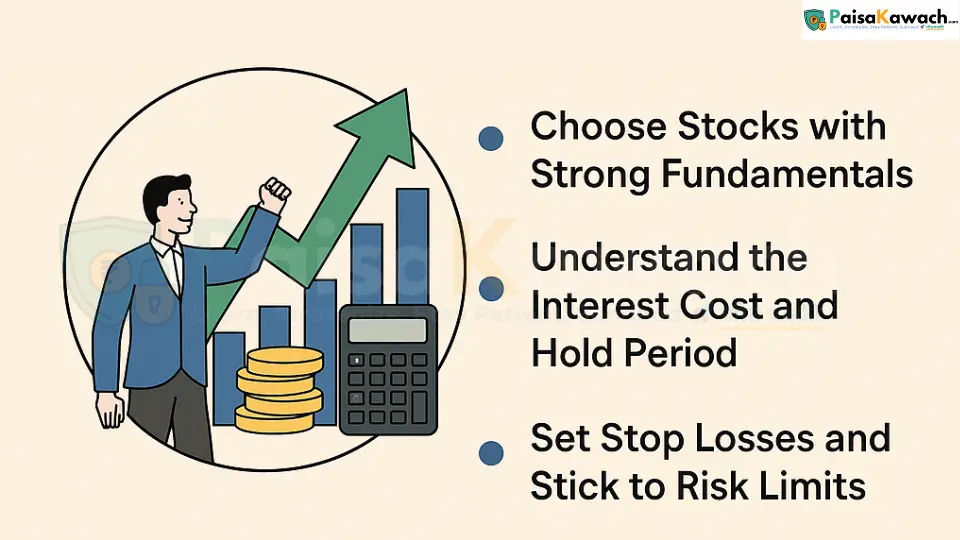 Top 5 Smart Tips to Maximize Profits Using Margin Trading Facility (MTF) Without High Risk
Next →
Top 5 Smart Tips to Maximize Profits Using Margin Trading Facility (MTF) Without High Risk
Next →
 How to Choose Stocks Without Regretting Later: A Beginner’s 7-Step Guide
Comments
No comments yet. Be the first to comment!