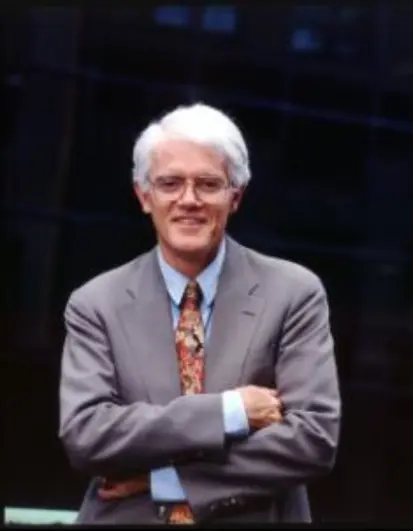
Peter Lynch is widely regarded as one of the greatest mutual fund managers of all time, remembered not only for his spectacular track record at the Fidelity Magellan Fund but also for the way he democratized investing. During his 13-year tenure (1977–1990), Lynch transformed Magellan from a modest $18 million fund into a global powerhouse worth more than $14 billion. Under his stewardship, it delivered an average annual return of nearly 29%, making it the best-performing mutual fund in the world at the time. His ability to consistently beat the market while managing billions of dollars earned him a legendary status in Wall Street history.
But Peter Lynch’s legacy goes far beyond numbers. He had a rare gift for translating complex financial concepts into practical, relatable advice for everyday investors. His mantra, “Invest in what you know”, has become one of the most quoted rules in the world of finance. What made this principle powerful was not its simplicity, but the discipline, research, and long-term thinking that supported it. Lynch showed that average individuals, armed with curiosity and diligence, could spot great investment opportunities right in their daily lives—often before professional analysts recognized them. This message transformed the way millions of people approached the stock market.
In this long-form biography, we will explore Peter Lynch’s journey in detail—from his humble beginnings in Massachusetts to his rise as one of the most influential investors of all time. We’ll examine his early life, his career at Fidelity, the legendary Magellan Fund years, his investing philosophy, his writings, and the lessons that continue to inspire new generations of investors.
Peter Lynch was born in 1944 in Newton, Massachusetts, a suburb of Boston. His early life was marked by both opportunity and hardship. His father, an English and Irish immigrant, worked as a mathematics professor, but tragedy struck when Peter was just 10 years old—his father passed away, leaving the family in difficult financial circumstances. His mother, now the sole provider, worked tirelessly to support Peter and ensure he could pursue his education.
This early experience of financial struggle had a profound impact on Lynch. It made him acutely aware of the importance of money management, security, and the role that education and opportunity play in shaping lives. Unlike many on Wall Street who grew up in privileged backgrounds, Lynch’s upbringing was modest, grounded in resilience and practicality. He never forgot these roots, and throughout his career he emphasized that ordinary people could succeed in investing if they applied discipline and common sense.
As a teenager, Lynch began working as a caddie at the Brae Burn Country Club in Newton. At first, this was simply a way to earn money to help his family. But it became much more than that. At Brae Burn, Lynch came into contact with successful business executives, bankers, and investors who played golf at the club. These interactions gave him an early glimpse into the world of business and finance.
Much like Ray Dalio, who had a similar formative experience as a golf caddie, Lynch benefited from informal mentorships on the golf course. He would listen to conversations about stocks, companies, and markets, gradually absorbing the mindset of wealthy and successful individuals. For Lynch, this was an education in itself—learning not from textbooks but from real-world practitioners of business and investing. These encounters piqued his interest and planted the seed for a career in finance.
Lynch attended Boston College, graduating in 1965 with a degree in finance. During his college years, he began taking a more active interest in the stock market. With the limited savings he had from caddying, he purchased shares of Flying Tiger Airlines, a small cargo airline. To his surprise, the investment performed well, further reinforcing his belief that ordinary people could make smart investment choices by paying attention to the businesses around them.
This first taste of investing success gave Lynch the confidence to dive deeper into finance. At Boston College, he immersed himself in economics, business, and accounting courses. He learned to read financial statements, analyze company fundamentals, and evaluate industries. These skills, combined with his street-level observations, laid the foundation for the unique approach he would later apply at Fidelity.
After completing his undergraduate studies, Lynch pursued an MBA at the Wharton School at the University of Pennsylvania, graduating in 1968. At Wharton, he was exposed to more formal financial theories, including portfolio management, risk analysis, and economic modeling. While he valued the rigorous training, Lynch always maintained a practical outlook: theory was useful, but it had to be applied in real-world contexts. This balance between academic training and common-sense investing became a defining feature of his career.
In 1966, before even completing his MBA, Lynch landed an internship at Fidelity Investments, then a relatively small Boston-based investment company. His job was to cover the airline industry, which was familiar to him because of his first stock purchase in Flying Tiger Airlines. Lynch impressed his supervisors by combining his financial analysis with practical observations of business trends.
After graduating from Wharton, Lynch joined Fidelity full-time. His career at Fidelity would span decades, culminating in one of the most successful mutual fund management careers in history. But in these early years, Lynch honed his skills as a researcher and analyst, learning how to dig into financial reports, visit companies, and speak directly with executives to understand their businesses.
By 1974, at just 30 years old, Peter Lynch was promoted to Director of Research at Fidelity. In this role, he managed a team of analysts and was responsible for overseeing the firm’s stock recommendations. Lynch thrived in this environment, encouraging his team to look beyond Wall Street consensus and to think creatively about investment opportunities. His leadership style emphasized curiosity, thoroughness, and independence of thought.
In 1977, at the age of 33, Lynch was appointed manager of the Fidelity Magellan Fund. At the time, Magellan was a small and relatively obscure mutual fund with just $18 million in assets under management. Few could have predicted that under Lynch’s leadership, Magellan would grow into the largest and best-performing mutual fund in the world.
This appointment marked the beginning of Lynch’s legendary run as a fund manager. Over the next 13 years, he would apply his philosophy of “invest in what you know,” grassroots research, and disciplined execution to deliver extraordinary returns for millions of investors. His journey from a caddie in Massachusetts to one of the most famous investors in the world had come full circle.
By the time Lynch took over the Magellan Fund in 1977, he had already built a philosophy that blended rigorous academic training, grassroots experience, and a belief in the power of everyday observations. These ingredients would make him one of the greatest mutual fund managers in history.
When Peter Lynch assumed control of the Fidelity Magellan Fund in 1977, the fund was far from famous. With just $18 million in assets under management and limited visibility, it was considered a small, relatively obscure mutual fund in Fidelity’s lineup. At the time, the mutual fund industry itself was not the dominant force it is today—pensions, insurance companies, and wealthy individuals largely controlled investing, while ordinary retail investors had less access to sophisticated funds.
Lynch, however, brought a unique combination of enthusiasm, discipline, and independent thinking to the Magellan Fund. At only 33 years old, he was still relatively young by Wall Street standards, but his prior experience as Fidelity’s Director of Research and his deep curiosity about companies gave him the confidence to experiment with a new approach. He believed that with thorough research, patience, and a willingness to look beyond Wall Street consensus, the Magellan Fund could outperform larger, more established competitors.
Over the next 13 years, Lynch grew the Magellan Fund into the most successful mutual fund in the world. By the time he retired in 1990, the fund’s assets had exploded from $18 million to more than $14 billion. This remarkable growth was not just due to market gains but also to the flood of investors who were drawn to Magellan after hearing about its stellar performance.
Under Lynch’s stewardship, Magellan became a household name, symbolizing the potential of mutual funds for ordinary investors. It reached more than one million shareholders, many of whom were everyday Americans seeking to grow their retirement savings, college funds, and long-term wealth. Lynch’s reputation as the “people’s fund manager” stemmed from his ability to connect with these investors in plain language and provide them with confidence in his philosophy.
The performance of the Magellan Fund during Lynch’s tenure remains legendary. From 1977 to 1990, Magellan delivered an average annual return of nearly 29%. This far exceeded the returns of the S&P 500 during the same period and made Magellan the best-performing mutual fund in the world. Lynch’s record is even more impressive considering the size of the fund; outperforming the market with billions under management is far more difficult than with a small pool of assets.
What made Lynch’s record remarkable was not just the returns but the consistency. He successfully navigated volatile markets, recessions, oil crises, interest rate shocks, and the crash of 1987. Through it all, his philosophy of patience, research, and long-term focus allowed Magellan to thrive when many others faltered.
Lynch’s unique style was often described as a blend of bottom-up stock picking with a dose of common sense observation. He was not beholden to rigid formulas or purely quantitative models. Instead, he combined grassroots insights with rigorous financial analysis:
Throughout his career at Magellan, Lynch made numerous investments that illustrated his philosophy:
Lynch’s tenure coincided with some turbulent periods in financial markets. The oil shocks of the late 1970s, soaring inflation in the early 1980s, and the Black Monday crash of October 1987 all tested his strategy. On October 19, 1987, the Dow Jones Industrial Average plunged more than 22% in a single day—the worst one-day decline in stock market history. Many investors panicked, but Lynch urged patience and calm.
Instead of selling, he doubled down on his long-term philosophy. He reminded investors that crashes were part of market cycles and that high-quality companies would recover. His ability to stay calm under pressure and reassure his shareholders further enhanced his reputation as a steady, trustworthy fund manager.
Part of Lynch’s success came from his legendary work ethic. He was known for working long hours, reading countless annual reports, speaking with hundreds of company executives, and traveling extensively to understand businesses firsthand. He once said that he would sometimes visit 15 companies in a single day. His relentless curiosity and willingness to do the hard work of research distinguished him from many of his peers.
Yet, despite his intensity at work, Lynch remained approachable and down-to-earth. He was known for explaining complex investment ideas in simple terms, making him a favorite among everyday investors. His humility and relatability made him stand out in an industry often associated with arrogance and exclusivity.
Unlike many fund managers who preferred to stay behind the scenes, Lynch actively communicated with shareholders. He wrote detailed reports and letters that explained his strategy, market outlook, and stock choices in plain language. This transparency built trust with investors and helped them stay committed to the fund through both good times and bad.
In 1990, after 13 years of extraordinary performance, Peter Lynch shocked the investment world by announcing his retirement at just 46 years old. At the time, he explained that he wanted to spend more time with his wife, Carolyn, and their three daughters. Lynch emphasized that he did not want to miss his children growing up, a decision that reflected his lifelong belief in balance between work and family.
Although some investors worried about Magellan’s future, Lynch’s legacy was secure. He had already proven himself as one of the greatest fund managers of all time, and his departure from Fidelity only enhanced the mystique surrounding his career. Many admired him not only for his performance but also for his decision to step away at the peak of his success.
The Magellan Fund years cemented Peter Lynch’s reputation as one of the greatest investors in history. His combination of common-sense observations, relentless research, and calm leadership created a blueprint for mutual fund success that has yet to be surpassed.
Perhaps the most famous phrase associated with Peter Lynch is his mantra: “Invest in what you know.” While at first glance this advice seems overly simplistic, its depth lies in its practical wisdom. Lynch believed that average people had an advantage over professional analysts because they experienced consumer trends firsthand. By simply paying attention to the products they bought, the stores they shopped in, or the brands gaining popularity in their communities, everyday investors could identify strong businesses before Wall Street caught on.
For example, if a new restaurant chain was always crowded or a new product was flying off store shelves, that could be an early signal of a great investment opportunity. This philosophy empowered millions of ordinary investors, giving them the confidence to trust their own observations rather than relying solely on experts. It democratized investing, showing that valuable insights often come from the ground up rather than from ivory towers.
While “invest in what you know” was the starting point, Lynch consistently emphasized that it was not the end of the process. A popular product was not enough to justify buying a stock. Investors had to do their homework, studying a company’s financial statements, understanding its growth prospects, evaluating competition, and assessing management quality. Lynch often warned against blindly chasing “hot” companies without rigorous analysis.
He encouraged investors to read annual reports, analyze balance sheets, and learn how to interpret earnings. His writings include many examples of people who lost money because they invested only on brand recognition without understanding the fundamentals. Lynch’s genius was in balancing grassroots insights with disciplined financial research.
To make investing more systematic, Lynch divided companies into six categories, each requiring a different strategy and set of expectations. This framework helped him—and the countless investors he influenced—better evaluate opportunities.
By classifying a stock correctly, investors could set realistic expectations. For instance, a stalwart like Procter & Gamble would never deliver the explosive returns of a fast grower but could provide reliable compounding. Conversely, a turnaround stock could double or triple quickly but also carried high risk. Lynch’s categories helped investors avoid mismatched expectations and better align their portfolios with their goals.
Lynch popularized the PEG ratio (Price-to-Earnings Growth ratio) as a simple yet powerful tool for evaluating stocks. The PEG ratio compares a company’s P/E ratio to its expected earnings growth rate. A stock with a P/E of 20 and a growth rate of 20% would have a PEG of 1, which Lynch considered fair value. If the PEG was below 1, the stock could be undervalued; if it was above 1.5 or 2, it might be overpriced.
This approach allowed investors to quickly determine whether a company’s valuation was justified by its growth. Lynch often emphasized that fast growers with low PEG ratios could be the best opportunities, provided investors had done their homework on the fundamentals.
One of Lynch’s most important teachings was the value of patience. He often reminded investors that “the real key to making money in stocks is not to get scared out of them.” Markets fluctuate, and downturns are inevitable, but quality companies recover and reward those who hold on. Lynch frequently pointed out that the greatest mistake investors made was selling too soon out of fear or impatience.
He encouraged investors to think in terms of decades rather than months. His success at Magellan came not from quick trades but from holding onto great companies through thick and thin, allowing compounding to work its magic.
Unlike Warren Buffett, who concentrated his investments in a relatively small number of companies, Lynch often held hundreds of stocks in the Magellan Fund—sometimes more than 1,000. Critics called this “diworsification,” suggesting that owning so many stocks diluted returns. Lynch countered that diversification reduced risk and allowed him to capture opportunities across multiple sectors.
However, Lynch was not blindly diversified. He still made significant allocations to his highest-conviction ideas, but by spreading investments broadly, he protected the fund from catastrophic losses if a few picks went wrong. For ordinary investors, he recommended owning at least 10–20 stocks to ensure balance and reduce reliance on any single company.
One of Lynch’s favorite examples of “invest in what you know” was his investment in Hanes, the maker of L’eggs pantyhose. His wife noticed the product gaining popularity, and Lynch investigated further. He discovered that the company had strong distribution, rising sales, and a growing market. Hanes became a major winner for the Magellan Fund. This case illustrated how everyday observations, combined with financial research, could uncover extraordinary opportunities.
Another example was Dunkin’ Donuts. Lynch observed the consistent customer loyalty and steady expansion of the brand. By analyzing its financials, he realized it had strong growth potential, even though it was in a “boring” business. Investing in Dunkin’ reinforced his belief that great companies were often right under investors’ noses.
Lynch also had a contrarian streak. He often bought companies when they were unpopular or ignored by Wall Street. He looked for opportunities in out-of-favor sectors, turnaround stories, and undervalued assets. His willingness to go against the crowd was a key driver of his success. However, unlike some contrarians who simply opposed consensus, Lynch combined contrarian thinking with solid evidence and thorough research.
Lynch consistently argued that market timing was impossible. He pointed out that more money had been lost by investors trying to predict market corrections than in the corrections themselves. Instead of trying to guess short-term moves, he urged investors to focus on owning strong companies for the long haul. His philosophy aligned with the idea that time in the market beats timing the market.
Lynch also identified patterns that often signaled trouble:
By avoiding these traps, Lynch reduced risk and improved his odds of success.
If Lynch’s philosophy could be summed up in one sentence, it would be: “Find good companies early, do your homework, hold patiently, and don’t let fear push you out of great opportunities.”
Through this philosophy, Peter Lynch transformed investing from a mysterious art practiced by professionals into a skill that ordinary people could learn and apply with confidence.
When Peter Lynch retired from managing the Fidelity Magellan Fund in 1990 at the age of 46, many investors assumed he would fade into a quiet life of wealth and comfort. Instead, Lynch chose a different path. Having already achieved financial independence, he dedicated much of his time to writing, teaching, and philanthropy. His goal was to empower ordinary investors with the tools and mindset they needed to succeed on their own. He wanted to demystify Wall Street, proving that investing could be understood and practiced by anyone willing to learn.
Lynch had always been a strong communicator. Even during his Magellan years, he wrote investor letters and gave talks where he broke down complex concepts into everyday language. After retirement, this ability to explain investing became his greatest contribution to the world outside the fund. Through his books, lectures, and media appearances, he reached millions of readers, students, and aspiring investors, many of whom credit him as their introduction to stock investing.
One Up on Wall Street, published in 1989, is Peter Lynch’s most famous book and widely considered one of the greatest investing guides ever written. It was released while he was still at Magellan and reflected his real-time thinking about markets, strategy, and philosophy. The central theme is that individual investors can outperform professionals by using their everyday knowledge of products, services, and consumer trends to identify promising companies early.
Lynch outlined how ordinary people shopping at malls, eating at restaurants, or noticing new trends in their neighborhoods could spot winning stocks before analysts wrote reports about them. However, he paired this with a clear warning: intuition is only the starting point. Proper research—examining balance sheets, earnings growth, competitive advantages—was essential to avoid costly mistakes.
The book became an international bestseller and has sold millions of copies worldwide. It continues to be a staple on recommended reading lists for new investors, even decades after its publication.
In 1993, Lynch followed up with Beating the Street, which dove deeper into practical stock-picking strategies. Whereas One Up on Wall Street laid out his philosophy, Beating the Street showed readers how he applied these principles in real-world situations.
The book included detailed case studies of stocks Lynch invested in and explained his reasoning. He walked readers through how he analyzed companies, what financial ratios mattered most, and how he categorized opportunities. Importantly, he made his thinking transparent, showing both successes and mistakes. This openness reinforced his teaching style—investing was a learning process, and even great investors got things wrong.
This book further cemented Lynch’s reputation as both a practitioner and a teacher. It gave readers not just theory but a blueprint they could adapt for their own portfolios.
In 1995, Lynch co-authored Learn to Earn with John Rothchild, aimed at beginners and young readers. Unlike his earlier works, this book was less about stock-picking strategy and more about the fundamentals of business, economics, and capitalism. Lynch believed that financial literacy should start early, and this book sought to give teenagers and novices a grounding in how the economy and stock market worked.
He explained concepts like how companies make money, why stocks exist, how dividends work, and why long-term investing matters. Written in accessible language, it helped demystify finance for a broader audience. Many educators adopted it as a teaching tool for high school and college students.
Lynch’s books stand out because of their accessibility. Unlike many finance authors who write in jargon-heavy language, Lynch explained concepts with humor, anecdotes, and analogies. He used everyday examples—from coffee shops to pantyhose brands—to illustrate larger points about business and investing. This style resonated with readers who had previously felt intimidated by Wall Street.
His partnership with financial writer John Rothchild in Beating the Street and Learn to Earn also helped ensure the books were engaging and easy to follow. Together, they created texts that appealed to both seasoned investors and complete beginners.
Beyond his books, Lynch became a frequent speaker at conferences, universities, and investor events. He appeared on television programs, gave interviews, and contributed articles that reinforced his teachings. His calm, approachable demeanor made him a media favorite, and he used this platform to spread his philosophy to millions more people who may never have read his books.
At Fidelity, even after retiring, Lynch mentored younger fund managers and analysts. He believed in passing on knowledge, creating a ripple effect of better investing practices across the industry.
Lynch’s teachings have had a profound influence on individual investors. Many cite his books as their first serious introduction to investing. His message—that ordinary people can succeed by staying observant, disciplined, and patient—resonated globally. He made investing less intimidating and more approachable, creating a culture of self-directed investors who felt empowered to take control of their financial futures.
Although widely respected, Lynch’s teachings are not without criticism. Some argue that his strategies were easier to apply in the 1980s and 1990s, when fewer professional analysts covered small and mid-cap stocks. Today’s markets, dominated by institutions and technology, may leave less room for individual investors to find overlooked opportunities.
Others point out that while his advice is sound, many investors lack the time or inclination to research hundreds of companies the way he did. For these critics, Lynch’s philosophy requires a level of commitment that may be unrealistic for casual investors. Nevertheless, his core lessons—focus on what you know, do your research, and stay patient—remain timeless and broadly applicable.
Decades after their publication, Peter Lynch’s books continue to be bestsellers and are frequently cited as must-reads for aspiring investors. One Up on Wall Street in particular is considered a classic, often appearing alongside Benjamin Graham’s The Intelligent Investor and Philip Fisher’s Common Stocks and Uncommon Profits as essential texts in investment literature.
His teachings remain relevant because they are not tied to specific market conditions or trends. Instead, they focus on timeless principles: curiosity, discipline, patience, and the belief that everyday life can reveal extraordinary opportunities.
Through his books and teachings, Peter Lynch extended his legacy far beyond the Magellan Fund. He became not just a successful investor but also one of the greatest educators in finance, empowering millions to think critically about money, markets, and businesses.
Peter Lynch’s career at the Fidelity Magellan Fund and his writings produced a treasure trove of lessons that continue to guide investors decades later. These lessons are simple in language but profound in application, blending common sense with disciplined research. They emphasize not only how to invest but also how to think about investing as a lifelong journey.
Lynch’s wisdom is often captured in his quotes, which continue to inspire investors around the world. Here are some of his most memorable:
These quotes embody his philosophy of humility, realism, and simplicity. They remind investors to focus on businesses, not hype, and to embrace uncertainty as part of the investing journey.
Beyond his financial success, Peter Lynch is also known for his philanthropy. Together with his wife, Carolyn, he established the Lynch Foundation, which has donated hundreds of millions of dollars to causes such as education, healthcare, cultural institutions, and religious organizations. Their philanthropy has left a lasting mark on Boston and beyond, reflecting the Lynches’ belief in giving back to the community that shaped their success.
Notably, the Lynch Foundation has supported scholarships for underprivileged students, medical research projects, and local cultural organizations. For Peter Lynch, philanthropy was a natural extension of his investing philosophy: just as compounding works in finance, generosity and investment in people create compounding benefits for society.
Lynch’s greatest legacy may be the confidence he instilled in everyday investors. Before Lynch, investing was often seen as the domain of professionals, analysts, and institutions. By emphasizing “invest in what you know” and writing in plain language, he opened the doors of Wall Street to Main Street. He showed that ordinary people could achieve extraordinary results with discipline, curiosity, and patience.
Countless investors attribute their first stock purchases or their long-term strategies to Lynch’s books and interviews. His teachings continue to be passed down through generations, shaping not only financial decisions but also broader attitudes toward money, risk, and opportunity.
Peter Lynch is often compared with other legendary investors like Warren Buffett and Benjamin Graham. While Graham provided the intellectual foundation for value investing and Buffett popularized concentrated, long-term investing in high-quality companies, Lynch’s contribution was different. He made investing accessible. His philosophy resonated with ordinary people in ways that Graham’s dense writings or Buffett’s large-scale deals could not.
Together, these three form a triumvirate of investment wisdom, each with unique contributions to the art and science of investing.
While Lynch’s approach is highly regarded, some critics argue that it is harder to implement in today’s markets. In the 1980s, when fewer analysts covered small and mid-cap companies, individual investors had more chances to find overlooked gems. Today, with data widely available and markets more efficient, such opportunities may be rarer. Additionally, Lynch’s famous practice of holding more than 1,000 stocks at Magellan is impractical for most individuals.
Nevertheless, the principles behind his approach—discipline, patience, focus on fundamentals—remain timeless. Even in an era of algorithmic trading and instant information, Lynch’s core message continues to resonate.
Peter Lynch’s legacy rests on three pillars: his track record, his writings, and his philanthropy. Few fund managers in history have achieved what he did at Magellan: turning a small, obscure fund into the largest and best-performing mutual fund of its era. Fewer still have managed to distill their methods into plain language books that continue to sell decades later. And fewer still have combined success with generosity, giving back to society in meaningful ways.
Today, Lynch’s books remain essential reading for anyone interested in investing. His quotes are shared across classrooms, conferences, and social media. His emphasis on common sense and discipline has influenced not only investors but also entrepreneurs, students, and leaders in other fields.
Peter Lynch’s career is proof that investing doesn’t have to be intimidating or inaccessible. By sticking to fundamentals, observing the world around us, and being patient, anyone can participate in the wealth creation of the stock market. His journey—from a caddie in Massachusetts to the manager of the world’s best mutual fund—shows that great investors are not born but made through curiosity, resilience, and discipline.
Lynch’s greatest gift to the world was not just his returns but his philosophy, which empowered millions of ordinary people to believe in themselves as investors. His teachings remain timeless, ensuring that his influence will endure for generations to come.
