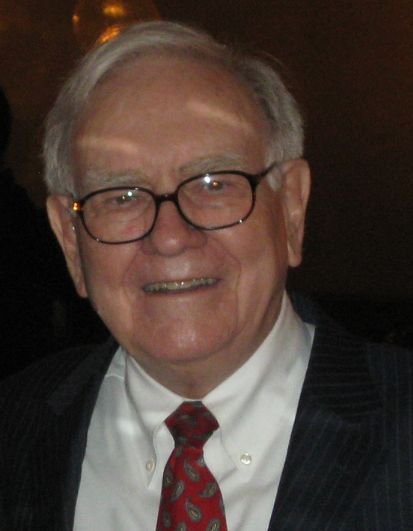
By Aaron Friedman – Photo, CC BY 2.0, via Wikimedia Commons
Warren Edward Buffett was born on August 30, 1930, in Omaha, Nebraska, during the early years of the Great Depression, an economic environment that would profoundly shape his investment philosophy and approach to business. The son of Howard Buffett, a four-term U.S. Congressman and stockbroker, young Warren demonstrated an extraordinary aptitude for numbers and business from an exceptionally early age. By age six, he was purchasing six-packs of Coca-Cola from his grandfather's grocery store for twenty-five cents and reselling individual bottles for five cents each, already understanding the fundamental concept of profit margins.
Buffett's fascination with the stock market emerged at age 11 when he purchased his first shares—three shares of Cities Service preferred stock at $38 per share for both himself and his sister Doris. Though the stock initially dropped to $27 before recovering to $40, this early experience taught him the importance of patience in investing. As a teenager, he diversified his entrepreneurial ventures, delivering newspapers for The Washington Post, operating pinball machines in barber shops, and filing tax returns—activities that collectively earned him over $5,000 by age 16 (equivalent to approximately $75,000 today).
Despite being rejected by Harvard Business School, Buffett discovered Benjamin Graham's "The Intelligent Investor" and was accepted to Columbia Business School where he studied directly under Graham, the father of value investing. He graduated in 1951 with a Master of Science in Economics, achieving the only A+ grade Graham ever awarded. After graduation, Buffett returned to Omaha and began managing partnerships, consistently outperforming the market by applying Graham's principles of buying companies trading below their intrinsic value—the foundation upon which he would build his legendary investment career.
Warren Buffett, who would later become one of the most successful investors in history, began displaying his financial genius at an incredibly young age. In 1943, at just 13 years old, Buffett filed his very first income tax return. This was no ordinary milestone for a teenager. It revealed the seriousness with which he approached money, business, and responsibility even before reaching high school. Most children his age were still asking their parents for allowance, but Buffett was already reporting his income to the U.S. government.
At the time, Buffett was working as a newspaper delivery boy in Omaha, Nebraska. His routes included delivering The Washington Post and other local papers, a job that required both physical effort and business discipline. He kept meticulous records of his earnings, a habit that would define his lifelong approach to investing and financial management. This simple but disciplined act of filing taxes became one of the earliest public signs of the traits that would later make him the “Oracle of Omaha.”
The most famous detail of Warren Buffett’s 1943 tax return was his $35 deduction. He listed his bicycle and watch as essential “business expenses.” To most, this might seem trivial, but to Buffett, it was logical. Without a bicycle, he couldn’t efficiently deliver newspapers across his neighborhood, and without a watch, he couldn’t stay on schedule. By categorizing them as deductible items, Buffett demonstrated a sharp understanding of how businesses calculate costs and maximize profits.
It’s important to note that this wasn’t a reckless move. Even at 13, Buffett understood the principle that tools necessary for work are part of business costs. The deduction reflected not just cleverness, but a disciplined thought process. In hindsight, it foreshadowed how he would later analyze companies, identify efficiencies, and value long-term investments.
Some might wonder why a teenager’s tax filing is remembered at all. In Buffett’s case, this small event is a critical piece of the puzzle. It reveals three core aspects of his personality that would define his career:
This is why historians and biographers often highlight this event. It may seem small, but it perfectly illustrates the habits and thought processes that would eventually lead to Buffett’s rise as one of the greatest investors of all time.
To fully appreciate this story, it helps to look at the bigger picture. In 1943, the world was deep in the turmoil of World War II. Resources were scarce, and American households were focused on saving money, rationing, and supporting the war effort. For a young Warren Buffett, growing up in Omaha, this environment shaped his sense of value, frugality, and the importance of resourcefulness.
At the same time, the U.S. tax system was expanding, as the government needed more revenue to fund the war. Filing a tax return became part of civic duty, but it was still rare for a teenager to do so—especially one earning income from newspaper delivery. This context makes Buffett’s action even more remarkable, showing that he was not only aware of his responsibilities but also eager to comply with them correctly.
By the time Buffett filed his first tax return, he was no stranger to making money. His childhood is filled with small but telling entrepreneurial ventures. These included:
Each of these activities taught him lessons in supply, demand, customer service, and profit margins. By the time he was 13, Buffett had already experimented with business models that many adults never attempt in their lives. The tax return simply formalized his growing identity as a businessperson.
Looking back, it’s clear that this small event carries symbolic weight. It wasn’t just about a boy filing paperwork—it was about the mindset that separates ordinary individuals from extraordinary leaders. Buffett’s first tax return was a preview of the habits that made him a billionaire investor and philanthropist.
Today, many financial educators point to this story as an example of why teaching kids about money early is so important. Buffett’s financial literacy at 13 was far ahead of his peers. He understood saving, investing, and accounting before most people even open their first bank account.
For anyone interested in business or investing, Warren Buffett’s 1943 tax return offers timeless lessons. Entrepreneurs today can learn:
These lessons remain as relevant in today’s startup-driven economy as they were in wartime America. Buffett’s story reminds us that success often comes down to small, disciplined actions repeated over time.
Warren Buffett’s decision to file his first tax return at age 13 in 1943 is more than a fun anecdote—it is a defining moment in his journey. It revealed his discipline, entrepreneurial instincts, and financial intelligence at an age when most children were still learning basic math. His deduction of $35 for a bicycle and watch has become a legendary symbol of how early he understood the principles of business expenses and efficiency.
In the decades that followed, Buffett would go on to build Berkshire Hathaway into a global powerhouse, amassing one of the largest fortunes in the world. Yet this story from his teenage years continues to inspire because it proves that financial wisdom isn’t built overnight. It starts with small, consistent steps—even something as simple as a 13-year-old boy filing a tax return.
In 1947, Warren Buffett graduated from Woodrow Wilson High School in Washington, D.C. at the age of just 16. While many of his classmates were still deciding what careers to pursue, Buffett already had a clear passion for business and investing. By this time, he had managed several entrepreneurial ventures, including delivering newspapers, selling soda bottles, and running small pinball machine businesses. Yet, despite his early successes, his father, Howard Buffett—a U.S. Congressman—believed Warren needed a formal business education. This led to his enrollment at the Wharton School of Business at the University of Pennsylvania, one of the most prestigious business schools in America.
When Buffett arrived at Wharton in Philadelphia, he was among the youngest students in his class. The school’s curriculum included courses in accounting, management, and economics, areas that offered a more structured approach compared to Buffett’s self-taught methods of learning about money and business. For the first time, Buffett was in an environment surrounded by peers and professors who viewed business through an academic lens.
Buffett, however, quickly realized that many of his professors did not have the practical business experience he valued. He found some of the material overly theoretical and less useful than the real-world lessons he had already gained through his own ventures. This created a sense of frustration, but it also reinforced his belief that experience and independent study were just as important—if not more so—than formal education in building true business expertise.
While at Wharton, Buffett did not abandon his entrepreneurial activities. He continued finding small opportunities to earn money, whether through investing in stocks or experimenting with business ventures on the side. These efforts showed that, even as a college student, he was already thinking like a businessman and investor rather than a traditional student.
At the same time, he absorbed valuable lessons about business structures and financial principles. Although Buffett did not enjoy every subject, exposure to concepts like corporate finance, economic systems, and accounting standards expanded his knowledge base. These lessons would later complement his natural instincts as he built Berkshire Hathaway into a global powerhouse.
By 1949, after spending two years at Wharton, Buffett decided to transfer to the University of Nebraska–Lincoln to complete his undergraduate degree. Several factors influenced this choice. First, Buffett wanted to finish college at a lower cost, and the University of Nebraska offered a more affordable option. Second, he felt that his time at Wharton had already given him what he needed in terms of exposure, and he was eager to move forward more quickly.
Buffett’s transfer decision highlights an important part of his character: practicality. Rather than staying at Wharton purely for its prestige, he chose a more efficient and cost-effective path that better aligned with his goals. This kind of practical thinking—valuing results over appearances—would later become a hallmark of his investing philosophy.
Although his time at Wharton was brief, it was far from insignificant. Those two years helped shape Buffett’s views on business, education, and the importance of independent thinking. Key takeaways from his Wharton years include:
Warren Buffett’s short time at the Wharton School of Business (1947–1949) is often overshadowed by his later studies at Columbia Business School, where he learned directly from Benjamin Graham, the father of value investing. Yet, Wharton played a critical role in his development. It gave him an early taste of formal business education, highlighted the gap between theory and practice, and helped him refine his belief that real-world experience was just as important as classroom lessons.
Ultimately, Buffett’s Wharton years were a stepping stone—a period that bridged his youthful entrepreneurship with his formal academic training. They represent an important chapter in understanding how Buffett became not only a disciplined student of business but also a lifelong independent thinker.
By 1950, Warren Buffett had already completed his undergraduate studies at the University of Nebraska and was eager to pursue graduate education in business. His first choice was Harvard Business School, a natural option for someone seeking prestige and access to elite networks. Confident in his academic performance and entrepreneurial background, Buffett applied with high hopes.
To Buffett’s surprise, his application to Harvard Business School was rejected. At the time, he was only 19 years old, which some believe worked against him. Harvard may have considered him too young and lacking in professional experience compared to older candidates. Buffett later joked about the experience, saying that Harvard’s rejection was a blessing in disguise.
Disappointed but determined, Buffett began searching for alternatives. His father encouraged him to consider Columbia Business School, where Benjamin Graham—the legendary investor and author of The Intelligent Investor—was teaching. Graham was already a hero to Buffett, whose investing philosophy had been shaped by reading his work. Buffett applied, was accepted, and soon found himself studying directly under both Graham and David Dodd, pioneers of value investing.
At Columbia, Buffett absorbed the core principles of value investing: analyzing companies, seeking intrinsic value, and maintaining discipline in the face of market speculation. This education had a profound impact, far greater than what Harvard could have offered at the time. Buffett often described Graham as the single greatest influence on his investment career.
In hindsight, Buffett’s rejection from Harvard was one of the most pivotal turning points of his life. It redirected him toward Columbia, where he gained the theoretical foundation and mentorship that would shape his career as the world’s most famous value investor. This story is often cited as an example of how setbacks can become opportunities, and how rejection can redirect you to something even better aligned with your goals.
By the end of 1951, Buffett had completed his master’s degree in economics from Columbia Business School, armed with the lessons of Benjamin Graham and ready to launch his investing career. The Harvard rejection, once a disappointment, had become one of the luckiest breaks in his life.
In 1951, Warren Buffett graduated from Columbia Business School with a Master of Science in Economics, but it was the mentorship of Benjamin Graham that made this period truly transformative. Graham, often called the “father of value investing,” had already revolutionized the way investors thought about stocks, emphasizing the importance of analyzing a company’s intrinsic value and maintaining a margin of safety. Buffett quickly became one of Graham’s most enthusiastic students, absorbing lessons on securities analysis, market discipline, and long-term investment strategies.
Buffett’s time at Columbia was marked not only by academic rigor but also by intellectual stimulation. He attended lectures with peers who would later become influential in finance, debated investment concepts, and meticulously studied Graham’s works, including The Intelligent Investor. Graham’s approach emphasized buying undervalued companies and avoiding speculation, a stark contrast to the prevailing “get rich quick” mindset of many investors at the time. These principles resonated deeply with Buffett and became the blueprint for his future investment philosophy.
Additionally, Buffett’s Columbia years reinforced the importance of patience, critical thinking, and discipline in investing. He learned to separate emotion from financial decisions, an approach that would later define his legendary ability to make rational, long-term investment choices even in volatile markets. For Buffett, studying under Benjamin Graham was more than a classroom experience—it was an apprenticeship in thinking like a professional investor, one that combined analytical rigor with real-world practicality.
After graduating from Columbia, Warren Buffett returned to Omaha and began his professional career at Buffett-Falk & Co., a small investment brokerage where he worked as an investment salesman. This role was Buffett’s first formal exposure to the practical side of investing. While the position involved selling stocks and bonds to clients, it also offered a deep understanding of investor behavior, market dynamics, and the psychology behind financial decisions.
At Buffett-Falk, Buffett developed essential skills in client management and communication. He learned how to assess investor goals, explain complex financial concepts in simple terms, and build trust with clients—a skill that would prove invaluable when he started his own investment partnership. The job also provided him with a firsthand look at the operational side of the investment business, including record-keeping, transaction management, and regulatory compliance.
Even in this early role, Buffett’s analytical mindset set him apart. He didn’t just sell investments; he studied market trends, evaluated company fundamentals, and began applying the value investing principles he had learned from Graham. This combination of education and practical experience gave him a unique perspective: he could understand both what the numbers said and how investors behaved in the real world.
Buffett often reflected on this period as a crucial bridge between theory and practice. The time at Buffett-Falk & Co. taught him that success in investing required more than understanding numbers—it demanded insight into human behavior, discipline, and the ability to make decisions under uncertainty. These lessons would directly inform the strategies he later employed in founding Buffett Partnership Ltd. and building Berkshire Hathaway into a global investment powerhouse.
In the midst of his early career, Warren Buffett married Susan Thompson in 1952 at Dundee Presbyterian Church. Susan would become a lifelong partner, supporting Buffett personally and professionally. Their marriage provided stability during the intense early years of Buffett’s career and played a significant role in his ability to focus on building his investment knowledge and eventually his own firm.
In 1954, Buffett returned to New York to join Graham-Newman Corp., the investment firm co-founded by Benjamin Graham. Working directly with Graham and his team, Buffett deepened his understanding of security analysis, portfolio management, and value investing strategies. This period allowed him to apply the principles he had studied at Columbia to real-world investments, further solidifying his reputation as a sharp and disciplined investor.
In 1956, after Benjamin Graham retired, Warren Buffett returned to Omaha, Nebraska, armed with both practical experience and a solid foundation in value investing. Recognizing an opportunity to apply Graham’s principles independently, Buffett founded Buffett Partnership Ltd., an investment partnership designed to manage money for a small group of private investors. The partnership started with just seven limited partners who collectively contributed $105,100—a modest sum by today’s standards, but significant enough to launch Buffett’s ambitious investment strategy.
Buffett Partnership Ltd. was structured to give Buffett full control over investment decisions while allowing partners to benefit from his disciplined approach. From the outset, he implemented the value investing principles he had learned under Graham: focusing on companies with strong fundamentals, buying securities below intrinsic value, and maintaining a margin of safety to minimize risk. Buffett also emphasized long-term growth rather than short-term speculation, setting the tone for the disciplined, patient investment style that would later define Berkshire Hathaway.
The early years of the partnership were marked by impressive results. Buffett’s ability to identify undervalued stocks and take advantage of market inefficiencies allowed him to generate substantial returns for his partners. His meticulous attention to detail, rigorous research process, and willingness to go against popular market trends helped the partnership outperform many contemporaries. These successes not only earned the trust of his investors but also cemented Buffett’s reputation as a savvy and disciplined investment manager.
Beyond financial performance, Buffett Partnership Ltd. became a proving ground for Buffett’s investment philosophy. It allowed him to experiment with different strategies, refine his approach to risk management, and understand the psychology of investors—both his partners and the broader market. This hands-on experience was critical in preparing him for the eventual acquisition of Berkshire Hathaway, which would become the primary vehicle for his long-term wealth-building strategy.
Launching Buffett Partnership Ltd. in 1956 was a pivotal moment in Warren Buffett’s career. It represented the transition from student and apprentice to independent investor and business leader. The lessons learned, successes achieved, and reputation built during this period laid the groundwork for a lifetime of disciplined investing, and it marked the beginning of what would eventually become one of the most remarkable investment careers in history.
These years were pivotal in shaping Warren Buffett’s career and personal life. From mastering value investing under Benjamin Graham to gaining practical experience at Buffett-Falk & Co. and Graham-Newman, and finally launching his own partnership, Buffett honed the skills, discipline, and philosophy that would define his legacy. The period also included personal milestones, like his marriage to Susan Thompson, which provided the stability and support necessary for his long-term success.
By the early 1960s, Warren Buffett had already built a reputation as a disciplined and highly successful investor through Buffett Partnership Ltd. In 1962, Buffett began acquiring shares in a struggling textile company called Berkshire Hathaway. At the time, the company was a conventional textile manufacturer facing declining profits due to rising competition and changes in the textile industry. Despite this, Buffett recognized an opportunity: the company’s stock was undervalued compared to its intrinsic worth. This investment reflected the same principles he had learned from Benjamin Graham—buying quality assets at a discount with a margin of safety.
By 1965, Buffett had accumulated a significant stake in Berkshire Hathaway and seized the opportunity to take control of the company. Initially, Berkshire was just a textile operation, but Buffett saw it as a potential vehicle for larger investments. He began using the company as a holding company, deploying its capital into more profitable ventures. This strategic pivot marked the beginning of a transformation that would eventually turn Berkshire Hathaway into one of the most powerful conglomerates in the world.
In 1967, Buffett made a pivotal move by acquiring his first insurance company, National Indemnity Company. This acquisition was significant for several reasons. Insurance companies generate “float,” which is the pool of premium money held before claims are paid. Buffett recognized that this float could be invested to generate additional returns. The purchase of National Indemnity marked the beginning of Buffett’s long-term strategy of using insurance cash flow to fund investments, a model that became central to the success of Berkshire Hathaway.
After 13 years of operating Buffett Partnership Ltd., Buffett closed the partnership in 1969. Over its lifetime, the partnership delivered an extraordinary compounded annual return of 29.5% for its investors, far exceeding market averages during the same period. Closing the partnership allowed Buffett to focus on managing Berkshire Hathaway full-time, applying the lessons he had learned over more than a decade of independent investing. This transition marked the end of one chapter and the beginning of another, as Buffett shifted from running a small investment partnership to overseeing a growing conglomerate of businesses under Berkshire Hathaway.
The 1960s were a transformative decade for Warren Buffett. During this period, he evolved from a highly successful investment partnership manager into the founder of a conglomerate-focused investment empire. His strategic acquisition of Berkshire Hathaway and the first insurance company laid the foundation for the modern Berkshire Hathaway business model: using high-quality cash-generating companies to fund long-term investments. This decade demonstrated Buffett’s ability to recognize undervalued opportunities, make bold strategic moves, and apply the principles of value investing on a larger scale.
The lessons from this era also highlight Buffett’s focus on patience, discipline, and thinking long-term. Rather than chasing short-term profits, he carefully evaluated businesses for intrinsic value and growth potential, setting a pattern that would define his investment approach for decades to come. The 1960s were more than just a period of financial success—they were the beginning of Warren Buffett’s transformation into one of the world’s most respected and influential investors.
By 1970, Warren Buffett had firmly established himself as a disciplined and visionary investor. That year, he officially became the Chairman of Berkshire Hathaway, the textile company he had transformed into a holding company for investments. While the textile business itself was declining, Buffett recognized that the company’s capital could be used to fund more profitable acquisitions and investments. Taking on the role of Chairman allowed Buffett to implement his long-term strategy of using Berkshire as a platform for disciplined, value-driven investing.
In 1973, Buffett made a landmark investment by acquiring stock in the Washington Post Company, a major media business led by Katharine Graham. This investment was significant not only because it demonstrated Buffett’s keen ability to identify undervalued, high-quality businesses, but also because it marked the beginning of a personal and professional friendship with Katharine Graham. Buffett admired her leadership and the Post’s consistent performance, and the investment became one of his most famous early successes, showcasing the power of buying great businesses at fair prices and holding them for the long term.
Another transformative moment in the 1970s came in 1976 when Buffett acquired the insurance company GEICO. Initially, Buffett had been a long-time shareholder due to his belief in the company’s strong fundamentals and potential for growth. By gaining control of GEICO, Buffett secured a steady source of “float”—the pool of premium money held before claims were paid—which could be reinvested to generate additional returns. GEICO would continue to grow under Berkshire’s ownership, with Buffett eventually completing the full acquisition in 1995, cementing it as a core part of Berkshire Hathaway’s insurance operations.
By the end of the 1970s, Buffett’s strategy had begun to bear remarkable fruit. In 1979, Berkshire Hathaway’s stock reached $290 per share, reflecting the successful transformation of the company from a struggling textile firm into a diversified holding company. Warren Buffett’s personal net worth had also grown significantly, reaching approximately $140 million. This milestone was a testament to his disciplined investing, focus on intrinsic value, and long-term vision, demonstrating how patient and strategic investing could yield extraordinary results over time.
The 1970s were a decade of strategic growth and consolidation for Warren Buffett and Berkshire Hathaway. During this period, Buffett honed his approach to acquiring undervalued companies, leveraging insurance float, and building relationships with capable business leaders. Investments like the Washington Post and GEICO highlighted his ability to combine financial analysis with trust in management. By the end of the decade, Buffett had transformed Berkshire Hathaway into a platform capable of supporting large-scale acquisitions, setting the stage for the explosive growth that would follow in the 1980s and beyond.
Overall, the 1970s exemplified Buffett’s focus on long-term value creation, disciplined investment strategies, and careful selection of businesses with strong fundamentals—principles that remain at the core of Berkshire Hathaway’s success today.
In 1983, Warren Buffett made a significant acquisition by purchasing Nebraska Furniture Mart from Rose Blumkin. This purchase marked Buffett’s first major foray into the retail sector and reflected his interest in acquiring high-quality, well-managed businesses with strong competitive advantages. Nebraska Furniture Mart was already a highly successful regional retailer, and Buffett recognized the potential to apply Berkshire Hathaway’s capital and management philosophy to help it grow further. The acquisition demonstrated Buffett’s strategy of investing in businesses that dominate their local markets and have durable long-term prospects.
By 1985, Buffett made a critical decision regarding Berkshire Hathaway’s original textile operations. After years of operating losses and declining prospects for the textile industry, he decided to finally shut down the business. This decision highlighted Buffett’s practical approach to business management: he recognized when a core operation was no longer viable and redirected resources toward more profitable and growing ventures. Closing the textile operations allowed Berkshire to focus fully on investments and acquisitions that would generate substantial long-term returns.
The strategic acquisitions and disciplined management approach began to reflect in Berkshire Hathaway’s market performance. By 1986, Berkshire’s stock had reached $3,000 per share, a remarkable milestone that demonstrated the value of Buffett’s long-term investment philosophy. The combination of acquiring high-quality businesses like Nebraska Furniture Mart and moving away from unprofitable operations showcased Buffett’s ability to identify opportunities, mitigate risks, and grow shareholder value steadily over time.
These mid-1980s milestones underscore Buffett’s focus on disciplined capital allocation, strategic acquisitions, and long-term growth. The period marked a pivotal transition from managing a holding company with a mix of declining and profitable businesses to running a diversified conglomerate with strong, high-performing subsidiaries. It set the stage for Berkshire Hathaway’s continued expansion and its evolution into one of the most successful investment companies in the world.
In 1988, Warren Buffett made one of the most famous investments of his career by purchasing a substantial stake in The Coca-Cola Company. Recognizing the brand’s global dominance, consistent profitability, and strong consumer loyalty, Buffett identified Coca-Cola as a classic example of a high-quality company trading at a reasonable price. This move reflected his core investment principle of buying outstanding businesses with durable competitive advantages and holding them for the long term.
Buffett’s initial purchases eventually grew into a $1.3 billion investment, representing one of the largest single-stock positions Berkshire Hathaway had ever taken at that time. The acquisition gave Berkshire Hathaway a significant ownership stake in a globally recognized brand, allowing Buffett to benefit from both the company’s steady cash flows and its potential for long-term capital appreciation.
The Coca-Cola investment perfectly aligned with Buffett’s value investing philosophy. The company offered a strong economic moat, predictable earnings, and a history of growth, making it an ideal long-term holding. Additionally, Coca-Cola paid consistent dividends, providing Berkshire Hathaway with a reliable stream of income that could be reinvested into other opportunities. Buffett’s focus on high-quality businesses with sustainable competitive advantages set the stage for Coca-Cola to become one of Berkshire Hathaway’s most iconic and enduring investments.
This strategic investment also demonstrated Buffett’s commitment to long-term thinking. Unlike speculative investors chasing short-term gains, Buffett viewed Coca-Cola as a company that would generate wealth steadily over decades. Today, it remains a symbol of his disciplined approach to investing, combining patience, rigorous analysis, and a deep understanding of business fundamentals.
In 1990, Warren Buffett reached a major personal milestone when Berkshire Hathaway’s stock price hit $7,175 per share, making him a billionaire. This moment marked Buffett’s transition from a highly respected investor within financial circles to mainstream recognition as one of the world’s wealthiest and most influential financiers. His disciplined, value-oriented investment approach, honed over decades, was now widely celebrated. This milestone not only highlighted Buffett’s extraordinary financial success but also solidified his reputation as a model for long-term, patient investing.
In 1991, Warren Buffett stepped into a major Wall Street crisis when Salomon Brothers, a leading investment bank, faced serious allegations of violating Treasury bond trading rules. The scandal threatened the firm’s reputation and stability, causing concern among investors and regulators alike.
Buffett was appointed interim chairman to help steady the ship. His role was simple in principle but challenging in practice: restore confidence, guide the company through the crisis, and ensure ethical leadership. Known for his integrity and calm decision-making, Buffett helped stabilize Salomon Brothers, earning respect for both his business judgment and leadership style.
This episode highlighted an important aspect of Buffett’s career beyond investing: his ability to manage companies with strong ethics, maintain trust under pressure, and act decisively in high-stakes situations. It also reinforced why Buffett is respected not just as an investor, but as a trusted business leader.
In 1996, Buffett completed Berkshire Hathaway’s acquisition of GEICO, securing one of the most profitable insurance companies in the United States. GEICO became a cornerstone of Berkshire’s insurance empire, providing substantial “float”—the pool of premium money available for investment—which Buffett leveraged to fund other strategic acquisitions. Additionally, in the same year, Berkshire introduced “B” shares, offering a more affordable way for public investors to buy into the company. The introduction of “B” shares helped expand Berkshire’s shareholder base while maintaining the original “A” shares’ voting power, reflecting Buffett’s thoughtful approach to corporate structure and shareholder relations.
In 1998, Berkshire Hathaway further expanded its insurance operations by acquiring General Reinsurance Corporation, one of the world’s leading reinsurance companies. This acquisition significantly strengthened Berkshire’s insurance holdings, providing an additional stream of investment capital through premiums and reinforcing Buffett’s strategy of using insurance float to fund long-term investments. The General Re acquisition highlighted Buffett’s consistent focus on acquiring high-quality companies that generate stable cash flows and contribute to the overall growth of Berkshire Hathaway.
The 1990s were a transformative decade for Warren Buffett, marked by both personal milestones and strategic business growth. Becoming a billionaire brought mainstream recognition, while his leadership during the Salomon Brothers crisis demonstrated integrity and corporate governance prowess. The acquisitions of GEICO and General Re solidified Berkshire Hathaway’s position as a powerhouse in the insurance sector, establishing a foundation for decades of future expansion. These achievements collectively underscore Buffett’s disciplined approach to investing, strategic capital allocation, and long-term value creation.
In 2004, Warren Buffett faced a deeply personal loss when his wife, Susan Thompson Buffett, passed away. Susan had been a significant influence on Buffett’s personal life and charitable outlook, and her passing marked a turning point in his focus on philanthropy. Her legacy shaped many of Buffett’s later decisions, including his commitment to giving away the majority of his wealth to charitable causes. This event also highlighted the personal side of Buffett, reminding the world that behind the legendary investor was a devoted family man and partner.
In 2006, Warren Buffett made a historic and landmark philanthropic commitment by pledging approximately 85% of his Berkshire Hathaway stock to charitable foundations, primarily the Bill & Melinda Gates Foundation. At the time, this represented tens of billions of dollars and stood as one of the largest charitable pledges in history. Buffett’s decision reflected his belief that those with immense wealth have a moral responsibility to contribute to society and address critical global challenges.
Buffett’s pledge was structured to distribute Berkshire shares over time, ensuring that foundations would benefit from the company’s long-term growth. He emphasized that the funds would be used to tackle pressing issues such as global health, education, and poverty alleviation. By giving to the Gates Foundation and other charities, Buffett leveraged both his wealth and his influence, inspiring transparency, accountability, and strategic philanthropy.
This monumental pledge also set the stage for the creation of The Giving Pledge in later years, a movement encouraging other billionaires to commit a majority of their fortunes to philanthropic causes. Buffett’s 2006 pledge highlighted his long-term vision—not just as an investor, but as a global citizen focused on creating meaningful, lasting impact. It reinforced the idea that wealth, when combined with discipline, foresight, and a sense of responsibility, can drive transformative social change.
The 2006 pledge is considered one of the defining moments of Buffett’s later career. It symbolized the intersection of his financial acumen, ethical values, and dedication to leaving a lasting legacy. Beyond the numbers, it showed the world that Buffett’s influence extends far beyond the stock market, impacting philanthropy on a global scale and inspiring a culture of giving among the world’s wealthiest individuals.
In 2008, Warren Buffett reached another milestone, becoming the richest person in the world with a net worth of approximately $62 billion. That same year, during the global financial crisis, Buffett made strategic and lucrative investments in companies such as Goldman Sachs and General Electric. These investments highlighted his exceptional ability to identify opportunities during periods of market turbulence and reinforced his reputation as a disciplined, long-term investor. Buffett’s actions during the crisis not only preserved and grew Berkshire Hathaway’s capital but also provided confidence to the broader financial markets.
In 2009, Berkshire Hathaway completed the $34 billion acquisition of Burlington Northern Santa Fe (BNSF), one of the largest railroad networks in the United States. This acquisition was a cornerstone in Buffett’s long-term diversification strategy, providing a stable, cash-generating business to complement Berkshire’s insurance operations. The BNSF purchase demonstrated Buffett’s forward-thinking approach, focusing on industries with durable economic moats and long-term growth potential. It became a key component of Berkshire Hathaway’s portfolio, reflecting Buffett’s vision of combining predictable cash flows with strategic investments.
The 2000s were a decade of both personal reflection and strategic growth for Warren Buffett. The passing of Susan Buffett shaped his philanthropic vision, leading to one of the most generous charitable pledges in history. At the same time, Buffett’s wealth and investment decisions during the financial crisis, along with major acquisitions like BNSF, demonstrated his continued skill as a long-term investor. These years highlighted the balance between personal values, philanthropy, and disciplined investing, solidifying Buffett’s legacy not just as a financial icon, but as a global leader in both wealth creation and giving.
In 2010, Warren Buffett, alongside Bill Gates, launched The Giving Pledge, a historic initiative aimed at encouraging the world’s wealthiest individuals to commit the majority of their fortunes to philanthropy. The goal was simple but profound: to inspire billionaires to use their wealth to tackle some of the world’s most pressing problems, including global health, education, poverty, and social inequality. Buffett’s own earlier commitment to donate 85% of his Berkshire Hathaway stock served as both the inspiration and blueprint for the pledge.
The Giving Pledge is structured to be flexible, allowing participants to decide how and when their wealth is donated, while encouraging transparency and accountability. Since its launch, the initiative has attracted hundreds of signatories, including notable figures like Mark Zuckerberg, Elon Musk, Michael Bloomberg, and Oprah Winfrey. By publicly committing to give away the majority of their wealth, these billionaires are setting a new standard for social responsibility among the world’s richest individuals.
Buffett emphasized that the pledge is not just about writing checks; it is about long-term impact and thoughtful philanthropy. He encouraged participants to consider not only the amount they give but also the effectiveness of how it is deployed, ensuring sustainable and meaningful change. The initiative has also fostered a culture of giving in the global business community, inspiring countless others to follow suit.
The 2010 launch of The Giving Pledge represents a defining moment in Buffett’s legacy. Beyond his achievements as an investor and business leader, it highlights his commitment to using wealth for social good, ensuring that his influence extends far beyond the stock market. Through the pledge, Buffett has helped shape a global movement of strategic, high-impact philanthropy, solidifying his reputation not only as a financial icon but also as a visionary in charitable giving.
In 2012, Buffett publicly announced that he had been diagnosed with prostate cancer. The announcement highlighted his transparency and willingness to share personal challenges with the public. The cancer was successfully treated, and Buffett continued his active role at Berkshire Hathaway. This period showcased his resilience, disciplined approach to personal health, and ability to maintain focus on both business and philanthropy even during difficult personal circumstances.
By 2014, Berkshire Hathaway had achieved an extraordinary milestone: its per-share book value had grown at an annualized rate of 19.7% for 49 consecutive years. This remarkable performance reflected Buffett’s disciplined investment philosophy, long-term focus, and careful capital allocation. The sustained growth of Berkshire’s book value not only increased shareholder wealth but also reinforced Buffett’s reputation as one of the most successful and consistent investors in history.
In 2018, Warren Buffett was named the most generous individual donor, contributing approximately $3.4 billion to various charitable causes. This record-breaking level of giving further solidified Buffett’s legacy as a philanthropist, demonstrating his commitment to addressing social issues and making a lasting impact on global communities. His generosity inspired other wealthy individuals to take similar actions, ensuring that his influence extended far beyond investing into meaningful social change.
The 2010s were a defining decade for Warren Buffett, focusing on cementing his legacy through philanthropy, transparency, and consistent financial leadership. From launching The Giving Pledge to donating billions and achieving nearly five decades of consistent investment growth, Buffett demonstrated that wealth could be leveraged responsibly to create both financial and social impact. These milestones highlight his dual role as a world-class investor and a global citizen committed to giving back.
In 2020, Warren Buffett and Berkshire Hathaway confronted the unprecedented challenges posed by the COVID-19 pandemic. Global markets experienced extreme volatility and economic uncertainty, creating a complex environment for investors. Despite these conditions, Buffett remained disciplined in his investment approach, focusing on long-term value rather than short-term market swings.
During this period, Buffett made strategic investments in Japanese trading companies, a move that demonstrated his ability to identify strong, undervalued businesses even amid global turmoil. These companies, known for their stable cash flows and diversified operations, aligned with Berkshire’s philosophy of acquiring businesses with durable economic moats. By targeting international opportunities, Buffett also highlighted the global scope of Berkshire’s investment strategy.
Buffett’s leadership during the pandemic reassured investors and shareholders, emphasizing patience, prudence, and confidence in long-term fundamentals. His decisions reflected a combination of historical market knowledge, careful risk assessment, and unwavering commitment to Berkshire’s core principles. The 2020 strategies reinforced Buffett’s reputation as a steady hand capable of navigating crises while generating value for shareholders.
In 2021, Warren Buffett officially announced Greg Abel as his designated successor as CEO of Berkshire Hathaway, providing clarity on the company’s succession plan. Abel, who had extensive experience managing Berkshire’s non-insurance businesses and demonstrating exceptional leadership skills, was chosen to carry forward Buffett’s long-term vision and investment philosophy.
This announcement was a critical moment for Berkshire Hathaway and the broader business community. Buffett’s careful selection of Abel ensured continuity in management, preserving the culture, disciplined approach to investing, and ethical standards that had defined Berkshire for decades. The choice also reassured shareholders that the company would maintain stability and strategic focus after Buffett’s eventual retirement.
Buffett’s succession planning highlighted his foresight and commitment to long-term sustainability. By publicly naming Abel, he not only reinforced confidence in Berkshire’s future but also set a corporate governance example for other large companies. The transition plan emphasized mentorship, preparation, and careful handover of responsibilities, ensuring that Berkshire’s legacy would endure beyond Buffett’s tenure.
In 2023, Warren Buffett celebrated six decades at the helm of Berkshire Hathaway, a testament to his remarkable longevity and consistent leadership. Despite the company’s massive growth and global influence, Buffett continued to attend annual shareholder meetings, sharing insights on investing, corporate governance, and market trends. His ongoing involvement reinforced his reputation as a hands-on leader and a trusted voice in the financial world.
At 93 years old in 2024, Warren Buffett remains Chairman and CEO of Berkshire Hathaway while gradually transitioning responsibilities to the next generation of leaders. This period emphasizes both continuity and careful planning, ensuring that Berkshire’s core principles and investment philosophy endure. Buffett’s ability to maintain an active role in management while mentoring successors highlights his enduring influence and commitment to the company’s long-term success.
The 2020s mark a decade focused on succession planning and responsible leadership for Warren Buffett. From navigating global crises like the COVID-19 pandemic to announcing Greg Abel as his successor, these years emphasize Buffett’s ability to balance stability with forward-looking planning. Celebrating 60 years at Berkshire and continuing active management at 93, Buffett demonstrates that thoughtful succession and steady leadership are key to preserving a corporate legacy built on decades of disciplined investing.
In 1962, Warren Buffett began acquiring shares of Berkshire Hathaway, a struggling textile manufacturing company based in New Bedford, Massachusetts, initially attracted by its apparent cheapness relative to its working capital. However, this investment would become what he later called his "multi-billion dollar mistake" as the textile industry continued its irreversible decline. Rather than accepting the loss, Buffett transformed Berkshire into the vehicle for his investment operations, gradually shifting its focus from textile production to insurance and investments—a strategic pivot that would create one of the most remarkable success stories in corporate history.
Under Buffett's visionary leadership, Berkshire Hathaway evolved into a massive conglomerate through a series of brilliant acquisitions and investments. The 1972 purchase of See's Candies for $25 million demonstrated Buffett's evolving philosophy toward quality businesses with durable competitive advantages—this single investment would generate over $2 billion in pre-tax earnings over the following decades. The 1996 acquisition of GEICO, after having first invested in the auto insurer in 1951, exemplified his patience and long-term perspective. The 2010 purchase of Burlington Northern Santa Fe Railway for $34 billion represented his confidence in American infrastructure and his willingness to make enormous bets when opportunities presented themselves.
Berkshire's unique corporate structure, with Buffett as Chairman and CEO and Charlie Munger as Vice Chairman, became a model of decentralized management. The company allowed acquired businesses to continue operating autonomously while providing capital allocation expertise at the corporate level. This approach, combined with Berkshire's famous aversion to excessive debt, layers of management, and Wall Street influence, created a distinctive corporate culture focused on long-term value creation rather than quarterly earnings expectations. From 1965 to 2022, Berkshire's per-share market value grew at an annual compounded rate of 20.1%, nearly double the 10.5% return of the S&P 500 including dividends—a performance unprecedented in duration and scale.
Even into his nineties, Warren Buffett remains actively involved in Berkshire Hathaway's capital allocation decisions while gradually transitioning responsibilities to younger executives Ajit Jain and Greg Abel, whom he has designated as his successors. His teachings continue to influence multiple generations of investors through his shareholder letters, interviews, and the countless books written about his methods. The value investing philosophy he championed has spawned numerous successful investment managers who applied his principles across global markets.
Buffett's impact extends far beyond investing into corporate governance, philanthropy, and public policy. His advocacy for reasonable executive compensation, transparent accounting, and long-term business thinking has influenced corporate America's governance practices. His criticism of excessive fees in the investment management industry led to the growth of low-cost index funds that have saved investors trillions in fees. His straightforward communication style and self-deprecating humor made complex financial concepts accessible to mainstream audiences, democratizing investment knowledge.
As the financial world evolves with technological disruption, algorithmic trading, and new asset classes, Buffett's core principles of business-focused investing, ethical behavior, and rational decision-making remain remarkably relevant. His career stands as a testament to the power of patience, compound interest, and integrity in building lasting wealth. The "Oracle of Omaha" has secured his place not just as the greatest investor in history, but as one of the most influential business figures of the modern era—a teacher whose lessons will continue to guide investors and business leaders for generations to come.
