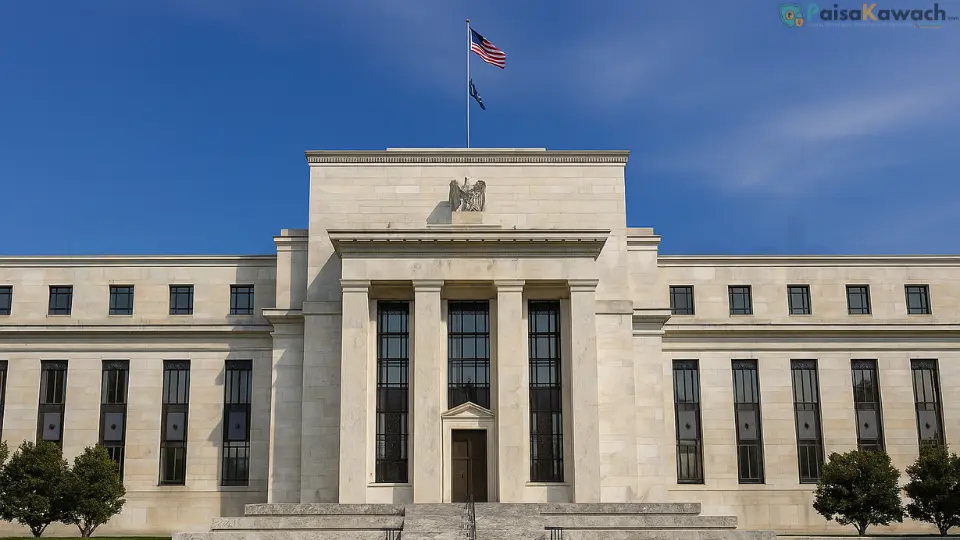
Fed Raises Interest Rates: 7 Ways the September Hike Affects Your Money

Fed Raises Interest Rates: 7 Ways the September Hike Affects Your Money
A quarter-point decision in Washington can quietly reprice a home loan in Bengaluru, a startup’s funding in Berlin, a credit-card balance in Toronto and a holiday budget in Singapore. Here is the chain reaction—and the decisions worth making before the headlines move on.
The 30-second version
The US Federal Reserve raised its benchmark interest-rate range to 3.75%–4.00% on 16 September 2026, its first increase since 2023. The reason is familiar but uncomfortable: inflation has proved stubborn, with energy costs adding pressure. The signal matters as much as the move. Policymakers indicated that another increase could still arrive this year, so markets must price not only today’s quarter point but also the possibility that money stays expensive.
This is not a command to sell everything, lock every loan or chase the highest-yielding account. It is a prompt to examine where interest rates touch your balance sheet. The Fed controls an overnight US policy rate, not the exact price of your mortgage, Indian fixed deposit, equity fund or gold coin. Yet its decision changes the reference point used across global finance. Banks, bond traders, currency desks, corporations and central banks respond—and those responses eventually reach household money.
- Debt becomes less forgiving: variable rates can reset upward, while new loans may remain costly.
- Cash becomes more productive: banks and money-market products have more room to pay savers, though they may not pass through the full increase.
- Asset prices face a tougher test: stocks, property, gold and crypto must compete with better yields on comparatively safer instruments.
Seven ways the September hike can reach your wallet
Think of interest rates as gravity for money. A small change does not make every asset fall, but it changes the effort required to stay aloft. These seven transmission channels matter more than the drama of the announcement itself.
1. Credit-card and revolving debt gets more dangerous
Credit-card rates are usually variable and already expensive. In the US, many cards are linked indirectly to the prime rate, which tends to move with the Fed. Elsewhere, the link is less mechanical, but global funding costs and local central-bank policy still influence lenders. An extra quarter point looks trivial beside a card charging 30% or more; the real hazard is treating the hike as only a quarter-point problem. When policy stays tight, refinancing offers shrink, minimum payments consume more income and carrying a balance for “just another month” becomes habitual.
2. Mortgages and home affordability feel the squeeze
The Fed does not set mortgage rates directly. Long-term government-bond yields, inflation expectations, bank competition and borrower risk all contribute. Still, a hawkish Fed can lift bond yields and keep mortgages expensive. Fixed-rate borrowers are insulated until they refinance or move. Floating-rate borrowers may see an earlier impact. Indian home loans linked to external benchmarks or repo-linked lending rates respond mainly to Reserve Bank of India conditions, but a stronger dollar, expensive imported energy and capital-flow pressure can complicate the RBI’s path.
Deep reader: why “my EMI did not change” can be misleading
A lender may preserve the monthly instalment and lengthen the repayment period. That feels painless today but may add many payments at the far end. Request an updated amortisation schedule. Compare three scenarios: accept the longer tenure, increase the EMI, or make a partial prepayment. Check prepayment rules and keep an emergency fund before using all spare cash against the loan.
3. Savings accounts and fixed deposits become worth shopping
Higher policy rates are bad news for borrowers but potentially useful for savers. The word “potentially” matters: banks often reprice loans faster than deposits. Do not reward inertia. Compare effective yield, lock-in period, early-withdrawal penalty, deposit insurance limits and tax treatment. In India, examine fixed deposits, sweep accounts, Treasury bills and liquid or money-market funds according to risk and liquidity needs. International readers can make the same comparison using insured high-yield savings, term deposits, Treasury bills or local equivalents.
4. Stocks must clear a higher hurdle
A rate hike changes the mathematics used to value future profits. When investors can earn more from government bonds or cash-like instruments, distant corporate earnings are discounted more heavily. That can be especially uncomfortable for richly valued growth companies whose best profits are expected years from now. Banks may benefit from wider lending margins, but only if credit quality holds and deposit costs do not rise faster. Energy companies may respond more to oil than to rates. Exporters may gain from a stronger dollar, while import-heavy businesses may face higher costs.
This is why “rates up, stocks down” is an incomplete slogan. The index reaction can hide large differences beneath it. A profitable company with modest debt, pricing power and steady cash flow is not economically identical to a speculative business that must repeatedly raise capital. The hike asks investors to distinguish rather than panic.
- Review concentration: one fashionable sector should not determine your financial future.
- Check corporate debt: refinancing at higher rates can squeeze free cash flow.
- Match risk to time: money needed within two or three years should not depend on a quick equity rebound.
5. The dollar strengthens—and crosses borders
Higher US yields can attract global capital and support the dollar. After the September decision, the dollar reached a seven-week high. That matters far outside America. A weaker home currency makes dollar-priced imports—oil, electronics, machinery, cloud services and some education costs—more expensive. It can also increase the local-currency burden of dollar debt. On the other side, exporters and households receiving dollar income may obtain more rupees, euros or pesos for each dollar.
For readers paid in dollars but spending locally, a currency gain is not free money. First reserve funds for taxes and future dollar expenses. For businesses, the lesson is similar: identify the currency of revenue, costs and debt rather than celebrating or fearing a single exchange-rate move.
6. Gold, bonds and crypto compete for the “safe” or “alternative” rupee
Gold climbed above $4,300 per ounce as markets digested the hike and geopolitical stress. That may seem odd because gold pays no interest and typically dislikes higher real yields. But assets respond to several forces at once: inflation anxiety, conflict, central-bank demand, currency moves, technical trading and portfolio insurance. A rising price does not prove that gold will keep rising; it proves that the market is balancing more than one story.
Bonds are more direct. Newly issued bonds can offer higher yields, while existing fixed-rate bonds may lose market value because their coupons look less attractive. Investors holding a high-quality bond to maturity may still receive the promised payments, subject to issuer risk. Bond-fund investors experience the price change sooner, with longer-duration funds generally more rate-sensitive.
Bitcoin held near $76,000 around the decision, but stability over a news cycle should not be confused with low risk. Crypto can behave like a liquidity-sensitive technology asset, an alternative monetary asset or a speculative vehicle depending on the period. If a 20%–30% drawdown would force you to sell, the position is too large regardless of the Fed.
7. Jobs, salaries and small businesses absorb the delayed impact
Interest-rate policy reaches the labour market with a lag. Businesses facing higher borrowing costs may postpone a new warehouse, reduce inventory, slow hiring or demand quicker payback from technology projects. Startups can find that investors prefer profitability over distant growth. Homebuilding and rate-sensitive industries may cool first. Yet the effect is not uniformly negative: savers earn more, banks receive different spreads, and companies with strong balance sheets can gain market share when weaker competitors retreat.
For workers, the practical risk is not that one hike causes a layoff tomorrow. It is that a series of expensive-money decisions gradually changes employer confidence. For founders, a ₹96 lakh ($100,000) expansion financed at a higher rate must generate more operating profit to justify itself. For freelancers serving US clients, dollar strength may improve rupee revenue while a slowing client budget threatens project volume. Both can be true.
- Employees: refresh your emergency reserve and document measurable work outcomes.
- Small businesses: stress-test cash flow with lower sales and a higher renewal rate.
- Founders: distinguish growth that creates cash from growth that continually consumes capital.
The India lens: imported inflation meets domestic reality
An Indian household does not borrow at the federal-funds rate, so why care? Because India is connected through oil, currency, capital and confidence.
First, India imports much of the energy it consumes, and crude oil is priced internationally in dollars. Oil remained above $100 a barrel around the Fed decision. A stronger dollar plus expensive crude can increase the rupee cost of energy, affecting transport, packaging, aviation, chemicals and household inflation. Second, higher US yields may encourage some global investors to reduce exposure to emerging markets. This can pressure the rupee and domestic financial conditions, although flows are never determined by one variable.
Third, the RBI makes its own decision based on Indian inflation, growth, liquidity and financial stability. It does not mechanically copy the Fed. Still, a weaker rupee and imported inflation can narrow its room to cut rates. Fourth, Indian companies with unhedged dollar debt may face a double burden: higher global financing costs and more rupees required to service each dollar.
| Your situation | Possible pressure | Useful response |
|---|---|---|
| Floating-rate home loan | EMI or tenure may rise if domestic benchmarks move | Request a revised amortisation schedule; compare prepayment with emergency liquidity |
| US tuition or travel ahead | A weaker rupee raises the local cost | Convert in planned tranches instead of betting on one date |
| Dollar salary or export income | Rupee receipts may increase, but demand can soften | Separate currency gain from recurring operating performance |
| Equity mutual-fund SIP | Near-term volatility may increase | Continue a suitable long-horizon plan; rebalance if allocation has drifted |
| Fixed-deposit saver | Existing deposit may lag newer rates | Compare after-tax yields and build a maturity ladder |
Your rate-hike action plan: tonight, this week, this month
Good financial decisions rarely require a heroic forecast. They require sequencing. Protect liquidity first, remove obviously expensive debt second, then improve the portfolio without turning a news alert into a personality test.
Tonight: see the map
Write down cash, debt rates, reset dates and the next twelve months of large expenses.
This week: fix leakage
Compare savings yields, automate high-cost debt payments and request loan schedules.
This month: rebalance
Restore your intended mix of cash, bonds, equities and alternatives—without headline chasing.
Interactive seven-point money check
Tick each item as you complete it. Your browser may remember the marks only for the current session, so copy any decisions into your regular financial notes.
A simple hierarchy for spare cash
If you have an extra ₹48,000 (about $500), the “best” use depends on what is fragile in your finances. A person carrying 36% card debt has a different answer from someone with no debt and an incomplete emergency fund. A homeowner with a low fixed rate has a different answer from a founder whose income changes monthly.
- Cover essential bills and avoid new penalties.
- Build a starter emergency buffer, then expand it according to job and family risk.
- Capture any genuine employer retirement match or equivalent benefit.
- Eliminate very high-interest debt.
- Compare moderate-rate debt repayment with after-tax, risk-adjusted investment returns.
- Invest for long-term goals through a diversified plan.
This order is intentionally unglamorous. It reduces the chance that a market prediction forces a bad real-life decision.
Three mistakes the rate-hike headline invites
The more useful question is not “What will markets do tomorrow?” It is “Which part of my plan breaks if rates stay higher for another year?” That question reveals debt exposure, thin cash buffers, currency mismatches and speculative positions without requiring clairvoyance.
Questions thoughtful readers are asking
Will the Fed raise rates again in 2026?
Possibly. The September projections and official tone left room for at least one more increase, while market probabilities can change rapidly with inflation, employment and energy data. Build a plan that survives either outcome instead of betting the household budget on one meeting.
Should I prepay my home loan now?
Compare the guaranteed interest saved with the after-tax return and risk of alternatives. Preserve emergency liquidity, check prepayment conditions and consider whether the loan rate is fixed or floating. For many borrowers, a partial prepayment plus a healthy cash reserve is more resilient than emptying the bank account.
Are fixed deposits better than equity funds after a hike?
They serve different jobs. A deposit offers a contractual return and lower volatility, subject to bank risk, insurance limits, lock-in and tax. Equity funds pursue long-term growth with material market risk. Compare them only after defining the goal and date.
Does a stronger dollar always hurt India?
No. It can raise import and dollar-debt costs, but it may help exporters and recipients of dollar income. The national effect depends on trade, capital flows, hedging, oil prices and domestic policy. The household effect depends on whether you earn, owe or spend dollars.
Is gold still a hedge when rates rise?
Gold may diversify a portfolio, but it is not a guaranteed short-term hedge against every inflation print or rate decision. Its price reflects real yields, currencies, risk sentiment, geopolitics, official-sector demand and positioning. Size it as a diversifier rather than treating a recent rally as certainty.
The bottom line
The September hike matters because it resets expectations. Borrowers had begun to imagine cheaper money; businesses had planned around easier financing; investors had assigned generous values to future growth. A return to tightening interrupts those assumptions. But the correct personal response is smaller and calmer than the market commentary suggests.
Know which debts can reprice. Make idle cash earn its keep without sacrificing access. Keep near-term spending out of volatile assets. Treat the dollar as a budget variable if your life crosses borders. Ask whether each investment has a role beyond “it went up recently.” Above all, increase the margin for error in your finances.
A resilient plan does not need the next Fed forecast to be right. It needs enough liquidity to avoid forced selling, enough diversification to survive an unfashionable asset, and enough discipline to reject expensive debt dressed up as convenience. The rate changed by a quarter point. Your advantage comes from looking at the whole balance sheet.
Sources and calculation note
- Federal Reserve decision and forward-rate expectations: Reuters, 17 September 2026.
- Dollar, Treasury-yield and global central-bank reaction: Reuters, 17 September 2026.
- Oil and gold market levels around the decision: Reuters, 17 September 2026.
Important: Rupee amounts appear first, followed by approximate US-dollar equivalents in parentheses. Examples use an illustrative conversion of ₹96 ≈ $1 for readability; they are not live foreign-exchange quotes. Rates, prices and product rules change. This article is educational and does not constitute personalised investment, tax, credit or legal advice.
Keep Reading: More Investing Basics Insights

Comments
No comments yet. Be the first to comment!