AI Video, Real Missiles: Untangling the Weekend Iran Escalation That Actually Matters
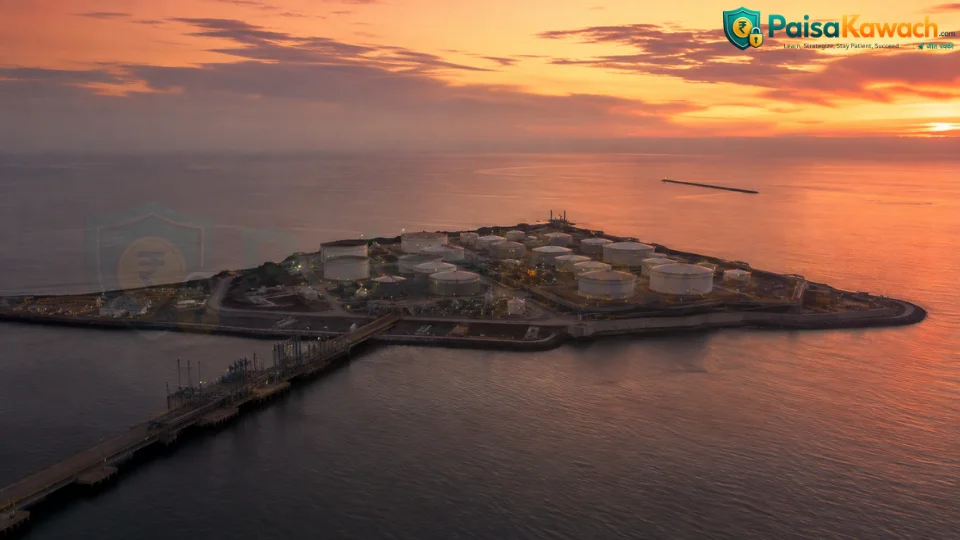
One Truth Social Post. Two Very Different Realities.
Sunday night, the internet watched Iran's biggest oil hub supposedly get "blown to smithereens." It didn't happen. But something else did — and that's the part actually moving oil prices today.
Weekends rarely produce news this strange. A sitting US president posted a dramatic, cinematic video of an oil facility exploding, captioned like a movie trailer. Within hours, that specific claim was confirmed false by his own government. And yet, buried underneath the fake clip, something genuinely serious had actually happened — real strikes, real retaliation, and a conflict that had gone quiet for weeks suddenly waking back up. Untangling which part of this weekend was theatre and which part was substance is worth doing carefully, because only one of them is actually moving oil prices, currency markets, and inflation expectations today.
🎬 Fake
Trump posted an AI-generated clip showing explosions at Kharg Island — Iran's terminal handling ~90% of its oil exports — captioned "blown to smithereens!!!"
💥 Real
US forces genuinely struck two Iranian rocket launchers on Larak Island, ~410 miles from Kharg, after CENTCOM flagged an imminent sea-mine threat to the Strait of Hormuz.
An Iranian energy official called the video "laughable," saying Kharg Island operations continued as normal — tankers still loading, storage tanks untouched, nothing resembling the footage circulating online. That dismissal matters, because it wasn't just a denial from a hostile government trying to save face. Independent reporting, including from Reuters, found no evidence Kharg had been struck at all, and a US official confirmed on the record that the military had not targeted the island. In other words, this wasn't a case of competing claims where the truth sits somewhere in the middle. One side made a specific, falsifiable claim, and it was checked and found false within hours.
So What Actually Happened This Weekend?
Strip away the video entirely, and a genuinely consequential sequence of events remains — one that deserves more attention than it's getting, precisely because it got overshadowed by a fake clip designed to grab headlines.
US Central Command says Iranian Revolutionary Guard forces were preparing rockets carrying sea mines for launch into the Strait of Hormuz — a direct threat to commercial shipping through one of the world's most critical oil corridors.
American forces hit two rocket launchers, described by CENTCOM as a "limited, precise action" specifically framed as protecting civilian mariners and international commerce rather than a broader offensive move.
Iran's Revolutionary Guards struck US bases in Jordan in direct response, and explicitly warned of "increasingly forceful counter-attacks" going forward — language that signals intent to escalate rather than de-escalate.
An AI-generated clip goes up on Truth Social hours after the real strikes, dramatically overstating what had actually happened on the ground and briefly dominating headlines over the substantive military developments.
Crude climbs nearly 2%, not because of the video, but because hostilities have genuinely resumed for the first time since late July — the first real exchange in this conflict in over a month.
Three Things That Actually Matter Here
Hostilities Are Officially Back
This is the first real exchange since late July — meaning the conflict is now stretching into its sixth month with no clean resolution in sight. A quiet stretch just ended, and markets had genuinely started pricing in the possibility of sustained calm.
Iran Is Promising More, Not Less
Explicitly warning of "increasingly forceful counter-attacks" is a signal Iran doesn't see this as a one-off exchange to be quietly absorbed. That kind of public escalation language raises genuine odds this continues rather than cools off again within days.
Oil Is Pricing the Real Story, Not the Fake One
Crude's near-2% jump reflects the actual Larak Island strike and Jordan retaliation. Markets saw straight through the AI video within hours and reacted only to the confirmed substance underneath it, not the dramatized version.
Why the Fake Video Detail Isn't Just a Sideshow
It would be easy to treat the AI-generated video as a strange, forgettable footnote — a president's social media post that got fact-checked within hours and moved on. But it's worth noting what it reveals about the information environment surrounding this conflict specifically: genuine military developments, like the Larak Island strike, the Jordan retaliation, and Iran's explicit escalation warning, are now competing directly with dramatized, unverified content for public attention, sometimes from the most authoritative possible source. For anyone trying to actually track this conflict's real trajectory, including how it affects oil prices, shipping risk, and inflation, the discipline of separating confirmed military action from dramatized social media content has become a genuinely necessary skill, not an optional one.
This matters practically, not just as a media-literacy point. If markets, or ordinary people trying to understand global risk, had reacted to the fake video's scale of destruction rather than the real, more limited strikes that actually occurred, the resulting price moves and panic would have been wildly disproportionate to what genuinely happened. The fact that oil rose a measured, roughly 2% — reflecting real, bounded military action — rather than spiking dramatically as it might have on news of an actual 90%-of-exports oil hub being destroyed, is itself evidence that serious market participants correctly filtered fiction from fact within hours.
The Bigger Pattern This Fits Into
This isn't the first time this specific conflict has produced a gap between dramatic rhetoric and more measured reality. Over recent months, this conflict has repeatedly oscillated between periods of relative calm and sudden re-escalation, often following exactly this pattern: a limited, targeted military action, followed by retaliation, followed by public statements from various sides that are considerably more dramatic than the underlying events themselves. Understanding this pattern is useful precisely because it helps calibrate how seriously to weigh future headlines from this conflict — not by assuming every claim is exaggerated, but by developing the habit of checking whether a dramatic claim has actually been independently confirmed before reacting to it.
What This Means Heading Into Today
Oil remains above ₹7,650 ($90) a barrel, and markets are treating this weekend's real developments, not the fake video, as confirmation that the underlying conflict remains genuinely unresolved. For anyone tracking how this connects to household costs, fuel prices, and inflation-sensitive investments, the useful signal from this weekend isn't the dramatic clip. It's the quieter, more substantive fact that a six-month conflict just resumed active hostilities, with the other side explicitly promising more to come — a genuinely important data point that got briefly buried under an AI-generated explosion video before the real story reasserted itself.
Keep Reading: More Insights You Might Like
Comments
No comments yet. Be the first to comment!