Global Markets on Edge: US-Iran Conflict Escalates as Fed Signals Rate Hike – Monday, August 31, 2026

Monday, August 31, 2026, has emerged as a day of heightened global market volatility, driven by two powerful and interconnected forces: a sharp military escalation between the United States and Iran near the strategic Strait of Hormuz, and hawkish signals from the US Federal Reserve Chair that have dramatically increased the probability of a September interest rate hike. The combination of geopolitical risk and monetary policy uncertainty has sent shockwaves through global equity, commodity, and currency markets.
This article provides a comprehensive analysis of the day's major business and financial news, breaking down the key events, their immediate impact on various asset classes, and what investors can expect moving forward. From crude oil reclaiming the $90 mark to the Indian benchmark indices crashing and gold prices hitting near two-week lows, here is everything you need to know about the major events shaping the global economy today.
Geopolitical Crisis: US Strikes Iranian Targets in the Strait of Hormuz
In a significant escalation of the ongoing conflict, the United States military struck Iranian rocket launchers on Larak Island in the Strait of Hormuz on Sunday evening. According to US Central Command, the Iranian launchers were preparing to fire rockets carrying sea mines into the strategic waterway, prompting the American strike.
The attack marks the first known US military action inside Iran since late July, breaking a month-long lull in direct confrontation. It comes shortly after the US military completed an operation to clear mines from the main shipping lane through the Strait of Hormuz.
Iran Retaliates, Vows Revenge
Iran has swiftly retaliated, with the Islamic Revolutionary Guard Corps (IRGC) launching ballistic missiles at two US bases in Jordan—King Hussein and Al Azraq—according to Iranian state media. The attack resulted in casualties, with Iranian state broadcaster IRIB reporting that the US strikes killed and wounded "several Iranian personnel and civilians."
- IRGC spokesman Gen. Hossein Mohebi condemned the US attack as a "fatal mistake," warning that the enemy will face consequences both militarily and economically.
- The strike underscores Iran's continued leverage through its ability to threaten maritime traffic in the Strait of Hormuz, a chokepoint for 20% of the world's oil supply.
- Pentagon concerns are growing over the prolonged conflict, with reports indicating that sustained military commitments could strain US readiness in other global theatres, with some deployments potentially extending into 2027.
Oil Markets: Brent Crude Surges Past $90 on Supply Disruption Fears
The immediate impact of the military escalation has been a sharp spike in global crude oil prices. Brent crude, the international benchmark, surged by over 2.3% to trade above $90 per barrel, while US West Texas Intermediate (WTI) crude climbed past $85 per barrel.
"The timing could hardly be worse for markets," noted Stephen Innes, managing partner at SPI Asset Management. "Oil does not need to return to crisis levels to matter here. It merely needs to remain expensive enough to prevent inflation from behaving as neatly as the Fed would like."
Expert Price Forecasts and Risk Premium
Analysts warn that the risk premium is now firmly embedded in oil prices, with projections of further spikes if the disruption continues.
- Goldman Sachs has separately warned that Brent could climb to $120 a barrel if shipping disruptions through the Strait of Hormuz persist.
- JPMorgan estimates that each additional month of disruption could add around $7 to $8 a barrel to Brent prices. If the disruption continues for three months, the bank expects average monthly Brent prices to reach around $114 a barrel.
- The ANZ Research analysts noted, "President Trump signaled he won't lift a naval blockade on Iranian ports, a key demand from the Islamic Republic. He's also not interested in returning to the terms of the June ceasefire."
Monetary Policy: Fed Chair Warsh's Hawkish Jackson Hole Speech
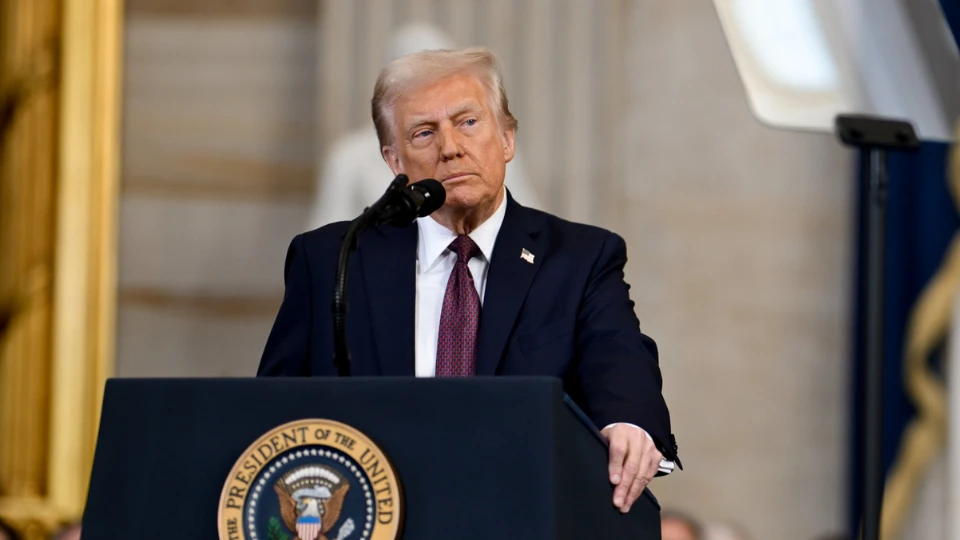
Compounding the geopolitical anxiety is a major shift in monetary policy expectations. Federal Reserve Chair Kevin Warsh delivered a surprisingly hawkish speech at the Jackson Hole Economic Policy Symposium on Friday, signalling that the central bank is prepared to raise interest rates to combat persistent inflation.
"Underlying inflation has not meaningfully improved," Warsh stated, adding that the Fed must be confident that inflation is clearly moving towards its 2% target, otherwise, "we have work to do." He also indicated a shift away from providing "forward guidance," suggesting a "quieter and more measured Fed" going forward.
Market Reprices for a September Rate Hike
Markets have aggressively repriced expectations in response to Warsh's comments. Before his speech, the probability of a 25-basis-point rate hike at the September 15-16 FOMC meeting was around 36%. It has now surged to approximately 57-61%.
- Eric Rosengren, former president of the Boston Fed, commented, "All the indicators he gave were in one direction, which is inflation's well above the inflation target. I would vote to raise rates at the September 16th meeting."
- The hawkish pivot has pushed US Treasury yields higher, with the 10-year yield climbing toward 4.7%, and triggered a broad rally in the US dollar.
- Donald Kohn, former Fed Vice Chairman, noted that Warsh's speech reversed the presumption of a hold to a presumption of a rate hike unless data suggests otherwise.
Equity Markets: Sensex Crashes 500 Points, Global Sell-off Intensifies
Global equity markets are trading sharply lower as investors grapple with the dual headwinds of rising oil prices and the prospect of tighter US monetary policy. In India, the Sensex crashed over 500 points, falling 0.64%, while the broader Nifty 50 slipped below the crucial 24,000 mark, declining 0.73% to 23,997.95.
The impact was broad-based, with all Nifty sectoral indices trading in the red. The broader Nifty Smallcap 100 and Nifty Midcap 100 indices slipped 1% each, reflecting widespread risk aversion. Foreign institutional investors (FIIs) added to the selling pressure, having offloaded Indian equities worth Rs 5,039.80 crore on Friday.
Global Cues and Investor Sentiment
Weak global cues further dampened sentiment. Asian markets traded lower, with Japan's Nikkei and South Korea's Kospi both down more than 1% in early trade. Wall Street futures were also down, indicating a weak opening for US equity markets.
- The India VIX, a gauge of market volatility and investor fear, rose more than 5% to 11.26, indicating increased uncertainty and signalling potentially greater swings in equity prices.
- "This week's trading begins with the market facing a few headwinds," said Ponmudi R, CEO of Enrich Money. "From the global equity market perspective, the sentiments have turned slightly negative following the Fed chief Kevin Warsh's statement."
- V K Vijayakumar, Chief Investment Strategist at Geojit Investments, noted, "The market has taken this as an indication of a rate hike in the FOMC meeting... Another headwind is the renewed escalation of tensions between the US and Iran pushing the Brent crude above USD 90."
Commodities: Gold Plunges on Fed's Hawkish Stance
While geopolitical tensions typically boost safe-haven demand for gold, the hawkish Fed signals and a stronger US dollar have exerted far stronger downward pressure. Gold prices plunged over 3% on Friday and continued their decline on Monday, hitting a near two-week low.
On the domestic front, MCX gold futures for the October contract opened Monday's session 1.09% lower at Rs 1,54,239 per 10 grams, while silver also declined. COMEX gold futures fell 1.23% to $4,474.30 per ounce. Analysts noted that higher interest rate expectations typically weigh on gold, which does not yield interest.
Short-term Outlook Remains Cautious
Market experts advise caution on gold in the near term, though underlying support remains.
- "The current environment is unfavorable for precious metals in the short term because higher US interest-rate expectations, elevated Treasury yields and a stronger dollar are creating headwinds," explained Nirpendra Yadav, Sr. analyst at Bonanza Portfolio.
- Despite the sharp correction, analysts believe gold's broader support from the "debasement trade" remains intact, with investors continuing to monitor concerns over US fiscal deficits, rising government debt, and geopolitical tensions.
- According to Yadav, gold finds support at Rs 1,53,500 per 10 grams, while resistance is placed at Rs 1,61,000. As long as prices remain below Rs 1,61,000, the short-term outlook remains cautious to bearish.
Currency Markets: Rupee Weakens on Oil and Fed Concerns
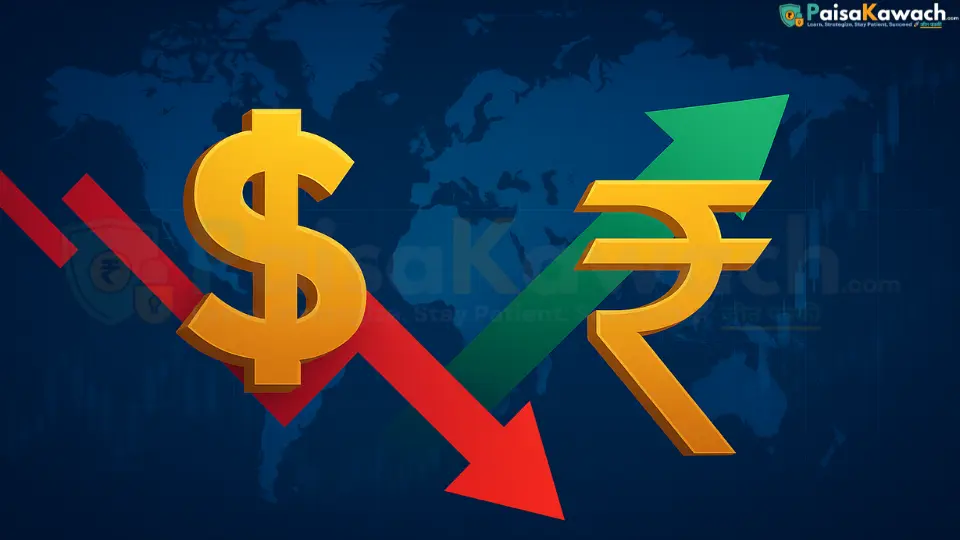
Currency markets reflected the broader risk-off sentiment. The Indian rupee fell 13 paise to trade at 95.56 per US dollar, pressured by rising crude oil prices and geopolitical tensions. The dollar strengthened broadly on expectations of a Fed rate hike, putting additional pressure on emerging market currencies.
The rupee is likely to remain volatile, with its trajectory depending on the interplay between oil prices, dollar strength, and RBI intervention. A higher crude import bill and sustained FII outflows could keep the rupee under pressure in the coming sessions.
Corporate Moves and Key Events to Watch
Beyond the macroeconomic turmoil, several significant corporate developments are unfolding that deserve investor attention.
HDFC Bank CEO Succession: Sashidhar Jagdishan to Retire
HDFC Bank CEO Sashidhar Jagdishan has decided not to seek reappointment and will retire on October 26, 2026. The board is fast-tracking the appointment of a successor. Reports suggest former SBI Chairman Dinesh Khara is being considered for the role, a development that could significantly impact the country's largest private sector lender.
Jio Platforms IPO Progress
Jio Platforms, a subsidiary of Reliance Industries, has received the crucial observation letter from SEBI on its draft red herring prospectus (DRHP), a key step toward its proposed IPO. This marks a significant milestone in what is expected to be one of the largest IPOs in Indian history.
MSCI Index Rejig Takes Effect
Investors are bracing for potential volatility from the August MSCI index rejig, which will be implemented at Monday's session close. Adani Energy, Lenskart, Groww, and Laurus Labs were added to the MSCI Standard Index, while Balkrishna Industries, SBI Cards, and Astral were removed. Traders are concerned about volatility as the index change comes weeks after a new share closing system was launched.
Corporate Contracts and Fundraising
In corporate deals, Max Estates entered a share-swap deal to acquire nine landholding companies with an 84.71-acre land parcel in West Delhi, expected to unlock a gross development value (GDV) of ₹10,000-12,000 crore. Sterlite Technologies secured a long-term supply contract worth $288 million with a leading hyperscaler for high-density optical fibre cable products, while Piramal Finance raised ₹2,100 crore via a QIP with participation from major investors including BlackRock, ICICI Prudential, and Goldman Sachs.
Key Takeaways and Market Outlook
As Monday, August 31, 2026, draws to a close, the global financial landscape appears distinctly more uncertain than at the start of the month. The twin shocks of a military escalation in the Middle East and a hawkish pivot from the Federal Reserve have created a volatile environment where traditional safe havens are behaving unpredictably, and risk assets are under significant pressure.
Investors should brace for continued volatility in the coming days. The path forward will be shaped by several critical factors: the trajectory of US-Iran tensions and potential for further retaliation or ceasefire; the upcoming US labor market reports, including the critical nonfarm payrolls data on Friday, which could solidify the case for a Fed rate hike; and how central banks in emerging markets like India respond to the strengthening dollar and rising oil import bills.
For now, the clear winners are oil and the US dollar, while equities and gold find themselves caught in the crossfire of geopolitical risk and monetary tightening.
Keep Reading: More Insights You Might Like
 Warsh Went Hawkish, Yields Split, Trump Disagreed, Stocks Rose Anyway — Four Puzzles From One Friday, Solved
Next →
Warsh Went Hawkish, Yields Split, Trump Disagreed, Stocks Rose Anyway — Four Puzzles From One Friday, Solved
Next →
 AI Video, Real Missiles: Untangling the Weekend Iran Escalation That Actually Matters
Comments
No comments yet. Be the first to comment!