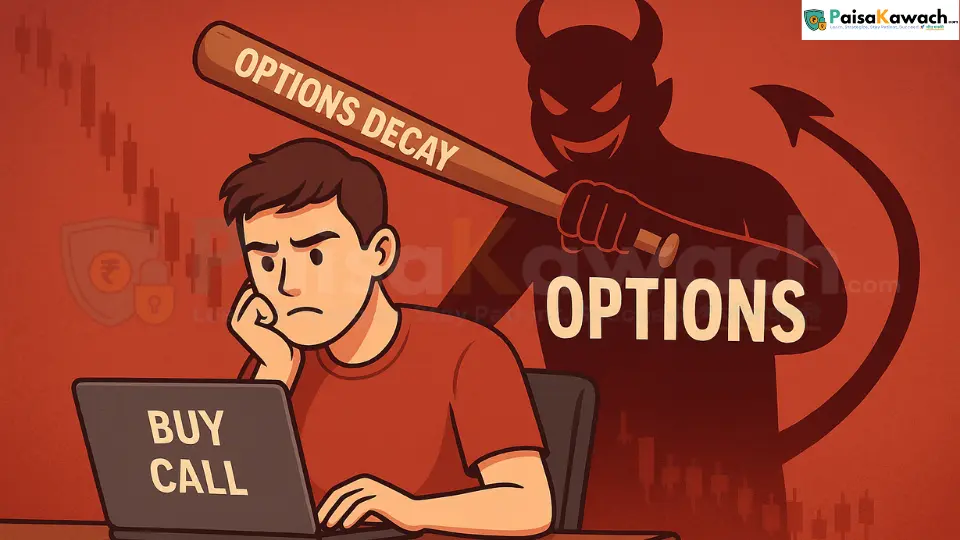
Your Stop-Loss Order Gets Auto-Cancelled Under SEBI's New CAS Rule, Here's What Traders Are Missing

If you place stop-loss orders on stocks like Reliance, HDFC Bank, Infosys, or TCS, and you've been trading through the last few weeks of August 2026 without noticing anything different, there's a good chance you've had a stop-loss silently disappear on you without realizing why. It's not a glitch. It's SEBI's new Closing Auction Session rule working exactly as designed, and most traders genuinely don't know about it yet.

The Rule Most Traders Are Missing
Stop-Loss Orders Are Auto-Cancelled, Not Carried Forward
Effective August 3, 2026, for all F&O-eligible stocks
What Actually Changed on August 3, 2026
SEBI introduced the Closing Auction Session, or CAS, replacing the old method of calculating a stock's closing price. Previously, the closing price was simply the volume-weighted average price of trades during the last 30 minutes of the day. Now, for stocks that have active Futures & Options contracts, continuous trading stops at 3:15 PM, and a dedicated 15-minute auction takes over to determine one single closing price through matched buy and sell orders.
That structural shift, moving from continuous trading to a batch auction, is exactly why stop-loss orders behave differently now, and it's the part almost nobody explained clearly when this rule rolled out.
Only stocks with active Futures & Options contracts are affected in this initial phase, think Reliance, HDFC Bank, Infosys, TCS, and similar large, actively-traded names. Stocks without F&O contracts continue trading normally until 3:30 PM using the old VWAP-based closing price method, completely unaffected by this change for now.
Why Stop-Loss Orders Specifically Get Cancelled
A stop-loss order works by sitting inactive until the market price hits your trigger, at which point it converts into a live order and executes. That mechanism depends entirely on continuous trading, prices constantly moving, so the system can constantly check whether your trigger has been hit.
The Closing Auction Session doesn't work that way. It's a batch process: all eligible orders get collected first, then matched together at one single equilibrium price. There's no continuous price movement during this window for a stop-loss trigger to react to. Because of this fundamental mismatch, stop-loss orders on CAS-eligible stocks are automatically cancelled as trading transitions from continuous mode into the auction, rather than being carried forward into a system that has no mechanism to process them.
This isn't a bug or an oversight. It's a structural consequence of how auction-based pricing works. Stop-loss orders need continuous price movement to trigger; the closing auction, by design, doesn't have that.
What This Actually Looks Like in Practice
Tap through a real scenario to see exactly where traders are getting caught out.
tap to reveal
You're holding Reliance shares with a stop-loss set at ₹2,850. The stock is trading normally, your stop-loss sits active, monitoring price movement continuously, exactly as expected.
tap to reveal
Continuous trading stops. Your stop-loss order at ₹2,850 gets automatically cancelled, not paused, not carried forward. If the stock drops sharply during the CAS auction window, that stop-loss is no longer there to protect you.
tap to reveal
The stock's closing price gets determined through auction matching, with no active stop-loss protecting your position. Any adverse move here happens fully unprotected, unless you've manually placed a regular limit order instead.
Why This Matters More Than It Sounds
The danger here isn't theoretical. Stop-losses exist specifically to protect against sharp, unexpected moves without requiring you to watch the screen every second. If that protection silently disappears at 3:15 PM every single day, and you don't know it, you're carrying real, unmanaged risk during exactly the window when institutional order flow and end-of-day positioning can create some of the sharpest price swings.
?? Trader Who Knows About CAS
Manually re-checks or re-places protective orders before 3:15 PM, or closes the position ahead of the auction window if protection matters that day.
🚨 Trader Who Doesn't Know
Assumes the stop-loss is still active, gets caught fully exposed during the auction window with no idea the order silently vanished 15 minutes before market close.
What You Can Actually Do About It
This isn't something you can turn off or opt out of, it's a structural exchange-level rule. But a few adjustments to your trading routine reduce the risk significantly.
This rule applies every single trading day, not just occasionally. If you regularly hold overnight or intraday positions in F&O-eligible large-cap stocks, this is now a permanent part of your daily risk checklist, not a one-time adjustment.
The Bigger Shift Behind This Rule
SEBI's intent with CAS isn't to inconvenience traders, it's aimed at improving price discovery and reducing manipulation risk around the official closing price, which matters for index calculations, derivatives settlement, and mutual fund NAV pricing. The stop-loss cancellation is a side effect of that structural redesign, not the goal itself. But side effect or not, it's a real, daily risk that every F&O trader now needs to actively manage rather than assume away.
Keep Reading: More Personal Finance Insights
 Why Grocery 'Shrinkflation' Is Easier to Hide in Some Products Than Others, and How to Actually Spot It
Next →
Why Grocery 'Shrinkflation' Is Easier to Hide in Some Products Than Others, and How to Actually Spot It
Next →
 NRIs Sending Money to Parents in India Could Trigger an Income Tax Notice Over One Common Mistake, Here's What It Is
Comments
No comments yet. Be the first to comment!