Why Quick Money Dreams Leave You Broke: Breaking Free from the Cycle of Regret
Introduction: The Seduction of Quick Money
In India, it’s common to see a 23-year-old showing off a luxury car bought with trading profits, or someone on Instagram flaunting “crypto gains” worth lakhs overnight. In the US, TikTok influencers promise $10,000 a week from dropshipping or meme stocks. Across the world, young people are being seduced by the same narrative: wealth should be instant.
But the truth? For every overnight success, there are thousands who lose money and suffer in silence. Chasing shortcuts rarely leads to real freedom—it leads to regret. Whether you lost ₹2 lakh (≈ $2,400) in options trading or $15,000 in crypto, the story is the same: quick money leaves deeper scars than empty wallets.
Why Quick Money Appeals to Gen Z and Millennials
Our generation grew up in an era of instant gratification. Order food? Delivered in 20 minutes. Post a video? Viral in hours. The same mindset spills into money. “Why wait 20 years for compounding when I can flip it in 20 days?”
The Psychology Behind Quick Money
- FOMO (Fear of Missing Out): In India, this might be friends flashing Zerodha trading profits; in the US, it’s Reddit posts of meme stock gains.
- Dopamine Rush: A ₹5,000 (≈ $60) profit in 5 minutes feels addictive, even if losses of ₹50,000 (≈ $600) follow soon after.
- Illusion of Control: Easy-to-use apps make people think wealth is “just one trade away.”
Common Quick Money Traps
1. High-Risk Stock & Options Trading
In India, Futures & Options (F&O) trading has exploded. Young traders put in ₹1 lakh (≈ $1,200) and dream of doubling it in a week. But SEBI data shows 9 out of 10 retail traders lose money. In the US, Robinhood made options trading “fun”—but many young investors ended up in debt instead of wealth.
2. Crypto Hype and Meme Coins
In 2021–22, thousands in India rushed into meme coins like Shiba Inu, hoping ₹10,000 (≈ $120) would become ₹10 lakh (≈ $12,000). Globally, investors piled into NFTs and coins with no fundamentals. Some made millions, but most entered late and lost nearly everything when the market crashed.
3. MLM and Ponzi Schemes
From chit funds in India to Ponzi scams like “BitConnect” globally, people are promised passive income with zero effort. Families have lost lakhs (tens of thousands of dollars) by trusting friends and relatives who introduced them into these traps.
4. Influencer Hustles & Online Courses
Instagram gurus in India promise “₹50,000 per week from trading signals.” In the US, TikTokers sell $999 courses on dropshipping or forex. The result? The influencer makes money, not the buyer.
The Cycle of Regret
Quick money isn’t only about losing cash—it creates an emotional cycle that drains confidence worldwide.
- Excitement: A 22-year-old in Delhi turns ₹20,000 (≈ $240) into ₹25,000 overnight and feels unstoppable.
- Loss: Within a week, that grows into a ₹1 lakh (≈ $1,200) loss. A US student sees their $2,000 paycheck vanish in a meme stock crash.
- Shame: Losses are hidden; people feel stupid for falling for “easy money.”
- Desperation: The urge to recover losses leads to even riskier bets.
- Regret: Years later, they realize not only money, but time was lost.
The Real Cost of Chasing Shortcuts
1. Financial Damage
In India, many max out credit cards for trading “tips.” In the US, payday loans and margin calls trap young investors in cycles of debt. Losing ₹5 lakh (≈ $6,000) early in life delays real wealth-building by years.
2. Lost Time
Two years wasted chasing intraday profits could have been two years compounding SIPs in an index fund. A $200 monthly SIP (≈ ₹16,000) for 10 years grows more than chasing risky flips.
3. Mental Health Struggles
Anxiety, sleepless nights, even depression follow financial ruin. A young trader in Mumbai may feel the same emptiness as a 25-year-old in New York who blew up savings in crypto.
4. Broken Relationships
Trust issues arise when family members pull others into schemes. Globally, “quick money failures” often destroy friendships and marriages.
Breaking Free from the Cycle
Step 1: Accept Past Mistakes
Whether you lost ₹2 lakh in India or $10,000 in the US, regret won’t fix it. Acceptance clears space for a new start.
Step 2: Learn Patience
Compounding is slow but unstoppable. ₹10,000/month (≈ $120) invested for 20 years grows into crores (hundreds of thousands of dollars). Warren Buffett didn’t get rich by chasing “10x stocks”—he stayed invested.
Step 3: Build a Real Investment Plan
- In India: SIPs in index/mutual funds, PPF, NPS.
- Globally: ETFs, 401(k), Roth IRA, diversified funds.
Step 4: Create Real Income Streams
Instead of gambling on quick schemes, build side hustles. In India, freelancing, digital content, or reselling goods can add steady income. In the US, consulting, e-commerce, or gig work can create additional security.
Step 5: Educate Yourself
Learn before you leap. In India, platforms like Zerodha Varsity teach investing basics for free. Globally, there are free finance courses from top universities. Knowledge shields against scams.
Stories That Teach
Indian Example: The F&O Loss
Arjun, 25, put ₹3 lakh (≈ $3,600) into F&O trades after seeing influencers on YouTube. Within six months, he lost it all. Instead of quitting, he restarted with a ₹5,000/month SIP (≈ $60). Today, three years later, he has regained stability and confidence.
Global Example: The Crypto Crash
Emily, 24, in California invested $15,000 (≈ ₹12.5 lakh) in meme coins during the 2021 hype. By 2022, she had less than $2,000 left. Now, she invests in ETFs and side hustles as a freelancer, slowly rebuilding her finances.
The New Wealth Mindset
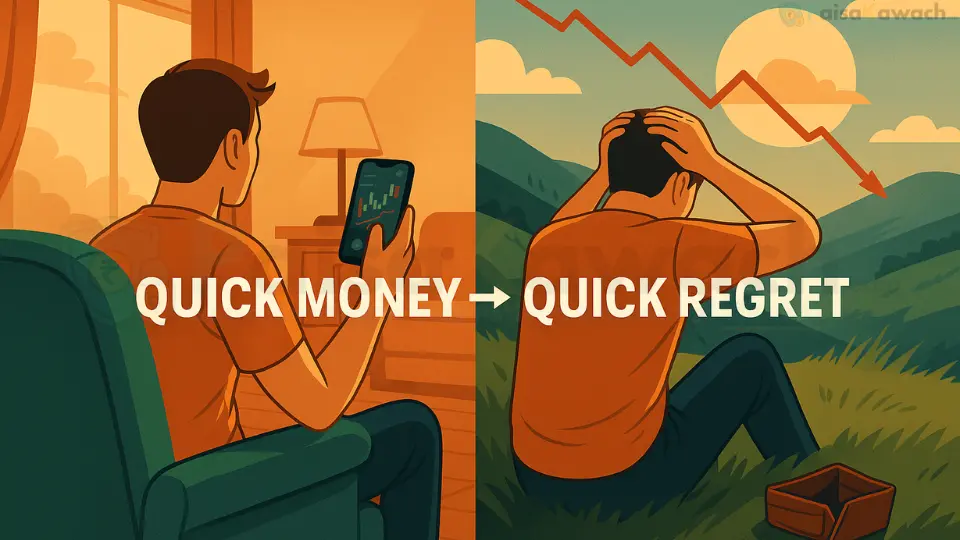
The next generation must learn: quick money = quick regret. Real wealth is boring at first but magical in the long run. Gen Z in India, the US, and worldwide still has time to build fortunes—but only by shifting from shortcuts to strategy.
Conclusion: Choosing Freedom Over Regret
If you’ve fallen into the quick money trap, you’re not alone. From Delhi to New York, millions have been there. But your future isn’t decided by your past mistakes. Break the cycle, start slow, and build the wealth that lasts. Patience is the new currency of freedom.
Keep Reading: More Personal Finance Insights
 Mutual Funds vs Direct Stocks: A Complete Guide to Smarter Wealth Building in 2025
Next →
Mutual Funds vs Direct Stocks: A Complete Guide to Smarter Wealth Building in 2025
Next →
 Why Every Non-Business Person Should Know About Dividends: A Simple Guide to Growing Wealth
Comments
No comments yet. Be the first to comment!