Changing Your iPhone Every Year: Actual Logic or Just Expensive Clownery? Here's the Honest Math
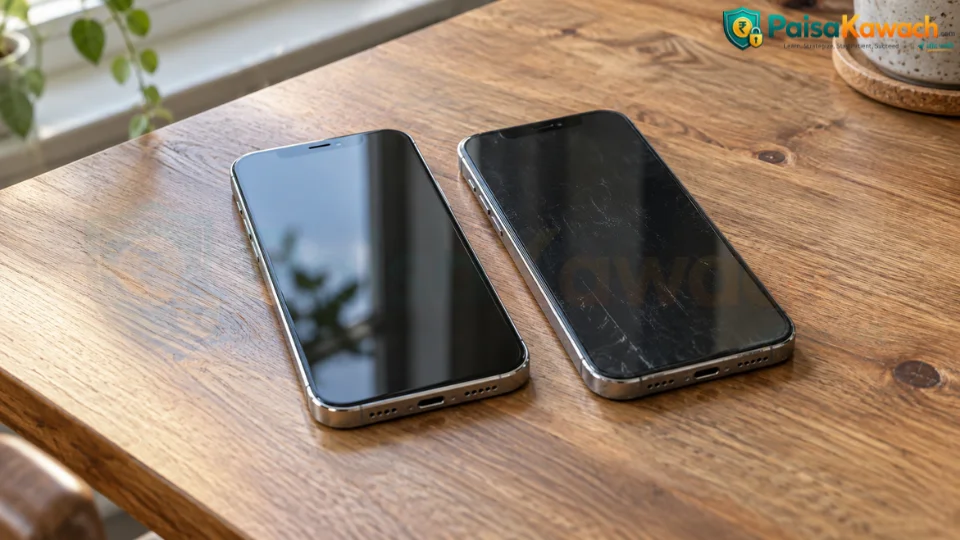
Let's just say it plainly: upgrading your iPhone every single year, when the old one still works perfectly fine, isn't really a technology decision. It's an emotional one wearing a technology costume. And the math on it is a lot uglier than the "it's basically free with trade-in" story makes it feel.
This isn't a lecture about needing your phone. It's just the actual numbers, laid out honestly, so you can decide for yourself whether the yearly upgrade is logic or clownery.

The Question We're Actually Answering
Does the Yearly Upgrade Math Ever Make Sense?
Short answer: almost never. Long answer, with real numbers, below.
The "Basically Free" Illusion, Debunked
The trade-in program is the entire reason this habit feels rational. "I just pay the difference" sounds like a small, harmless top-up. It isn't. It's a recurring, compounding cost dressed up as a discount.
A phone loses the biggest chunk of its resale value in its first 12 months, easily 30-40%. Trading in every single year means you're always selling at the steepest point of the depreciation curve, over and over, forever, instead of letting that curve flatten out over 2-3 years the way it naturally does.
Tap Through the Real 10-Year Math
Same total spend on phones. Two completely different outcomes, just based on how often you upgrade.
🔁 Yearly Upgrader
₹5,80,000 ($6,960)Upgrading every year for 10 years, net cost after trade-in each time, on a phone that costs roughly ₹1,10,000 ($1,320) new with a typical ₹52,000-58,000 ($625-700) top-up each cycle
⏳ 3-Year Upgrader
₹2,90,000 ($3,480)Same starting phone price, upgrading roughly every 3 years, letting resale value stabilize before trading in, over the same 10-year window
That's roughly ₹2,90,000 ($3,480) difference over a decade, money that could have gone toward an emergency fund, an investment, or literally anything that isn't a marginally better camera on a device you already own a perfectly working version of.
Tap Each Card: Logic, FOMO, or Somewhere In Between
Not every yearly upgrader is the same. Be honest with yourself, which one are you?
tap to reveal
Camera and processing improvements genuinely affect income, review videos, photography work. This is the closest thing to actual logic in the yearly-upgrade world, a legitimate business tool cost, not vanity.
tap to reveal
Says it's for productivity or work, but genuinely can't name one specific task last year's model couldn't handle. This is FOMO with a business-casual outfit on.
tap to reveal
Wants to be seen with the new one, on launch day, before anyone else in the group. No functional justification offered, none needed. This is the clownery tier, expensive, honest about it, and completely optional.
What "Logic" Would Actually Look Like
If the upgrade decision were purely rational, stripped of ego and social pressure, here's roughly what would trigger it.
Notice none of these are "the new one came out" or "it looks better in photos." Every one of these takes 3+ years to actually show up on a real phone. If you're upgrading every 12 months, you are, by definition, upgrading before any of these logic-based triggers have occurred.
So, Logic or Clownery? The Honest Verdict
For the vast majority of people, yearly upgrading is clownery, expensive, socially-driven, and mathematically indefensible clownery. That's not an insult, it's just what the numbers say when you strip away the trade-in illusion. For a small minority, creators whose income directly depends on camera and chip improvements, there's a legitimate business case buried in there.
Would you still upgrade this year if literally nobody else, not one friend, not one follower, would ever know or see it? If the answer is no, you already know which category you're in, and that's fine, just don't call it logic anymore. Call it what it is: you like new things, and you can afford the ₹2,90,000 ($3,480) premium over a decade to feel that way every year. That's a valid choice. It's just not a rational one.
The Bottom Line
Nobody's saying don't buy the new iPhone. Buy it if you genuinely want it and can afford the real, honest cost, not the trade-in-illusion cost. Just stop calling it a smart financial decision when it's actually a fun, optional, socially-driven purchase. There's a real difference between "I can afford this and I want it" and "this makes financial sense," and mixing the two up is exactly how ₹2,90,000 ($3,480) quietly disappears over a decade without anyone noticing where it went.
Keep Reading: More Gen Z Finance Insights

Comments
No comments yet. Be the first to comment!