Your Bank Knows Your Financial Habits Better Than You Do: What Transaction Data Reveals
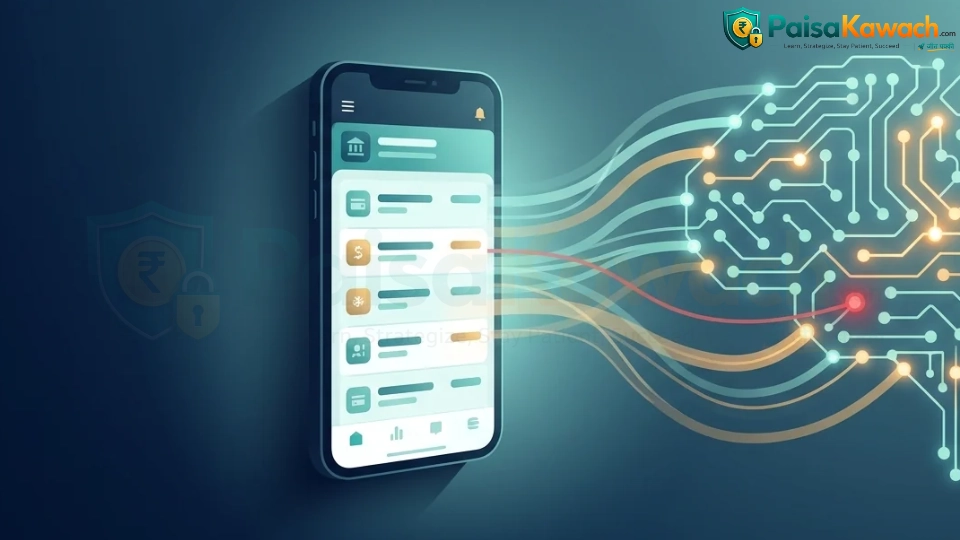
Open your banking app right now and scroll back three months. That scrolling list of debits and deposits isn't just a receipt of where your money went — it's a behavioral fingerprint. Long before you've finished your morning coffee, your bank's systems have already logged your income timing, your spending rhythm, your financial stress points, and the subtle shifts in your life that you haven't consciously noticed yet. In many ways, your bank's data team understands your financial habits with more precision, and less bias, than you do about yourself.
Quick Summary
- Your bank analyzes transaction patterns — not just single purchases — to build a detailed financial behavior profile.
- This data influences credit decisions, product offers, and sometimes third-party marketing partnerships.
- Banks are legally allowed to share certain data unless you opt out — and most people never do.
- "Anonymized" spending data can sometimes be re-identified by researchers and data brokers.
- You have real, practical options to limit how your financial behavior data gets used.
In This Article
- What Your Transaction History Actually Reveals
- How We Got Here: A Short History of Bank Data Analysis
- How Banks Use Your Spending Data Behind the Scenes
- Real-World Examples You've Probably Already Experienced
- Is Your Bank Selling Your Spending Data?
- Myths vs. Facts About Bank Data Tracking
- How to Protect Your Financial Privacy
- Frequently Asked Questions
What Your Transaction History Actually Reveals
A single purchase tells your bank almost nothing useful. But thousands of transactions, strung together over months, form a pattern — and patterns are where the real insight lives. Modern banking systems don't look at what you bought; they look at the shape of your financial life: timing, frequency, merchant category, and amount, repeated over time. This is the same principle behind how streaming services guess your taste in movies, except the inputs here are far more sensitive — rent payments, medical bills, and the gap between your paychecks.
The signals banks are quietly tracking
- Income stability — how regularly deposits land, whether amounts vary, and whether you have one income source or several
- Cash-flow stress — low balances right before payday, repeated overdraft attempts, or minimum-payment-only credit card behavior
- Lifestyle transitions — new merchant categories appearing in your history, such as childcare, medical billing, moving services, or wedding vendors
- Spending discipline — the ratio of essential spending (rent, utilities, groceries) to discretionary spending (dining, entertainment, subscriptions)
- Risk appetite — how often you carry a credit card balance versus paying in full, and how quickly you recover from a large unexpected expense
Deep Dive: How transaction-pattern modeling actually works
Behind the scenes, banks run transaction histories through behavioral scoring models — similar in spirit to credit scoring models, but built from real-time account activity instead of a credit bureau file. These models cluster customers into behavioral segments: for example, "stable high earner, low discretionary spend" versus "variable income, frequent overdraft." Some banks update these segments monthly; more advanced systems update them continuously as new transactions post. The output isn't usually visible to the customer at all — it lives inside internal risk and marketing systems, feeding decisions about credit limits, loan pre-approvals, and which in-app offers you see first. A handful of larger institutions have even started layering in machine-learning models that predict the likelihood of a customer closing an account or switching banks, based purely on subtle shifts in deposit timing and spending category mix.
How We Got Here: A Short History of Bank Data Analysis
None of this is new, exactly — it's an acceleration of something banks have always done in a cruder form. Loan officers once judged "character" by reputation and handwritten ledgers. What's changed is scale, speed, and automation.
From paper ledgers to predictive models
Credit scoring as we know it emerged in the mid-20th century, replacing subjective judgment with statistical models built mostly from loan repayment history. The rise of debit and credit cards in the following decades gave banks a second, much richer data stream: not just whether you repaid debt, but how and where you spent money day to day. Mobile banking apps, launched widely in the 2010s, turned that data stream into something continuous and real-time rather than a monthly statement reviewed once in a while. Today, open banking frameworks and fintech partnerships mean transaction data doesn't just stay with your primary bank — it often flows through budgeting apps, lending platforms, and payment processors, each adding another layer of analysis on top of the original record.
How Banks Use Your Spending Data Behind the Scenes
This analysis isn't incidental — it's one of the most valuable assets a modern bank holds, and it gets used well beyond the fraud-detection purpose most customers assume is the only reason their spending gets watched.
Where your spending data actually goes
- Credit decisions — spending stability can influence credit limit increases, pre-approved loan offers, and internal risk scoring alongside your traditional credit report
- Targeted product marketing — frequent travel charges may trigger a travel rewards card pitch; frequent overdrafts may trigger an offer for overdraft protection or a savings product
- Cross-selling within the bank's family of products — a bank with an insurance division, a brokerage arm, and a credit card business can move your financial profile across all three
- Third-party data partnerships — some banks share aggregated or "anonymized" spending data with outside analytics firms and advertisers
- Fraud and anomaly detection — the same pattern-recognition engine used for marketing also flags transactions that don't fit your usual behavior, which is the one use case most customers do welcome
Real-World Examples You've Probably Already Experienced
This isn't abstract. If you've used a bank card for more than a year or two, you've likely already felt the effects of transaction-pattern analysis without realizing it.
Everyday moments where this data is working in the background
- A card decline-turned-approval after you called to confirm you really are traveling abroad — the bank's model flagged the charge as unusual before you ever spoke to anyone
- A surprise "cash back at this store" offer appearing in your banking app right before a holiday shopping season, tied to merchants you've already visited
- A sudden credit limit increase with no application, triggered by months of on-time payments and stable spending
- A pop-up offering a savings "round-up" feature right after a few months of visibly tight cash flow
Is Your Bank Selling Your Spending Data?
This is one of the most searched questions on the topic, and the honest answer is: sometimes, in a limited and usually anonymized form — and almost always with far less transparency than customers assume. Banks are generally permitted to share financial data with third-party marketing partners as long as they've disclosed it somewhere in their privacy policy and given customers a basic opt-out right. The catch is that almost nobody reads that disclosure, and the opt-out process is rarely easy to find.
Why "anonymized" doesn't always mean private
Banks typically say shared data is stripped of direct identifiers like your name or account number. But privacy researchers have repeatedly demonstrated that anonymized financial data can often be re-identified when it's cross-referenced with just a few outside data points — a home ZIP code, a handful of purchase timestamps, or a known employer. In practice, "anonymized" is a much lower privacy bar than most customers assume it to be.
Deep Dive: The regulatory reality in plain terms
In the U.S., banks must report certain activity to regulators regardless of your consent — large cash transactions go to FinCEN under the Bank Secrecy Act, and interest income is reported to the IRS annually. That's separate from marketing-related data sharing, which falls under federal privacy rules that require disclosure and a limited opt-out, but not your active consent. Some states, including California, layer on additional consumer privacy rights that go further than federal law — meaning your actual protections can depend heavily on where you live. Outside the U.S., frameworks like GDPR in Europe generally require more active consent before financial data can be shared for marketing purposes, which is part of why the same bank often behaves differently depending on which country's customers it's serving.
Myths vs. Facts About Bank Data Tracking
A lot of what people believe about bank data tracking is either outdated or exaggerated in one direction or the other. A quick reality check helps separate reasonable concern from unnecessary panic.
How to Protect Your Financial Privacy From Bank Data Tracking
You can't opt out of your bank seeing your transactions — that's how banking works. But you have more control than most people exercise over how that data gets used and shared beyond your own account.
Practical steps that actually move the needle
- Find your bank's privacy notice (usually in account settings or the footer of their website) and use the opt-out option for third-party data sharing
- Check your state's privacy laws — residents of states with stronger consumer privacy statutes often have rights beyond the federal baseline
- Separate sensitive spending across a dedicated account or card — useful for medical expenses, legal matters, or anything you'd rather not have profiled alongside your everyday spending
- Review connected apps and "open banking" permissions periodically, since each connected app is another party with a window into your transaction history
- Ask your bank directly, in writing, what categories of data it shares and with whom — many institutions will provide this on request even if it isn't advertised
Frequently Asked Questions
Can my bank see everything I buy?
Your bank sees the merchant, amount, date, and merchant category code for every transaction — but not an itemized receipt. Even without itemized detail, merchant categories alone are often specific enough to reveal a lot about your habits.
Does checking my balance or spending habits affect my credit score?
No. Viewing your own account activity has no effect on your credit score. Spending-pattern analysis used internally by banks is separate from the credit bureaus' scoring models, though it can influence bank-specific decisions like credit limit changes.
How do I opt out of my bank sharing my data?
Look for a privacy notice or "choices" section in your bank's app or website — it's typically a required disclosure under federal privacy rules and will outline how to limit third-party sharing.
Is it worse to use a big bank or a smaller one for data privacy?
Not necessarily. Data-sharing practices vary more by each institution's specific partnerships and policies than by its size — it's worth checking the privacy notice of your specific bank rather than assuming based on reputation.
Do budgeting apps connected to my bank add another layer of risk?
Often, yes. Any third-party app with read access to your transactions becomes another party that can analyze, store, or in some cases monetize that data, so it's worth reviewing which apps you've connected and revoking access to ones you no longer use.
Can I ask my bank to delete my transaction history?
Generally no, at least not entirely — banks are required by law to retain transaction records for a set number of years for regulatory and tax purposes, regardless of a customer's request.
Your bank was never designed to be a diary, but the data trail you leave behind functions like one anyway. The good news is that financial privacy isn't all-or-nothing — small, deliberate choices about what you read, what you opt out of, and how you segment your spending can meaningfully change how much of your financial life gets seen by anyone other than you.
Keep Reading: More Gen Z Finance Insights

Comments
No comments yet. Be the first to comment!