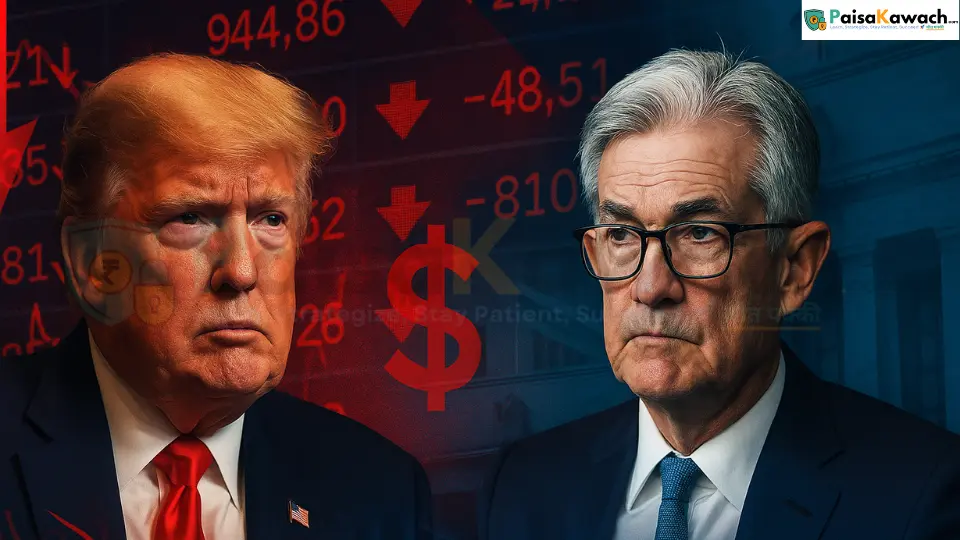
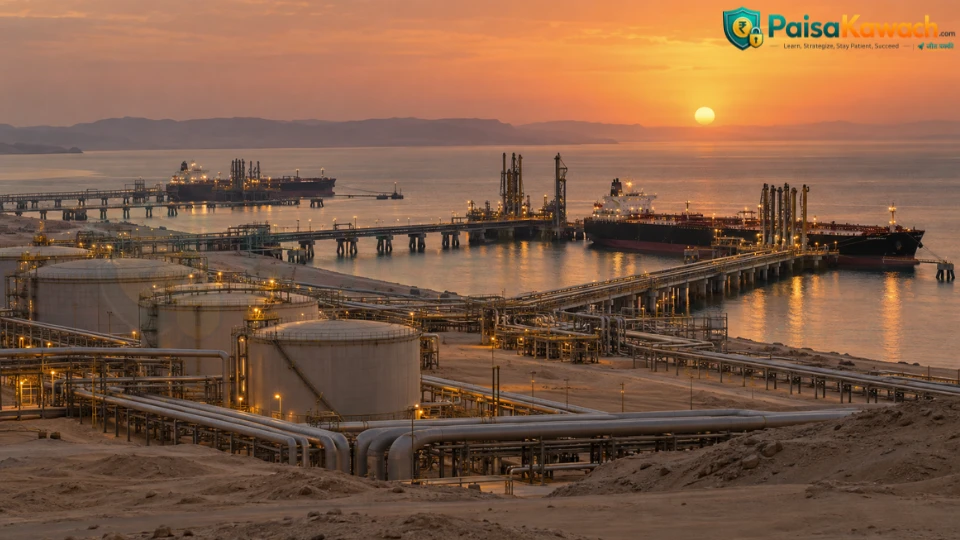
Trump Says Iran Deal "Largely Negotiated" — What It Means for Oil, Markets, and India — May 25, 2026
Trump Says Iran Deal "Largely Negotiated" — If True, It Changes Everything for Oil, Inflation, and India
Today in 60 Seconds
- 🚨Trump says Iran deal is "largely negotiated" — Strait of Hormuz could reopen in phases — announcement expected "shortly"
- →US markets closed today for Memorial Day — NYSE, Nasdaq, bond markets all shut — reopen Tuesday 9:30 AM ET
- →Americans paying $4.56/gallon — highest Memorial Day gas price in 4 years — record 45 million travelling anyway
- →Most important earnings week of 2026 starts Tuesday: Salesforce, Dell, Costco, Marvell, Snowflake + Q1 GDP + PCE inflation data
- →Dow at record 50,579 — S&P 500 on 8th straight weekly gain — AI valuations stretched at 20.9× forward P/E
- 🇮🇳India: An Iran deal is the single biggest positive macro event possible for India in 2026 — oil falls, rupee recovers, RBI hike off table
- 🇮🇳India: Without a deal — FPI outflows continue, rupee bleeds toward ₹96–98, RBI forced to hike, Nifty faces 21,000 bear case
- 🇮🇳India: Sensex opens Tuesday in direct reaction to any Iran announcement made today or tonight
Breaking · Geopolitics & Oil
Trump: Iran Deal "Largely Negotiated" — The Strait of Hormuz May Finally Reopen
After 12 weeks of economic pain — $4.56 gas, 19-year bond highs, a new Fed chair, and a market priced for perfection — Trump said Saturday the deal is "largely negotiated" and will be announced "shortly." Here is everything we know right now.
Brent Crude (Fri)
$100.21
fell on deal hopes
Rise since war began
+45%
both Brent & WTI
If deal: Brent target
~$80
Wood Mackenzie
Full flow restoration
Q1 2027
ADNOC CEO estimate
Deal Structure — 2 Phases
Phase 1 — Reopen the Strait of Hormuz (Immediate)
Iran's IRGC has already authorised 30+ vessels through the Strait in the past 24 hours as a confidence-building step. A formal Phase 1 agreement would establish safe passage protocols and begin easing the oil supply shock. Oil would fall 10–15% within days of confirmation.
Phase 2 — Nuclear Framework + Sanctions (30–60 days)
The harder part. The US demands Iran surrender enriched uranium. Iran has refused — Reuters quoted a senior Iranian official Sunday saying the nuclear issue is NOT part of the preliminary agreement. Pakistan and Qatar are mediating. Sanctions relief and unfreezing of Iranian assets worth $30–50 billion are the primary carrots.
"There's been a little bit of movement, and that's good. Iran can never have a nuclear weapon. This problem will be solved, one way or the other."
— Secretary of State Marco Rubio, New Delhi, May 23, 2026On Saturday, May 23, President Trump said a peace deal with Iran is "largely negotiated" and will be announced "shortly" — his most definitive statement since the conflict began on February 28. The Financial Times, citing sources close to the talks, reported that the preliminary framework would establish a structure for nuclear talks, ease sanctions on Iran, and unfreeze Tehran's overseas assets — potentially worth $30–50 billion.
The deal structure emerging has two clear phases. Phase 1 — reopening the Strait of Hormuz — appears closest to agreement. Iran's Islamic Revolutionary Guard Corps has already authorised more than 30 commercial vessels to traverse the Strait in the past 24 hours, a significant confidence-building measure. Speaker Mike Johnson, who spoke with Trump on Saturday night, said he is "very confident" the deal will prevent Iran from developing a nuclear weapon.
Phase 2 — the nuclear issue — is where the deal could still collapse. Reuters quoted a senior Iranian source Sunday saying Tehran has not agreed to hand over its highly enriched uranium stockpile, and that the nuclear issue is explicitly not part of the preliminary agreement. Iran's Foreign Ministry maintains that the US must lift sanctions, end its port blockade, and release frozen assets before Tehran will discuss any nuclear commitments.
Pakistani and Qatari negotiators held intensive sessions with Iranian counterparts on Thursday and Friday, staying in regular contact with US envoy Steve Witkoff. Iran's top negotiator told a Pakistani counterpart that Iran would not compromise its "legitimate rights" but expressed some openness to continued dialogue.
Critical oil caveat: Even if Phase 1 is signed today, ADNOC CEO Dr. Sultan Al Jaber warned that full oil flows through the Strait will not return until Q1 or Q2 of 2027. Even at 80% restored flow, the oil supply shock eases meaningfully but does not disappear overnight. Goldman Sachs has revised its end-2026 Brent forecast to $90 — down from $100+ current levels — even in a positive scenario.
Markets will respond Tuesday when the NYSE reopens. A signed Phase 1 paper = oil gap-down 8–12%, equities gap-up 1–2%, rupee strengthens, Indian markets rally. A positive statement with no signature = muted, volatile, wait-and-see session.
Bottom Line
The deal is closer than it has ever been — but "largely negotiated" has been said before. The uranium question remains unresolved. Watch for any official statement from Iran's Presidency website (not the IRGC or Foreign Ministry spokesperson) — that is the only statement that can formally bind Phase 1. If you see that over Monday, Tuesday will be a very different market than Friday.
Global Story 01 · Consumer Economy
45 Million Americans Travelling at $4.56/Gallon — The Real Cost of the Iran War at Home
The highest Memorial Day gas prices in four years. A record number of Americans travelling anyway. Every extra dollar at the pump is a dollar not spent elsewhere — the quiet household tax of geopolitics.
National Avg Gas
$4.56
4-year Memorial Day high
vs Last Year
+$1.38
per gallon
States above $5/gal
7
California above $6
Americans Travelling
45M
record despite costs
"That's what happens when the world's most vital waterway to the shipment of oil becomes a military target."
— Patrick De Haan, Head of Petroleum Analysis, GasBuddy, May 22, 2026Memorial Day 2026 marks the unofficial start of the US summer driving season — and it is doing so with the highest pump prices in four years. The national average for a gallon of regular unleaded stands at $4.56, up $1.38 from the same weekend last year. California motorists are paying over $6 per gallon. Seven states have crossed $5. Every US state is now above $4 — a level that has historically signalled meaningful consumer behaviour change.
GasBuddy's Patrick De Haan attributes more than 90% of the year-over-year price difference directly to the Iran war and the Strait of Hormuz closure. Despite the costs, a record 45 million Americans are travelling at least 50 miles this weekend — up from 44.8 million in 2025 and 42.8 million in 2019. Average domestic airfare is $383, up $89 from last year.
The behavioural adaptation is visible: more than half of hotel spending this weekend comes from households earning $150,000 or more. Lower-income travellers are shortening trips, skipping hotel stays, or using airline miles. Walmart's CFO noted last week that lower-income customers are filling gas tanks with under 10 gallons at a time — a direct indicator of financial distress spreading at the pump.
GasBuddy's modelling projects that if Hormuz disruptions continue through summer, national averages could approach $4.80 per gallon — the second-highest Memorial Day to Labor Day average on record. An Iran deal in the next two weeks would change that trajectory completely.
What This Means For Markets
High fuel costs are a persistent inflation input that prevents the Fed from cutting rates and potentially forces a hike. The summer driving season extends this pressure through September. An Iran deal is not just a geopolitical event — it is the single most important macro relief valve for the US economy heading into H2 2026.
Global Story 02 · Markets & Earnings
The Most Important Trading Week of the Year Starts Tuesday — GDP, PCE, Salesforce, Dell, Costco
US markets reopen Tuesday to a packed calendar. Q1 GDP second estimate and April PCE inflation data land Thursday alongside five major earnings reports. Every number this week feeds directly into Kevin Warsh's first Fed decision.
Salesforce YTD
−31%
worst Dow stock 2026
ARM last week
+42.5%
AI royalty surge
Dell last week
+24%
AI server demand
Q1 S&P Net Margin
13.4%
all-time record
Week Ahead Calendar
Mon May 25
- NYSE Closed — Memorial Day
- Iran deal watch all day
- Asian & EU markets open
Tue May 26
- Consumer Confidence (May)
- AutoZone (AZO)
- Zscaler (ZS)
- Iran reaction open
Wed May 27
- April New Home Sales
- Salesforce (CRM) 🔥
- Marvell Tech (MRVL)
- Snowflake (SNOW)
- Synopsys (SNPS)
Thu May 28 ⭐
- Q1 GDP — 2nd estimate
- April PCE Index 🔥🔥
- Dell (DELL)
- Costco (COST)
- Dollar Tree (DLTR)
- Best Buy (BBY)
Fri May 29
- No major data
- Month-end rebalancing
- Iran follow-up
Tuesday's market open will be the first chance for US investors to price in the weekend's Iran developments. If any formal Phase 1 deal is announced Monday, Tuesday could see significant gap-up moves in equities and a sharp crude drop. If not, focus shifts quickly to the data calendar.
Salesforce (Wednesday) is the most closely watched report of the week. The SaaS giant is the worst-performing Dow Jones component of 2026, down 31% through May 21. Analyst J. Parker Lane at Stifel says everything hinges on whether Agentforce and Data Cloud are showing "real adoption" — not just pipeline. A beat-and-raise could trigger a 15–20% single-day recovery. A miss accelerates the sell-off to new lows.
Thursday is the most important single macro day of the quarter. The April PCE price index — the Fed's preferred inflation gauge — lands alongside the second estimate of Q1 GDP. PCE above 2.5% core confirms the rate-hike narrative and makes Warsh's June meeting a live hike event. PCE cooling toward 2.0–2.2% gives the Fed room to hold and validates the bull case for equities at 20.9× forward P/E.
Costco's earnings are a critical consumer barometer for middle-to-upper-income households — the segment Walmart's CFO described as "spending with confidence." Any crack in that demographic signals stress is spreading upward, not just downward. The S&P 500's record Q1 net profit margin of 13.4% shows earnings fundamentals remain strong — but there is no room for guidance disappointments at current valuations.
What This Means For Investors
Thursday May 28 is the day that determines whether June's Fed meeting is a hold or a hike signal. PCE hot = Warsh signals hawkish = sell bonds, dollar strengthens, EM assets fall. PCE cool = Warsh holds = rally extension possible. For Indian investors — US PCE directly impacts RBI's calculus. A cool reading reduces pressure on the RBI to hike and gives Indian markets a meaningful relief catalyst going into June.
India Story 01 · The Deal Scenario
For India, an Iran Deal Is Not Just Good News — It Is the Difference Between Recovery and Crisis
India imports 85% of its oil. Every $10 drop in Brent crude saves India $12–15 billion annually. A deal dropping oil from $100 to $80 would be the single largest positive macro event for India since 2020 — in reverse.
India oil import share
85%
of total consumption
Savings per $10 oil drop
$12–15B
annual CAD relief
Rupee now
~₹94
down 10%+ in 12 months
FPI outflows (3 months)
$22.2B
exceeds full-year 2025
Deal vs No-Deal — India's Two Futures
DEAL SCENARIO — Brent falls toward $80
India's current account deficit narrows $25–35B. Rupee strengthens toward ₹88–90. Inflation eases below 4%. RBI rate hike off the table — possibly a cut in H2 2026. FPI outflows slow and reverse. Sensex targets 82,000–85,000 by year-end. Rate-sensitive sectors surge first: real estate, auto, banking, NBFCs, aviation, OMCs.
NO-DEAL SCENARIO — Oil stays $100+
Rupee tests ₹96–98 by Q3 2026. CPI rises to 4.4–5%. RBI forced into emergency hike. Emkay bear case of Nifty 21,000 activates. FPI outflows accelerate. Small and midcap stocks most vulnerable. IT and pharma remain the only safe harbours for Indian retail investors.
India's economic position in May 2026 is uniquely exposed to the Iran conflict — and uniquely positioned to benefit from its resolution. No major economy in Asia has more to gain from a Strait of Hormuz reopening than India.
The oil arithmetic: India consumed approximately 5.5 million barrels per day in 2025. At $100 Brent, India's annual oil import bill runs approximately $200 billion — $40–50 billion above what the economy was sized for. A drop to $80 Brent removes $40+ billion from the import bill within 12 months, narrows the current account deficit dramatically, and removes the primary structural pressure on the rupee.
The rupee chain reaction: A stronger rupee reduces imported inflation across fuel, edible oils, electronics, and fertilisers. Lower inflation reduces pressure on the RBI to raise rates. Lower rates reduce EMI costs for Indian households across home loans, car loans, and personal credit. Consumer spending recovers. GDP growth accelerates. This entire cycle is triggered by one geopolitical agreement.
FPI flows: Foreign portfolio investors have pulled $22.2 billion from Indian equities in three months — more than all of 2025's annual outflows. The primary driver is currency risk combined with the relative attractiveness of US AI stocks. An Iran deal resolves the currency risk component immediately and makes Indian equities at 20× forward earnings among the most attractively valued in Asia.
Sectors to watch on Tuesday's open if a deal is announced: OMCs (Indian Oil, BPCL, HPCL) — direct oil cost relief; Aviation (IndiGo, Air India) — jet fuel cost collapse; Auto (Maruti, Tata Motors, M&M) — consumer confidence plus input cost relief; Infrastructure and Real Estate (DLF, Godrej Properties) — rate cut expectations; Banking (Axis, ICICI, HDFC, SBI) — improved macro outlook.
Sectors that will NOT benefit as much: IT and pharma exporters see their dollar revenues translate to fewer rupees as the rupee strengthens. These were the safe harbour crisis trades — in a deal scenario, rotate gradually toward domestic consumption and infrastructure plays. Do not exit IT and pharma in one session — institutional flows take time to rotate, and you will have 2–3 weeks to reposition before the big money fully moves.
For Indian Retail Investors — What To Do Now
Do not try to trade the announcement in real time. Institutions will move first. Instead: if underweight domestic consumption, auto, and banking — a deal is the rebalancing trigger. If overweight IT and pharma (the crisis trade) — a deal is the gradual rotation signal. Keep 5–10% cash ready to deploy at Tuesday's open if a deal breaks over Monday. The Sensex at 75,000 with an Iran deal is a completely different risk-reward from the Sensex at 75,000 without one.
India Story 02 · RBI & Policy
RBI Rate Hike Probability Falls Sharply If Iran Deal Lands — But Thursday's US PCE Data Decides It
The RBI's next move depends on two numbers it cannot control: US PCE inflation on Thursday and Brent crude oil today. Both are in flux this week. Here is the decision tree every Indian investor needs to understand.
RBI Repo Rate
5.25%
cut in Dec 2025
India CPI projected
4.4%
if $10 fuel hike passes
Hike probability
Rising
if oil stays $100+
Nifty bear case
21,000
Emkay — prolonged crisis
The Reserve Bank of India is watching two external variables it cannot control this week. The first is the Iran deal — which would remove the primary source of inflationary pressure on the Indian economy. The second is Thursday's US PCE data — which determines whether the Federal Reserve signals a rate hike under Kevin Warsh, strengthening the dollar, weakening the rupee further, and forcing the RBI's hand.
Emkay Global's May research note stated explicitly: "A rate hike in the upcoming MPC meeting appears increasingly inevitable, with even a possibility of an inter-meeting action if oil prices remain elevated." That note was written before Trump's "largely negotiated" statement. An Iran deal materially changes the calculus.
The decision tree: Iran deal confirmed + PCE cool → RBI holds, possibly signals H2 cut, Indian markets rally strongly. Iran deal confirmed but PCE hot → mixed signals, RBI likely holds one more meeting but watches dollar carefully. No Iran deal + PCE hot → RBI cornered, hike nearly inevitable by June or August MPC. No Iran deal + PCE cool → RBI can hold one more meeting, rupee stabilises, markets drift sideways.
The RBI has approximately $640 billion in foreign exchange reserves — sufficient to defend the rupee through targeted intervention without a rate hike. But every dollar spent on intervention is unavailable for future crises. The RBI will try to buy time — but the market knows the math and will test it if oil stays elevated.
What To Watch This Week For India
Thursday's US PCE data at 8:30 AM ET (7 PM IST) is the most important single number for India's monetary policy this week. Cool PCE = RBI breathes, market rallies. Hot PCE = RBI hike discussion accelerates, market pressure. Combined with any Iran announcement today, these two data points define India's entire economic narrative for the next 60 days.
🤖 IPO Watch
OpenAI Confidential S-1 Filing — This Week
OpenAI expected to file its IPO prospectus this week with Goldman Sachs and Morgan Stanley. Target: $1 trillion valuation, September debut. Could be the week it officially happens.
🚀 SpaceX
Starship Test Results — $2T IPO Confidence Signal
SpaceX Starship test results this week are a direct IPO confidence signal. Success validates the $2 trillion SPCX Nasdaq listing. A failure or anomaly could force a listing delay.
🏦 Fed Watch
Kevin Warsh — First Major Public Remarks
Warsh has not yet given his first major speech as Fed Chair. Any scheduled appearance this week will be the most closely parsed Fed communication since 2022. One word on rates moves markets.
🇮🇳 India
Sensex Tuesday Open — Direct Iran Reaction
India's market is closed today. Tuesday's 9:15 AM IST open will be the first opportunity for Indian investors to price in any Iran deal announced over Monday. Gap-up or gap-down of 1–3% is possible.
🇮🇳 India
Yatra Online Results Call — 10 AM IST Today
India's leading corporate travel platform hosts its Q4 FY26 investor call today. A bellwether for domestic business travel — which reflects corporate India's confidence in the current economy.
📊 Data
April PCE + Q1 GDP — Thursday May 28
The Fed's preferred inflation gauge alongside the Q1 growth revision. These two numbers determine the probability of a Warsh rate hike at the June FOMC — the most important Fed event of 2026.
Week Ahead Outlook · Global + India
The Next 48 Hours Will Set the Tone for the Entire Second Half of 2026
Markets are closed in the US today, but the world is not. The Iran deal either gets announced over Memorial Day Monday — in which case Tuesday's open is a celebration — or it does not, in which case the week becomes about earnings and PCE data rather than geopolitics. Both scenarios have clear playbooks.
For global investors: the Dow at 50,579 and S&P 500 at 7,473 already price in significant optimism. If the Iran deal materialises and PCE cools on Thursday, the setup for a continued rally is intact. If both disappoint, the market faces a genuine reckoning — 20.9× forward P/E is not defensible with oil at $100, a rate hike coming, and Salesforce down 31%.
For Indian investors specifically: this is the most consequential week since the conflict began. A deal announcement before Tuesday's 9:15 AM Sensex open could trigger the largest single-day rally in Indian equities in months. Sectors to watch first: OMCs, aviation, auto, banking, and infrastructure. IT and pharma may actually underperform in a deal scenario as the rupee strengthens and the crisis premium unwinds.
Watch Pakistan's Foreign Ministry, Iran's official Presidency website, and US envoy Steve Witkoff's X account over Monday. Those three sources will carry the deal announcement before any mainstream media. In 2026, the most market-moving news breaks on social first.
Sources: CNBC · NPR · CBS News · CNN · FT · AAA · GasBuddy · Axios · Kiplinger · Schwab · Emkay Global · Wood Mackenzie · Goldman Sachs · May 25, 2026
Keep Reading: More Insights You Might Like
 New Fed Chair, Iran Talks Stall Again, and India Bleeds $22 Billion — Weekend Global & India Briefing, May 23, 2026
Next →
New Fed Chair, Iran Talks Stall Again, and India Bleeds $22 Billion — Weekend Global & India Briefing, May 23, 2026
Next →
 Iran Deal "Proceeding Nicely" — Markets Rally, Oil Falls, India Watches Closely — May 26, 2026
Comments
No comments yet. Be the first to comment!