Three Global Forces Shaking Markets Today: Oil, Fed Rates, and the AI Boom

Three powerful forces are moving global financial markets on July 7, 2026 — and their ripple effects will be felt from Wall Street to Dalal Street, from Tokyo to Frankfurt. Oil supply is rising sharply as Middle East tensions ease following a US-Iran peace framework. The US Federal Reserve's June meeting minutes are due today, carrying the weight of a possible rate hike decision that could redirect billions in global capital. And the artificial intelligence investment boom is accelerating with SpaceX's historic entry into the Nasdaq-100 today. These are not isolated events — they are interconnected forces that together define the risk environment every investor, trader, and business must navigate right now.
1. OPEC+ Raises Oil Output for Fifth Straight Month — Prices Hit Pre-War Lows
The world's most powerful oil cartel has spoken — again. Seven OPEC+ member nations including Saudi Arabia, Russia, Iraq, Kuwait, Kazakhstan, Algeria, and Oman gathered virtually on July 5 and agreed to raise their collective oil output by 188,000 barrels per day starting August 2026. This is not a one-off decision. It marks the fifth consecutive monthly production increase from the group, continuing a carefully managed unwinding of the deep supply cuts that were first announced in April 2023 and extended through November of that year amid a string of global banking collapses and a major commodity sell-off.
How We Got Here — The Iran War Energy Shock
To understand why this OPEC+ decision matters so much today, you have to go back to late February 2026, when the United States and Israel launched military operations against Iran. The conflict sent shockwaves through global energy markets almost instantly. The Strait of Hormuz — the narrow waterway through which approximately 20% of the world's oil supply passes — was effectively blocked to tanker traffic. Major Gulf producers including Saudi Arabia, Kuwait, and Iraq found themselves sitting on crude with nowhere to send it. OPEC+ had been announcing production increases on paper for months, but those barrels simply could not reach the market. Brent crude spiked to a four-year high above $126 per barrel in late April 2026 as the energy crisis deepened and inflation fears spread across the globe.
The tide began turning in June, when a preliminary peace framework was reached between the United States and Iran. As part of the agreement, Iran committed to allowing ships to pass unimpeded through the Strait of Hormuz. The reopening was gradual but real — Saudi Arabia more than doubled its shipping volume from June 17 onwards compared to the prior three months combined. Iran itself pushed close to 50 million barrels of stored crude back to market as the naval blockade was lifted. The result has been a dramatic and rapid fall in oil prices. Brent crude settled at $71.99 a barrel on Monday and WTI at $68.55 — erasing more than $55 per barrel from the April peak and returning to levels last seen before the war began.
Why Falling Oil Is a Big Deal for Global Markets
Lower oil prices are one of the most broadly positive macroeconomic developments possible for the global economy. Energy costs flow through to virtually every sector — manufacturing, logistics, agriculture, aviation, consumer goods, and utilities all carry crude oil as a core input cost. When oil falls sharply, inflation eases, corporate margins improve, and consumer spending power increases. For central banks that have been fighting energy-driven inflation for months, falling crude gives them room to pause — or even pivot — on interest rates. For emerging market economies that are large net importers of oil, the relief is even more pronounced. Analysts broadly agree that this supply normalization, assuming the peace holds, is one of the single most constructive macro developments of 2026 so far.
- OPEC+ production increase: 188,000 barrels per day added from August — the fifth consecutive monthly hike, with the group having now restored nearly 940,000 bpd of supply since the unwinding process began.
- Brent crude at $72, WTI at $68.55: Oil has shed over $55 from its April peak, directly easing inflation pressure on energy-importing economies including India, Japan, South Korea, and most of Europe.
- India's import bill relief: Every $10 fall in crude oil prices saves India approximately $12–15 billion annually in import costs, improving the current account deficit, easing inflation, and providing support for the rupee against the US dollar.
2. US Federal Reserve June Minutes — The Rate Hike Question That Has Every Market Watching
While oil markets offer good news today, the US Federal Reserve's June meeting minutes — released today — carry the potential to cut the other way. These minutes document the internal deliberations of the Federal Open Market Committee from its June 17 meeting, where the Fed voted unanimously to hold interest rates at 3.5%–3.75%. On the surface, a hold sounds neutral. But the details of that meeting told a more complicated story, and today's full minutes will reveal just how hawkish the committee's thinking really is.
The Inflation Problem Has Not Gone Away
At the June meeting, the Fed revised its own inflation forecasts sharply higher. PCE inflation — the Fed's preferred measure — was projected at 3.6% for 2026. Core PCE, which strips out food and energy, was forecast at 3.3%. Both figures are significantly above the Fed's 2% target, and the committee acknowledged that elevated energy prices stemming from the Iran conflict had been a meaningful contributor. New Fed Chair Kevin Warsh, who attended the ECB Forum in Portugal last week, notably and deliberately refused to provide any forward guidance when pressed repeatedly by journalists — a calculated signal of strategic ambiguity that left markets on edge. Nine of the Fed's 18 officials have already penciled in at least one interest rate hike for 2026 in their individual projections.
Before the release of the June jobs report, markets were pricing a 65% probability of a rate hike at the September FOMC meeting. That number dropped to 53.5% after the jobs report showed a surprisingly soft 57,000 nonfarm payrolls for June — well below expectations. But the debate is far from settled. Today's minutes will reveal how unified or divided the committee is on the question of tightening further. If the minutes show widespread support for a hike, the dollar will strengthen, bond yields will rise, and equity markets — especially rate-sensitive sectors — will come under pressure globally. The next scheduled FOMC meeting is July 28–29, making today's minutes the last major Fed communication before that decision.
What This Means for India and Emerging Markets
Fed rate decisions are never purely a US event. When the Fed raises rates, the yield differential between US assets and emerging market assets widens, pulling capital out of countries like India, Indonesia, Brazil, and South Africa and back into US dollar-denominated instruments. This puts pressure on EM currencies, raises the cost of dollar-denominated debt, and can trigger equity outflows from foreign institutional investors. India's rupee, equity markets, and bond yields are all sensitive to Fed signals. A hawkish set of minutes today could offset some of the positive sentiment generated by falling crude oil prices.
- Rates held at 3.5%–3.75%: The Fed has paused, but with PCE inflation at 3.6% — well above the 2% target — a July or September hike remains firmly on the table and the minutes today will clarify the committee's real intent.
- Soft jobs report shifts odds: June's weak 57,000 nonfarm payrolls print reduced the probability of a September hike from 65% to 53.5%, but the Fed has repeatedly signalled it is data-dependent and one weak jobs print may not be enough to change course.
- Global capital flow risk: A hawkish Fed signal strengthens the dollar, pressures the rupee and other EM currencies, raises borrowing costs globally, and can trigger sell-offs in rate-sensitive sectors including real estate, banking, infrastructure, and utilities across all markets.
3. The AI Investment Boom Accelerates — SpaceX Joins the Nasdaq-100 Today
If oil and the Fed represent the macro risk environment, then artificial intelligence represents the structural engine powering global equity markets in 2026. And today that engine gets a significant new component: SpaceX officially joins the Nasdaq-100 on July 7, 2026 — a historic inclusion that is already reshaping index fund flows, options pricing strategies, and the broader narrative around what technology investing means in this era. The event caps a week of powerful AI-driven momentum that saw the Nasdaq Composite advance 1.12% on Monday to close at 26,121 and the S&P 500 gain 0.72% to end at 7,537.
Nvidia, Broadcom, and the Road Map Is Intact
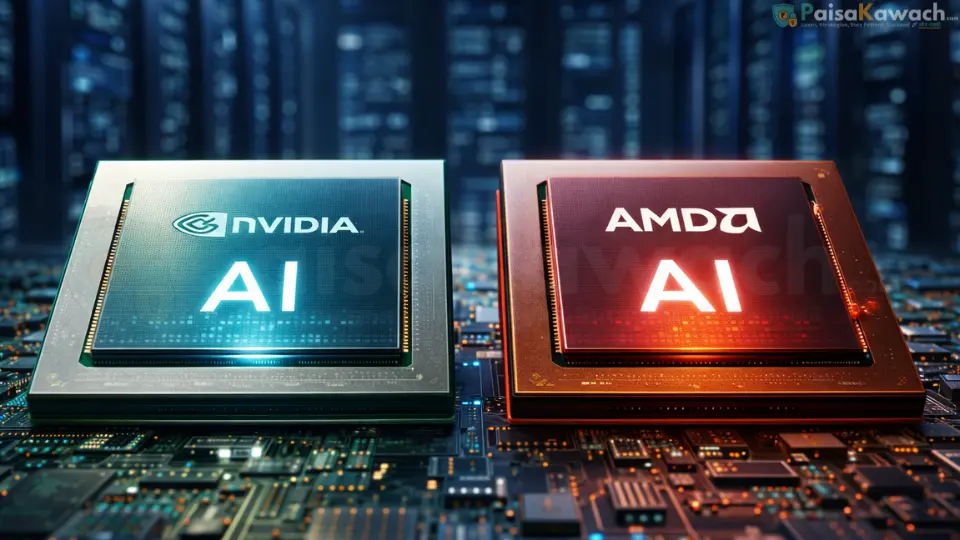
The AI rally this week was not without its scares. A report circulating in Asian markets suggested a delay in Nvidia's server road map, briefly rattling tech stocks in Tokyo, Seoul, and Hong Kong. Nvidia moved quickly to reassure investors, stating publicly that its road map is intact. The clarification was enough to halt the sell-off and reignite confidence. Broadcom added to the positive momentum by announcing it had extended its landmark chip design partnership with Apple through to 2031 — a multi-year revenue visibility signal that investors rewarded with a sharp rally in Broadcom shares. Meanwhile, Oracle gained 2.5% and Marvell Technology rose more than 1% as the broader AI infrastructure trade rebounded strongly after a brief two-session pullback in semiconductors.
The Earnings Engine Behind the Rally
What separates the current AI rally from a purely speculative bubble is the earnings data backing it up. S&P 500 earnings are expected to grow 23% year-on-year in Q2 2026, marking the seventh consecutive quarter of double-digit earnings growth, according to BlackRock's Investment Institute. The AI spending wave — spanning hyperscale data centres, advanced semiconductor manufacturing, cloud infrastructure buildout, and enterprise software — is generating real, measurable profit growth across the technology sector. This is not hype. Capital expenditure from the world's largest technology companies on AI infrastructure reached record levels in the first half of 2026, and the returns are now showing up in reported earnings. Analysts at Quantum Strategy have gone so far as to recommend rotating out of the Magnificent 7 US tech leaders in favour of Chinese AI adoption stocks, signalling that the AI trade has evolved into a global, multi-geography investment theme rather than a purely American one.
- SpaceX enters the Nasdaq-100 today: The inclusion triggers automatic buying from index-tracking funds and ETFs globally. Analysts warn that a future lockup expiration could bring up to $800 billion in SpaceX shares to market — a structural supply event every investor in Nasdaq-linked instruments should monitor carefully.
- Seven straight quarters of double-digit S&P 500 earnings growth: Q2 2026 earnings are expected to rise 23% year-on-year, with AI infrastructure spending identified as the primary driver — confirming that the technology rally is built on fundamental profit growth, not speculative froth alone.
- Global spillover into Asian and Indian tech: The AI rally directly lifts South Korean chipmakers Samsung and SK Hynix, Taiwan's TSMC, Japan's Kioxia, and Indian IT majors including HCL Tech, TCS, Infosys, and Tech Mahindra — making this a globally interconnected investment trade with real implications for Dalal Street, not just Wall Street.
Keep Reading: More Insights You Might Like
 Top International Business News Today: OPEC+ Boosts Oil Supply, Foxconn's AI Revenue Surges, Global Markets Await Earnings Season
Next →
Top International Business News Today: OPEC+ Boosts Oil Supply, Foxconn's AI Revenue Surges, Global Markets Await Earnings Season
Next →
 Samsung's AI Chip Boom, Enerpac's $472 Million Acquisition, and MasTec's Infrastructure Expansion
Comments
No comments yet. Be the first to comment!