
Two Forces, Opposite Directions: Why Cooling Inflation Data and Stubborn Oil Prices Are Telling Completely Different Stories
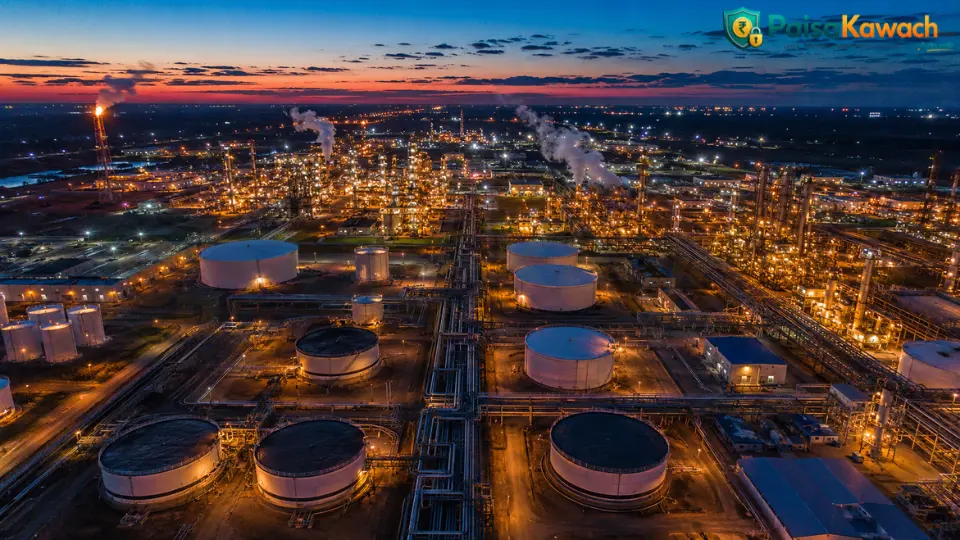
Every so often, two economic data points arrive close enough together to look like they belong to the same story, when they're actually measuring two entirely different things moving in opposite directions. That's exactly what happened this week. July's US inflation print came in right in line with expectations, giving markets and Fed watchers genuine, legitimate reason for relief. In the very same stretch of days, Brent crude held stubbornly near $89 a barrel, and OPEC+ quietly downgraded its own demand forecast for 2026 — not because global economic activity is slowing, but specifically because elevated, conflict-driven oil prices are already denting how much fuel the world is willing to buy. Read separately, these look like a good inflation story and a routine oil-market data point. Read together, they reveal something considerably more useful: two distinct forces, pulling against each other, and neither one is going to resolve the other.
The Genuine Relief Behind an In-Line CPI Print
There's a specific kind of good news that doesn't always announce itself dramatically, and this week's inflation data was exactly that kind. July's Consumer Price Index landed right where economists had forecast — not a beat, not a miss, simply in line. In an environment where markets have spent weeks bracing for inflation surprises in either direction, a clean, unremarkable, in-line print counts as genuinely reassuring news, because it removes one major source of uncertainty from an already crowded field of them.
The practical consequence of this print showed up quickly in how analysts are now reading the Federal Reserve's likely path forward. With this now the second consecutive subdued CPI reading, the expectation has solidified that the Fed will remain sidelined through its September meeting, choosing to hold rather than move in either direction. This matters considerably given the volatile back-and-forth the Fed has been through recently — a meeting that produced a notable three-member hawkish dissent, followed within days by a weak jobs report that undercut the case for that same dissent. A clean, in-line inflation print offers the kind of stability that lets policymakers genuinely pause rather than feel pressured to react to the latest data surprise.
Why "In Line" Matters More Than "Better Than Expected" Right Now
In a calmer economic environment, markets might have wanted to see inflation actually beat expectations to the downside before fully relaxing. But given how much whiplash the past several weeks have produced — a hawkish Fed dissent, a weak jobs report, oscillating Iran de-escalation headlines — simply removing the risk of another surprise carries real value on its own. An in-line print doesn't require anyone to update their expectations dramatically in either direction, and after a stretch this volatile, the absence of a new shock is itself a meaningful, stabilizing outcome.
- A second consecutive subdued CPI reading has meaningfully solidified expectations that the Fed will hold rates steady through its September meeting
- Given recent volatility in Fed signaling, an in-line print's real value lies in removing the risk of a fresh surprise, not merely in the specific number itself
- This reading offers policymakers genuine room to pause and assess, rather than feeling pressured to react to yet another unexpected data point
Oil's Refusal to Cooperate With the Inflation Story
If the inflation data alone told the whole story, this would be a straightforwardly reassuring week. It isn't, because sitting directly alongside that CPI relief is a stubborn, structurally different problem that cooling consumer prices haven't touched at all. Brent crude remains near $89 a barrel, a level that reflects sustained, conflict-driven pressure rather than any temporary spike that might reasonably be expected to fade on its own.
The more revealing detail here isn't the price level itself — it's what OPEC+ just did about it. The cartel forecast lower global oil demand for 2026, and crucially, the reasoning behind that downgrade wasn't a story about a weakening global economy or softening industrial activity. It was specifically that elevated prices, driven by the ongoing Iran conflict, are already denting how much oil the world is willing and able to consume. In other words, OPEC+ is essentially confirming that current price levels have become high enough to start suppressing their own demand — a self-limiting dynamic that reflects genuine structural strain rather than a temporary market anomaly working its way through the system.
Why OPEC+'s Own Demand Downgrade Is More Telling Than the Price Itself
Oil prices fluctuate constantly for all kinds of reasons, and a single elevated price level rarely tells you much on its own about how sustainable that level actually is. What makes this specific development genuinely significant is that the organization with the deepest, most direct insight into global oil demand — OPEC+ itself — is the one confirming that current prices are already suppressing consumption. That's a meaningfully different signal than an outside analyst speculating about demand destruction; it's the supply side of the market acknowledging, through its own forecast, that the current price environment isn't comfortably sustainable even from the producers' own vantage point.
- OPEC+'s demand downgrade being attributed specifically to conflict-driven prices, rather than broader economic weakness, confirms this is a supply-side crisis rather than a demand-side slowdown
- A downgrade coming from the producers' own organization carries more weight than an equivalent forecast from an outside analyst, since OPEC+ has direct visibility into real-time demand signals
- This dynamic suggests current oil prices have crossed into genuinely self-limiting territory, where elevated costs are now measurably suppressing the consumption that sustains those same prices
Why Cooling Inflation Can't Actually Fix This
This is the part worth sitting with most carefully, because it's easy to assume that improving inflation data and elevated oil prices are somehow contradictory signals that will eventually converge toward a single, consistent story. They won't, at least not automatically, because they're driven by fundamentally different mechanisms. Consumer inflation cooling reflects broad demand-side conditions across an entire economy — wages, consumer spending, overall price pressure across thousands of goods and services. Oil prices staying elevated near $89 reflect a narrow, specific supply-side disruption tied directly to an active military conflict affecting a critical global shipping corridor.
A demand-side cooling trend doesn't resolve a supply-side conflict, no matter how encouraging the broader inflation trajectory looks. Unless and until the underlying Iran situation genuinely stabilizes — not through another announcement, but through verified, sustained normal shipping activity through the Strait of Hormuz — oil prices have little structural reason to come down meaningfully, regardless of how well-behaved the rest of the inflation basket looks in any given month's CPI report.
The Practical Risk of Reading These Two Signals as One Story
The genuine danger in this moment is treating a good inflation print as evidence that the broader economic picture has fully stabilized, when in fact one major, structurally elevated cost — energy — remains completely unresolved and could reassert itself into headline inflation the moment its effects fully filter through supply chains, transport costs, and downstream pricing. Markets and policymakers celebrating the CPI relief while overlooking the oil market's own signal risk being caught off guard if elevated energy costs eventually work their way back into consumer prices in the months ahead, undoing some of the very relief this week's data just delivered.
- Demand-side inflation cooling and supply-side oil price pressure are driven by fundamentally different mechanisms and don't automatically converge toward the same outcome
- Elevated oil prices carry a lag before fully working through into broader consumer inflation, meaning today's good CPI print doesn't guarantee tomorrow's will look the same
- Genuine, durable relief on the inflation front likely requires the Iran conflict itself to stabilize, not simply continued good behavior from the rest of the consumer price basket
Two Numbers, Two Timelines, One Unresolved Risk
July's inflation data earned its relief fairly — it reflects real, broad-based stability that gives the Fed genuine room to pause. But Brent crude near $89 and OPEC+'s own demand downgrade tell a parallel story that the inflation print simply doesn't touch: an energy market still absorbing the direct costs of an unresolved conflict, elevated enough that even the producers themselves are now forecasting reduced consumption as a result. These two stories aren't in conflict with each other so much as they're operating on entirely separate timelines — one improving steadily, the other structurally stuck until its underlying cause genuinely resolves. Reading only one of them risks missing exactly the kind of gap that tends to catch markets off guard later.
Keep Reading: More Insights You Might Like
 The Vote of Confidence, The Standing Wariness, and The Electricity Bill: Three Signals Measuring How Far the AI and Iran Stories Have Actually Traveled
Next →
The Vote of Confidence, The Standing Wariness, and The Electricity Bill: Three Signals Measuring How Far the AI and Iran Stories Have Actually Traveled
Next →
 The Attack, The Record, and The Dissent: Three Signals Showing Nothing About This Crisis Is Actually Settled
Comments
No comments yet. Be the first to comment!