You're broke at 24 and want the life you see online: an honest path from zero

It’s late. You’re scrolling, and there it is again: someone your age leaning on a car that costs more than you’ll earn in years, or standing in front of a home with a view. Then you check your bank balance, and you close the app feeling about two inches tall.
If that’s you, I want to say something first, before any advice. You are not lazy, you are not shallow, and you are not a failure. You’re twenty-something, you’re starting with very little, and you’re still wanting a better life. That last part is not a flaw. It’s the engine. This article is about learning to point it somewhere useful.
⚡ THE 2-MINUTE VERSION
- You’re not behind. You’re starting with less, and that’s a different thing.
- Online lives are highlight reels. A lot of what you see is borrowed, leased or financed.
- The path is a ladder, not a leap: stabilise, earn more, save automatically, build assets, own the small version, then upgrade the dream.
- Start today with one 10-minute action from the 24-hour reset below.

1. The Honest Truth: You’re Not Behind, You’re Starting With Less
Let’s be straight about something most advice skips. Some people begin with a head start: a parent who pays the deposit, a family contact who gets them a first job, a safety net that catches every fall. If you don’t have any of that, your starting line is simply further back. That isn’t an excuse, and it isn’t your fault. It’s just maths.
Why It Feels So Unfair (Because Partly, It Is)
When you’re working alone with a small income, every setback costs more. A broken phone, a sick week, a rent rise: these things knock a person with no cushion flat, while someone with backup barely notices. That’s why “just save more” advice feels insulting. You can’t save what you don’t have.
- Starting later or with less does not mean you can’t get there. It means the timeline is longer.
- Comparing your chapter one to someone else’s chapter ten will always feel terrible.
- Building from zero teaches skills that inherited comfort never does: resourcefulness, patience and self-reliance.
Tap if you’ve ever thought “maybe I’m just not made for this”
That thought is common, and it’s almost always the tiredness talking, not the truth. “Not made for this” would mean there’s a fixed ability you’re missing. But what usually separates people at 24 is access, timing and luck, much more than talent. Skills can be learned, and income can grow. Your job right now isn’t to prove you’re “made for it”. It’s to take the next small step.
2. Why the Online Life Looks So Close and Feels So Far Away
Social media is built to show the best 2% of people’s lives. Nobody posts the credit-card statement, the stress at 3am or the argument about money. You see the car, not the loan. You see the view, not the rent. You’re comparing your whole messy life with someone else’s trailer.
What You’re Not Seeing
A lot of what looks like wealth is something else wearing a costume. Some of it is truly earned and some of it is not, but the camera can’t tell you which.
- Cars can be leased, financed over many years or borrowed for the shoot.
- Clothes and locations are often gifted, rented or part of a paid promotion.
- Even real wealth can come with real stress, debt and loneliness that never get posted.

Tap for a 10-minute feed fix that actually helps
Mute or unfollow accounts that make you feel behind, even if you like them. Follow a few people who teach skills, share honest money stories or show ordinary life. Your feed trains your desires, so you get to choose the trainer. You’re not hiding from reality. You’re refusing to let a screen set your self-worth.
3. Wanting Luxury Doesn’t Make You Shallow
Somewhere along the way, a lot of people learn to feel ashamed of wanting nice things. Let’s drop that. Wanting a great car or your own home is not greed. It usually points to something deeper: safety, freedom, pride, or proof that your hard start didn’t define you.
Use the Want as a Compass, Not a Weapon
The problem isn’t the want. It’s when the want turns into a stick to beat yourself with: “I don’t have it, so I’m nothing.” Ask a better question instead: what does this actually give me?
- If it’s “respect”, you might find that skills and calm confidence earn more of it than a badge ever could.
- If it’s “safety”, a savings cushion and your own place may matter more than a flashy car.
- If it’s “freedom”, income and low debt buy you more of it than any purchase does.
Tap for a 60-second exercise: what do I really want?
Write down the thing you want (the car, the house). Underneath, finish this sentence three times: “I want it because I’d feel ______.” Look at the three feelings. Those are your real targets. The car or house might still be the right route, but now you’re aiming at the feeling, which gives you more ways to start today.
4. The Ladder: Six Steps From Zero to the Life You Want
Here is the heart of the article. Big goals feel impossible because we look at the top rung and forget we only need to reach the next one. Treat this as a ladder. You’re not meant to jump to step 6. You’re meant to find where you are and climb one rung.
Step 1: Stabilise (Stop the Bleeding)
Before you build, stop leaks. This step is unglamorous and it matters most when you have little.
- Write down what comes in and what goes out for one month. No judgment, just facts.
- Deal with high-interest debt first, since it quietly eats progress. Pay at least the minimum on everything and put extra on the costliest.
- Start a tiny cushion, even a very small amount per week. The aim is the habit, not the number.
Tap if you can’t even afford to save
Then step 1 for you is finding the smallest leak you can plug, or the smallest extra income you can add. Even one cancelled subscription or one weekend of paid work can free a first small amount. If your income truly can’t cover basics, look at free local support such as community services and food or housing help in your area, with no shame. Using help is a tool, not a verdict.
Step 2: Earn More (The Real Lever)
Here’s the honest part: when you earn very little, income is the biggest lever you have. You can only cut so much from a small number, but you can grow the number.
- Pick one skill people pay for and learn it steadily. Think writing, design, sales, video editing, spreadsheets, coding, customer support or a trade.
- Use free or low-cost learning, then build a small portfolio of real work, even unpaid practice projects, so you can show what you can do.
- Ask for better-paid work regularly and update your CV. Many people stay underpaid simply because they never ask or apply.
Tap for 7 skill ideas you can start with a phone and a free weekend
1. Basic video editing. 2. Writing and copy for small businesses. 3. Spreadsheet and data basics. 4. Customer support and communication. 5. Social media management. 6. Simple graphic design. 7. A hands-on trade, such as repairs, electrical or mechanics, which often pays well and is in demand. Choose the one that matches your interest and the work available near you.
Step 3: Save Automatically
Willpower is unreliable when you’re tired and stressed. Automation isn’t.
- Set up an automatic transfer on payday, even if it’s a tiny amount.
- Keep this money in a separate account so it’s harder to dip into.
- Raise the amount a little each time your income rises, so your lifestyle doesn’t eat every raise.
Step 4: Build Assets Slowly
An asset is something that tends to grow in value or produce income. When you’re ready, and only after a basic cushion, start learning how investing works.
- Learn the basics first from reliable, neutral sources, and be careful of anyone promising fast riches.
- Prefer simple, low-cost, diversified options over exciting tips, and never put in money you can’t afford to lose.
- Remember that your best “investment” at 24 is often your own skills and income.
Tap for a warning about “get rich quick”
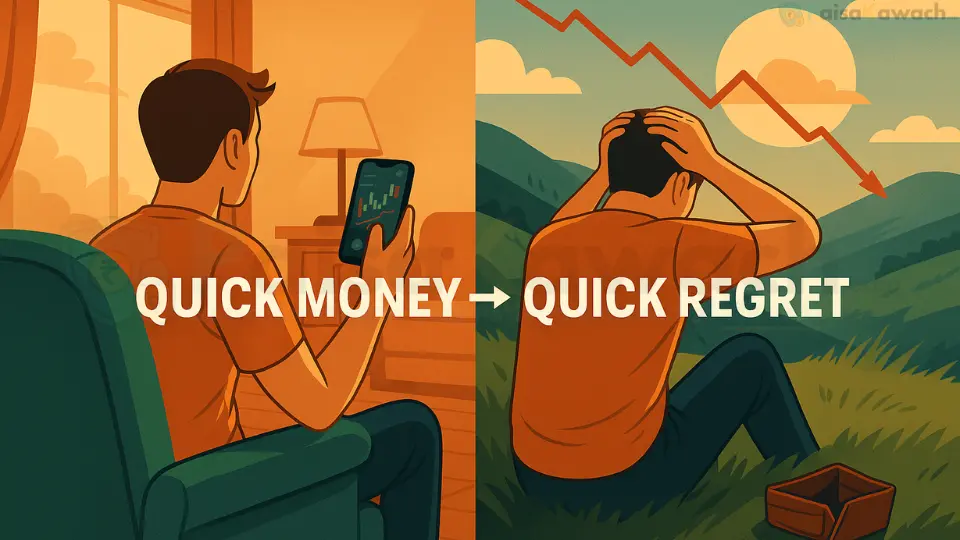
When you’re desperate, scams and get-rich-quick schemes feel like a lifeline, and that’s exactly why they target people like you. Be very wary of guaranteed returns, pressure to act fast, anyone asking you to recruit friends, and trading “gurus” selling courses. If it sounds too good to be true, it usually is. Real progress is slower and a lot more boring.
Step 5: Own the Small Version First
You don’t have to skip straight to the dream. A smaller, practical version gets you moving and builds the credit, savings and confidence that make the dream possible.
- A reliable, affordable car that gets you to work beats a stretched purchase that leaves you stressed every month.
- A rented place you can comfortably afford, or a shared home, frees money to save toward a deposit later.
- Think “stepping stone”, not “settling”.
Step 6: Upgrade the Dream
Once income is higher, debt is low and savings are steady, the car or the home stops being a fantasy and starts being a plan with a date on it.
- Work out the full cost of the dream, including insurance, maintenance, taxes and running costs, not just the sticker price.
- Aim to pay a big part upfront so loan payments stay manageable.
- If the payment would stress you out, wait or choose the next step down. Peace of mind is part of the luxury.
The Ladder at a Glance
Tap to find where you are on the ladder
If you don’t know where your money goes: Step 1. If you cover your costs but have nothing left over: Step 2. If you have spare money but spend it all: Step 3. If you have a cushion and want it to grow: Step 4. If you’re stable and ready for something bigger: Step 5 or 6. Being on Step 1 is not failure. Everyone starts somewhere.
5. Your 24-Hour Reset: Five Free Things You Can Do Today
When you feel stuck, thinking about the whole ladder is too much. So pick one thing from this list and do it today. Small actions break the freeze, and that matters more than a perfect plan.
Pick One and Start
- Open a notes app and write your money in and money out for the last month. Ten minutes. No judgment.
- Cancel or pause one thing you pay for and barely use.
- Search one skill and watch one free beginner lesson, then write down one thing you learned.
- Message one person who works in a job you’d like and ask a short question about how they started.
- Clean your feed: unfollow five accounts that make you feel behind.
Tap for the 10-minute rule that beats procrastination
Tell yourself you’ll work on your goal for just ten minutes, and you’re allowed to stop after. Most of the time you’ll keep going, because starting is the hard part. If you do stop, you still kept a promise to yourself, and that builds trust faster than any big plan you abandon.
6. When You Feel Like Giving Up: Stopping the Negative Spiral
Here’s something nobody tells you: the hardest part of being broke isn’t only the money. It’s the voice in your head that says it’ll never change. That voice is persuasive when you’re tired, lonely and comparing yourself to everyone online. But feelings aren’t facts.
Three Thinking Traps (and the One-Line Fix for Each)
Our minds fall into predictable traps when we’re stressed. Naming them takes away their power.
- “Everyone else is ahead of me.” You’re comparing your insides with their outsides. Fix: compare yourself to who you were six months ago.
- “If I can’t get it all, why try?” All-or-nothing thinking. Fix: one small step still counts as moving.
- “It will always be like this.” You’re treating a hard chapter like the whole book. Fix: write “right now” before the sentence. “Right now, I’m broke.”
Tap for the 3-step spiral breaker (takes two minutes)
1. Name it: “I’m having the thought that I’ll never get out of this.” 2. Check the evidence: is there any proof this thought is 100% true, or any past time you got through something hard? 3. Take one tiny step: drink water, step outside for five minutes, or do one item from the 24-hour reset. You’re not trying to feel amazing, just a bit steadier.
Tap for what to do on a truly bad night
Put the phone down and do something physical and small: shower, walk around the block, eat something, text one person. Don’t make big money or life decisions at 2am, because tired brains lie. Tomorrow’s version of you will see it more clearly.
A gentle note, from one human to another: if the heaviness doesn’t lift, or you feel hopeless or unsafe, please talk to someone you trust, such as a friend, family member, doctor or counsellor. You don’t need to be at rock bottom to ask for help. Free, local support lines exist in most countries, and you can search for yours at findahelpline.com. If you’re in immediate danger, contact your local emergency number right now.
7. The 7-Day Starter Challenge (10 Minutes a Day)
This is a small, free challenge to build momentum. Tick the boxes yourself or copy this list into your notes app. Each day takes about ten minutes.
- ☐ Day 1 – See it: write down last month’s income and spending.
- ☐ Day 2 – Plug a leak: cancel or pause one unused subscription or small recurring cost.
- ☐ Day 3 – Pick a skill: choose one skill to learn and watch one beginner lesson.
- ☐ Day 4 – Clean your feed: unfollow or mute five accounts that make you feel bad.
- ☐ Day 5 – Reach out: message one person for advice, or apply for one better-paid opportunity.
- ☐ Day 6 – Save a little: move a small amount, however tiny, into a separate savings spot.
- ☐ Day 7 – Review: write three things you did this week and one thing you’ll do next week.
Tap if you missed a day
Then you missed a day, and that’s all it means. Pick up at the next one. A perfect streak isn’t the goal. Coming back is. The people who get ahead aren’t perfect. They’re the ones who restart without punishing themselves.

8. A 90-Day Roadmap for Someone With No Money, No Network and No Help
If the 7-day challenge worked, here’s the next stretch. Treat it as a guide to adapt, not a rulebook. Everyone’s situation is different.
What Progress Honestly Looks Like
Progress at the beginning rarely looks like a dramatic jump. It looks like small, almost boring signs that you’re getting steadier.
- You know your numbers without dreading them.
- You have a little cushion, even if it’s small.
- You have one new skill or piece of work you can point to.
Tap if 90 days feels too long
Then forget 90 days and just do this week. A long road is made of ordinary days. You don’t need to see the whole staircase to take the first step. You only need to see the next one.
9. Protecting the Dream: How to Plan for the Car and the Home Without Letting Them Ruin You
You can keep the dream and still be smart about it. The trick is to separate wanting the thing from rushing to get it.
Working Backwards From the Dream
Instead of staring at the finish line, plan backwards. It turns a vague fantasy into a list of steps.
- Look up the full cost of what you want, including insurance, fuel or utilities, maintenance and taxes, so there are no surprises.
- Decide a realistic timeframe, such as 5 or 10 years, and work out what monthly saving that needs.
- Ask what income you’d need to make that saving comfortable, then aim your skills and career at that number.
Tap for the “comfortable payment” test
Before taking any loan, ask: if my income dropped a bit, or I had a bad month, would I still be okay? If the answer is no, the payment is too big for you right now. Stress is a cost too, and a purchase that leaves you anxious every month isn’t really a luxury.
Tap for what to avoid at 24 with a small income
Be careful about stretching for a very expensive car on a long loan, buy-now-pay-later habits for non-essentials, payday-style high-interest loans, and any scheme that needs you to borrow to “invest”. These can turn a small income into a long-term trap. This is general information and not financial advice, so for big decisions it’s worth speaking to a qualified local adviser.
10. Quick FAQs
Is it wrong to want a luxury car or home when I’m broke?
No. Wanting a better life is natural and can motivate you. It only becomes a problem if you rush into debt to get it or use it to put yourself down.
I have no family support. Can I still get there?
Many people do, but it usually takes longer and needs patience. Focus on income, skills, saving habits and a few supportive people, and measure progress against your own past, not against people with a head start.
What should I do first if I only have one hour this week?
Track last month’s money and cancel one thing you don’t use. That alone gives you clarity and a first small win.
How do I stop comparing myself to people online?
Mute accounts that make you feel behind, follow people who teach or share honestly, and limit late-night scrolling. Compare yourself with who you were three months ago.
One Last Thing
If you remember only one line from this whole article, make it this: don’t judge your life by someone else’s highlight reel, and don’t give up on a chapter you haven’t finished writing.
You may start with less. You may take longer. But you’re allowed to want more, and you’re allowed to build it one honest step at a time. Pick one thing from the 24-hour reset. Do it today. Then come back and do the next one.
This article is general information and encouragement, not financial, legal or mental-health advice. Figures and timelines will differ by person and country. For decisions about debt, investing or large purchases, please speak with a qualified local adviser. If you’re struggling emotionally, reach out to someone you trust or a professional.
Keep Reading: More Gen Z Finance Insights

Comments
No comments yet. Be the first to comment!