When the Budget Does Not Align With You: How Individuals, Investors, and Businesses Should Respond

Every year, the Union Budget becomes one of the most closely watched policy events in India. Expectations run high across income groups, industries, and financial markets. For weeks leading up to budget day, speculation dominates headlines—possible tax cuts, sector-specific incentives, relief for salaried individuals, and stimulus for consumption or growth. Television debates, newspaper columns, and social media discussions amplify these expectations, creating a sense that the budget will decisively improve personal financial outcomes.
However, once the budget is announced, disappointment often outweighs satisfaction. Salaried individuals feel overlooked, small and medium businesses feel under-supported, investors worry about short-term market reactions, and taxpayers question whether national priorities truly reflect everyday realities. The recurring sentiment is familiar: this budget does not align with me.
When a budget does not align with you, frustration is a natural reaction. Yet, a government budget is not a personal financial plan. It is a macroeconomic policy document shaped by fiscal constraints, political realities, global economic conditions, and long-term national objectives. Understanding this distinction is essential before deciding how to interpret or respond to any budget announcement.
Understanding what a budget is — and what it is not
At its core, a government budget is a structured statement of projected revenue, planned expenditure, borrowing requirements, and policy direction for a specific financial year. It reflects how the state intends to mobilise resources and deploy them to maintain economic stability, promote growth, support vulnerable sections, and meet strategic national priorities.
The budget also functions as a signalling mechanism. It communicates the government’s priorities to investors, businesses, international institutions, and citizens. Allocations toward infrastructure, defence, manufacturing, or social welfare indicate where policy emphasis is likely to remain over the medium term.
However, it is equally important to understand what a budget is not. A budget is not designed to provide immediate financial relief to every citizen. It is not intended to guarantee stock market rallies or eliminate structural problems within a single year. Expecting it to do so creates a persistent mismatch between perception and reality.
Why budgets often feel misaligned
One of the primary reasons budgets feel disappointing is expectation inflation. In the weeks preceding the budget, speculation by media outlets, analysts, industry associations, and political commentators creates narratives of sweeping tax cuts or transformative reforms. Each stakeholder group highlights demands specific to its interests, creating an illusion that all priorities can be addressed simultaneously.
When the actual budget focuses on fiscal consolidation, long-term capital expenditure, or structural stability instead of immediate consumption support, it appears underwhelming. The disappointment often reflects unmet expectations rather than policy failure.
Another major factor is the timing of benefits. Infrastructure spending, manufacturing incentives, and institutional reforms generate results over years, not months. The costs—taxes, compliance requirements, inflationary pressures—are often felt immediately, while benefits are deferred.
Human psychology is naturally biased toward short-term outcomes. Immediate discomfort overshadows long-term potential gains, making even prudent budgets feel misaligned at the individual level.
The political and economic constraints behind every budget
Budgets are shaped by constraints that significantly limit flexibility. Governments must operate within defined fiscal boundaries. Higher spending increases borrowing and future interest obligations, while lower taxes reduce revenue and widen fiscal deficits. Both carry long-term risks.
Every allocation involves trade-offs. Supporting one sector often means deprioritising another. Increased welfare spending may restrict capital investment. A capex-heavy approach may frustrate consumption-driven households. These trade-offs are structural, not accidental.
Political feasibility also plays a role. Some economically sound measures may be politically sensitive, while politically necessary decisions may not be economically optimal in the short term. Budget-making is therefore a balance between economics, governance, and political reality.
This is why no budget can satisfy all groups simultaneously. Misalignment for one segment often reflects alignment for another.
- Budgets are macro tools: Designed for national balance, not individual optimisation.
- Trade-offs are inevitable: Supporting one priority limits others.
- Short-term discomfort: Immediate effects are often uneven.
- Long-term intent: Benefits unfold gradually.
What you cannot realistically do
When a budget disappoints, emotional responses are common. Public outrage, social media criticism, or impulsive reactions may provide temporary emotional relief but rarely influence outcomes. Once passed, a budget becomes law and establishes the economic operating framework for the year.
Similarly, panic-driven financial decisions are counterproductive. Selling investments due to fear or chasing speculative opportunities based on rumours often leads to suboptimal outcomes. Markets assimilate budget information rapidly, and emotional responses usually lag rational pricing.
What individuals can do instead
The most effective response to a misaligned budget is adaptation. Individuals should reassess personal finances in light of revised tax structures, inflation expectations, and policy changes. This may involve adjusting spending habits, increasing savings buffers, or revisiting financial priorities.
Tax planning becomes especially important. Instead of focusing on relief that was not provided, individuals should optimise within the existing framework. Effective use of deductions, exemptions, long-term investment instruments, and timing strategies can significantly improve outcomes even without headline tax cuts.
Financial resilience is built through preparation, not reaction. Budgets may change the rules, but informed individuals learn to operate more effectively within them.
How investors should interpret a disappointing budget
For investors, budgets should be viewed as directional indicators rather than trading triggers. While markets may react sharply on budget day, long-term performance depends on earnings growth, policy continuity, economic fundamentals, and global conditions.
Short-term volatility often reflects sentiment rather than structural change. Investors who react emotionally risk locking in losses or missing long-term opportunities.
A more constructive approach is to analyse sectoral implications. Long-term government focus on infrastructure, manufacturing, defence, energy, or technology provides insight into where sustained policy support may exist. Portfolio adjustments should be gradual and aligned with long-term strategy rather than short-term noise.
Implications for businesses and professionals
For businesses, headline announcements rarely capture the true impact of a budget. Changes in depreciation rules, compliance requirements, procurement policies, and incentive structures often matter more than headline tax rates or allocations.
Budgets also offer strategic signals. A sustained push toward capital expenditure may create opportunities for suppliers, logistics providers, engineering firms, and service companies. Businesses that align early with policy direction often benefit more than those that resist structural change.
Professionals, particularly in finance, consulting, and operations, should interpret budgets as frameworks that shape demand patterns and regulatory environments over time.
Democratic and civic options
If a budget disproportionately affects a sector or community, constructive engagement is more effective than outrage. Industry associations, formal consultation processes, and structured policy feedback channels influence future decisions more reliably than public anger.
In democratic systems, policy evolution is gradual. Sustained, reasoned input shapes future budgets far more effectively than reactionary criticism.
Long-term perspective: budgets as a process, not an event
Budgets should be understood as part of a continuous policy process rather than isolated annual events. Structural reforms unfold over multiple years, and consistency often matters more than dramatic announcements.
Some of the most effective budgets appear uneventful in the short term. Their impact becomes visible only over time through improved stability, predictable policy frameworks, and sustained investment flows.
Economies that prioritise fiscal discipline, transparency, and long-term planning tend to attract durable growth even if short-term public sentiment remains mixed.
Bottom line
When the budget does not align with you, the most productive response is not resistance but recalibration. Understand the intent, adapt personal and professional strategies, and maintain a long-term outlook. Budgets change the rules of the game—but informed individuals and organisations learn to play better within them.
Keep Reading: More Personal Finance Insights
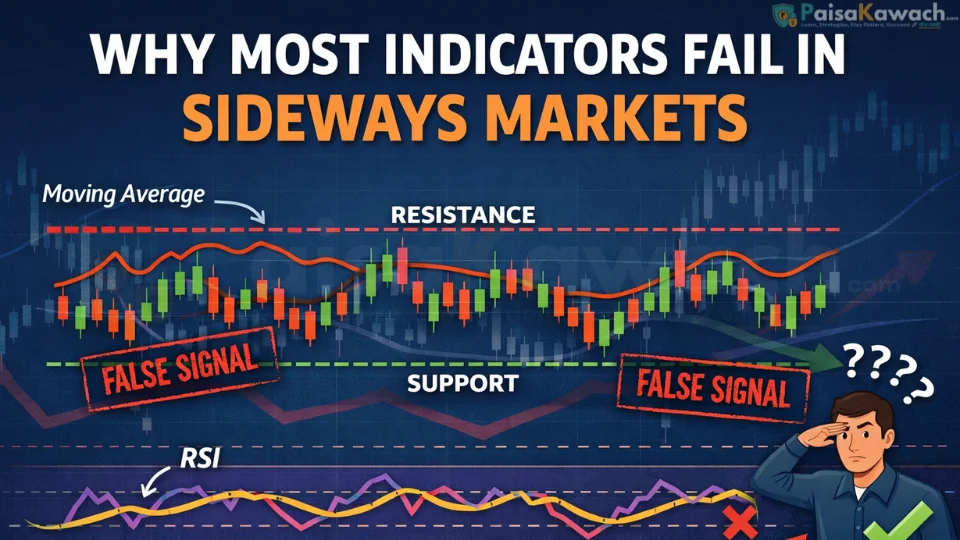 Why Most Indicators Fail in Sideways Markets (And What Actually Works)
Next →
Why Most Indicators Fail in Sideways Markets (And What Actually Works)
Next →
 India–Middle East Trade Corridor in 2026: Emerging Business Opportunities, Strategic Shifts, and Economic Impact
Comments
No comments yet. Be the first to comment!