Who Are Big Investors and Why Their Decisions Move Markets So Fast (Explained Simply)
Understanding the Invisible Hands That Move Markets
If you have ever opened the news and seen headlines like “Markets fall sharply,” “Stocks rally suddenly,” or “Investors turn cautious,” you may have wondered one simple question: Who exactly is moving the market?
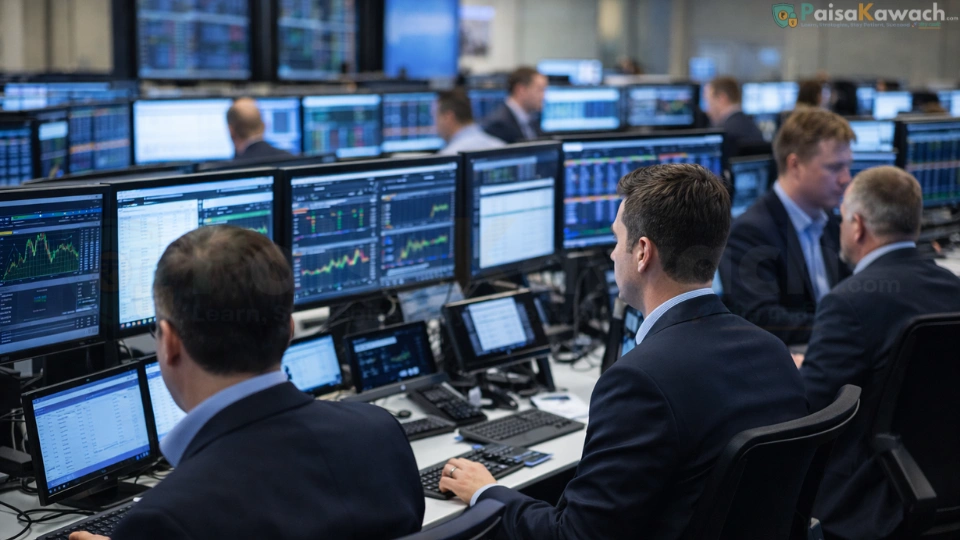
It is rarely individual people buying or selling from their phones. In reality, most large and fast market moves are driven by a small group known as “big investors.” These investors control enormous amounts of money, and their decisions can move markets within minutes.
This article explains—slowly and clearly—who these big investors are, how they think, why they act quickly, and what their actions mean for people who don’t understand financial terms easily.
Who Are “Big Investors”?
Big investors are institutions or organisations that manage very large pools of money. This money does not usually belong to one person—it belongs to millions of people whose savings are collected and invested together.
Think of big investors like this: imagine millions of small water drops coming together to form a powerful river. One drop cannot change direction much—but the river can.
Common Types of Big Investors
- Mutual Funds – Manage money from regular people investing monthly or yearly
- Pension Funds – Invest retirement money of employees and workers
- Insurance Companies – Invest premiums collected from policyholders
- Foreign Institutional Investors (FIIs) – Global funds investing across countries
- Hedge Funds – Professional traders managing large, fast-moving capital
These institutions may invest in stocks, bonds, commodities, currencies, or entire countries. Because of their size, even small decisions by them can create big market reactions.
Why Do Big Investors Matter More Than Individuals?
Let’s use a simple example.
If you buy shares worth ₹10,000, the market barely notices. But if a large fund sells shares worth ₹10,000 crore, prices will move immediately—because supply suddenly becomes very high.
Markets move on demand and supply. Big investors control massive supply and demand.
This is why market movements often feel sudden and confusing to everyday readers.
How Big Investors Think (Very Different From Retail Investors)
Most individuals think like this:
- “Is this company good?”
- “Is the price low or high?”
- “Should I buy or sell now?”
Big investors think differently. They ask:
- “Is the global environment safe or risky?”
- “Should we protect capital or take risk?”
- “Which countries or sectors are safer right now?”
Their decisions are less emotional and more defensive. Survival comes before profit.
Why Big Investors Act So Fast
Speed is critical for large funds. When managing huge sums of money, delaying decisions can be costly.
If a fund waits too long:
- Prices may fall further
- Liquidity may disappear
- Losses may grow rapidly
That’s why big investors often sell before bad news is fully confirmed. They reduce exposure first and analyse later.
What Is “Risk-On” and “Risk-Off” (In Simple Words)
Big investors usually operate in two modes:
Risk-On
When the world feels stable, growth is visible, and uncertainty is low, big investors are comfortable taking risk. They buy stocks, invest in emerging markets, and seek higher returns.
Risk-Off
When uncertainty rises—due to wars, trade tensions, inflation, or political issues—they shift to safety. They sell risky assets and move money to safer places.
Why Markets Fall Even Without Bad News
This confuses many people.
Markets often fall not because something bad happened—but because something might happen.
Big investors don’t wait for confirmation. They react to signals, headlines, and probabilities.
This is why markets sometimes fall on “fear,” not facts.
Why Retail Investors Feel Left Behind
Individual investors usually react later:
- They wait for news explanations
- They watch prices already moving
- They feel panic after big moves
By the time news reaches the public, big investors have often already adjusted positions.
How Big Investors Influence News Itself
Market moves often create news rather than follow it.
When markets fall sharply, media starts searching for reasons. The cause may be uncertainty—but headlines give it a name.
This creates a feedback loop:
- Big investors sell
- Markets fall
- News reports fear
- More investors panic
What This Means for Normal People
Understanding big investors helps remove fear.
Markets are not random. They are driven by capital movement, safety needs, and global uncertainty—not daily emotions of small investors.
When markets fall sharply, it doesn’t mean everything is broken. It often means big investors are temporarily protecting money.
How You Should Read Market News Differently
Instead of asking:
“Why did markets crash today?”
Ask:
- What uncertainty are big investors reacting to?
- Is this fear-based or data-based?
- Is this short-term protection or long-term damage?
Long-Term vs Short-Term Thinking
Big investors think in cycles, not days.
They may sell today and buy back later. Their goal is to survive volatility—not predict every move.
This is why copying their short-term actions without understanding context is dangerous for individuals.
Final Thoughts: Markets Are Human, Not Machines
Markets move because humans manage money. Humans fear loss more than they love profit.
Big investors act fast not because they are smarter—but because they must protect massive capital.
Once you understand this, market movements feel less scary and more logical.
Keep Reading: More Personal Finance Insights
 Union Budget 2026 Expectations: What Businesses, Investors, and the Economy Are Watching Closely
Next →
Union Budget 2026 Expectations: What Businesses, Investors, and the Economy Are Watching Closely
Next →
 Why Most Indicators Fail in Sideways Markets (And What Actually Works)
Comments
No comments yet. Be the first to comment!