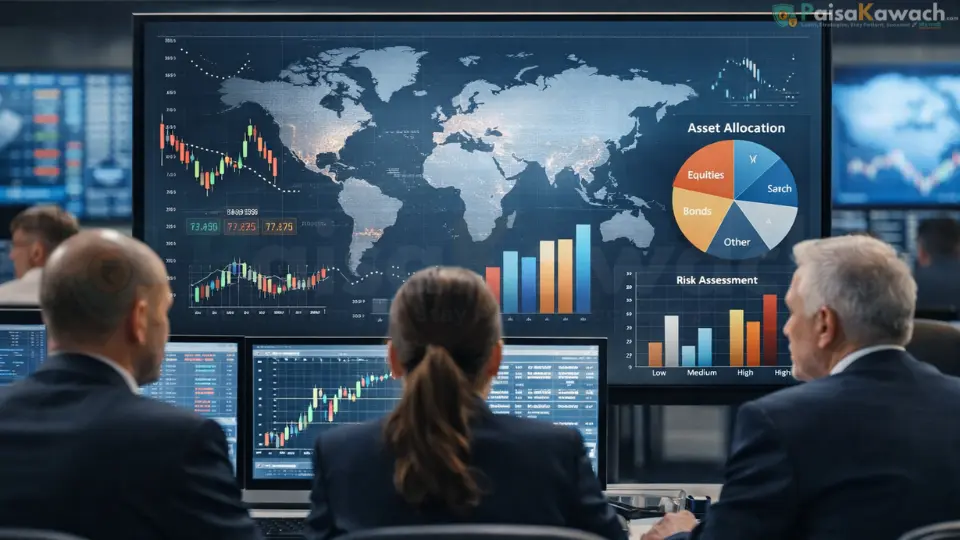
Why Global Growth Had a Slow Start in 2026: Key Economic Factors Explained
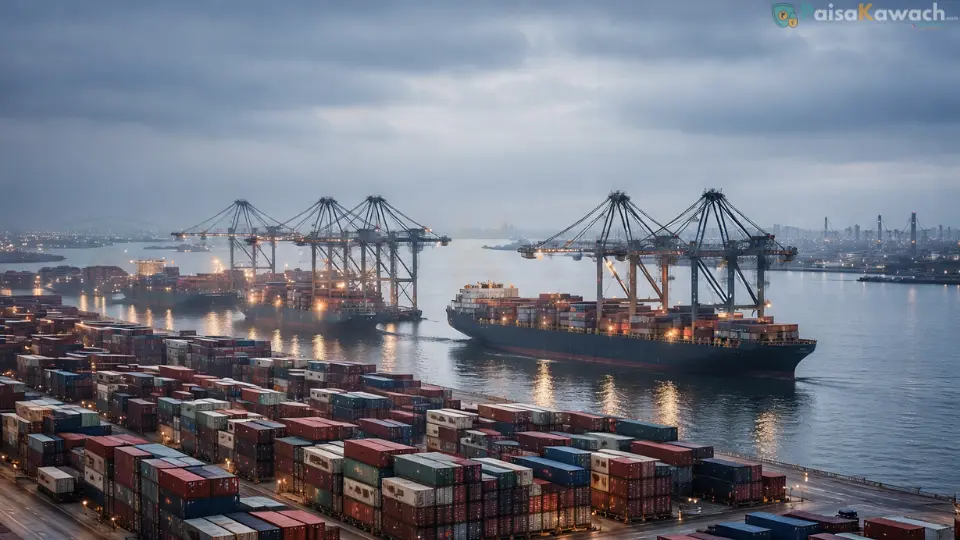
A Cautious Start to the Global Economy in 2026
As 2026 began, global economic growth showed signs of slowing rather than accelerating. While fears of a deep global recession have not materialized, momentum across major economies has been noticeably weaker than many policymakers, investors, and businesses had expected at the start of the year.
This softer start has been visible across a range of indicators: slower industrial output growth, cautious consumer spending, delayed corporate investments, and subdued global trade volumes. Importantly, this slowdown is not uniform across regions, nor is it abrupt. Instead, it reflects a gradual cooling after several years of extraordinary policy intervention, post-pandemic recovery, and inflation-driven tightening.
The world economy in early 2026 is best described as stable but hesitant. Growth continues, employment remains relatively resilient in many countries, and financial systems are functioning normally. Yet, the enthusiasm that typically accompanies the start of a new economic cycle is largely absent.
This slower start is not the result of a single shock or crisis. Rather, it is the outcome of a combination of structural and cyclical factors that have been building steadily over time. High interest rates, trade and policy uncertainty, uneven regional recoveries, and geopolitical tensions are collectively shaping a more cautious global environment.
Understanding why global growth slowed at the start of 2026 requires examining these forces individually — and how they interact with each other.
High Interest Rates Continue to Weigh on Growth
One of the most significant drags on global growth entering 2026 has been the persistence of relatively high interest rates across major economies. While inflation has moderated from the peaks seen in previous years, central banks have remained cautious about loosening monetary policy too quickly.
After the inflation surge of the early 2020s, policymakers are acutely aware of the risks of easing prematurely. As a result, interest rates in the United States, Europe, and several emerging markets remain restrictive compared to historical norms.
High interest rates influence the global economy through multiple channels, many of which take time to fully materialize.
- Borrowing costs for businesses remain elevated
- Household consumption has softened
- Capital investment decisions are being delayed
For businesses, higher borrowing costs mean that expansion plans must clear a higher hurdle rate. Projects that may have been profitable under low-rate conditions are now postponed or cancelled altogether. This has been especially visible in capital-intensive sectors such as manufacturing, infrastructure, real estate, and renewable energy.
Households, meanwhile, are adjusting to higher mortgage rates, auto loan costs, and credit expenses. Even in countries where employment remains strong, discretionary spending has become more selective. Consumers are prioritizing essentials and savings over large purchases, dampening demand across retail, housing, and durable goods sectors.
The cumulative effect is a broad-based cooling of demand — not a collapse, but a slowdown sufficient to reduce overall growth momentum.
This environment has given rise to what many economists describe as a “soft but sluggish” phase. Economic activity continues, but without the dynamism typically associated with expansionary cycles.
Crucially, monetary policy operates with long and variable lags. Decisions taken by central banks in 2023 and 2024 are still working their way through the economy. This delayed transmission helps explain why growth slowed in early 2026 even as inflation pressures have eased.
Trade and Policy Uncertainty Is Holding Back Investment
Global trade conditions remain uncertain in early 2026. While the world has avoided a full-scale trade war, ongoing discussions around tariffs, sanctions, industrial policy, and supply-chain security have created an environment of persistent uncertainty.
Businesses that operate across borders depend heavily on predictability. When trade rules are unclear or subject to sudden change, companies tend to delay or scale back long-term investments.
This caution has been particularly visible in sectors with complex global supply chains, including:
- Electronics and semiconductors
- Automobiles and auto components
- Energy and critical minerals
- Heavy manufacturing and capital goods
Even when tariffs are not immediately imposed, the mere possibility of future restrictions can alter corporate behavior. Firms may choose to hold cash, reduce exposure, or reconfigure supply chains gradually rather than commit to large expansions.
Policy uncertainty is not limited to trade alone. Questions around environmental regulations, labor laws, industrial subsidies, and national security frameworks also influence investment decisions. When policy direction is unclear, businesses prefer flexibility over commitment.
At the macro level, this translates into slower capital formation — a critical driver of long-term economic growth.
For the global economy, reduced investment today can constrain productivity and output tomorrow, reinforcing a slower growth trajectory.
China’s Slower Recovery Is Affecting Global Demand
China’s economic performance continues to play a central role in shaping global growth. Entering 2026, China’s recovery from previous disruptions remains uneven, marked by weaker consumer confidence and ongoing stress in parts of its property sector.
While Chinese authorities have taken steps to stabilize growth, structural challenges persist. Demographic pressures, high local government debt, and adjustments in the real estate sector have weighed on domestic demand.
Because China occupies a central position in global manufacturing and commodity consumption, slower growth there has ripple effects far beyond its borders.
- Export-driven Asian economies face softer external demand
- Commodity-producing nations see weaker price support
- Global industrial supply chains adjust to lower volumes
Countries that supply raw materials such as metals, energy, and agricultural products are particularly sensitive to changes in Chinese demand. A moderation in Chinese construction and industrial activity reduces demand for commodities, affecting exporters across Latin America, Africa, and Australia.
At the same time, weaker Chinese import demand impacts manufacturing hubs that rely on Chinese assembly and consumption.
China’s slower recovery does not imply economic contraction. Rather, it reflects a transition toward a different growth model — one that emphasizes sustainability and domestic stability over rapid expansion. However, this transition inevitably results in lower headline growth rates, with global consequences.
Fiscal Support Is Less Aggressive Than in Previous Years
Another important factor behind the slow start to global growth in 2026 is the reduced role of fiscal stimulus. Unlike the stimulus-heavy years that followed the pandemic, governments today are exercising greater restraint.
Public debt levels have risen significantly over the past decade, prompting policymakers to prioritize fiscal sustainability. Many governments are now focused on deficit control rather than aggressive spending expansion.
As a result:
- Large-scale stimulus programs are limited
- Public investment growth has moderated
- Support measures are more targeted than broad-based
Fiscal policy remains supportive in some regions, particularly through infrastructure and social programs. However, the scale is smaller compared to earlier recovery phases.
This shift matters because fiscal spending often acts as a counterbalance when private demand weakens. With governments stepping back, the burden of growth falls more heavily on the private sector — which is itself constrained by high interest rates and uncertainty.
The result is slower aggregate demand growth, reinforcing the cautious tone of the global economy.
Geopolitical Tensions Continue to Influence Confidence
Geopolitical tensions remain a persistent backdrop to the global economy in 2026. While markets have adapted to ongoing conflicts and diplomatic friction, uncertainty surrounding energy security, trade routes, and international alliances continues to influence confidence.
These tensions affect the economy through indirect channels rather than immediate disruption. Businesses factor geopolitical risks into investment decisions, supply-chain planning, and pricing strategies.
Energy markets, in particular, remain sensitive to geopolitical developments. Although supply disruptions have been largely avoided, risk premiums remain embedded in prices, influencing inflation expectations and policy decisions.
Importantly, geopolitical uncertainty tends to amplify other economic headwinds. In an environment already shaped by high rates and policy caution, elevated risk perception further reduces appetite for aggressive expansion.
This has not caused a crisis, but it has reduced the willingness of businesses and investors to take large, irreversible risks.
What This Means Going Forward
A slow start to 2026 does not necessarily imply a weak year overall. Economic growth is not collapsing; rather, it is normalizing after years of extraordinary intervention and volatility.
Many economists expect growth conditions to stabilize as greater clarity emerges across key areas.
- Interest rate expectations become clearer
- Inflation trends remain under control
- Trade and policy decisions gain visibility
If inflation continues to ease and central banks gain confidence, gradual policy easing could support demand later in the year. Similarly, improved policy clarity could unlock delayed investment.
The global economy appears to be transitioning from recovery to normalization — a phase that typically involves slower, more balanced growth rather than rapid acceleration.
This transition may feel uncomfortable for markets accustomed to abundant liquidity and stimulus, but it is not inherently negative. Sustainable growth often requires periods of consolidation.
Bottom Line
Global growth started 2026 at a measured pace due to tight financial conditions, policy uncertainty, uneven regional recoveries, and lingering geopolitical risks — not because of an imminent crisis.
The slowdown reflects adjustment rather than deterioration. For policymakers, the challenge lies in balancing inflation control with growth support. For investors and businesses, the focus has shifted toward resilience, efficiency, and long-term positioning.
In this environment, stability and sustainability matter more than speed. The early months of 2026 suggest a global economy that is cautious, adaptive, and searching for balance rather than momentum.
Keep Reading: More Personal Finance Insights
 The Difference Between Business, Investing, Trading, and Speculation: A Clear Guide for Beginners in 2026
Next →
The Difference Between Business, Investing, Trading, and Speculation: A Clear Guide for Beginners in 2026
Next →
 Capital Protection vs Profit Chasing: Which One Should You Focus on Right Now?
Comments
No comments yet. Be the first to comment!