SpaceX Acquires xAI to Build Orbital AI Infrastructure, Redefining Space-Tech and Machine Intelligence
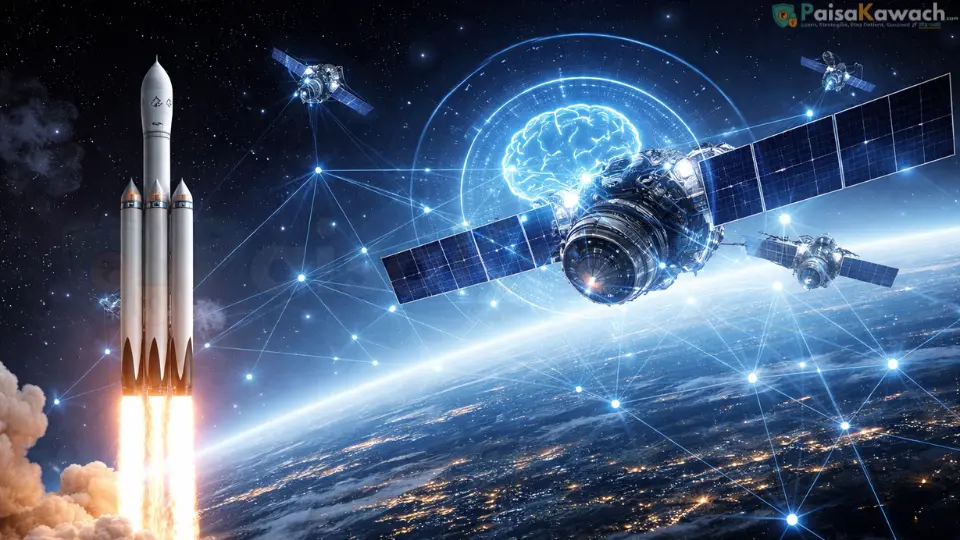
SpaceX completes landmark acquisition of xAI
In a deal that signals a new chapter for both the aerospace and artificial intelligence industries, SpaceX has agreed to acquire xAI for $250 billion, creating an enterprise with an estimated combined valuation of roughly $1.25 trillion. The acquisition is positioned as a strategic move to accelerate development of space-based AI systems, including proposals for orbital data centres and compute infrastructure that could expand global connectivity and on-orbit processing capabilities.
Deal Snapshot
- Acquirer: SpaceX (aerospace & launch operations)
- Target: xAI (AI research & model development)
- Deal value: $250 billion (purchase price)
- Combined valuation: ~ $1.25 trillion (company estimate)
- Strategic aim: build space-based AI compute & orbital data centres
Context: Why the Acquisition Matters
The convergence of advanced AI and space infrastructure has long been discussed by technologists and strategists. This transaction formalises that convergence: by bringing deep AI research under the umbrella of an operator with launch capability and existing satellite networks, the combined group is better positioned to pursue hardware-software synergies that span Earth and orbit.
Experts say the deal is about more than scale. It reflects a bid to integrate proprietary models, satellite telemetry, edge computing and low-latency communications — capabilities that could unlock new commercial use cases from climate monitoring and logistics to global CDN-style provisioning for AI workloads.
Deal Rationale and Strategic Aims
From Launch Vehicles to Compute Platforms
Historically, SpaceX has focused on reducing the cost of access to space through reusable rockets and dense satellite constellations. Integrating an AI research organisation enables a shift from providing connectivity alone to offering integrated compute services in or near space. This could include:
- On-orbit inference and data preprocessing to reduce downlink bandwidth.
- Distributed AI workloads that leverage low-latency satellite links for specialised applications.
- Edge AI for autonomous spacecraft, planetary robotics, and remote sensing pipelines.
Leadership and Vision
The acquisition also reunites operational scale with research horsepower under a leadership vision associated with Elon Musk, whose companies aim to operate at the intersection of infrastructure and intelligence. Observers contend the combined capabilities could accelerate timelines for commercial applications that were previously constrained by terrestrial compute and network limits.
Market and Competitive Impact
Technology Sector Repercussions
This deal reorders priorities across several technology segments. Cloud providers, chipmakers, and other AI firms may reassess their long-term competitive posture if orbital compute becomes commercially viable. Expect intensified investment in radiation-hardened processors, thermal management, and space-qualified AI accelerators.
Space Industry Effects
For legacy and emerging space companies, the acquisition raises the bar for vertically integrated offerings — combining launch, satellites, and in-space services with advanced AI capabilities. Competitors may pursue strategic partnerships or M&A to close capability gaps in data processing, machine learning operations, and hardware integration.
Regulatory, Security and Ethical Considerations
A deal of this magnitude draws scrutiny from regulators and national security agencies. Space-based AI systems touch on sensitive domains: defence dual-use, cross-border data flows, and export controls. Observers expect regulators to request clear assurances on data governance, cybersecurity, and compliance with national export regimes.
Ethical questions will also surface around the kinds of intelligence run beyond national jurisdictions and how oversight, transparency, and accountability are enforced for on-orbit automated decision systems.
What This Means for Investors
Short to medium term, the market reaction will depend on capital allocation signals, disclosed integration plans, and early technical milestones. Investors typically look for:
- Clear timelines for productisation of space-based AI services.
- Revenue models tied to satellite compute, data subscriptions, or service-level agreements.
- Partnerships with cloud and telecom players to bridge terrestrial and orbital ecosystems.
Analysts note that while the headline valuation is substantial, the real test will be translating research and infrastructure into dependable, scalable revenue streams.
Peer and Sector Comparison
Unlike traditional cloud providers that scale via terrestrial data centres, the combined SpaceX–xAI entity would pursue a hybrid architecture — one where orbital assets complement ground infrastructure. This model contrasts with competitors who are focused either on cloud-centric AI or pure launch and satellite operations.
Implementation Risks and Challenges
- Technical integration: marrying research systems with ruggedised space hardware is non-trivial.
- Regulatory hurdles: cross-jurisdictional approvals and export compliance may slow deployment.
- Capital intensity: orbital compute requires high upfront investment and long payback horizons.
- Market adoption: customers must value latency or bandwidth advantages enough to pay a premium.
What to Watch Next
Key milestones that will indicate progress include public roadmaps for orbital data centres, demonstration missions showing on-orbit inference, partnerships with cloud or telecom providers, and early contracted customers for premium services.
For ongoing coverage and analysis, see reporting from Financial Times.
Bottom Line
The acquisition of xAI by SpaceX marks a defining moment for the convergence of space infrastructure and artificial intelligence. Execution, regulation, and commercial validation will determine whether this bold vision reshapes the global technology landscape.
Keep Reading: More Insights You Might Like
 India–US Trade Deal Boosts Market Sentiment, Signals New Phase in Bilateral Economic Ties
Next →
India–US Trade Deal Boosts Market Sentiment, Signals New Phase in Bilateral Economic Ties
Next →
 NIFTY 50 Pre-Market Context: Market Structure Signals Balanced Conditions Ahead of Feb 4 Session
Comments
No comments yet. Be the first to comment!