AI Infrastructure Is Becoming the World’s Most Valuable Asset in 2026 and Beyond

The Rise of a New Global Asset Class
For centuries, the world’s most valuable assets were tangible and easy to understand: land, labor, factories, oil, and capital. In the digital age, data and software joined that list. Now, as artificial intelligence reshapes every major industry, a new asset has quietly moved to the top of the global value hierarchy — AI infrastructure.
AI infrastructure is no longer a background technical detail. It has become the foundation upon which economic power, corporate dominance, and national competitiveness are built. Companies that control large-scale AI infrastructure increasingly control innovation speed, cost efficiency, and long-term market leadership.
In 2026, AI infrastructure is not just supporting business. It is defining it.
What Exactly Is AI Infrastructure?
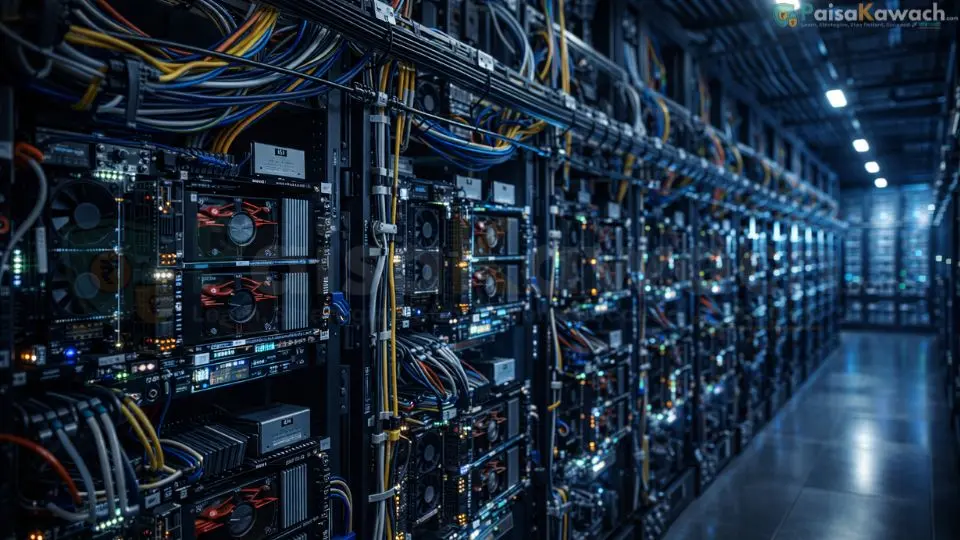
AI infrastructure refers to the complete physical and digital backbone required to develop, deploy, and operate artificial intelligence systems at scale. Unlike traditional IT infrastructure, AI infrastructure is purpose-built for extreme computational intensity, data throughput, and continuous learning.
Core Components of AI Infrastructure
- Compute: High-performance processors such as GPUs, specialized accelerators, and advanced CPUs capable of handling parallel workloads.
- Data Centers: Facilities designed for massive power consumption, cooling efficiency, and reliability.
- Networking: Ultra-fast interconnects that allow machines to communicate with minimal latency.
- Energy Systems: Reliable power generation and distribution, often including renewable energy sources.
- Software Stack: Operating systems, AI frameworks, orchestration tools, and optimization layers.
Unlike traditional infrastructure, AI infrastructure must operate continuously, scale rapidly, and remain adaptable as models evolve. This makes it both capital-intensive and strategically valuable.
Why AI Infrastructure Is More Valuable Than Data Alone
In earlier stages of the digital economy, data was often described as “the new oil.” While data remains essential, it has become clear that data alone is not enough. Without sufficient AI infrastructure, even the largest datasets cannot generate meaningful intelligence.
AI infrastructure transforms raw data into actionable insight. It determines how quickly models can be trained, how cheaply they can be deployed, and how reliably they can operate in real-world environments.
Data without infrastructure is potential. Infrastructure without data is capacity. When combined, they create economic power.
The Economics of AI Infrastructure
The economic characteristics of AI infrastructure differ fundamentally from traditional assets.
High Fixed Costs, Low Marginal Costs
Building AI infrastructure requires enormous upfront investment. Data centers, chips, power systems, and networks demand billions in capital. However, once built, the marginal cost of running additional AI workloads drops significantly.
This creates strong economies of scale, favoring large players who can amortize costs over massive usage volumes.
Infrastructure as a Competitive Moat
Once a company establishes AI infrastructure at scale, it becomes extremely difficult for competitors to replicate. This creates long-term defensibility similar to railroads in the 19th century or oil pipelines in the 20th.
AI infrastructure locks in advantages related to speed, cost, and capability.
Why Big Tech Is Investing Billions
Major technology companies are committing unprecedented capital to AI infrastructure because they understand a critical truth: future growth depends less on applications and more on capacity.
AI models grow larger, more complex, and more resource-hungry every year. Companies that fail to secure sufficient infrastructure risk stagnation.
From Software Companies to Infrastructure Owners
Many firms once described as software companies are rapidly transforming into infrastructure owners. This shift reflects the realization that control over compute and energy matters more than control over interfaces.
In effect, the technology industry is experiencing a return to vertical integration.
AI Infrastructure and National Power
AI infrastructure is not just a corporate concern. It has become a matter of national strategy.
Countries that control advanced AI infrastructure gain advantages in productivity, defense, healthcare, finance, and scientific research. This has triggered a global race to secure chips, data centers, and energy resources.
Infrastructure as a Geopolitical Asset
Just as oil reserves shaped geopolitics in the 20th century, AI infrastructure capacity is shaping power dynamics in the 21st. Access restrictions, export controls, and supply chain dependencies all reflect the strategic importance of this new asset.
Energy: The Hidden Constraint
AI infrastructure is extraordinarily energy-intensive. Power availability has become one of the primary constraints on AI expansion.
Modern AI data centers consume as much electricity as small cities. This has forced companies to rethink energy sourcing, efficiency, and sustainability.
The Convergence of AI and Energy Infrastructure
Increasingly, AI infrastructure investment goes hand-in-hand with energy infrastructure investment. Renewable energy, advanced cooling systems, and grid optimization are no longer optional add-ons — they are core components.
Who Benefits From the AI Infrastructure Boom?
The value created by AI infrastructure extends far beyond technology companies.
- Semiconductor manufacturers benefit from sustained demand.
- Energy companies gain long-term customers.
- Construction and engineering firms build specialized facilities.
- Cloud service providers monetize capacity through enterprise contracts.
This creates a broad ecosystem of beneficiaries across industries.
AI Infrastructure vs Traditional Capital Assets
Traditional capital assets depreciate predictably. AI infrastructure depreciates technologically rather than physically.
A data center may remain operational for decades, but its economic value depends on continuous upgrades. This shifts capital planning from static investment to dynamic reinvestment.
Infrastructure as a Living Asset
AI infrastructure must evolve constantly. Hardware upgrades, software optimization, and energy improvements are ongoing requirements, not one-time events.
Risks and Challenges
Despite its value, AI infrastructure is not without risks.
- Overinvestment could lead to temporary excess capacity.
- Rapid technological change may shorten asset lifespans.
- Energy constraints may limit expansion.
- Regulatory scrutiny may increase.
However, these risks resemble those faced by earlier transformative infrastructures — railroads, electricity grids, and telecommunications.
What This Means for Businesses
For businesses, the rise of AI infrastructure changes strategic priorities.
Access to AI infrastructure will increasingly determine productivity, innovation speed, and competitiveness. Companies must decide whether to build, buy, or partner.
Infrastructure Strategy as Business Strategy
In the AI era, infrastructure decisions are no longer technical decisions. They are core business decisions with long-term implications.
What This Means for Investors
Investors are beginning to recognize AI infrastructure as a distinct asset class.
Rather than focusing solely on AI applications, long-term investors are examining the infrastructure layer that enables all AI activity.
In every technological revolution, infrastructure owners tend to capture the most durable value.
The Road Ahead
As AI adoption accelerates, infrastructure demand will continue to grow. This growth will not be linear. It will come in waves driven by breakthroughs, regulation, and energy availability.
Over time, AI infrastructure may become as fundamental to economic life as electricity and the internet.
Conclusion
AI infrastructure is becoming the world’s most valuable asset because it sits at the intersection of technology, energy, capital, and power. It determines who can innovate, who can scale, and who can compete.
In 2026 and beyond, the companies and countries that master AI infrastructure will shape the global economy. Those that ignore it risk falling behind — not gradually, but decisively.
Keep Reading: More Personal Finance Insights
 What 2026 Might Mean for Your Money After Everything That Happened in 2025
Next →
What 2026 Might Mean for Your Money After Everything That Happened in 2025
Next →
 How Institutions Position at the Start of a New Trading Year: Inside the Quiet Reset of Global Markets
Comments
No comments yet. Be the first to comment!