Why Data Centers Are Becoming the Most Valuable Assets in the AI Economy
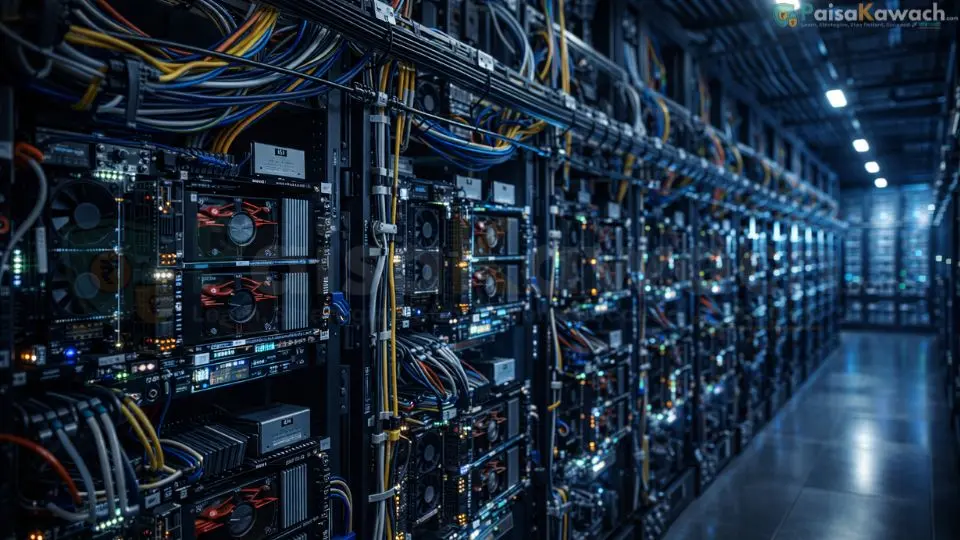
The Rise of Data Centers as Strategic Economic Assets
Data centers have quietly transitioned from behind-the-scenes infrastructure to front-line strategic assets in the global economy. As artificial intelligence adoption accelerates across industries, the demand for reliable, scalable, and high-performance computing environments has placed data centers at the core of digital transformation strategies.
What was once considered a support function for IT operations is now viewed as mission-critical infrastructure, comparable in importance to energy grids, transportation networks, and telecommunications systems. In the AI-driven economy, data centers are not just facilities that store servers — they are the engines that power innovation, automation, and competitive advantage.
Understanding the AI Economy
The AI economy is built on the ability to collect, process, analyze, and learn from massive volumes of data in real time. Machine learning models, generative AI systems, autonomous platforms, and predictive analytics all require immense computational power, ultra-low latency, and continuous availability.
Unlike traditional software applications, AI systems are resource-intensive by design. Training large-scale models requires thousands of processors working in parallel, consuming enormous amounts of power and generating significant heat. Inference workloads — the real-time use of AI models — also demand fast, reliable access to data.
This shift has fundamentally altered the infrastructure requirements of modern businesses, placing unprecedented importance on data centers.
Why AI Workloads Are Different From Traditional Computing
Traditional enterprise computing focused on predictable workloads such as databases, email servers, and business applications. These systems were designed for stability and cost efficiency rather than extreme performance.
AI workloads, by contrast, introduce new challenges:
- Massive parallel processing requirements
- High-density server configurations
- Continuous model training cycles
- Latency-sensitive inference operations
- Explosive data storage needs
To support these demands, data centers must evolve beyond conventional designs, incorporating specialized hardware, advanced cooling systems, and high-capacity power infrastructure.
Data Centers as the Physical Backbone of Artificial Intelligence
While AI is often discussed in abstract terms — algorithms, models, and software — its real-world execution depends entirely on physical infrastructure. Data centers provide the controlled environments necessary for housing the hardware that runs AI systems.
Every AI breakthrough, from natural language processing to computer vision, ultimately relies on data centers to function at scale. Without access to reliable infrastructure, even the most advanced AI models cannot be deployed effectively.
This reality has elevated data centers from operational necessities to strategic assets that determine who can compete in the AI economy and who cannot.
The Explosion in Global Data Center Investment
Investment in data center infrastructure has surged dramatically in recent years, driven largely by AI adoption. Institutional investors, private equity firms, sovereign wealth funds, and technology companies are allocating record capital toward data center development and acquisition.
Several factors are driving this investment boom:
- Long-term demand visibility from AI growth
- Predictable cash flows from enterprise and cloud clients
- High barriers to entry due to capital and regulatory requirements
- Strategic importance to national digital economies
As a result, data centers are increasingly viewed as infrastructure assets rather than traditional real estate, attracting investors seeking stability and long-term returns.
Hyperscale Data Centers and the AI Arms Race
Hyperscale data centers — massive facilities designed to support cloud and AI workloads — have become central to the global AI arms race. These facilities house tens of thousands of servers and consume power equivalent to small cities.
Technology companies are racing to build or secure access to hyperscale capacity to ensure they can train and deploy increasingly complex AI models. The availability of such infrastructure directly influences a company’s ability to innovate and compete.
This competition has transformed data center capacity into a strategic bottleneck, with demand frequently outpacing supply in key regions.
Power and Energy: The New Constraints
One of the most critical challenges facing data centers is power availability. AI workloads require vast amounts of electricity, and access to reliable, affordable power has become a deciding factor in where data centers are built.
Energy considerations now shape infrastructure strategy in several ways:
- Proximity to renewable energy sources
- Grid stability and redundancy
- Long-term power purchase agreements
- Energy efficiency and sustainability targets
In many markets, power constraints have become more limiting than land availability, fundamentally reshaping data center site selection.
Cooling Technology and Infrastructure Innovation
As server densities increase, traditional air-cooling methods are no longer sufficient. AI-driven data centers increasingly rely on advanced cooling technologies to maintain performance and reliability.
Innovations include liquid cooling, immersion cooling, and AI-optimized thermal management systems. These technologies not only improve efficiency but also enable higher computing densities, maximizing the value of physical space.
Cooling infrastructure is now a key differentiator in data center design, directly impacting operational costs and scalability.
Geopolitics and Digital Sovereignty
Data centers have become central to discussions around digital sovereignty and national security. Governments increasingly view control over data infrastructure as a strategic priority.
AI systems often process sensitive information, making the physical location of data centers a matter of regulatory and geopolitical importance. This has led to stricter data localization laws and increased scrutiny of foreign ownership in critical infrastructure.
As a result, data center investments are no longer purely commercial decisions — they are shaped by political, regulatory, and security considerations.
The Role of Edge Data Centers in AI Deployment
While hyperscale facilities dominate headlines, edge data centers play an equally important role in the AI economy. These smaller facilities are located closer to end users, enabling low-latency AI applications such as autonomous vehicles, smart cities, and real-time analytics.
The combination of centralized hyperscale data centers and distributed edge infrastructure creates a layered computing ecosystem capable of supporting diverse AI use cases.
Enterprise Transformation Driven by Data Center Access
For enterprises, access to high-quality data center infrastructure increasingly determines the pace and success of AI adoption. Companies with reliable infrastructure can experiment, scale, and deploy AI solutions faster than competitors.
This dynamic has turned data center partnerships and long-term capacity agreements into strategic priorities for businesses across sectors, from finance and healthcare to manufacturing and retail.
Financial Characteristics of Data Centers
From a financial perspective, data centers offer attractive characteristics:
- Long-term contracts with creditworthy tenants
- High switching costs for customers
- Predictable revenue streams
- Inflation-linked pricing mechanisms
These attributes make data centers particularly appealing in uncertain economic environments, further reinforcing their status as valuable assets.
Talent, Skills, and Operational Complexity
Operating modern AI-ready data centers requires specialized skills across engineering, energy management, cybersecurity, and operations. Talent shortages in these areas add another layer of complexity and value to established operators.
The ability to design, build, and operate high-performance data centers at scale is increasingly seen as a core competitive advantage.
Environmental and Sustainability Pressures
As energy-intensive facilities, data centers face growing scrutiny over their environmental impact. Sustainability considerations now influence investment decisions, regulatory approvals, and customer preferences.
Operators are investing heavily in renewable energy sourcing, efficiency improvements, and carbon reduction initiatives to align with global sustainability goals.
Why Data Centers Command Premium Valuations
The convergence of AI growth, infrastructure scarcity, and long-term demand has pushed data center valuations to historic highs. Unlike traditional assets, their value is tied not just to physical property but to their strategic role in enabling digital economies.
As AI adoption deepens, the importance of data centers is expected to increase further, reinforcing their premium status.
The Future Outlook: Data Centers as Core Economic Infrastructure
Looking ahead, data centers are likely to be recognized as core economic infrastructure alongside power plants and transportation networks. Governments, investors, and corporations are already adapting their strategies accordingly.
In the AI economy, data centers are not optional — they are foundational. Their ability to support innovation, scale intelligence, and enable digital transformation ensures their position as some of the most valuable assets of the modern era.
Keep Reading: More Personal Finance Insights
 The AI Boom and Stock Markets: Are We Seeing Real Growth or Another Tech Bubble?
Next →
The AI Boom and Stock Markets: Are We Seeing Real Growth or Another Tech Bubble?
Next →
 What 2026 Might Mean for Your Money After Everything That Happened in 2025
Comments
No comments yet. Be the first to comment!