One Room, Two Wars, and a Currency Challenge: What's Actually at Stake at This Weekend's BRICS Summit
Most international summits produce a group photo, a joint statement full of careful diplomatic language, and not much else that changes anything by Monday. This one has a genuine chance of being different, and it's worth understanding exactly why before the usual news cycle reduces it to a handshake photo. Three separate threads are converging in the same room in Delhi this weekend — a cautious thaw between two nuclear-armed neighbors, a serious institutional challenge to how global trade gets paid for, and the unusual sight of leaders from both of the world's two major active conflicts sitting at the same table as most of the rest of the world's emerging economic power. None of these three threads are guaranteed to produce a dramatic outcome. All three are worth watching closely regardless.
Thread One: Xi's First India Visit in Seven Years
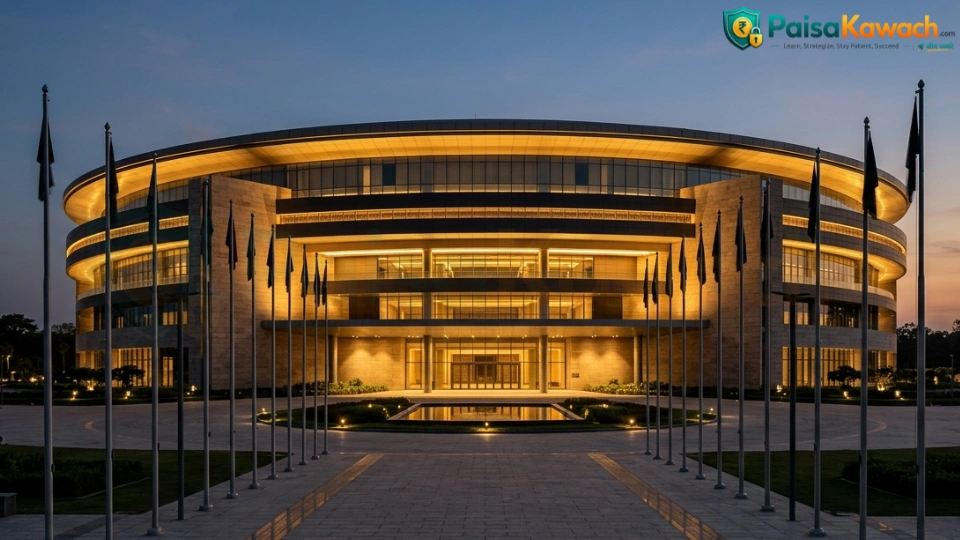
Chinese President Xi Jinping arrived in New Delhi for the 18th BRICS Summit — his first visit to India in seven years, a gap defined largely by military tension along the Line of Actual Control that has kept high-level engagement between the two countries frozen for an unusually long stretch given their combined economic and demographic weight. His arrival set up a closely watched bilateral meeting with Prime Minister Narendra Modi at Bharat Mandapam, and China has separately signaled ahead of the talks that it intends to "work with India to resolve differences" — notably conciliatory language from a government that has historically been far more guarded in its public framing of the relationship.
Why a Seven-Year Gap Between Visits Matters More Than the Meeting Itself
The length of this gap is itself the most informative detail here. Two countries with India and China's combined scale — together representing roughly a third of the world's population and a substantial share of global GDP — normally maintain frequent, routine high-level contact regardless of underlying tensions, simply because the economic and security stakes of a communication breakdown are too high to leave dormant for years at a time. A seven-year gap signals the relationship had genuinely deteriorated to the point where even routine diplomatic engagement became difficult to sustain. Xi's decision to travel to Delhi now, rather than continuing to avoid it, suggests both sides may have independently concluded that the cost of continued distance has become higher than the cost of resuming dialogue, even without a full resolution of the underlying border tensions.
- A seven-year gap between high-level visits between two countries of this scale reflects a genuinely serious, prolonged deterioration in relations rather than routine diplomatic caution
- China's public commitment to "work with India to resolve differences" ahead of the meeting represents a notably softer public tone than has characterized recent years of the relationship
- Any meaningful de-escalation signal from this meeting would carry consequences well beyond bilateral relations, given both countries' combined weight in global manufacturing, technology supply chains, and regional security architecture
Thread Two: A Real Challenge to Dollar-Based Trade
Sitting alongside the geopolitical drama is a genuinely consequential economic conversation: BRICS leaders are actively discussing cross-border payment mechanisms designed to reduce reliance on the US dollar for international trade settlement. The chair of the BRICS Business Council offered an unusually candid assessment ahead of the summit, describing a unified BRICS payment system as "achievable, but trust is key hurdle" — an admission that the technical capability exists, but the harder problem is getting eleven member countries and ten partner nations to genuinely trust a shared financial infrastructure enough to rely on it for real trade volume.
Why "Trust" Is a More Honest Obstacle Than "Technology"
Building payment infrastructure capable of handling cross-border transactions is a solved technical problem — multiple countries already operate sophisticated domestic and regional payment systems. The genuine difficulty in a BRICS-wide system isn't engineering; it's political and financial confidence. Any country routing significant trade volume through a shared payment system is implicitly trusting that system's governance, its resistance to manipulation by any single dominant member, and its stability during a crisis. With member countries ranging from major economies like China and India to smaller partner nations, and with genuinely differing strategic interests among them, building that shared trust is a far slower, harder process than building the underlying technology — which is exactly why this initiative has been discussed for years without yet producing a fully operational system.
- The technical capability for a BRICS payment system already exists; the genuine barrier is political trust among member states with differing strategic interests
- Even a partial, gradual shift toward BRICS-based trade settlement would have real consequences for dollar demand, US monetary policy leverage, and how countries under Western sanctions — including Russia and Iran — conduct international trade
- Progress on this front tends to be incremental and hard to measure in a single summit, meaning the more realistic signal to watch for is continued institutional commitment rather than a sudden, complete system launch
Thread Three: Two Active Wars, One Shared Table
The third thread is less about any single agreement and more about the unusual composition of the room itself. Russian President Vladimir Putin and Iranian President Masoud Pezeshkian are both attending this summit, meaning leaders representing both sides of the world's two most significant active conflicts — the Ukraine war and the broader West Asia crisis — are present at the same gathering as major economic powers including China, India, South Africa, Egypt, and Indonesia. Both conflicts are explicitly listed among the geopolitical issues expected to be raised during the summit's proceedings.
Why the Room's Composition Matters as Much as Any Formal Agenda Item
Formal summit agendas rarely produce breakthrough resolutions to active conflicts — that's simply not how multilateral diplomacy typically works, and nobody attending expects a ceasefire announcement to emerge from a scheduled agenda item. What matters more in a setting like this is the informal, sideline diplomacy that becomes possible precisely because so many relevant leaders happen to be in the same physical space at the same time. A brief conversation between officials on the margins of a plenary session, a private aside during a state dinner, or an informal exchange between delegations can sometimes move a stalled diplomatic track further than weeks of formal negotiation, simply because the usual logistical and political barriers to arranging such a conversation are temporarily removed. With Putin, Pezeshkian, and leaders from nearly every major power center outside the US and its closest allies all present, the sideline conversations happening away from the cameras this weekend may ultimately matter more than anything said in the formal sessions.
- The presence of leaders from both major active global conflicts at the same summit creates informal diplomatic opportunities that don't require any formal agenda item to matter
- Major US newspapers have already characterized this summit as a window into a changing global order shaped by strained Western alliances and regional wars, reflecting how seriously this gathering's composition is being read internationally
- Any signal, however informal, emerging from sideline interactions involving Putin or Pezeshkian carries genuine weight given how few multilateral settings currently bring these particular leaders into direct proximity with such a broad range of other major powers
Why These Three Threads Reinforce Each Other
None of these three stories exist in isolation, and reading them together reveals why this particular summit carries more weight than a routine BRICS gathering. A genuine Modi-Xi thaw strengthens the broader coalition's internal cohesion, which in turn makes a unified payment system marginally more achievable, since two of the bloc's largest economies finding common ground reduces one source of the "trust" deficit the Business Council chair identified as the core obstacle. And a more cohesive, functioning BRICS bloc becomes a more credible and consequential forum for exactly the kind of informal conflict-adjacent diplomacy that Putin and Pezeshkian's presence makes possible this weekend. Each thread makes the others somewhat more consequential, which is precisely why this two-day gathering deserves closer attention than the standard multilateral summit typically receives.
What to Actually Watch For as This Unfolds
Over the remainder of this weekend, the most meaningful signals to watch aren't likely to be dramatic joint declarations — multilateral summits of this kind rarely produce those. They're more likely to be subtler: specific language used in the Modi-Xi joint readout, any concrete timeline attached to the payment system discussions rather than continued general commitment, and whether Putin or Pezeshkian make any notable public remarks or hold additional bilateral meetings beyond their scheduled formal sessions. Those quieter details, more than the summit's official communiqué, are likely to tell the more accurate story of what actually shifted this weekend.
Keep Reading: More Insights You Might Like
 Global Markets Under Pressure as Oil Surges, Bond Yields Rise and Fed Rate-Hike Bets Grow
Comments
No comments yet. Be the first to comment!