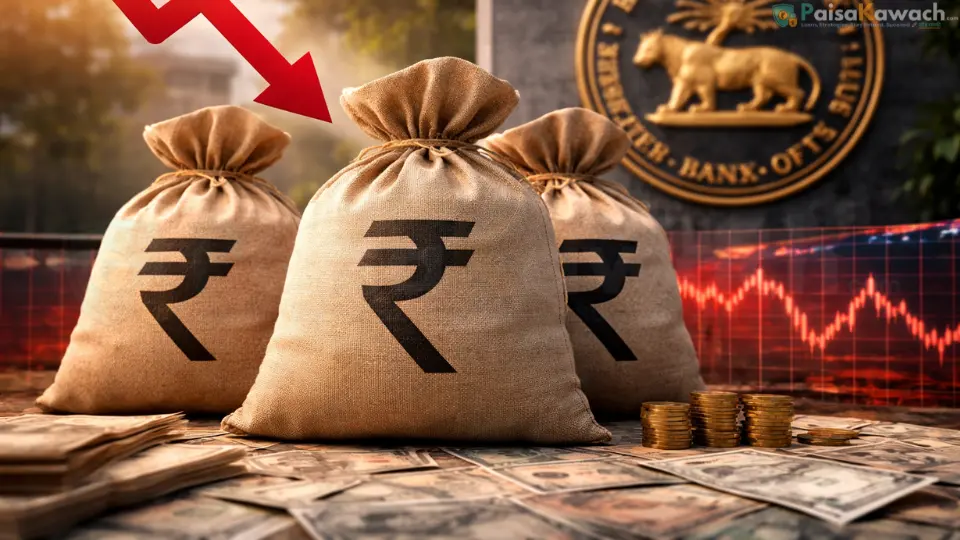
Rupee Faces Heightened Volatility as Currency Pressure Takes Center Stage Ahead of Market Trade

Rupee Volatility Emerges as a Key Market Variable
The Indian rupee entered the January 22, 2026 trading session under renewed scrutiny, as currency pressure and rising volatility became a central focus for equity, bond, and derivatives markets. While benchmark indices attempted to stabilize after recent weakness, movements in the rupee continued to reflect broader global risk sentiment and capital flow dynamics.
Currency volatility has grown more relevant for Indian markets in recent weeks due to a combination of external factors, including shifting global interest rate expectations, geopolitical uncertainty, and cautious positioning by foreign institutional investors (FIIs). As a result, traders and investors are closely monitoring the rupee for signals on risk appetite and cross-asset positioning.
Why the Rupee Is Under Pressure
The rupee’s recent instability stems from multiple overlapping forces rather than a single trigger. Persistent dollar strength, uneven global equity performance, and selective foreign outflows from emerging markets have all contributed to heightened currency swings.
- Global risk-off sentiment increasing demand for the US dollar
- Foreign portfolio flows remaining volatile across equities and debt
- Crude oil price fluctuations impacting India’s import bill
- Uncertainty around the global interest rate trajectory
Rupee Snapshot – January 22, 2026
- Trend: Volatile with downside pressure
- Key driver: Global dollar strength and FII flows
- Market impact: Elevated caution across equities and bonds
- Policy watch: RBI intervention signals and liquidity management
What This Means for Markets and Investors
A volatile rupee environment tends to create mixed implications across sectors. Export-oriented companies may benefit from currency depreciation, while import-dependent sectors such as oil marketing companies, aviation, and select manufacturing segments face margin pressure.
For equity markets, sharp currency moves often coincide with increased index volatility, as foreign investors reassess exposure. Bond markets also remain sensitive, particularly if currency weakness feeds into inflation expectations or prompts defensive policy measures.
How India Compares with Other Emerging Markets
India is not alone in facing currency pressure. Several emerging market currencies have experienced similar volatility amid global uncertainty. However, India’s relatively strong forex reserves and proactive central bank management continue to provide a layer of stability compared to peers with weaker external balances.
According to Reuters, emerging market currencies have broadly struggled in recent sessions as investors favor safe-haven assets, underscoring that the rupee’s movement is part of a wider global pattern rather than a domestic-only concern.
What to Watch Next
Going forward, market participants will closely track foreign fund flows, US dollar index movements, crude oil prices, and any signals from the Reserve Bank of India. Stability in these variables could help ease currency pressure, while renewed global shocks may keep volatility elevated.
For now, the rupee remains a critical variable shaping near-term market behavior, reinforcing the need for cautious positioning and active risk management across asset classes.
Keep Reading: More Insights You Might Like
 Global Pre-Market Context for Indian Equities as Global Risk Sentiment Remains Cautious
Next →
Global Pre-Market Context for Indian Equities as Global Risk Sentiment Remains Cautious
Next →
 Indian Stock Market Pre-Market Context: Global Risk Signals Ahead of the 23 January Session
Comments
No comments yet. Be the first to comment!