Energy Ceasefire, Saudi Attacks and AI Jobs: Three Global Shocks Reshaping the World on October 12, 2026
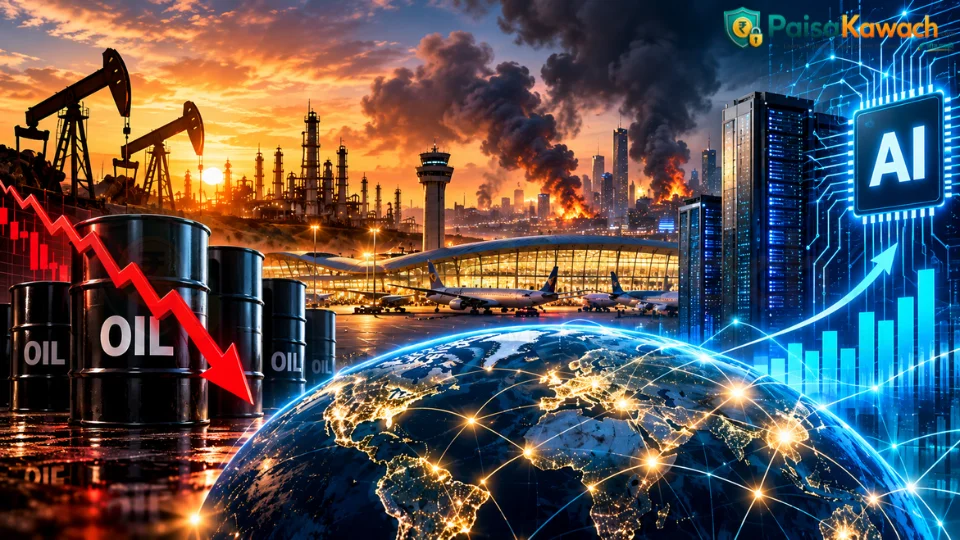
The global economy is being pulled in three very different directions on October 12, 2026.
Oil prices are falling after U.S. President Donald Trump announced what he called an immediate Russia-Ukraine “energy ceasefire,” raising hopes that attacks on energy infrastructure could ease and Russian supply could become more reliable. At the same time, Saudi Arabia is facing its deadliest attack in more than a decade after strikes on Riyadh’s main international airport killed civilians and injured hundreds. And in Asia, the International Monetary Fund says massive investment in artificial intelligence is helping keep global growth near 3%, even as political leaders warn that AI is already reducing entry-level job opportunities.
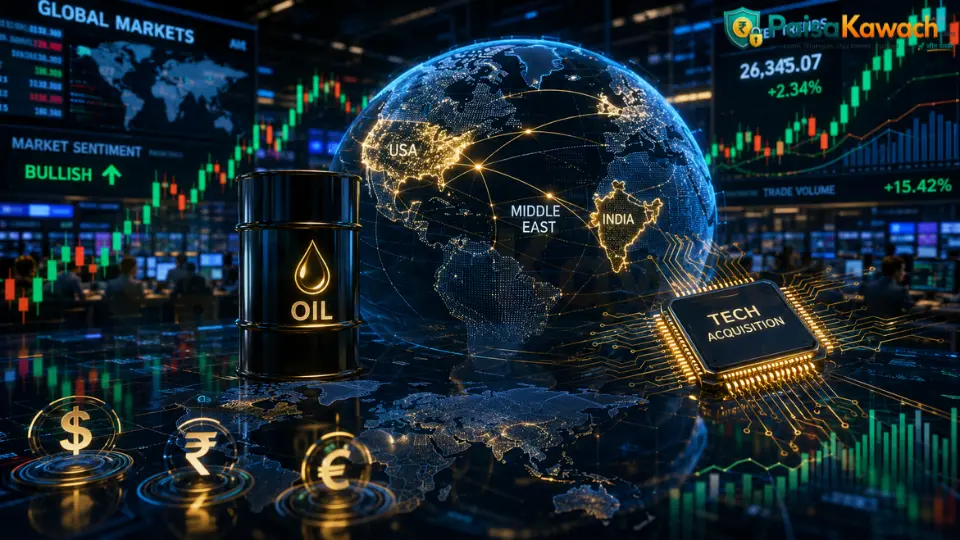
These stories may look unrelated, but they are connected by one bigger issue: the world is trying to grow while dealing with persistent energy risk, geopolitical instability and an accelerating technological transformation.
Quick Read: What Is Happening Today?
Three developments stand out as some of the most globally important stories on October 12, 2026.
- Oil prices are falling after Trump said Russia and Ukraine had agreed to stop attacks on energy infrastructure, although the agreement remains unclear and unconfirmed by both sides.
- Saudi Arabia is dealing with repeated attacks on Riyadh’s King Khalid International Airport after one strike killed at least 12 people and injured more than 300.
- The IMF says AI investment is helping global growth remain around 3%, while Singapore’s president warns that fresh graduates are already losing entry-level opportunities because of AI.
Story 1: A Russia-Ukraine “Energy Ceasefire” Is Moving Oil Markets
Oil prices fell on Monday after President Trump said Ukraine and Russia had agreed to an immediate ceasefire covering attacks on each other’s energy facilities.
Brent crude fell to around $103.18 per barrel, while U.S. West Texas Intermediate crude moved near $90.31 per barrel as traders priced in the possibility of more stable Russian energy supplies.
The market reaction was immediate because energy infrastructure has become one of the most strategically important parts of the Russia-Ukraine war.
Why Oil Prices Fell So Quickly
If attacks on refineries, pipelines, terminals and power infrastructure decline, Russia could potentially maintain or increase energy exports with fewer interruptions.
That would increase confidence in global supply and reduce part of the geopolitical premium embedded in oil prices.
- Brent crude fell roughly 1.5% to around $103.18 per barrel.
- WTI crude dropped by about 1.7% to around $90.31.
- Markets are pricing the possibility that Russian supply could become more reliable if attacks on energy infrastructure stop.
But the Ceasefire Is Still Far From Certain
The biggest problem is that the agreement remains unclear.
Trump announced the ceasefire publicly, but at the time of the announcement there was no full confirmation from either Kyiv or Moscow regarding its exact terms.
Ukrainian President Volodymyr Zelenskiy said more details were needed, while Russian attacks on Ukrainian infrastructure were still being reported.
The Market Is Trading on Hope, Not a Final Deal
This is important because commodity markets often move before political agreements are fully implemented.
If the ceasefire becomes formal and enforceable, oil could remain under pressure. If it collapses or proves largely symbolic, geopolitical risk could return quickly.
- The agreement has not been fully defined publicly.
- Ukraine has said further clarification is needed.
- Any renewed attacks on energy infrastructure could quickly reverse the decline in oil prices.
Why Russian Energy Infrastructure Matters to the Entire World
Russia remains one of the world’s largest energy producers and exporters.
Disruption to Russian oil, diesel or refining capacity can affect not only Europe but global fuel markets because energy cargoes are constantly rerouted between Asia, Europe, Africa and the Middle East.
Energy Infrastructure Has Become a Battlefield
Refineries, storage sites and export terminals have increasingly become strategic targets because damaging them can reduce revenue and disrupt military logistics.
- Russian diesel and crude remain important to global energy supply.
- Attacks on refineries can tighten global refined-fuel markets even if crude production continues.
- An energy ceasefire could reduce pressure on transport and industrial fuel prices worldwide.
Could Lower Oil Help Global Inflation?
A sustained decline in oil prices could have important consequences for inflation.
Energy costs affect transport, food production, manufacturing and consumer prices.
Cheaper Energy Could Give Central Banks More Flexibility
If oil remains lower, inflation may ease faster in many economies.
That could reduce pressure on central banks to keep interest rates high or raise them further.
- Lower oil prices can reduce headline inflation.
- Transport and manufacturing costs may ease.
- Central banks could gain more flexibility if energy inflation declines sustainably.
Story 2: Saudi Arabia Faces Its Deadliest Attack in More Than a Decade
While energy risk is easing in Europe, security conditions are worsening in the Middle East.
A Houthi strike on Riyadh’s King Khalid International Airport killed at least 12 people and injured more than 300, making it the deadliest attack on Saudi Arabia in more than a decade.
A subsequent attack caused another death and nearly a dozen additional injuries.
Why the Riyadh Airport Attack Is Globally Important
Saudi Arabia is one of the world’s largest oil exporters and a central player in global energy markets.
An attack on its main international airport does not directly reduce oil output, but it increases concerns about the vulnerability of Saudi infrastructure and the possibility of wider escalation.
- At least 12 people were killed in the first major airport strike.
- More than 300 people were injured.
- A second attack caused another death and additional injuries.
Airlines and Global Travel Are Now Part of the Risk
The Houthis have warned airlines and travellers to stay away from Saudi airports.
That raises the possibility of flight cancellations, route changes, higher insurance costs and broader disruption to business travel.
Aviation Risk Can Spread Beyond Saudi Arabia
Riyadh is a major regional business and transport hub.
Repeated attacks can affect international airlines, conferences, investment events and tourism.
- Commercial airlines may reassess routes and schedules.
- Insurance costs can increase for flights entering high-risk airspace.
- Repeated disruption could affect Saudi Arabia’s broader investment and tourism ambitions.
Why This Creates a New Oil-Market Contradiction
The global energy market is now facing two opposing geopolitical forces at the same time.
Russia-Ukraine developments are reducing some oil-market risk, while the Saudi-Houthi conflict is increasing risk in the Middle East.
One Conflict Is Easing While Another Is Intensifying
This explains why crude prices remain volatile rather than collapsing despite hopes of improved Russian supply.
- Russia-Ukraine energy diplomacy is reducing part of the supply-risk premium.
- Saudi-Houthi escalation is increasing regional security risk.
- Oil prices are being pulled between improving supply expectations and worsening Middle East security.
Could Saudi Infrastructure Become a Bigger Target?
The key question for global markets is whether attacks remain concentrated on airports or expand toward energy infrastructure.
Saudi Arabia’s refineries, pipelines, export terminals and oil-processing facilities are globally important.
A Direct Energy Attack Would Change the Market Quickly
Any major strike on Saudi energy facilities could immediately push oil prices higher because Saudi Arabia supplies a significant share of global crude exports.
- Saudi oil infrastructure remains strategically critical.
- Markets will closely watch whether attacks expand beyond aviation targets.
- Energy facilities would represent a much larger global economic risk.
Story 3: AI Investment Is Helping Keep Global Growth Near 3%
The third major story is not about war or commodities, but about artificial intelligence.
IMF Managing Director Kristalina Georgieva said large-scale investment in AI infrastructure is helping keep global economic growth around 3%.
The AI boom is generating demand across semiconductors, construction, electricity, data centres and cloud computing.
AI Is Becoming a Global Investment Shock
AI spending is no longer limited to software or technology companies.
The infrastructure required to support AI includes advanced chips, data centres, power generation, transmission networks and cooling systems.
- The IMF says AI investment is helping keep global growth around 3%.
- Asian economies that supply hardware are benefiting significantly.
- AI is acting as both a technology boom and a broader capital-investment cycle.
Asia Could Be One of the Biggest Winners
The IMF says advanced Asian economies could receive a growth boost of roughly 0.5 to 1 percentage point from AI-related investment and productivity improvements.
Emerging Asian economies could see gains of approximately 0.2 to 0.8 percentage point.
Hardware Supply Chains Are Critical
Asian economies produce many of the chips, components, servers and industrial inputs needed for AI infrastructure.
- AI hardware demand is supporting manufacturing across Asia.
- Chip, server and electronics suppliers are benefiting from large investment programmes.
- Countries with strong technology supply chains could outperform slower adopters.
But AI Is Also Starting to Remove Entry-Level Jobs
The growth story has a darker side.
Singapore President Tharman Shanmugaratnam warned that AI is already reducing employment opportunities for fresh graduates in some sectors.
He said governments need to respond before AI creates a deeper divide between advanced and developing economies.
Fresh Graduates Could Face the Biggest Immediate Risk
Entry-level roles often involve routine research, writing, analysis, coding or administrative tasks that modern AI systems can increasingly perform.
- AI can replace or reduce demand for some junior white-collar tasks.
- Fresh graduates may struggle to gain the experience traditionally earned through entry-level roles.
- Governments may need new training, education and labour-market policies.
The Productivity Paradox: More Growth, Fewer Jobs?
The AI boom creates an economic paradox.
AI can increase productivity and raise overall economic output while simultaneously reducing demand for certain types of workers.
GDP Growth Does Not Guarantee Equal Benefits
An economy can become more productive without everyone benefiting equally.
- Companies may produce more with fewer workers.
- AI-related gains may concentrate among technology owners and skilled workers.
- Income inequality could increase without policy intervention.
Could AI Widen the Gap Between Rich and Poor Countries?
Countries with reliable electricity, advanced semiconductor access, strong universities and large capital markets are better positioned to build AI infrastructure.
Lower-income countries may struggle to compete.
A New Global Digital Divide Could Emerge
Instead of simply dividing the world between countries with internet access and those without it, the next divide may be between countries capable of deploying AI at scale and those that cannot.
- Advanced economies have greater access to chips and computing power.
- AI infrastructure requires large amounts of capital and electricity.
- Developing economies risk falling behind without targeted investment and education.
Interactive View: How the Three Stories Connect
Russia-Ukraine Chain
Energy ceasefire hopes → Russian supply risk falls → oil prices decline → inflation pressure eases → central banks gain more flexibility.
Saudi-Houthi Chain
Airport attacks → regional security risk rises → aviation and shipping insurance increase → risk of wider infrastructure attacks grows → oil premium can rise again.
AI Chain
AI investment surges → global capital spending rises → growth receives support → productivity increases → some entry-level jobs disappear → inequality risks rise.
The Global Economy Is Receiving Opposite Shocks at the Same Time
The unusual feature of October 12 is that the global economy is simultaneously receiving positive and negative shocks.
Lower oil prices from Russia-Ukraine diplomacy can help growth. AI investment is adding demand and productivity. But Middle East instability can reverse energy relief, while AI threatens employment and increases inequality.
This Makes Central-Bank Policy Much Harder
Central banks must judge whether inflation will decline because energy prices are easing or remain elevated because geopolitical risk and strong AI investment continue supporting demand.
- Lower oil can reduce inflation.
- AI investment can keep demand strong.
- Middle East escalation can quickly push energy prices back up.
What Does This Mean for India?
India has meaningful exposure to all three stories.
Lower oil helps reduce the import bill and supports the rupee. Saudi instability can hurt Indian workers, airlines and energy supply chains. AI investment creates major opportunities for Indian IT services, data centres and digital infrastructure while also threatening some junior service-sector jobs.
India Could Benefit and Face Risk at the Same Time
- Cheaper crude can reduce inflation and improve India’s current-account balance.
- Saudi security risks can affect Indian travellers, workers and businesses in the Gulf.
- AI growth can create new investment opportunities while disrupting entry-level technology and services jobs.
What Should Investors Watch Next?
Watch Whether Russia Confirms the Energy Ceasefire
Formal confirmation from Moscow and Kyiv would make the oil-market reaction more credible.
Watch Saudi Energy Infrastructure
Any shift from airport attacks toward refineries, pipelines or export facilities would represent a much larger global risk.
Watch AI Employment Data
Graduate hiring, entry-level technology vacancies and wage trends could become important indicators of AI’s labour-market impact.
- Track Brent crude for confirmation that energy-risk premiums are falling.
- Track security developments around Riyadh and Saudi energy infrastructure.
- Track entry-level hiring trends in technology, finance and professional services.
Frequently Asked Questions
Has Russia officially confirmed the energy ceasefire?
Not fully. Trump announced the agreement, but details remain unclear and both Russia and Ukraine have not publicly confirmed a comprehensive final arrangement.
Why does an energy ceasefire matter for oil?
Fewer attacks on refineries and energy infrastructure could improve Russian fuel supply and reduce the geopolitical premium embedded in oil prices.
Why are the Saudi airport attacks important for global markets?
Saudi Arabia is a major oil exporter and business hub. Repeated attacks increase security, aviation and insurance risk and raise concerns that energy infrastructure could eventually be targeted.
How is AI helping global growth?
AI is generating large-scale investment in chips, data centres, power infrastructure and software, creating demand across many industries.
Why is AI threatening fresh graduates?
Entry-level jobs often contain routine research, writing, analysis and coding tasks that AI can increasingly automate, potentially reducing the number of junior positions available.
Conclusion: The World Is Entering a More Complicated Growth Cycle
The global economy on October 12, 2026 is being shaped by three powerful forces at the same time.
Russia-Ukraine energy diplomacy offers a potential path toward lower oil prices and weaker inflation. Saudi Arabia’s worsening security crisis threatens to push energy and transport risk back in the opposite direction. And artificial intelligence is supporting global growth while simultaneously disrupting labour markets.
Together, these developments show why the next phase of the global economy may be unusually difficult to predict.
Growth can accelerate because of AI investment. Inflation can decline because of lower oil. But geopolitical shocks can reverse those gains quickly, while the technology supporting economic growth can create new unemployment and inequality risks.
The world is therefore not moving toward a simple “risk-on” or “risk-off” environment.
It is moving into an era where energy security, technology investment and labour-market disruption must all be understood together.
Keep Reading: More Insights You Might Like
Comments
No comments yet. Be the first to comment!