AI, Cyber Risk and Oil: Three Global Shocks Reshaping Markets on October 9, 2026

Global markets are being pulled in three different directions on October 9, 2026.
Technology investors are becoming more cautious about the enormous amount of money being poured into artificial-intelligence infrastructure. Oil prices are falling as signs of progress in U.S.-Iran talks reduce immediate fears of another major energy shock. And at the same time, artificial intelligence is creating a new type of financial-security threat after AI-powered tools were linked to cyberattacks targeting multiple banks in South Korea.
These developments may appear unrelated, but together they point to a larger shift in the global economy: artificial intelligence is no longer just a growth story, while geopolitical risk is no longer just an energy story. Both are becoming deeply connected to finance, debt, cybersecurity, infrastructure and the stability of markets.
Quick Read: What Is Happening Today?
Three developments stand out as some of the most globally important market stories on October 9, 2026.
- Global technology stocks are under pressure as investors question whether massive AI spending and debt issuance can generate sufficient returns.
- Oil prices are easing after U.S. President Donald Trump said talks with Iran were productive and indicated there would be no U.S. attack before the November elections.
- AI-powered cyber tools have reportedly been used in attacks targeting at least nine South Korean banks, raising new concerns about automated financial-system attacks.
Story 1: The AI Boom Is Starting to Look Like a Financing Problem
The artificial-intelligence investment boom has been one of the strongest forces supporting global stock markets over the past several years.
Technology companies have committed enormous sums to data centres, advanced chips, cloud infrastructure, energy supply and networking equipment in the expectation that AI demand will continue growing rapidly.
But investors are increasingly asking a harder question: how quickly will those investments generate profits?
Markets Are Becoming More Sensitive to AI Spending
Global technology shares have come under pressure as concerns grow about the amount of capital being committed to AI infrastructure.
Investors are particularly focused on companies with large financing needs or those that are raising substantial amounts of debt to fund expansion.
- AI infrastructure requires extremely large upfront capital investment.
- Investors are becoming more selective about whether spending will translate into revenue and profits.
- Highly valued technology companies can become vulnerable if earnings expectations fail to justify their capital expenditure.
Why AI Spending Is Moving Beyond the Technology Sector
The financial impact of AI now extends far beyond semiconductor companies.
Building AI infrastructure requires electricity generation, transmission lines, cooling systems, construction materials, land, fibre networks and large-scale financing.
As a result, AI has become deeply connected to utilities, banks, bond markets and infrastructure investors.
The Real AI Trade Is Becoming Much Larger Than Chips
The first phase of the AI boom was dominated by chipmakers and cloud-computing companies. The next phase is increasingly about who can finance and power the infrastructure required to operate AI systems at scale.
- Data centres require huge amounts of electricity and cooling.
- Technology firms are increasingly tapping bond markets to finance expansion.
- Utilities and infrastructure companies are becoming part of the AI investment chain.
Debt-Funded AI Growth Creates a New Market Risk
When companies finance major investment programmes through debt, the cost of capital becomes critical.
If long-term interest rates remain elevated, borrowing becomes more expensive and project returns become harder to achieve.
Higher Yields Can Challenge AI Economics
A project that looks attractive when borrowing costs are low can become much less attractive when financing costs rise sharply.
This is why the AI boom is increasingly linked to the bond market.
- Higher bond yields increase the cost of financing data centres and infrastructure.
- Debt-heavy expansion becomes more sensitive to interest rates.
- Investors may reduce valuations if expected returns do not keep pace with financing costs.
The Market Is Starting to Separate AI Winners From AI Spenders
One of the most important changes in investor behaviour is that markets are no longer rewarding every company simply for increasing AI expenditure.
Investors increasingly want evidence of revenue growth, productivity improvement and sustainable margins.
Capital Discipline Is Becoming Important Again
During the early stages of a major investment cycle, companies can often receive strong market support simply by announcing ambitious expansion plans.
As the cycle matures, investors begin demanding proof that the spending is economically justified.
- AI spending alone may no longer guarantee higher valuations.
- Revenue growth and cash flow are becoming more important.
- Companies with weak monetisation could face stronger market pressure.
Story 2: U.S.-Iran Talks Are Moving Oil Prices Lower
Energy markets are moving in the opposite direction.
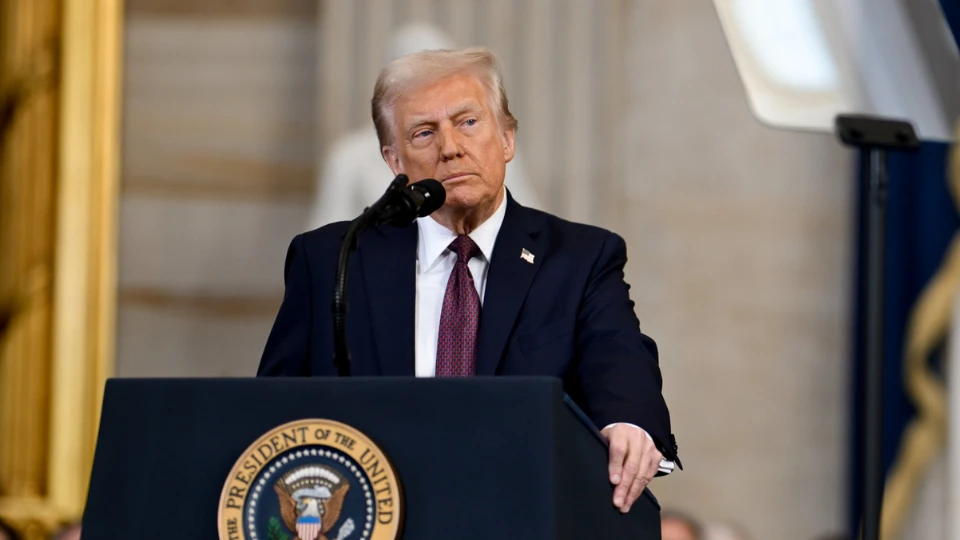
Oil prices fell on October 9 after President Trump said the United States would not attack Iran before the November midterm elections and described diplomatic talks as productive.
The comments reduced some of the geopolitical risk premium that had been built into crude prices.
Brent Crude Falls as War Risk Eases
Brent crude moved lower to around $103.50 per barrel as markets reassessed the probability of an immediate escalation.
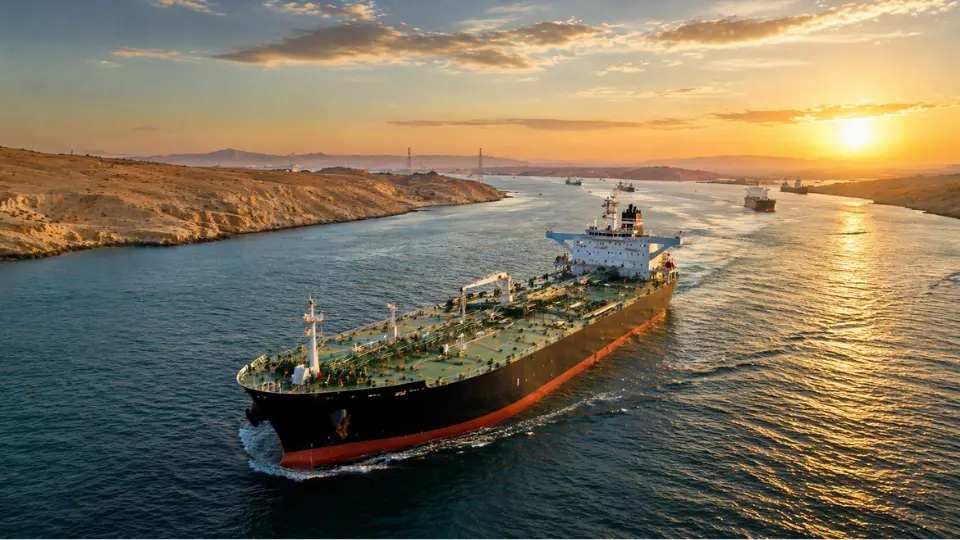
The move shows how sensitive oil prices remain to political developments involving Iran and the Strait of Hormuz.
- Oil prices fell after Trump signalled a reduced immediate risk of military escalation.
- Diplomatic progress is lowering some of the geopolitical premium in crude markets.
- Energy prices remain highly sensitive to developments around Iran and Gulf shipping routes.
Why the Strait of Hormuz Still Matters More Than Almost Any Other Energy Route
The Strait of Hormuz remains one of the most strategically important shipping corridors in the world.
A significant share of global oil and fuel shipments passes through the route, making it a critical connection between Gulf producers and international buyers.
A Small Change in Risk Can Move Global Prices
Because so much energy trade is concentrated in one narrow maritime corridor, even a modest increase in perceived security risk can affect freight rates, insurance costs and crude prices.
- The Strait of Hormuz carries a substantial share of global oil and fuel trade.
- Security concerns can raise shipping and insurance costs even if physical exports continue.
- Any reopening or easing of restrictions can quickly reduce energy-market risk premiums.
Could a Hormuz Reopening Become a Global Inflation Relief Story?
If negotiations lead to safer and more predictable shipping through the Strait of Hormuz, the impact could extend well beyond oil traders.
Lower energy prices can reduce inflation pressure, improve consumer purchasing power and give central banks more flexibility.
Cheaper Energy Can Change the Interest-Rate Outlook
Energy costs influence transportation, manufacturing, food and household expenses.
If oil falls substantially and remains lower, inflation could ease faster than expected in many economies.
- Lower oil prices can reduce headline inflation.
- Reduced inflation can ease pressure on central banks to keep rates high.
- Lower energy costs can support consumer spending and corporate margins.
But the Risk Has Not Disappeared
Diplomatic progress does not guarantee a permanent resolution.
Oil markets can reverse quickly if negotiations fail, military activity increases or shipping routes become less secure.
Energy Markets Remain Politically Driven
Unlike many other commodities, oil prices can react instantly to political statements because the consequences of disruption are potentially enormous.
- Diplomatic progress can quickly lower oil prices.
- A breakdown in negotiations could restore the geopolitical risk premium just as quickly.
- Markets remain vulnerable to sudden changes in U.S.-Iran relations.
Story 3: AI Is Becoming a Cybersecurity Weapon Against Banks
The third development may be the most important long-term financial-security story.
An AI-powered hacking tool known as ARTEX has reportedly been linked to attacks targeting at least nine South Korean banks.
The developer behind the tool has since closed its source code following allegations that it was being misused in cyberattacks.
This Is a New Kind of Banking Threat
Traditional cyberattacks often require significant technical expertise and manual effort.
AI-powered tools can potentially automate parts of the attack process, including vulnerability discovery, code generation, reconnaissance and exploitation.
- At least nine South Korean banks were reportedly targeted.
- AI tools may have been used to automate parts of the hacking process.
- The incident raises broader concerns about the use of AI agents in cybercrime.
Why AI Changes the Economics of Cybercrime
One of the biggest risks from AI-assisted hacking is that it can lower the cost and technical barrier required to launch sophisticated attacks.
A smaller criminal group may be able to perform tasks that previously required a much larger team of skilled hackers.
Automation Can Increase the Scale of Attacks
If AI can simultaneously scan thousands of systems, test vulnerabilities and adapt attack methods, the number of potential targets can increase dramatically.
- AI can speed up reconnaissance and vulnerability scanning.
- Attackers may be able to target many organisations at once.
- Financial institutions could face more frequent and more automated attacks.
Banks Are Especially Attractive Targets
Banks hold valuable financial data, customer information and access to payment networks.
They are therefore among the most attractive targets for cybercriminals and state-linked hacking groups.
A Banking Cyberattack Can Become a Systemic Problem
A successful attack on a major bank does not only affect the institution itself.
It can disrupt payments, customer access, liquidity operations and financial-market confidence.
- Banks sit at the centre of payment and settlement systems.
- Large cyber incidents can damage confidence in financial institutions.
- AI-assisted attacks could increase the speed at which problems spread.
Why This Matters Beyond South Korea
The significance of the ARTEX case is not limited to one country.
If AI agents can be repurposed for cyberattacks, financial institutions around the world may need to change how they defend their systems.
Cyber Defence May Need AI Too
Banks may increasingly rely on AI-powered monitoring systems to detect unusual behaviour, identify threats and respond faster than human teams can.
- AI-assisted attacks may force banks to automate more of their own cyber defence.
- Cybersecurity investment is likely to become a larger operating cost.
- Regulators may introduce stricter standards for financial-system AI security.
Interactive View: How the Three Stories Connect
AI Financing Chain
AI investment boom → huge data-centre spending → more corporate borrowing → higher financing sensitivity → investors demand stronger returns → tech valuations become more volatile.
Oil and Geopolitics Chain
U.S.-Iran diplomacy improves → risk of conflict falls → Hormuz concerns ease → oil prices decline → inflation pressure softens → central-bank policy becomes less restrictive.
AI Cybersecurity Chain
AI tools become more capable → hacking becomes easier to automate → banks face more sophisticated attacks → cybersecurity spending rises → regulators tighten standards.
The Bigger Story: AI Is Creating Both Growth and Risk
The most important connection between these developments is the changing role of artificial intelligence.
AI is simultaneously creating enormous investment opportunities and new vulnerabilities.
AI Is No Longer a One-Directional Growth Story
The technology can increase productivity, but it also requires vast amounts of capital and infrastructure.
It can improve cybersecurity, but it can also help attackers.
- AI creates growth opportunities but requires expensive infrastructure.
- AI can improve financial-system efficiency while also increasing cyber risk.
- The economic impact of AI is becoming broader and more complex.
How Energy Prices Affect the AI Boom
There is also a direct connection between energy markets and artificial intelligence.
Data centres consume enormous amounts of electricity.
If oil, natural gas or power prices remain high, the operating cost of AI infrastructure rises.
Cheaper Energy Could Support AI Economics
A sustained decline in energy prices could improve the economics of data centres and cloud computing.
- AI infrastructure is highly energy-intensive.
- Lower energy prices can reduce operating costs for data centres.
- Higher energy prices can weaken returns on capital-intensive AI projects.
Why Financial Markets Are Watching All Three at Once
Investors are trying to determine whether the global economy is moving toward lower inflation and easier monetary policy or toward a new period of financial instability.
Oil prices, technology valuations and cybersecurity risks all influence that question in different ways.
The Market Is Balancing Growth Against Risk
Lower oil can support economic growth. AI investment can boost productivity. But excessive debt and cyber instability can create new financial vulnerabilities.
- Lower energy prices are positive for inflation and consumers.
- AI investment supports growth but increases capital requirements.
- Cyber risk can undermine confidence in financial infrastructure.
What Does This Mean for India?
India has direct exposure to all three developments.
Lower oil prices can reduce the country's import bill and inflation pressure. Global weakness in technology shares can affect Indian IT stocks and foreign investment sentiment. AI-related cyber risks can increase security costs for Indian banks and payment companies.
India Could Benefit From Lower Oil but Face Higher Cyber Costs
- Lower crude prices can support the rupee and reduce inflation pressure.
- Global AI valuation concerns can affect Indian technology-sector sentiment.
- Indian banks may need to increase cybersecurity investment as AI-powered attacks become more sophisticated.
What Should Investors Watch Next?
Watch AI Capital Spending
Investors should monitor whether major technology companies continue increasing spending or begin slowing projects because financing costs and profitability concerns are rising.
Watch U.S.-Iran Negotiations
Any meaningful agreement affecting the Strait of Hormuz could significantly change oil prices and global inflation expectations.
Watch Bank Cybersecurity Incidents
Further AI-assisted attacks on major financial institutions could become a major regulatory and market issue.
- Track technology-company capital expenditure and debt issuance.
- Track Brent crude and developments around Hormuz.
- Track AI-related cyberattacks on banks and payment infrastructure.
Frequently Asked Questions
Why are AI stocks under pressure?
Investors are increasingly questioning whether massive AI infrastructure spending will generate enough revenue and profit to justify current valuations and financing needs.
Why did oil prices fall today?
Oil fell after President Trump indicated that the U.S. would not attack Iran before the November elections and described talks as productive, reducing some immediate geopolitical risk.
Why is the Strait of Hormuz so important?
A large share of global oil and fuel shipments passes through the route, making it one of the most important energy chokepoints in the world.
What is AI-assisted hacking?
It refers to the use of artificial-intelligence tools to automate or improve parts of cyberattacks, such as finding vulnerabilities, generating malicious code or analysing target systems.
Could AI-powered cyberattacks become a systemic financial risk?
Potentially. If attacks become faster, more automated and more scalable, major financial institutions and payment networks could face greater operational and security risks.
Conclusion: AI and Geopolitics Are Rewriting Global Financial Risk
The most important global stories on October 9, 2026 show how rapidly the financial system is changing.
Artificial intelligence is no longer simply pushing stock prices higher. It is requiring enormous amounts of capital, creating questions about debt-funded infrastructure and introducing new cybersecurity threats.
At the same time, geopolitics continues to shape energy markets, with U.S.-Iran diplomacy directly influencing oil prices and inflation expectations.
Together, these developments reveal a new global market environment in which technology, energy and security risks are deeply interconnected.
For investors, businesses and governments, the challenge is no longer just identifying the next source of growth.
It is understanding how quickly that growth can create new financial vulnerabilities.
Keep Reading: More Insights You Might Like
Comments
No comments yet. Be the first to comment!