Global Market News Today: Oil Above $100, Fed Rate Decision and Inflation Risks Hit India

Global financial markets on September 16, 2026 are being driven by three developments that are reaching far beyond their countries of origin. Crude oil remains above $100 a barrel as Middle East supply risks keep energy traders on edge, investors are waiting for a crucial US Federal Reserve interest-rate decision, and inflation concerns are returning just as businesses and households had started hoping for easier financial conditions. For India, these are not distant international stories. Together, they affect the cost of imported energy, the value of the rupee, foreign investment flows, corporate margins, borrowing costs and expectations for future Reserve Bank of India policy.
The connection between these events is becoming increasingly important for investors and businesses to understand. Higher oil prices can increase inflation. Stronger inflation can push central banks toward tighter monetary policy. Higher US interest rates can strengthen the dollar and increase bond yields, making emerging-market assets less attractive to some international investors. India then faces a combination of costlier imports, possible foreign portfolio outflows and additional pressure on the currency. Each development is significant on its own, but their combined effect is what makes the current global market environment particularly important.
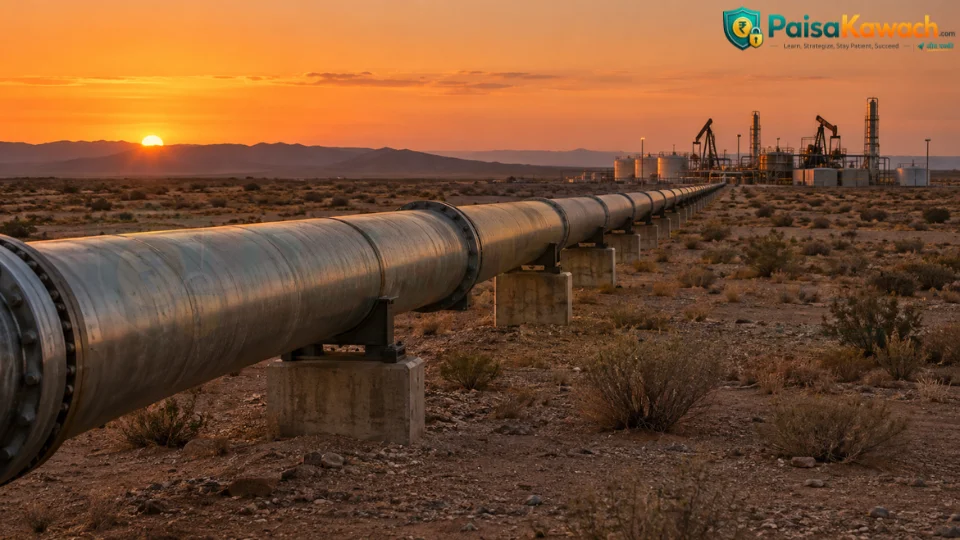
Middle East Tensions Keep Global Oil Prices Above $100
Oil is once again one of the biggest forces moving the global economy. Brent crude remained near $108 a barrel on September 16, keeping energy prices at levels that can significantly influence inflation, business costs and consumer spending. Prices eased slightly during early trading after data pointed to an unexpected increase in US crude inventories, but the broader concern has not disappeared. Traders remain focused on supply security in the Middle East and the risk that further disruption could reduce the amount of oil available to global buyers.
The impact of expensive oil extends well beyond fuel stations. Crude oil is deeply connected to global transportation, aviation, shipping, plastics, chemicals, fertilizers, manufacturing and logistics. When oil stays expensive for a sustained period, companies face higher operating costs across multiple stages of their supply chains. Some businesses absorb those costs and accept weaker profit margins, while others raise prices. Either outcome can affect economic growth, consumer demand and financial markets.
Why High Crude Oil Prices Matter More for India
India is especially sensitive to a major increase in global oil prices because the country imports most of the crude oil it consumes. That means every sustained rise in international crude prices can increase India's import bill and raise the amount of foreign currency needed to pay for energy. This can contribute to pressure on the rupee, particularly when the US dollar is already strong.
Higher crude prices can also move through the Indian economy in less obvious ways. Airlines may face higher aviation turbine fuel costs, logistics companies can see operating expenses rise, manufacturers may pay more for transportation and petroleum-linked raw materials, and consumer-facing companies can encounter higher distribution expenses. Businesses with limited pricing power may find it difficult to fully pass these costs to customers, potentially squeezing margins.
- Brent crude remained close to $108 a barrel, keeping global energy costs elevated.
- Middle East supply risks continue to create uncertainty for oil-dependent economies and international businesses.
- For India, higher crude prices can increase the import bill, pressure the rupee and raise costs for transport, manufacturing and consumer businesses.
US Federal Reserve Decision Becomes the Biggest Global Market Trigger
The second major development is the US Federal Reserve's interest-rate decision. Global investors are watching the central bank closely because American monetary policy has consequences far beyond the United States. The Federal Reserve influences the cost of dollars, US Treasury yields and global capital flows, all of which can affect stock markets, currencies and borrowing conditions in emerging economies.
Markets entered the September 16 decision with expectations that the Fed could raise interest rates by 25 basis points. Investors are not only interested in whether rates move at this meeting, but also in the language used by policymakers. Statements about inflation, economic growth and future interest-rate moves can sometimes have a larger market impact than the rate decision itself.
US Treasury yields have also become an important part of the story. The 10-year Treasury yield has recently moved around or above the 5% level, making US government debt comparatively attractive to global investors. When yields rise sharply in the world's largest bond market, asset managers often reconsider how much risk they want to take elsewhere.
How Higher US Rates Can Affect Indian Markets
For India, a higher US interest-rate environment can affect both equities and currencies. International investors compare expected returns across countries. If US bonds offer attractive yields with relatively low perceived risk, some investors may reduce exposure to emerging-market stocks or bonds. This does not automatically mean money will leave India, but it can increase the pressure on foreign portfolio flows when global sentiment is already cautious.
A stronger dollar can create another challenge. The rupee closed near 95.9550 against the US dollar in the previous session as high oil prices, foreign selling and expectations around US monetary policy weighed on the currency. A weaker rupee raises the local-currency cost of dollar-denominated imports, including crude oil, industrial equipment and several commodities.
Bond markets are affected as well. If US yields remain elevated, Indian bond yields may face upward pressure as investors demand competitive returns. Higher yields can eventually influence borrowing costs for governments and businesses, particularly if global financial conditions remain tight for an extended period.
- The Fed's September decision is being closely watched for both the rate move and guidance on future policy.
- High US Treasury yields can pull global capital toward dollar-denominated assets and away from riskier markets.
- India can see the spillover through foreign investor flows, rupee weakness, equity volatility and pressure on domestic bond yields.
Inflation Is Returning as a Major Global Economic Risk
The third major development is the renewed concern over inflation. For much of the past several years, central banks have tried to bring inflation under control without causing unnecessary damage to economic growth. The latest rise in energy prices is complicating that effort. Oil affects transport and production costs across the economy, so a sustained increase can eventually appear in consumer prices even when demand is not especially strong.
The problem for policymakers is timing. Many investors had expected central banks to gradually move toward easier monetary policy as inflation cooled. A fresh inflation shock could delay those expectations or force some central banks to maintain higher interest rates for longer. That would affect mortgages, business loans, government borrowing and company valuations across major markets.
Businesses also have to adjust their planning when inflation becomes unpredictable. Companies may delay investment, hold more cash, renegotiate supplier contracts or increase prices more frequently. Consumers can respond by reducing discretionary spending, particularly when food, transport, housing or energy expenses rise at the same time.
India Faces Imported Inflation Alongside Currency Pressure
India's inflation outlook is particularly connected to international energy prices because crude oil is largely imported. Retail inflation accelerated to 4.82% in August, and a prolonged period of expensive crude could create additional pressure in the coming months. The final effect on consumer prices will depend on several factors, including currency movements, taxes, domestic fuel pricing and how much companies pass higher costs on to customers.
The rupee adds another layer to the equation. When the currency weakens against the dollar, imported goods become more expensive even if their international price remains unchanged. When both the dollar strengthens and crude oil rises at the same time, the effect can become more pronounced. This is why oil prices and the rupee are often watched together by Indian businesses and market participants.
The inflation picture also matters for the Reserve Bank of India. If price pressures remain persistent, the RBI has less freedom to support growth through aggressive interest-rate cuts. Domestic monetary policy is not determined by the Federal Reserve, but global rates, currency movements, commodity prices and capital flows can influence the environment in which the RBI makes its decisions.
- Higher energy prices can push up transport, logistics, manufacturing and household costs across the economy.
- A weaker rupee can increase the domestic cost of imported oil and other dollar-priced goods.
- Persistent inflation could limit the RBI's flexibility to reduce interest rates even if domestic growth needs support.
Why These Three Global Events Are Connected
The most important feature of the current market environment is that oil, interest rates and inflation are not separate stories. They reinforce one another. Middle East supply disruptions can push crude oil higher. Higher oil can increase inflation expectations. Stronger inflation can make the US Federal Reserve and other central banks more cautious about lowering interest rates. Higher US rates and bond yields can strengthen the dollar and affect global investment flows. A stronger dollar can then make energy imports even more expensive for countries such as India.
This chain reaction is why relatively distant events can quickly appear in Indian markets. A geopolitical event thousands of kilometres away can affect the price of crude oil. That oil price can influence India's import bill and rupee. Currency weakness can change inflation expectations, and inflation expectations can affect bond yields and interest-rate forecasts. Stock markets then respond as investors reassess company earnings and economic growth.
What Indian Investors and Businesses Are Watching Now
For Indian markets, the next signals will come from the direction of crude oil, the Federal Reserve's policy communication, US Treasury yields and the rupee. A sustained decline in oil could ease some of the immediate pressure. On the other hand, another supply shock or a more restrictive message from the Fed could keep global risk appetite weak.
Indian companies will also experience very different effects depending on their sectors. Energy-intensive manufacturers, airlines, logistics companies and businesses dependent on imported raw materials generally face greater pressure when crude and the dollar rise together. Exporters earning a large portion of their revenue in dollars may receive some support from a weaker rupee, although the benefit can vary depending on their own imported costs and hedging strategies.
- Crude oil remains one of the most important external indicators for India's inflation and import bill.
- The Federal Reserve's guidance can influence the dollar, foreign investment flows and borrowing costs across global markets.
- The interaction between oil, inflation and interest rates will determine whether current market pressure eases or becomes more persistent.
The Bigger Picture for India
India's economy remains driven primarily by domestic demand, investment and local business activity, but a large economy cannot fully escape major changes in global energy and financial markets. The combination of expensive crude, high US yields and renewed inflation concerns increases uncertainty for both policymakers and businesses.
That does not mean every international shock will translate into a lasting economic slowdown in India. The size of the eventual impact depends on how long oil remains elevated, how the Federal Reserve responds to inflation, how the rupee behaves and whether global investors continue reducing exposure to emerging markets. What is clear is that these three developments have become the main international variables linking global markets with India's near-term outlook.
For now, investors are dealing with an environment in which geopolitical risk is influencing oil, oil is influencing inflation, and inflation is influencing interest rates. India sits directly in that chain because of its dependence on imported energy and its integration with global capital markets. The direction of crude oil and US monetary policy over the coming sessions could therefore play an important role in determining whether recent pressure on Indian stocks, bonds and the rupee begins to ease or continues deeper into September.
Keep Reading: More Insights You Might Like
Comments
No comments yet. Be the first to comment!