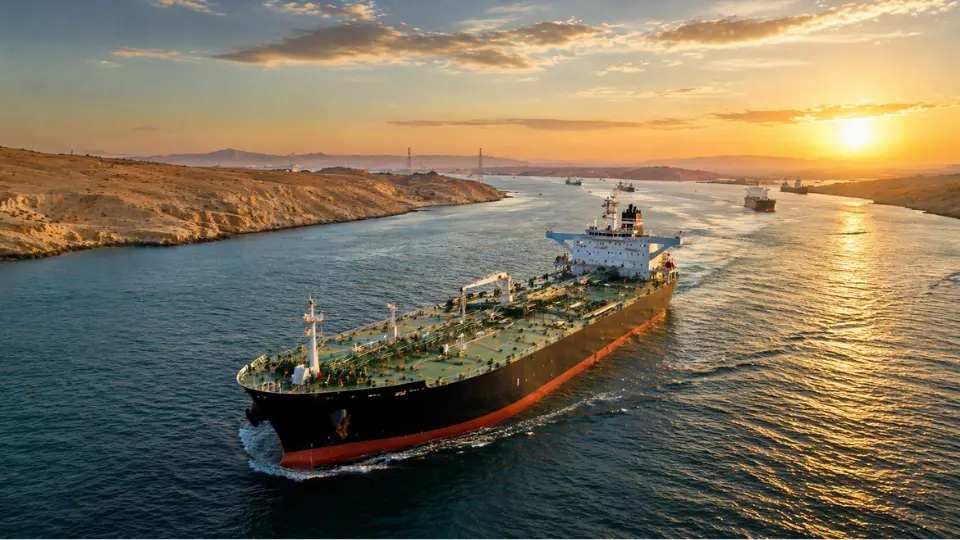
The Hormuz Shock: How One Waterway Is Quietly Rewriting the Rules of Global Money
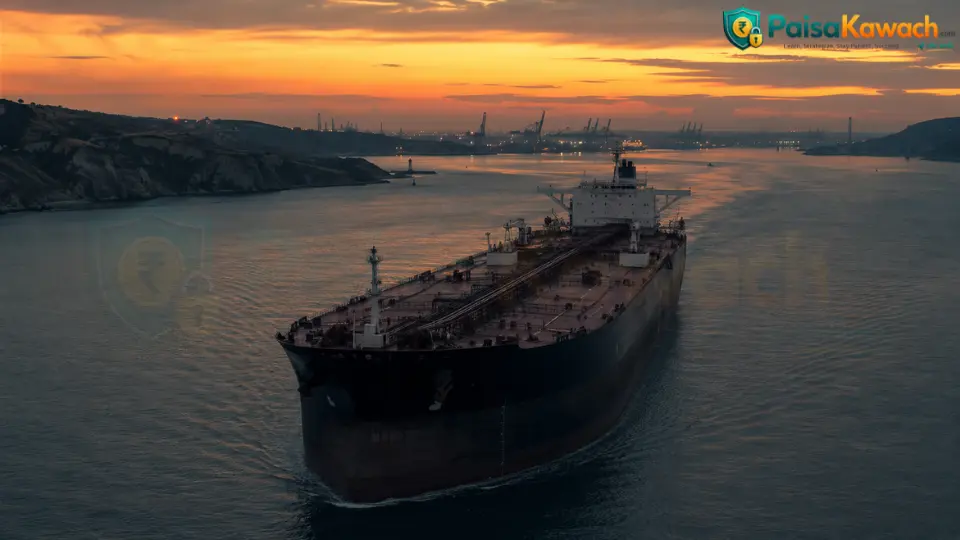
There is a version of this story that treats the Strait of Hormuz like a headline that will fade in a news cycle or two. Ships get delayed, oil ticks up, commentators use the word "volatility," and everyone moves on. That version is wrong, and it has been wrong since February. What is unfolding through this narrow stretch of water between Iran and Oman is not a blip. It is the reintroduction of a variable the global economy had convinced itself it no longer needed to price in: a single chokepoint with the power to bend inflation, growth, and monetary policy across every major economy simultaneously.
A Toll Booth in the Middle of the Ocean
The latest twist arrived with a declaration that sounded almost theatrical — the United States positioning itself as the self-appointed "Guardian of the Strait," and attaching a 20% fee to cargo that passes through under its watch. Strip away the framing and what remains is a hard economic fact: the world's most important oil artery, a corridor that has historically carried something close to a fifth of global petroleum consumption, is no longer functioning as a free channel of trade. It is functioning as a tollway, patrolled, priced, and politically contested.
This did not happen overnight. Since late February, military escalation between the US, Israel, and Iran has made the Strait progressively less safe for ordinary shipping. Insurance premiums for tankers making the crossing became, in many cases, either unavailable or so expensive that the economics of the voyage stopped making sense. Crews grew unwilling to risk the passage regardless of what insurers were willing to underwrite. The result was a slow-motion closure — not a single dramatic blockade announced on one day, but a corridor that emptied out gradually as risk premiums did what fear usually does to markets: freeze activity long before any formal rule forces it to stop.
Why This Particular Chokepoint Matters So Much
Global energy markets are full of chokepoints, but few carry the concentrated weight of the Strait of Hormuz. Close to a quarter of all seaborne oil trade moves through it, alongside major volumes of liquefied natural gas and the fertilizer inputs that much of the world's agriculture quietly depends on. When a corridor like this seizes up, the damage does not stay contained to gasoline prices in one country. It moves through shipping insurance, through freight rates, through the cost of the fertilizer a farmer in an entirely unrelated part of the world needs to plant next season's crop. Energy economists have already started describing the resulting disruption as one of the largest the global oil market has ever recorded, language usually reserved for events with decades-long echoes rather than passing headlines.
- Nearly a fifth of daily global petroleum consumption has historically moved through this single corridor
- Rising insurance and freight costs are pushing prices up well before any physical shortage appears on paper
- The disruption is bleeding into fertilizer and shipping costs, not just fuel, meaning the effects reach food prices too
The Inflation Problem Central Banks Cannot Wish Away
For most of the last two years, the dominant inflation narrative in major economies has been one of gradual cooling — rate hikes doing their job, supply chains normalizing, wage growth settling into a sustainable rhythm. The Hormuz disruption threatens to unwind a meaningful part of that progress, and it does so through the most stubborn transmission channel in economics: energy costs feeding directly into the price of nearly everything else.
Senior US monetary policymakers have already flagged this risk publicly, warning that sustained disruption to this corridor creates real inflationary pressure for the broader global economy. That is not a controversial claim among economists — oil price shocks have been one of the most reliable drivers of consumer inflation across the last half-century of data. What makes this moment uncomfortable is the timing. Central banks were positioning themselves for a gradual path toward lower rates. An energy shock of this magnitude forces an awkward recalculation, one where policymakers may need to hold rates higher for longer, or in worse scenarios, consider hikes at precisely the moment growth is already fragile.
The Stagflation Word Nobody Wants to Say Out Loud
Economic modeling on scenarios like this tends to move in bands rather than single numbers, but the shape of the risk is consistent across most projections. At moderate oil price levels, the hit to growth and the boost to inflation are described as manageable — uncomfortable, but absorbable. Beyond a certain threshold, the relationship stops being linear. The inflationary and growth-damaging effects roughly double, tipping the situation into something closer to genuine stagflation: rising prices paired with slowing growth, the exact combination that leaves central banks with no clean policy tool to reach for. Cutting rates to support growth risks entrenching inflation. Raising rates to fight inflation risks strangling growth that is already under pressure from expensive energy. It is the same impossible choice that defined the 1970s, revived by a very different set of geopolitical actors.
- Oil shocks feed almost immediately into consumer inflation, with limited ability for central banks to intervene quickly
- A prolonged disruption raises the odds of stagflation — inflation and slowing growth arriving together
- Governments offering fiscal support during the crisis could add further upside inflation risk, complicating the picture further
What This Actually Means Beyond the Headlines
It is tempting to read all of this as a story that belongs to oil traders, central bankers, and geopolitics desks — important, but distant from ordinary financial decisions. That reading understates how directly this reaches everyday economic life. Higher energy costs move through freight rates into the price of imported goods. They move through fertilizer costs into food prices. They move through consumer inflation into the affordability calculations behind every EMI, every fixed deposit rate, every equity valuation model currently sitting on an analyst's desk. Markets have already responded, with major indices pulling back and safe-haven assets like the dollar and oil itself absorbing the uncertainty. That reaction is not overreaction. It is markets doing exactly what they are supposed to do: repricing risk the moment a structural assumption about global trade gets called into question.
The honest takeaway is not panic, and it is not complacency either. It is recognition that a chokepoint most people never think about has, once again, proven itself capable of reshaping inflation expectations, growth forecasts, and monetary policy paths across the entire world economy — all from one narrow stretch of water that a small number of ships are still willing to cross.
Keep Reading: More Insights You Might Like
 Global Markets on Edge: Oil Jumps, Bank Earnings Begin, Inflation Data in Focus
Next →
Global Markets on Edge: Oil Jumps, Bank Earnings Begin, Inflation Data in Focus
Next →
 Trump Cancelled the Hormuz Fee. Your Grocery Bill Didn't Get the Memo.
Comments
No comments yet. Be the first to comment!