Global Markets on Edge: Oil Jumps, Bank Earnings Begin, Inflation Data in Focus
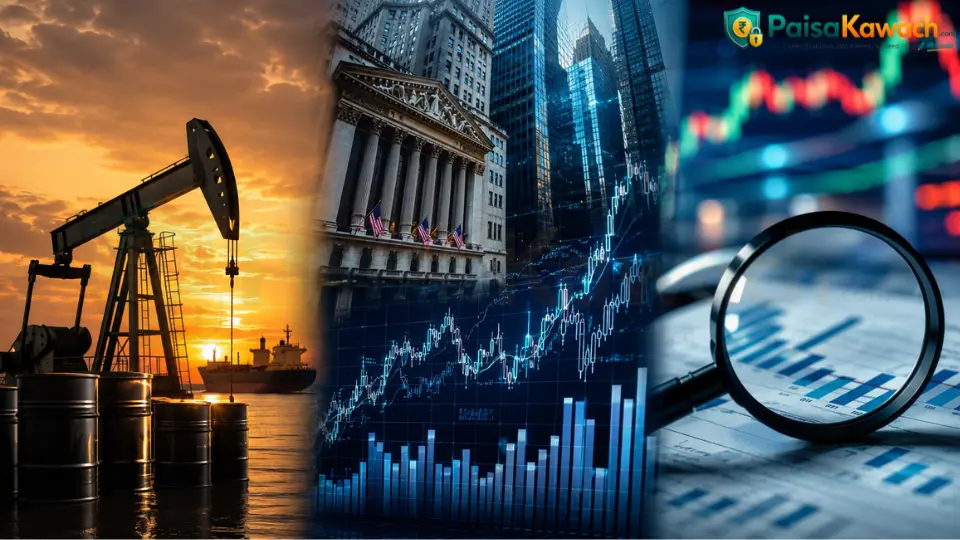
Global financial markets entered the new trading week facing one of the most important combinations of economic and geopolitical developments seen in recent months. Investors across the United States, Europe, and Asia are carefully monitoring three major events that have the potential to influence stocks, commodities, currencies, and bond markets worldwide. Crude oil prices have moved sharply higher following renewed geopolitical tensions in the Middle East, the quarterly earnings season begins with reports from some of the world's largest banking institutions, and markets are preparing for crucial U.S. inflation data that could shape the Federal Reserve's next interest rate decision. Together, these developments are expected to determine investor sentiment and market direction throughout the week.
While each event is significant on its own, their combined impact makes this a particularly important period for businesses, policymakers, and investors. Higher energy prices can fuel inflation, corporate earnings provide a real-time picture of economic health, and inflation data directly affects monetary policy. As global markets continue to navigate economic uncertainty, these three developments are likely to remain the primary drivers of financial activity.
Oil Prices Climb as Middle East Tensions Raise Supply Concerns
Global energy markets experienced renewed volatility after geopolitical tensions involving the United States and Iran intensified. Investors quickly responded by purchasing crude oil futures amid growing concerns that any escalation could disrupt supplies from the Middle East. The region remains one of the world's largest producers and exporters of crude oil, making geopolitical developments there highly influential for international energy markets.
A major focus for traders is the Strait of Hormuz, one of the world's busiest maritime routes for oil transportation. A significant share of globally traded crude oil passes through this narrow waterway every day. Even the possibility of disruptions is often enough to trigger higher oil prices because markets tend to price in future supply risks before any actual interruption occurs.
Higher oil prices affect much more than energy companies. Fuel costs influence transportation, aviation, shipping, manufacturing, agriculture, logistics, and consumer prices. When businesses face increased operating expenses, many eventually pass those costs on to consumers, contributing to higher inflation.
Global Economic Impact of Rising Oil Prices
Energy price movements often have ripple effects across the global economy. Countries that import large amounts of crude oil generally experience rising import bills, weaker trade balances, and increased inflationary pressure. On the other hand, major oil-exporting nations often benefit from stronger export revenues during periods of elevated crude prices.
Financial markets also respond differently across sectors. Energy producers frequently outperform during periods of rising oil prices, while industries such as airlines, transportation companies, chemical manufacturers, and logistics providers may experience pressure due to higher fuel expenses. Investors therefore closely monitor oil markets as an important indicator of broader economic conditions.
- Renewed Middle East tensions have increased concerns about global oil supply stability.
- The Strait of Hormuz remains one of the world's most strategically important energy shipping routes.
- Higher oil prices may increase inflation, transportation costs, and business operating expenses across multiple industries.
Major Bank Earnings Begin a Critical Corporate Reporting Season
The second major development shaping global markets is the start of the quarterly earnings season in the United States. Several of America's largest banking institutions are scheduled to announce financial results, providing investors with one of the earliest comprehensive assessments of economic activity during the second quarter.
Large banks occupy a unique position within the economy because they interact with consumers, businesses, corporations, governments, and financial markets simultaneously. Their earnings reports provide valuable information regarding loan demand, consumer spending, business investment, trading activity, wealth management, credit quality, and corporate financing conditions.
Investors are particularly interested in whether higher interest rates have continued supporting bank profitability or whether slowing economic activity has begun affecting loan growth and credit performance. Bank executives are also expected to discuss business conditions, future lending demand, and risks facing the global economy during the remainder of the year.
Why Bank Earnings Matter Beyond the Financial Sector
Corporate earnings are among the most closely watched indicators in financial markets because they reveal how businesses are performing under current economic conditions. Strong earnings generally suggest healthy consumer demand and resilient business activity, while weaker results may indicate slowing growth or rising economic risks.
The banking sector often sets the tone for the broader earnings season because financial institutions report before many technology, industrial, healthcare, and consumer companies. Positive surprises may improve investor confidence across multiple sectors, whereas disappointing results can lead to increased market volatility.
Technology companies are also expected to remain in focus later in the week, particularly firms connected to artificial intelligence, semiconductors, and advanced computing infrastructure. Investors will compare corporate guidance across industries to determine whether AI-related investment continues supporting global economic growth.
- Quarterly earnings provide one of the clearest indicators of current economic health.
- Major U.S. banks offer insights into lending, consumer spending, and business investment trends.
- Corporate outlook statements may significantly influence investor expectations for the second half of 2026.
Inflation Reports Could Influence Federal Reserve Policy
The third major event attracting investor attention is the release of key U.S. inflation reports, including the Consumer Price Index (CPI) and Producer Price Index (PPI). These economic indicators measure changes in prices paid by consumers and producers, helping policymakers evaluate whether inflation is moving toward long-term targets.
Inflation remains one of the most closely monitored economic indicators because it directly affects interest rate decisions by the Federal Reserve. When inflation remains elevated, central banks often maintain higher borrowing costs to slow economic activity and stabilize prices. Conversely, moderating inflation may allow policymakers greater flexibility to reduce interest rates and support economic expansion.
Financial markets respond rapidly to inflation data because expectations surrounding interest rates influence nearly every major asset class. Equity valuations, government bond yields, currency markets, commodity prices, and precious metals frequently experience increased volatility immediately following inflation releases.
Why Investors Closely Watch CPI and PPI
Consumer inflation affects household purchasing power, wage negotiations, retail spending, and business pricing strategies. Producer inflation provides an early indication of cost pressures faced by manufacturers and suppliers before those expenses potentially reach consumers.
If inflation data comes in lower than expected, investors may anticipate a more accommodative monetary policy from the Federal Reserve later this year. Lower interest rates generally reduce borrowing costs for businesses and households, encouraging investment and economic growth. However, stronger-than-expected inflation could reinforce expectations that interest rates will remain elevated for a longer period.
- Upcoming CPI and PPI reports could become the week's biggest market-moving economic releases.
- Inflation data directly influences Federal Reserve interest rate expectations.
- Stocks, bonds, currencies, commodities, and precious metals may all experience heightened volatility after the reports.
What These Developments Mean for Global Investors
The combination of geopolitical uncertainty, corporate earnings, and critical economic data creates a complex environment for investors around the world. Market participants must evaluate not only individual events but also how they interact with one another. Rising oil prices could contribute to higher inflation, stronger inflation could delay interest rate reductions, and higher borrowing costs could influence future corporate earnings.
Diversification therefore remains an important strategy during periods of heightened uncertainty. Investors often monitor developments across multiple asset classes rather than focusing exclusively on equities. Government bonds, commodities, energy stocks, defensive sectors, and high-quality dividend-paying companies frequently receive increased attention when volatility rises.
International investors are also closely watching currency markets, as changes in interest rate expectations can significantly influence exchange rates. A stronger U.S. dollar may affect emerging markets, commodity prices, and multinational corporate earnings, adding another layer of complexity to global investment decisions.
Global Market Outlook
The week ahead represents a critical period for financial markets worldwide. Oil prices will continue responding to geopolitical developments in the Middle East, investors will evaluate whether major banks demonstrate resilience amid changing economic conditions, and inflation reports will provide fresh insight into the likely direction of U.S. monetary policy.
Although market volatility may remain elevated in the short term, these events will also provide valuable information regarding the strength of the global economy. Businesses, policymakers, and investors alike will use the coming days to assess whether economic growth remains resilient despite geopolitical uncertainty and persistent inflation concerns. As markets digest these developments, the combination of energy prices, corporate earnings, and inflation data is expected to shape investment sentiment and financial market performance throughout the remainder of the quarter.
Keep Reading: More Insights You Might Like
 Apollo Targets easyJet, TSMC AI Outlook in Focus, Delta Air Lines Beats Earnings
Next →
Apollo Targets easyJet, TSMC AI Outlook in Focus, Delta Air Lines Beats Earnings
Next →
 The Hormuz Shock: How One Waterway Is Quietly Rewriting the Rules of Global Money
Comments
No comments yet. Be the first to comment!