Sensex Rebounds, Gujarat Gas Crisis, US-India Trade Deal Snag & Forest Essentials Buyout — March 6, 2026

A week of extraordinary volatility closes with a dramatic rebound on Dalal Street — but the energy crisis at home and diplomatic turbulence abroad remind investors that the storm is far from over.
The Big Picture: A Rebound Built on Fragile Ground
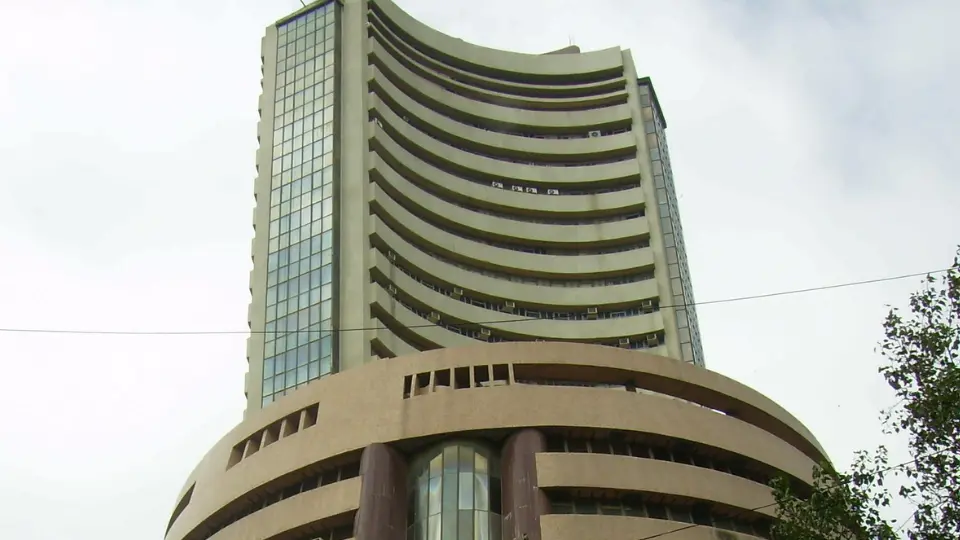
March 6, 2026, arrives with Indian equity markets nursing the wounds from one of the most punishing weeks in recent memory. The BSE Sensex cratered nearly 2,033 points and the Nifty 50 lost over 645 points across the week — a sharp reminder that global shocks can overwhelm even structurally sound economies. Wednesday's carnage, triggered by the rupee's collapse to an all-time low of ₹92.30 per dollar and a 1,122-point Sensex crash, had left investors shell-shocked.
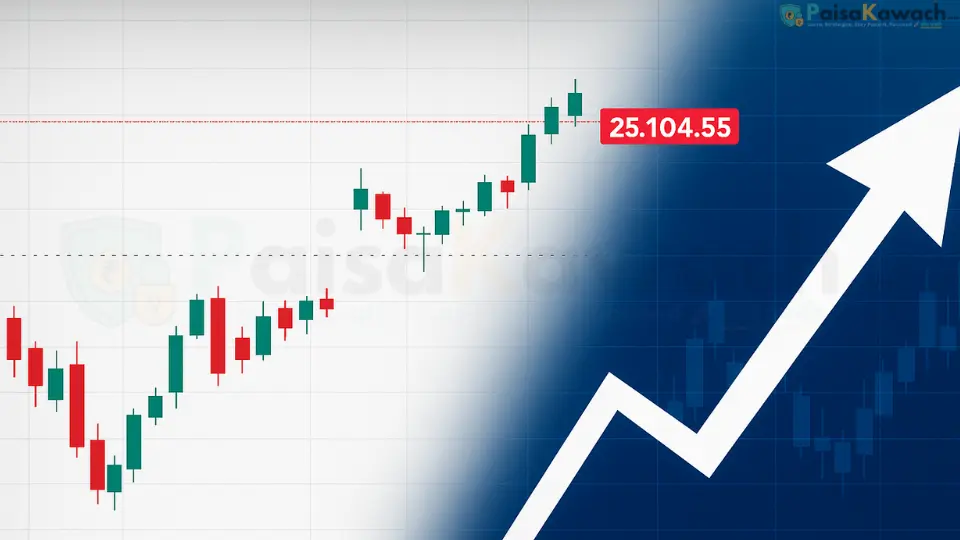
Thursday's session offered a reprieve. Diplomatic signals from Tehran — Iran's Deputy Foreign Minister indicated the country may be open to nuclear concessions if Washington meets its conditions — sent crude oil prices lower and triggered a risk-on reversal. The Sensex surged 899 points to reclaim the 80,000 mark and the Nifty gained 285 points, closing at 24,765. As Friday's session opens, the mood is cautiously optimistic but edgy, with the Nifty moving in an early band of 24,595–24,827.
Yet beneath the rebound lies a reality that seasoned market observers are not ignoring: the week's total loss in BSE-listed market capitalisation stands at a staggering ₹16.28 lakh crore. Foreign institutional investors have sold a net ₹4,630 crore in equities this week alone, extending a selling streak that has now lasted three consecutive weeks. Domestic institutional investors have absorbed the brunt — buying ₹24,312 crore — preventing a deeper collapse, but the structural imbalance in flows remains a concern.
📌 Today's Market Snapshot — March 6, 2026
- Sensex (Thu close): 80,015 (+899 pts, +1.14%) | Weekly loss: -2,033 pts (-2.43%)
- Nifty 50 (Thu close): 24,765 (+285 pts, +1.17%) | Weekly loss: -645 pts (-2.51%)
- BSE Market Cap Weekly Loss: ₹16.28 lakh crore wiped out
- FII Weekly Outflow: -₹4,630 crore | DII Weekly Buy: +₹24,312 crore
- Indian Rupee: Recovering — record low ₹92.30/$ hit Wednesday
- Gold (24-carat, Delhi): ₹1,63,020 per 10g | MCX April futures +₹1,600 today
- MCX Silver (May): Surged ₹8,700 in today's session
- Brent Crude: ~$80/bbl, easing from 7-month highs
- India VIX: Elevated; watching Iran diplomacy and LNG supply closely
- Nifty Support Level: 24,300 — key technical make-or-break zone
🇮🇳🇺🇸 Top Story: India-US Trade Deal Hits a US Supreme Court Wall
This is the most consequential economic story of the week for India — and one that will define the country's export competitiveness for years to come. The India-US Bilateral Trade Agreement (BTA), which had been painstakingly negotiated over the past year, appeared set to deliver a transformative shift in bilateral commerce. The framework, announced via a joint White House-Government of India statement on February 6, 2026, proposed slashing the effective US tariff on Indian goods from a punishing 50% (which had included a 25% punitive duty for India's purchases of Russian crude) down to 18% — still above zero, but a dramatic improvement.
Under the terms of the framework, India committed to eliminating or reducing tariffs on all US industrial goods and a sweeping range of agricultural products — from dried distillers' grains and sorghum for animal feed to nuts, fruits, soybean oil, wines and spirits. India also agreed to a historic $500 billion purchase commitment of US energy products, aircraft and aircraft parts, precious metals, technology products and coking coal over the next five years, alongside expanded GPU and data centre technology cooperation.
The deal was also strategically significant. India effectively agreed to stop purchasing Russian crude oil — a geopolitical pivot of enormous consequence — in exchange for the US removing that punitive 25% tariff that had been imposed in August 2025. The two sides were targeting formal signature of an Interim Agreement by end of March 2026.
Then came the bombshell. On February 20, 2026, the US Supreme Court struck down country-specific tariff measures imposed under the International Emergency Economic Powers Act (IEEPA), ruling them unconstitutional. This removed the legal foundation on which the reciprocal-tariff framework was built — creating a sudden legal vacuum in the negotiation architecture. While a universal 15% baseline duty now applies to all countries under a Section 122 framework, the BTA's preferential structure for India remains in limbo. Both sides are now reassessing, and further rounds of talks have been rescheduled.
The delay is painful but not fatal. India's strategic direction toward the US remains intact, and analysts note that the preferential tariff structure — once finalised — will give India a meaningful edge over regional competitors. At 18%, India already fares better than Vietnam (20%), Bangladesh (20%), and far better than China (30–35%). The full-fledged BTA is now expected to conclude by late 2026 or 2027. Sectors most directly impacted by the delay include textiles, pharmaceuticals, gems and jewellery, and IT services — together accounting for over 40% of India's goods exports to the US.
🔥 Energy Crisis Goes Operational: Gujarat Gas Cuts 50% Supply to Industry From Today
If the trade deal delay is a strategic uncertainty, the Gujarat Gas force majeure is an operational emergency — and it is happening right now, on the ground, across industrial India.
India's largest city gas distribution company, Gujarat Gas Limited, formally issued force majeure notices to all its industrial customers and began restricting Daily Contracted Quantities (DCQ) of piped natural gas from March 6, 2026 — today. The trigger is a severe constraint in the availability of Regasified Liquefied Natural Gas (R-LNG), directly caused by the ongoing US-Israel-Iran military conflict. According to CNBC-TV18, the supply reduction stands at approximately 50% of contracted quantities and will remain in effect until at least March 31, 2026 — with the possibility of extension.
The root cause is a cascading global LNG supply shock. Qatar's Ras Laffan facility — the world's largest LNG export complex, processing the majority of Qatar's 20% share of global LNG exports — was struck by Iranian drone attacks and declared force majeure on deliveries. India sources between 40% and 50% of its total LNG imports from Qatar. When Ras Laffan went offline, Petronet LNG, India's largest LNG importer, was among the first to feel the squeeze. Gujarat Gas, which distributes the regasified LNG downstream to industry, is now the next domino.
The industrial fallout is severe and immediate. Morbi's ceramics cluster — India's largest, contributing over 70% of the country's ceramic tile exports — is the most acutely affected. The cluster historically consumes over 4 million metric standard cubic metres of gas daily from Gujarat Gas alone. With supply halved, plants are shutting down or operating at a fraction of capacity, threatening export orders, labour income, and supply chains for construction and home decor sectors across India and internationally.
Other affected sectors include chemicals, textiles, glass, and a range of energy-intensive manufacturing clusters across Gujarat. The force majeure clause — activated because "Acts of War" fall outside contractual obligations — also means Gujarat Gas's insurance policies do not cover the event, leaving the company with no indemnification for lost revenues while contracted supply obligations are suspended.
The ripple effect extends beyond Gujarat Gas. Somany Ceramics has also flagged a temporary gas supply restriction at its Kadi plant from March 6, though it is sourcing alternative gas from GAIL to minimise operational disruption. Energy analysts warn that if the Hormuz Strait disruption persists, India could face a nationwide industrial gas crunch, with Brent crude already hovering at approximately $80 per barrel — up 19% year-on-year — and global LNG spot prices spiking to multi-month highs.
💱 Rupee & Gold: The Safe-Haven Rotation Deepens
The Indian rupee, which crashed to an all-time intraday low of ₹92.3050 per US dollar on Wednesday in its sharpest single-day fall in ten months, is staging a partial recovery today as geopolitical de-escalation signals reduce immediate oil price pressure. The RBI's aggressive dollar sales in both the spot and forward markets on Wednesday provided an important floor, preventing a more disorderly rout. However, analysts caution that the structural forces driving the depreciation — elevated oil prices, persistent FII outflows, and a strong dollar — have not reversed.
Gold is the clear beneficiary of India's triple crisis: currency weakness, energy shock, and geopolitical anxiety. On the MCX, April gold futures surged over ₹1,600 today, while May silver futures jumped ₹8,700 in a single session. In physical markets, 24-carat gold in Delhi is retailing at ₹1,63,020 per 10 grams and 22-carat at ₹1,49,440. Jewellery demand ahead of the spring wedding season is providing additional price support at the retail level, even as investment demand picks up among institutional and retail buyers seeking inflation and currency hedges.
🏭 Corporate India: Must-Know Stories of the Week
Estée Lauder Acquires Forest Essentials — India's Luxury Ayurveda Goes Global
In one of the most significant consumer-sector M&A developments in India this year, American beauty giant Estée Lauder Companies has entered into an agreement to acquire the remaining 51% stake in Forest Essentials — India's most prominent luxury Ayurveda brand — subject to regulatory approvals. The transaction is expected to close in the second half of 2026, with the acquisition amount undisclosed.
Founded in 2000 by entrepreneur Mira Kulkarni, Forest Essentials pioneered the luxury Ayurvedic personal care segment in India, blending traditional Indian formulations with high-end packaging and international retail standards. Kulkarni will remain at the helm of the brand, with headquarters staying in New Delhi, and her son Samrath Bedi continuing as Executive Director. Estée Lauder, which had already held a 49% stake in the company, is completing its ownership consolidation as it positions Forest Essentials as its flagship emerging-market asset.
Following the acquisition, India is expected to become Estée Lauder's largest emerging market by combined portfolio performance. The brand is projected to post low double-digit net sales growth, operating approximately 200 standalone stores across India, the Middle East, and the UK. The deal signals growing international confidence in Indian wellness and beauty brands as genuinely global-scale propositions, not merely domestic niche plays.
Gujarat Gas / Coal India / Energy Sector — War Premium Reshapes Valuations
Coal India emerged as one of the week's clearest beneficiaries of the energy crisis. Citi placed the stock on a 90-day Upside Catalyst Watch and raised its price target, citing the prospect of gas-to-coal switching by power plants as LNG prices surge. The brokerage expects improved e-auction coal realisations as industrial buyers scramble for alternative fuels. Coal India shares have gained over 5% this week.
In a further positive development for Coal India shareholders, the company's board approved a plan for its subsidiary South Eastern Coalfields Limited (SECL) to pursue a listing on Indian stock exchanges — a significant value unlock from one of India's largest mining conglomerates. The listing process is expected to progress over the coming quarters.
Bharat Forge — North American Order Book Boom
Bharat Forge shares gained 4% after data showed that North American Class 8 truck orders surged 159% year-on-year in February 2026 — a leading indicator for the company's largest export segment. Strong order books in commercial vehicles in North America translate directly into higher component demand from Bharat Forge's US-facing manufacturing operations, reinforcing the investment thesis for India's auto components sector.
Castrol India — Ownership Changes Hands at Modest Premium
Motion JVCo Limited, together with Stonepeak and Canada Pension Plan Investment Board (CPPIB), launched a formal open offer to acquire up to 26% of Castrol India at ₹194.04 per share — a 2.3% premium to the recent closing price of ₹189.39. The offer targets 25.71 crore shares, representing a potential payout of approximately ₹4,990 crore at the offer price. This follows British Petroleum's December 2024 agreement to sell 65% of its global Castrol lubricants business to Stonepeak at a $10.1 billion enterprise value.
Analysts at Equinomics cautioned that the slim premium makes a significant stock rally unlikely. Castrol India shares gained approximately 4% intraday but are unlikely to meaningfully outperform the offer price. The deeper strategic question for investors is longer-term: whether a Stonepeak-led Castrol pursues growth in EV fluids, industrial specialties, and data-centre thermal management — areas that could significantly re-rate the stock's long-term value even if near-term trading stays range-bound near the offer price.
Vodafone Idea — AGR Reassessment Begins
A government-appointed two-member committee has formally begun its reassessment of Vodafone Idea's Adjusted Gross Revenue (AGR) dues, with a March 31, 2026 deadline. Under the revised relief schedule, Vodafone Idea will pay a maximum of ₹124 crore annually between March 2026 and March 2031 — a dramatically reduced figure compared to the ₹75,900 crore originally due in six annual instalments, effectively giving the telecom company a lifeline as it attempts to scale its 5G ambitions. Despite the relief, JPMorgan downgraded Vodafone Idea to 'Underweight', citing ongoing funding challenges and growth projections it views as overly optimistic.
📊 Macro Watch: What Analysts Are Saying
Sanjeev Prasad of Kotak Institutional Equities highlighted crude oil supply disruption as the single most important risk factor for Indian markets, warning that prolonged conflict in West Asia could force earnings downgrades across commodity-linked sectors while simultaneously pressuring the rupee and widening the current account deficit.
Analysts from Bajaj Broking noted that from a technical standpoint, Nifty's ability to hold above Wednesday's panic low of approximately 24,300 is critical. A sustained hold above that level opens the path to a recovery toward 25,100–25,200 in the coming sessions. A decisive break below 24,300, however, could drag the index toward 24,000 — a level that would begin attracting serious valuation-based buying from long-term domestic investors.
J.P. Morgan's Head of Asia Equity Strategy took a longer view, noting that improving domestic macro indicators and a strong earnings trajectory position India for a meaningful market rally from the second half of 2026 onward, with private consumption expected to contribute 4.4% to GDP growth by year-end.
🔭 What to Watch Next Week
The coming week will be decisive across multiple fronts. On the geopolitical front, any escalation or de-escalation in the Iran-US-Israel conflict will directly move crude oil prices, the rupee, bond yields, and sectoral stock performance. The Gujarat Gas LNG situation is now a live operational crisis — its continuation beyond March 31 would begin to cause measurable GDP-level impact via industrial output losses.
On the trade front, the rescheduling of India-US BTA talks will be closely tracked by textile, pharma, and IT sector stakeholders. Any clarity on the legal pathway following the US Supreme Court ruling on IEEPA tariffs could unlock significant export optimism.
Domestically, the Sedemac Mechatronics IPO listing on March 11 will serve as a sentiment barometer for India's primary market appetite. The SECL listing timeline and RBI signals ahead of the April Monetary Policy Committee meeting will also be critical inputs for market positioning.
- Iran nuclear diplomacy: Any breakthrough = oil relief = rupee recovery = market rally
- Gujarat Gas / LNG situation: Watch for March 31 extension or resolution notices
- India-US BTA rescheduled talks: Export sector and FDI sentiment hinge on this
- Sedemac Mechatronics listing (Mar 11): IPO market confidence indicator
- RBI April MPC signals: Rate cut path vs. rising inflation risk from oil
- Nifty 24,300 technical level: The floor the market must defend
- US non-farm payrolls (tonight, 7 PM IST): Dollar direction and rupee trajectory
India enters next week with its fundamentals intact — 7.3% GDP growth, inflation within target, a resilient DII base, and strong strategic positioning — but with geopolitical and energy risks that could overwhelm near-term macro strength. For investors, this remains a market where patience, selectivity, and a sharp eye on global energy developments will determine outcomes far more than domestic earnings alone.
Keep Reading: More Insights You Might Like
 Indian Rupee Hits All-Time Low of 92.30 Against US Dollar as Middle East War Fuels Oil Shock — RBI Steps In
Next →
Indian Rupee Hits All-Time Low of 92.30 Against US Dollar as Middle East War Fuels Oil Shock — RBI Steps In
Next →
 India Market Weekly Wrap March 7, 2026: Worst Week in Six Years, US Grants Russia Oil Waiver, Defence Stocks Surge & Strait of Hormuz Shuts Down
Comments
No comments yet. Be the first to comment!