Nifty 50 and Sensex Pre-Market Outlook for March 23, 2026 — Geopolitical Pressure, FII Selling, and a Cautious Range-Bound Session Ahead

A Market Navigating a Multi-Front Shock — Where Nifty Stands This Monday
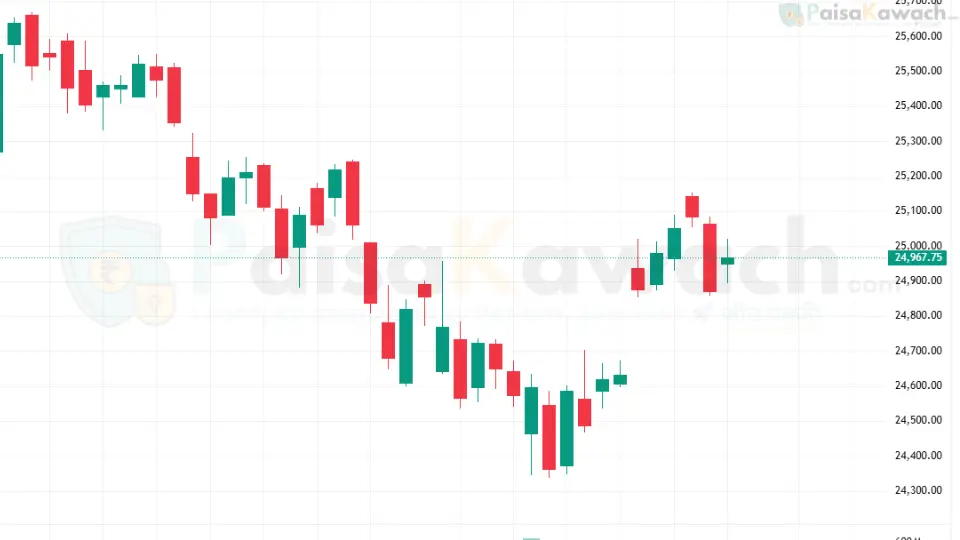
Indian equity markets enter the March 23 trading session carrying the weight of a geopolitical storm that has fundamentally altered the macro backdrop over the past three weeks. The Nifty 50 closed Friday's session at 23,114.50, registering a modest gain of 112.35 points (+0.49%), while the BSE Sensex ended at 74,532.96, up 325.72 points (+0.44%). Both indices managed a partial recovery from Thursday's devastating 3.26% crash — but that recovery came on selective participation, not broad-based buying. Heading into Monday, GIFT Nifty futures are pointing to a near-flat open around 23,133, suggesting the market lacks directional conviction at the start of the week.
The backdrop is not benign. Business Today reports that the Indian crude oil basket has surged to a staggering $156.29 per barrel — its highest level on record — driven by insurance and logistics surcharges layered on top of the underlying Brent price of $105–107. The Rupee is trading at a record low of 93.71 against the US dollar. And foreign institutional investors have pulled over ₹81,262 crore from Indian equities in March alone. The session ahead will be determined by how price responds to a narrow but critical structural corridor.
Pre-Market Snapshot — March 23, 2026
- Nifty 50 Last Close: 23,114.50 (+0.49% on March 20)
- Sensex Last Close: 74,532.96 (+0.44% on March 20)
- GIFT Nifty Pre-Open: ~23,133 — flat-to-marginally positive open indicated
- FII (March 20): Net sellers — ₹5,518.39 Cr outflow
- FII MTD (March): –₹81,262.5 Cr
- DII (March 20): Net buyers — ₹5,706.23 Cr inflow
- DII MTD (March): +₹95,462.37 Cr
- Indian Crude Basket: $156.29/barrel (record high)
- Brent Crude (spot): ~$105–107/barrel
- USDINR: 93.71 (record low)
- Nifty Immediate Resistance: 23,300–23,400
- Nifty Immediate Support: 23,000–22,900
- Key Risk Factor: Iran war escalation, Strait of Hormuz disruption, crude oil trajectory
What Happened Last Week — Context Before Monday's Open
March 2026 has been one of the most turbulent months for Indian equities in recent memory. The month opened with a precarious geopolitical situation that rapidly deteriorated as military exchanges between the US-Israel coalition and Iran intensified under what has been described as Operation Roaring Lion. The Strait of Hormuz has been functionally impaired since early March, disrupting global oil flows. The World Economic Forum has characterised the conflict as "a structural shock to the world economy," noting that roughly 20 million barrels per day of crude passed through the strait in 2025.
The most severe single-session damage came on March 19, when the Sensex cratered 2,496 points (3.26%) and the Nifty plunged 775 points to 23,002.15, briefly breaching the psychologically significant 23,000 mark. The catalyst was a combination of Israel's overnight strike on Iran's South Pars gas facilities and the subsequent hawkish posture from the US Federal Reserve, which held rates steady while signalling it would maintain the "higher for longer" stance given war-induced energy inflation. The following day — March 20 — saw a partial recovery, but the rebound was powered primarily by IT stocks responding to an encouraging Accenture earnings signal and select metal names, while financial sector heavyweights continued to face selling pressure.
The Structural Picture — Where Nifty 50 Currently Sits
From a price structure standpoint, the Nifty 50 is trading in the lower half of its 52-week range (21,743–26,373). The index has failed to sustain multiple recovery attempts above 23,300, and each such failure reinforces the overhead supply structure that has formed since the distribution phase began near 25,400. The current zone — 23,000 to 23,300 — represents what market structure analysts describe as a balance or equilibrium corridor: a range where neither buyers nor sellers have achieved decisive acceptance.
On the downside, the 22,900–23,000 band has been repeatedly tested and repeatedly defended, suggesting concentrated demand activity at these levels. However, as structural analysts note, repeated tests of a support zone progressively erode its integrity. Meanwhile, the Nifty Futures 30-March contract is trading at 22,845.50, a notable discount of approximately 269 points to the cash close — a signal of continued bearish positioning in the derivatives market. According to data tracked by TradingView analysts, FIIs have been adding fresh short positions in index futures, with index long percentage remaining at a subdued 14%.
Structural Note: The decisive close below the 0.618 Fibonacci retracement from last year's low, and the breach of the 100-week EMA observed during the week ending March 20, represents a medium-term structural breakdown — not merely a pullback. Recovery attempts within this framework should be evaluated as potential short-covering rallies unless accompanied by decisive volume and breadth confirmation above 23,400.
The Macro Weight — Crude Oil, the Rupee, and What They Mean for India
The Iran war has delivered a brutal double shock to India's macro fundamentals. On the energy side, Business Upturn documents that India's crude basket moved from $63 per barrel at the start of January 2026 to $146.39 by March 18 — a rise of over 130% in less than seven weeks. The Business Today explainer notes the basket has since climbed further to $156.29 per barrel, reflecting elevated insurance and logistics premiums on Gulf shipping routes. India imports approximately 85–88% of its crude needs, making this a direct hit to the current account.
On the currency side, the Rupee's weakness to 93.71 is compounding the damage. 5paisa notes that the combination of high crude prices and a weak Rupee creates a "double whammy" — even if oil prices stabilise, every barrel now costs approximately 10% more for Indian refineries than it did a year ago. Analysts at Ambit Capital have flagged the possibility of a further 7.5% correction in the Rupee, potentially pushing it toward the 94–95 range against the dollar if the conflict does not de-escalate. The RBI has reportedly deployed $12–15 billion from forex reserves to contain the slide, but the pace of intervention has been measured rather than aggressive.
Institutional Flows — The FII-DII Tug of War Defining the Market Floor
The defining dynamic of the current market phase is the sustained divergence between foreign and domestic institutional participants. FIIs have been relentless net sellers throughout March, with the month-to-date outflow reaching ₹81,262.5 crore — a pace that reflects structural repositioning, not tactical profit-booking. According to reports tracked by Anand Rathi PMS, global investors have withdrawn over $3 billion from Indian equities in March alone, seeking safe-haven exposure in US dollar assets as geopolitical risk aversion intensifies.
Domestic Institutional Investors, however, have functioned as the primary price support mechanism. DII inflows of ₹95,462 crore MTD represent a systematic absorption of FII supply — and it is this buying that has prevented the Nifty from breaching 22,900 on a closing basis. According to weekly recap data from Liquide, DII buying for the week of March 16–20 alone amounted to ₹30,642 crore — an extraordinary figure that underscores the degree to which domestic institutions are backstopping the market against foreign outflows. The question entering Monday is whether this absorption can continue if FII selling accelerates further.
Sector Rotation — What Friday's Recovery Actually Revealed
The March 20 recovery was not a broad-market event. It was, in large part, a story of two sectors: IT and metals. On the Nifty, the top performers were Tech Mahindra (+3.41%), JSW Steel (+3.28%), Tata Steel (+3.08%), Infosys (+2.88%), Coal India (+2.99%), and HCL Tech (+2.14%). IT stocks rose partly in response to Accenture's earnings guidance, which markets interpreted as a positive read-through for Indian IT majors. Metal stocks benefited from a supply disruption narrative — aluminium prices rose over 3% on the London Metal Exchange as Gulf smelters faced shipping restrictions.
Meanwhile, financial sector stocks — which form the largest weight in both Nifty and Sensex — continued to face distribution. HDFC Bank fell 2.15%, Shriram Finance dropped 1.66%, HDFC Life slipped 1.40%, and ICICI Prudential Life fell 2.29%. The Nifty Financial Services index closed lower by 170.65 points (–0.68%) with market breadth showing 3 stocks advancing against 17 declining. This internal divergence — select IT and metals versus widespread financial sector weakness — is inconsistent with the profile of a durable recovery and argues for a cautious reading of Friday's green close.
What to Watch on March 23 — The Variables That Matter
Several observable variables could materially alter the session's character on Monday. The most important is intraday crude oil price movement — any further escalation in the Iran-Iraq supply disruption narrative (Iraq declared force majeure on all foreign-operated oilfields last week) could trigger a fresh risk-off move. USDINR spot behaviour at the open will be equally important; further Rupee weakness from the 93.71 level will amplify FII selling pressure and weigh on rate-sensitive sectors. Bank Nifty's performance — specifically whether HDFC Bank and ICICI Bank stabilise or continue their decline — will determine index breadth quality. Finally, any geopolitical headline during Indian trading hours has the potential to generate instantaneous intraday volatility in the current environment.
On the positive side, a potential US move to ease sanctions on Iranian oil in transit — signalled by US Treasury Secretary Scott Bessent, who mentioned approximately 140 million barrels of Iranian oil currently at sea that could be un-sanctioned "in the coming days" — could provide a significant near-term relief to crude prices if confirmed. According to Business Today, this would represent roughly two weeks of global supply hitting the market and could meaningfully ease the energy price premium currently baked into Indian equities.
Key Watch Levels for March 23: Resistance: 23,300–23,400 (immediate), 23,600–23,750 (structural). Support: 23,000–22,900 (immediate floor), 22,800–22,700 (structural), 22,500–22,000 (broader demand region). The Nifty 50 Futures (30-March contract) trading at 22,845.50 — a discount of ~269 points to cash close — reflects ongoing net short positioning in derivatives.
The Broader Implication for Investors — Context Over Panic
The current environment is one of genuine macro stress, not manufactured volatility. India faces a convergence of elevated energy costs, currency weakness, and foreign capital outflows — all driven by a geopolitical event that remains unresolved. However, as market historians note, shocks of this nature are typically temporary in their full intensity. The $146 crude basket level implies a worst-case annualised import bill that would be fiscally unsustainable — a reality that historically generates policy responses, diplomatic interventions, or price corrections driven by demand destruction.
India's macro fundamentals outside the energy sector remain intact. GST collections stood at ₹1.8 lakh crore in February 2026, domestic demand has held up, and the RBI has been proactive in liquidity management, injecting ₹1 lakh crore through open market operations in March to keep banking system funding stable and bond yields anchored. These are not trivial buffers. For long-term investors, the DII behaviour — systematic buying at current distressed levels — reflects an institutional conviction that valuations at sub-23,000 Nifty levels offer structural value. That conviction, however, does not eliminate near-term volatility.
The session on March 23 is likely to be characterised by range-bound oscillation, selective sector participation, and sensitivity to external headlines. It is a market that rewards discipline and punishes impulsive positioning. As the World Economic Forum observed of the broader conflict, "historically, every major oil shock has generated a policy response proportional to the pain it inflicts." India is not alone in feeling that pain — and the eventual policy response, when it materialises, will likely define the trajectory of recovery.
Keep Reading: More Insights You Might Like
 India Markets: The Week That Changed Everything — 21 March 2026
Next →
India Markets: The Week That Changed Everything — 21 March 2026
Next →
 India Faces Liquidity Crunch and Inflation Risk: Why March 24, 2026 Could Be a Turning Point for Markets
Comments
No comments yet. Be the first to comment!