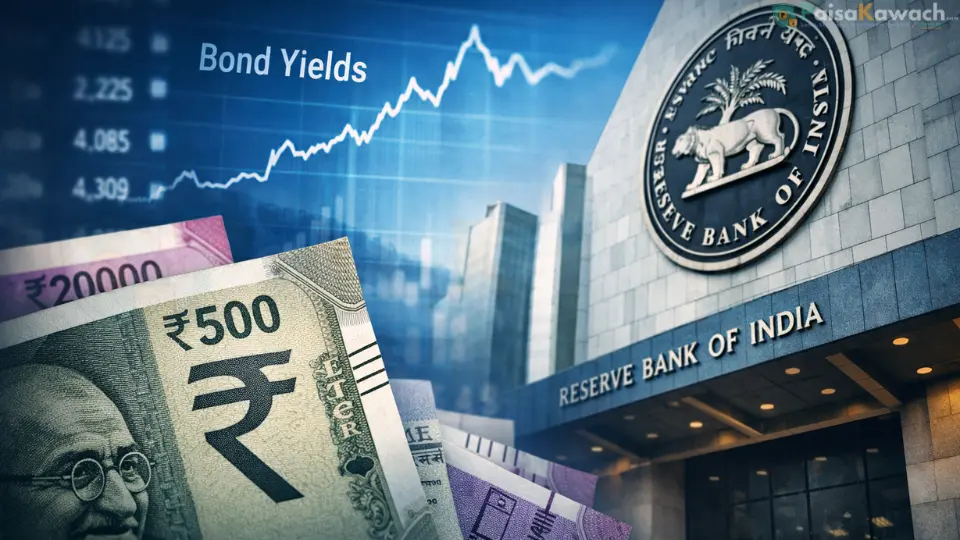
Rupee Rally Faces Oil Price Test as Crude Nears $96 and RBI Steps In

The Reserve Bank of India has reportedly been selling dollars in the foreign-exchange market to limit excessive volatility and protect the rupee from the impact of higher oil prices. This creates an unusual situation for India's currency market: strong foreign-currency inflows are supporting the rupee at the same time that an expensive oil bill is working in the opposite direction.
For investors, the key question is whether the rupee can maintain its recent gains if crude remains elevated. The answer will depend on three major forces: global oil prices, the U.S. dollar and Federal Reserve expectations, and the RBI's willingness to manage currency volatility.
Why the Indian Rupee Has Strengthened Despite Higher Oil Prices
The rupee's recent performance has surprised some currency-market participants because higher crude prices normally create pressure on an oil-importing economy such as India. The currency has instead benefited from substantial foreign-currency inflows and active RBI intervention.
Large capital inflows are supporting the currency
Reuters reported that more than $136 billion of inflows have entered India through special schemes, exceeding market expectations. Those inflows have helped make the rupee one of Asia's better-performing currencies this week and pushed it to its strongest level in about two months.
- The rupee closed around 94.4850 per U.S. dollar on Thursday, a 10-week high.
- More than $136 billion of inflows through special schemes have provided additional dollar liquidity.
- RBI intervention has helped reduce sharp movements in the foreign-exchange market.
The improvement is important because the rupee had previously faced significant pressure from oil prices, dollar demand and global risk aversion. The recent inflows have temporarily changed that balance.
However, a stronger currency does not eliminate the underlying economic impact of expensive crude. If oil stays high for an extended period, India's import bill can rise even while the rupee remains relatively stable.
Crude Oil Near $96 Creates a New Risk for India
Oil is now the biggest threat to the rupee's recent recovery. Brent crude was around $95.67 per barrel early Friday and was heading for its strongest weekly gain since mid-July as tensions between the United States and Iran increased concerns about Middle Eastern supply disruptions.
For India, the oil story is particularly important because the country depends heavily on imported crude. A sustained rise in international oil prices increases the amount of foreign currency required by Indian refiners and other importers.
How higher crude can affect the Indian economy
When oil becomes more expensive, the impact can spread well beyond petrol and diesel prices. Transportation, aviation, chemicals, manufacturing and logistics companies can all face higher costs.
- Import bill: Higher crude prices increase India's overall cost of importing energy.
- Rupee: More dollar demand from oil importers can create downward pressure on the Indian currency.
- Inflation: Higher fuel and transportation costs can eventually feed into broader consumer prices.
India's crude basket has already moved close to $100 per barrel. Financial Express reported that the Indian crude basket reached $99.35 per barrel on September 2, up sharply from $90.19 in August and $82.04 in July.
This makes crude one of the most important variables for Indian financial markets over the coming weeks.
RBI Intervention Becomes Crucial as Oil Pressure Builds
The Reserve Bank of India is playing an increasingly important role in the currency market. Reuters reported that the central bank was seen selling dollars near the beginning of Friday's trading session to cushion the rupee against the pressure created by higher oil prices.
Why RBI action matters for investors
Central-bank intervention can smooth sudden movements in the rupee, but it cannot permanently eliminate the economic consequences of expensive energy. If crude prices remain high for a prolonged period, maintaining currency stability can require continued policy support.
- RBI dollar sales can reduce excessive short-term rupee volatility.
- Strong capital inflows give the central bank more room to manage currency movements.
- A prolonged oil shock could eventually put renewed pressure on the rupee despite intervention.
The current situation is therefore better described as a balance between strong inflows and rising oil costs rather than a complete end to the rupee's external risks.
The recent strength of the rupee is also partly connected to weakness in the U.S. dollar. Reuters reported that the dollar has weakened broadly, while the Japanese yen has gained amid expectations of a possible Bank of Japan rate hike.
U.S. Jobs Report Could Change the Rupee Outlook
Another major event for the Indian currency and financial markets is scheduled for Friday: the U.S. employment report for August. Economists surveyed by Reuters expect U.S. nonfarm payrolls to increase by around 56,000 after payrolls unexpectedly fell by 23,000 in July. The unemployment rate is expected to remain around 4.1%.
The employment data could influence expectations for the Federal Reserve's next interest-rate decision and, in turn, the U.S. dollar and global capital flows.
Three possible market reactions
- Weak jobs data: Greater expectations of easier U.S. monetary policy could weaken the dollar and support emerging-market currencies.
- Strong jobs data: Higher expectations for tighter U.S. policy could strengthen the dollar and create pressure on the rupee.
- Mixed data: Markets could focus more heavily on wage growth, unemployment and inflation expectations before deciding the direction of the dollar.
The jobs report is especially important because the U.S. labor market has recently shown signs of cooling. ADP data indicated that private-sector employment increased by only 38,000 in August, while weekly unemployment claims remained relatively low.
For Indian investors, the connection is straightforward: U.S. jobs data can affect Fed expectations, Fed expectations can move Treasury yields and the dollar, and those moves can influence USD/INR and foreign investment flows into India.
What Could Happen to the Rupee Next?
The rupee enters Friday with a relatively strong technical and fundamental backdrop, but the outlook remains highly dependent on oil. Thursday's close near 94.49 per dollar represented a substantial improvement from levels seen earlier in the year.
However, the currency's ability to remain near these levels will depend on whether crude stabilizes or continues climbing.
Key indicators to watch over the next few sessions
- Brent crude: A move well above current levels would increase pressure on India's import bill and currency.
- USD/INR: Sustained rupee strength would suggest that inflows and RBI support are offsetting oil-related dollar demand.
- U.S. Treasury yields: Higher yields can make dollar assets more attractive and potentially reduce emerging-market currency support.
There is also an important geopolitical variable. Oil prices are being driven partly by renewed U.S.-Iran tensions and concerns over commercial shipping through the Strait of Hormuz. Reuters reported that Brent crude is on course for its strongest weekly gain since mid-July as the conflict raises concerns about potential supply disruption.
What Does This Mean for Indian Stock Markets?
The rupee and crude oil combination could create a mixed environment for Indian equities. A stronger rupee can benefit companies with significant foreign-currency costs, while higher oil prices can hurt businesses that depend heavily on fuel and transportation.
Technology exporters can benefit from a weaker rupee because overseas revenue converts into more rupees, while airlines, paints, chemicals and other energy-intensive industries can face margin pressure when crude and related costs rise.
Indian sectors to watch
- IT exporters: Currency movements can affect the rupee value of overseas revenue.
- Airlines and logistics: Higher fuel costs can pressure operating margins.
- Oil and energy companies: Higher crude prices can create both opportunities and risks depending on the company's business model.
The broader Nifty and Sensex response will also depend on global risk appetite. If the dollar weakens and U.S. yields decline after the jobs report, Indian equities could receive support. If oil continues rising at the same time that U.S. yields move higher, the positive effect could be overwhelmed by inflation and currency concerns.
Bottom Line: The Rupee Rally Is Facing Its Biggest Test
The Indian rupee has entered September with an unusual combination of strong capital inflows, RBI support and a softer dollar. Those factors have helped the currency reach a 10-week high despite the return of oil-market stress.
But the rally cannot be viewed in isolation. Brent crude near $96, renewed U.S.-Iran tensions and the possibility of further disruption to Middle Eastern energy shipments represent significant risks for India.
The next major test comes from the combination of oil prices, RBI intervention and Friday's U.S. employment data. If oil stabilizes and the dollar remains weak, the rupee could retain much of its recent strength. If crude continues higher and U.S. data pushes Treasury yields and the dollar upward, pressure on the Indian currency could return quickly.
For investors, the most important message is simple: watch crude oil and the dollar alongside the rupee. The direction of USD/INR over the next few weeks may depend less on domestic sentiment and more on what happens in global energy and U.S. financial markets.
Keep Reading: More Insights You Might Like

Comments
No comments yet. Be the first to comment!