World News Today, 23 November 2026: Global AI Stock Crash, COP31 Collapse & Gulf Oil Crisis — Impact on India
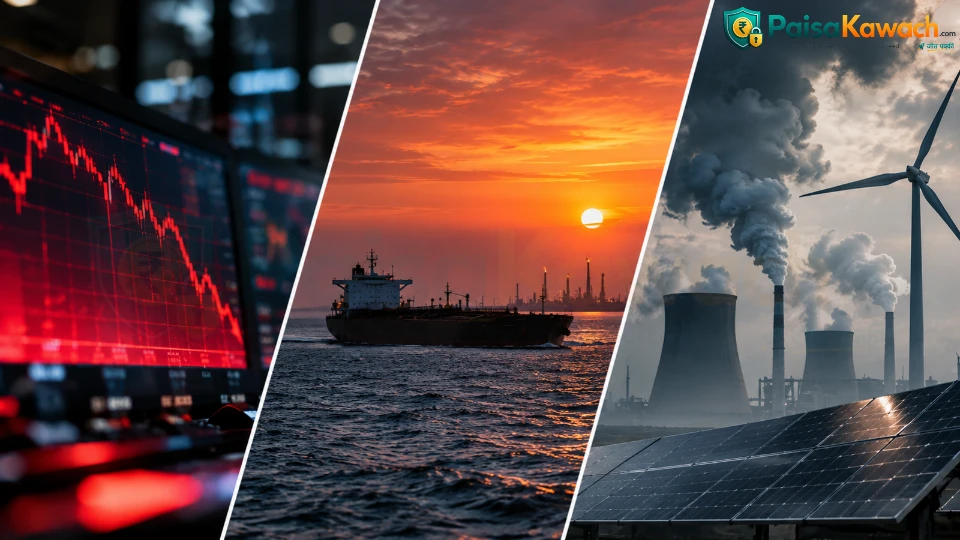
World Business and Financial News Today, 23 November 2026: Imagine waking up to three worrying headlines. Global technology stocks are falling sharply, world leaders have failed to reach a major climate agreement, and renewed attacks in the Middle East are threatening important energy shipping routes.
At first, these events may seem unrelated. But what if all three could eventually affect your investments, fuel expenses, employment opportunities and the Indian economy?
That is exactly why today's international news matters.
On Monday, 23 November 2026, Asian stock markets are facing heavy selling pressure, the collapse of COP31 climate negotiations is raising questions about global energy policy, and fresh attacks in the Gulf are keeping oil markets uncertain.
For India, these developments create both risks and potential opportunities. Global financial instability could affect foreign investment, energy disruptions could influence inflation, and uncertainty over climate finance may affect renewable-energy infrastructure.
But does this mean Indian investors should panic? Or could some of these global challenges actually benefit parts of India's economy?
Let's understand the three biggest stories and their real impact on India.
Published: 23 November 2026 | Category: International Business and Financial News | Coverage: Global Stock Markets, COP31, Oil Prices and Indian Economy | Reading Time: Approximately 9 Minutes
Today's Top 3 International News Stories in 30 Seconds
Here are the most important developments you need to know.
- 1. Global AI Stock Selloff: South Korea's stock market has come under heavy pressure amid concerns about expensive AI companies and semiconductor stocks.
- 2. COP31 Climate Talks Collapse: The UN climate summit ended on 22 November without a major overarching political agreement because countries could not agree on fossil fuels and financing.
- 3. Gulf Oil Crisis: Fresh attacks on shipping and energy infrastructure have raised concerns about crude oil supply, even as prices face pressure from weaker demand expectations.
- 4. Impact on India: Foreign investment, technology stocks, renewable-energy projects, oil imports, the rupee and inflation could all be affected.
- 5. Join the Discussion: Which global risk concerns you most — STOCK MARKET, CLIMATE or OIL PRICES?
1. Global AI Stock Selloff: Why Are Technology Stocks Falling So Sharply?
One of the biggest financial developments this Monday is the continued decline in technology-heavy Asian stock markets.
South Korea's benchmark KOSPI index faced significant selling pressure as investors reassessed the valuations of companies associated with the global artificial intelligence boom.
The KOSPI had already declined 5.21% on Friday, 20 November, before falling another 2.77% at Monday's opening. Reuters subsequently reported a decline of approximately 5% during Monday's session.
South Korean authorities said market-stabilisation measures were available if conditions deteriorated further.
The sharp decline has raised a question that investors around the world are asking: Have expectations surrounding artificial intelligence become too optimistic?
What Is Causing the Global Technology Selloff?
Over recent years, technology companies have invested heavily in artificial intelligence, data centres, semiconductor manufacturing and advanced computing infrastructure.
Investors expect these investments to create substantial future revenue and profits.
However, markets are increasingly questioning whether the earnings generated by AI businesses will justify the enormous amounts of money being spent.
- High valuations: Some AI-related companies have been priced for extremely strong future growth.
- Infrastructure costs: Advanced processors, data centres and electricity infrastructure require large investments.
- Profitability concerns: Investors are questioning how quickly AI spending can generate sustainable returns.
- Technology restrictions: International semiconductor export rules have created additional uncertainty.
- Market sentiment: Losses in major US technology stocks have affected confidence across Asian markets.
Does This Mean the Artificial Intelligence Boom Is Ending?
Not necessarily.
There is an important difference between the usefulness of artificial intelligence and the stock-market valuation of companies involved in the industry.
AI adoption may continue growing even when technology stocks experience corrections.
For example, a company may develop highly successful products while its share price falls because investors had previously expected even faster growth.
A stock-market decline is therefore not proof that the underlying technology has failed.
Why Does South Korea Matter to Global Financial Markets?
South Korea is an important global semiconductor and electronics manufacturing centre.
Major Korean companies supply memory chips, electronic components and technologies used by international manufacturers.
Changes in investor confidence toward these businesses can influence technology valuations in other financial markets.
Large declines may also cause investment funds to reassess their allocations across countries and industries.
How Could the Global AI Selloff Affect India?
India is connected to international technology markets through IT services, software exports, digital infrastructure and foreign portfolio investment.
If international investors reduce exposure to technology-related investments, some Indian companies and funds may experience changes in market sentiment.
- Indian IT companies: Global technology spending decisions could affect demand for certain services.
- Mutual funds: Investors holding international technology or semiconductor funds may experience greater volatility.
- Foreign institutional investors: Changes in global risk appetite could influence investment flows into Indian equities.
- Indian startups: A prolonged decline in technology valuations could make fundraising more difficult for some businesses.
- Data-centre investment: Companies may reassess the financial returns expected from large AI infrastructure projects.
However, Indian IT services companies are not identical to semiconductor manufacturers.
Their financial performance depends on client contracts, enterprise spending, margins, currency movements and company-specific factors.
Therefore, a decline in overseas AI stocks does not automatically mean that every Indian technology company will experience similar losses.
Should Indian Investors Sell Their Technology Stocks?
A sharp international market decline can create anxiety, particularly among investors who recently entered the market.
However, decisions should depend on financial goals, investment horizon, valuations and portfolio diversification rather than a single day's headlines.
Investors should evaluate whether their portfolio is excessively concentrated in one sector and whether the underlying companies remain financially sound.
PaisaKawach Takeaway: The global AI selloff highlights the risks of high valuations and investor expectations. Indian investors should focus on diversification and fundamentals rather than reacting emotionally to international market volatility.
Source: Reuters — South Korea's Stock Market Faces AI-Related Selling Pressure, 23 November 2026
2. COP31 Climate Summit Collapses: Why Could This Affect the Global Economy?
The second major international development concerns the future of global energy and climate policy.
The COP31 climate conference in Antalya, Turkey, ended on Sunday, 22 November 2026, without an overarching political agreement.
Negotiators from nearly 200 countries were unable to resolve disagreements involving fossil fuels, climate financing and the responsibilities of developed and developing economies.
The breakdown is significant because international climate agreements can influence the direction of future investment in electricity, transportation, manufacturing and infrastructure.
Why Did the Climate Talks Fail?
A major disagreement involved whether the final political agreement should explicitly address the transition away from coal, oil and natural gas.
Several countries wanted stronger commitments to reducing dependence on fossil fuels.
Others argued that energy security, affordability and the development needs of poorer economies required greater consideration.
Climate financing was another major point of disagreement.
- Fossil fuels: Countries disagreed about how strongly the agreement should address coal, oil and gas.
- Climate finance: Developing economies sought stronger financial commitments from wealthier countries.
- Energy security: Some governments argued that energy transitions must avoid shortages and excessive costs.
- Economic development: Countries differed over how climate responsibilities should be shared.
- Political agreement: The summit ended without adopting its proposed overarching climate declaration.
Does This Mean All Previous Climate Agreements Have Ended?
No.
The failure to reach a new overarching political agreement does not cancel the Paris Agreement or automatically remove existing national climate commitments.
Countries can continue developing renewable energy, improving efficiency and implementing domestic climate policies.
Some technical work and separate initiatives also progressed during the conference.
The major setback was the inability to establish a new shared political direction on several contentious issues.
Why Does COP31 Matter to Businesses and Investors?
Energy infrastructure requires long-term planning and substantial capital investment.
Companies building renewable-energy projects, electricity networks, manufacturing plants and industrial facilities often make decisions based on expectations about future regulation and demand.
Uncertainty over international climate cooperation can make planning more difficult.
- Renewable energy: Investors may reassess future policy support and financing opportunities.
- Fossil fuels: Oil, gas and coal producers face continuing uncertainty about long-term demand and regulation.
- Electricity infrastructure: Grid upgrades and energy storage remain important investment areas.
- Manufacturing: Companies may face different environmental requirements across international markets.
- Climate finance: Developing countries may continue pressing for more accessible and affordable funding.
What Does the COP31 Failure Mean for India?
India faces the challenge of expanding energy supply while supporting economic growth, industrial development and environmental objectives.
The country is investing in renewable energy, electricity transmission, energy storage and other infrastructure.
Many of these projects require long-term financing.
International climate financing discussions are important because access to affordable capital can influence the cost of major energy and adaptation projects.
Potential Impact on India's Economy
- Solar manufacturing: Future international renewable-energy investment trends could influence demand.
- Electricity infrastructure: Power-grid modernisation and storage projects remain essential regardless of the summit outcome.
- Coal industry: The absence of a new global political agreement does not eliminate longer-term energy-transition pressures.
- Electric vehicles: Manufacturing and charging infrastructure depend on domestic policy and technology costs.
- Climate finance: India and other developing economies may continue seeking affordable international funding.
Will Electricity Become More Expensive in India?
Not automatically.
The collapse of COP31 does not directly determine household electricity tariffs in India.
Domestic electricity prices depend on fuel costs, generation technology, distribution expenses, state regulation, infrastructure investment and government policies.
However, long-term changes in financing costs and energy investment can influence future electricity-system expenses.
PaisaKawach Takeaway: COP31's failure creates uncertainty for international climate cooperation, but it does not end existing climate commitments or India's energy transition. The most important issue for India remains affordable and reliable infrastructure investment.
Sources: Down To Earth — COP31 Ends Without Major Agreement | ABC News — COP31 Negotiations Break Down, 23 November 2026
3. Gulf Oil Crisis: New Shipping Attacks Raise Global Energy Concerns
The third major international story involves one of the most important commodities in the world: crude oil.
Fresh attacks on vessels and energy infrastructure in the Middle East have renewed concerns about the security of international oil supplies.
Over the weekend, the Iran-aligned Houthi movement claimed responsibility for an attack on a Saudi Arabian oil refinery.
Maritime authorities also reported additional shipping incidents in the Gulf and near the Strait of Hormuz.
However, oil prices declined during Monday's early trading as concerns about global economic growth and weaker financial markets outweighed some of the immediate supply risks.
Why Is the Strait of Hormuz So Important?
The Strait of Hormuz is a strategically important maritime passage connecting the Persian Gulf with international shipping routes.
Major energy exporters use the region to transport petroleum and other energy products to overseas customers.
Disruptions can influence supply expectations, transportation costs and maritime insurance expenses.
What Happened Over the Weekend?
- Houthi forces claimed responsibility for an attack on a Saudi oil refinery.
- Additional maritime security incidents were reported in Gulf shipping areas.
- Concerns remained about the safety of commercial vessels near important energy routes.
- Oil traders monitored geopolitical developments alongside global demand conditions.
- Crude prices faced downward pressure despite the renewed security risks.
Claims of responsibility should be distinguished from independently verified assessments of physical damage and production disruption.
Why Are Oil Prices Falling Despite the Attacks?
Oil prices respond to both supply and demand expectations.
Geopolitical attacks may increase concern about future supply disruptions.
But weaker financial markets and expectations of slower economic growth can reduce anticipated demand for oil.
When traders believe demand may weaken or sufficient supply will remain available, oil prices can decline even during periods of geopolitical uncertainty.
This explains why headlines about attacks do not always result in immediate price increases.
Could the Crisis Affect Petrol and Diesel Prices in India?
Potentially, particularly if disruptions become prolonged and raise international energy costs.
India imports a large share of the crude oil it consumes, making global petroleum markets important for the domestic economy.
However, retail fuel prices depend on several other factors.
- International crude oil prices.
- Rupee-dollar exchange-rate movements.
- Refining and transportation expenses.
- Central and state taxes.
- Domestic fuel-pricing decisions.
Therefore, a temporary increase or decrease in global crude prices does not guarantee an immediate change in Indian petrol and diesel prices.
How Could Oil Supply Problems Affect India's Economy?
Energy is used throughout the economy, from transporting goods to operating factories.
If crude oil becomes more expensive for a sustained period, businesses that rely heavily on fuel may experience higher costs.
- Airlines: Aviation fuel expenses can influence profitability and ticket pricing.
- Logistics: Higher diesel expenses can affect transportation costs.
- Manufacturing: Some industrial businesses may face higher input or operating expenses.
- Inflation: Sustained energy-cost increases can contribute to price pressures.
- Rupee: A higher petroleum import bill may increase demand for foreign currency.
Could Lower Global Oil Prices Benefit India?
Yes, if the decline is substantial and sustained.
Lower crude prices can reduce India's import costs and potentially ease inflation pressure.
Businesses that use significant amounts of fuel or petroleum-based inputs may also benefit.
However, the benefits depend on exchange rates, domestic pricing and industry conditions.
PaisaKawach Takeaway: The Gulf shipping crisis creates uncertainty for global energy supplies, but oil prices can move in either direction depending on demand and supply expectations. Indian households should monitor sustained trends rather than individual headlines.
Source: Reuters — Oil Prices Fall as Gulf Shipping Attacks Limit Losses, 23 November 2026
4. The Big India Connection: How These Three Global Events Could Affect Your Money
Let's connect the three stories through their possible impact on Indian households, investors and businesses.
The global technology selloff may influence stock-market sentiment and foreign portfolio investments.
The failure of COP31 could increase uncertainty over future international climate financing and energy policies.
And Gulf shipping risks may affect India's crude oil import costs and inflation outlook.
Five Areas Indian Readers Should Watch
- Stock markets: Global risk aversion can influence Indian equity valuations and foreign investment.
- Mutual funds: International equity exposure may increase portfolio volatility.
- Fuel prices: Oil supply disruptions and commodity prices can influence energy costs.
- Employment: Technology investment and manufacturing conditions can affect business hiring decisions over time.
- Infrastructure: Renewable-energy and electricity projects depend on financing and long-term policy conditions.
Does This Mean India Is Heading for an Economic Crisis?
No such conclusion can be drawn from these three developments alone.
India's economic performance depends on domestic demand, investment, corporate earnings, inflation, government policy and international conditions.
Some global changes can create challenges for certain industries while benefiting others.
For example, lower crude prices may reduce costs for Indian airlines and manufacturers, even while global equity-market uncertainty affects investment sentiment.
The important lesson is to examine individual economic effects rather than assume that every international problem will harm India equally.
5. What Should Indian Investors Do Today?
Global headlines can influence market sentiment, but financial decisions should remain connected to personal circumstances.
- Review portfolio diversification instead of concentrating heavily in one sector.
- Understand whether mutual funds have significant exposure to international technology stocks.
- Avoid making impulsive investment decisions based on intraday market movements.
- Monitor corporate earnings and company fundamentals alongside global news.
- Maintain emergency savings for unexpected personal financial needs.
A market decline can create uncertainty, but it does not automatically establish that all investments are overvalued or that prices will continue falling.
6. Frequently Asked Questions
Why Are Global AI Stocks Falling Today?
Investors are increasingly questioning technology-sector valuations, infrastructure spending and future profitability. The selloff has affected major Asian markets, including South Korea.
Is the AI Industry Collapsing?
Not necessarily. A decline in technology share prices does not mean artificial intelligence technology has stopped developing or that all AI businesses are losing customers.
Why Did COP31 End Without an Agreement?
Countries failed to reach consensus on an overarching political declaration, particularly concerning fossil fuels and climate financing.
Does COP31's Failure Cancel the Paris Agreement?
No. Existing international climate agreements and national commitments remain in place.
Will Gulf Shipping Attacks Increase Petrol Prices in India?
They could create upward pressure if they cause prolonged supply disruptions, but Indian retail fuel prices also depend on exchange rates, taxes and domestic pricing decisions.
Should Indian Investors Sell Their Stocks Because of Global Market Weakness?
Investment decisions should depend on financial objectives, risk tolerance, diversification and fundamentals rather than on one day's international headlines.
7. Your Opinion Matters: Which Global Risk Worries You Most?
Now we want to hear from PaisaKawach readers.
Three important global developments are creating uncertainty. But which one could have the greatest impact on India's economy?
- Option A — STOCK MARKET: Global AI share-price declines and investment uncertainty.
- Option B — CLIMATE: Failure of international climate talks and uncertainty over future energy financing.
- Option C — OIL PRICES: Gulf shipping attacks and potential effects on fuel prices and inflation.
- Option D — ALL THREE: Financial markets, energy security and climate investment are all important.
Comment A, B, C or D below and explain your answer in one sentence.
For example: "C — Oil prices concern me most because fuel expenses can affect transport costs and household budgets."
We welcome opinions from students, working professionals, business owners and investors.
Do you believe India is better prepared for global economic shocks today than it was five years ago?
Share your thoughts in the comment section and join the discussion.
8. Final Analysis: Three Global Challenges, One Important Lesson for India
November 23, 2026, highlights three important challenges facing the international economy.
The global AI stock selloff demonstrates how changing expectations can create sharp financial-market volatility.
The collapse of COP31 shows the difficulty of reaching international agreement on energy policy, climate financing and economic development.
Meanwhile, renewed Gulf shipping attacks remind the world that energy security remains vulnerable to geopolitical instability.
For India, the implications are significant but varied.
Stock-market volatility can affect investor confidence. International climate-financing uncertainty can influence long-term infrastructure planning. And changes in oil supply conditions can affect energy costs and inflation.
However, none of these developments alone establishes that India's economy will weaken or that financial markets will continue declining.
The most useful response is to understand the risks, follow verified developments and make decisions based on long-term economic and financial fundamentals.
PaisaKawach Final Takeaway: Global events matter because they can influence everyday life in India. Understanding the connection between international financial markets, energy security and economic policy can help readers make more informed decisions.
Which of today's three international developments worries you most? Join the conversation in the comments below.
Sources and Further Reading
- Reuters — South Korea Market Selloff and Stabilisation Measures, 23 November 2026
- Korea JoongAng Daily — KOSPI Opens Lower Amid AI Concerns
- Down To Earth — COP31 Ends Without Major Climate Agreement
- ABC News — COP31 Negotiations Collapse
- Reuters — Global Oil Prices and Gulf Shipping Attacks
Stay informed with PaisaKawach for international business news, financial market developments and global economic stories explained through their impact on India.
Disclaimer: This article is published for news, educational and informational purposes only. Market figures refer to the reporting periods stated and may change. Geopolitical developments and economic outcomes remain uncertain. This content does not constitute personal investment advice.
Keep Reading: More Insights You Might Like

Comments
No comments yet. Be the first to comment!