Building a Diversified Investment Portfolio: Tips and Strategies for 2025

Introduction: Navigating the New Financial Landscape
The investment world in 2025 is a complex tapestry woven with threads of technological disruption, geopolitical uncertainty, and economic transition. The aftershocks of post-pandemic monetary policy, the relentless march of artificial intelligence, and the urgent global shift towards sustainability have created a market environment that is both fraught with risk and ripe with opportunity. In such a climate, the age-old adage of "don't put all your eggs in one basket" has evolved from a simple piece of advice into a critical survival strategy. Constructing a diligently diversified investment portfolio is no longer a mere option for sophisticated investors; it is an absolute necessity for anyone seeking to preserve and grow their capital.
This comprehensive guide is designed to be your roadmap through this new terrain. We will move beyond basic definitions to explore the nuanced, advanced strategies required for modern portfolio construction. We will delve into the core components of a robust portfolio, investigate cutting-edge alternative assets, and provide a practical, step-by-step framework for building and maintaining your investments. Whether you are a seasoned investor looking to refine your strategy or a beginner taking your first steps toward financial freedom, this guide will equip you with the knowledge and tools needed to build a resilient portfolio capable of weathering the storms and capitalizing on the growth potential of 2025 and beyond. The goal is not to eliminate risk—an impossible feat—but to understand it, manage it, and position yourself to achieve your long-term financial objectives.
Understanding Diversification: The Cornerstone of Modern Investing
What Is Diversification? Beyond the Basic Definition
At its core, diversification is a risk management strategy that involves spreading investments across a wide variety of asset classes, industries, geographic regions, and security types. The fundamental principle is that a portfolio constructed of different kinds of investments will, on average, yield higher long-term returns and pose a lower risk than any individual investment found within the portfolio. This is because different assets react differently to the same economic event—a concept known as correlation.
The theoretical foundation for diversification is Modern Portfolio Theory (MPT), pioneered by economist Harry Markowitz in the 1950s. For his work, he won a Nobel Prize. MPT argues that an investor can construct an "efficient frontier" of optimal portfolios offering the maximum possible expected return for a given level of risk. This is achieved not by selecting individually "good" investments, but by combining assets whose prices do not move in perfect lockstep. For instance, when economic growth slows, equities might decline as corporate profits fall. However, during the same period, high-quality bonds might rise in value as interest rates are cut by central banks aiming to stimulate the economy. The positive performance of the bonds can help offset the negative performance of the stocks, thereby smoothing the portfolio's overall returns and reducing volatility.
It is crucial to understand that diversification is not about maximizing returns in the short term. In a raging bull market where one sector (e.g., technology) is skyrocketing, a highly diversified portfolio will likely underperform a concentrated bet on that sector. Instead, diversification is about long-term risk-adjusted returns. It is the strategic discipline of sacrificing the potential for spectacular gains in order to drastically reduce the potential for catastrophic losses. It’s about ensuring that no single unforeseen event, corporate scandal, or sector-wide crash can derail your entire financial plan.
The Critical Importance of Diversification in 2025
The specific economic and geopolitical conditions of 2025 make a compelling case for sophisticated diversification. The world is grappling with a unique set of interconnected challenges:
- The Inflation and Interest Rate Conundrum: While the peak of inflation may have passed, its persistence above central bank targets remains a key concern. The Federal Reserve and other central banks walk a tightrope, attempting to curb inflation without triggering a deep recession. This creates a volatile environment for both stocks and bonds, breaking down their traditional negative correlation at times. Diversification into assets that historically perform well during inflationary periods, such as commodities and real estate, becomes paramount.
- Geopolitical Fragmentation: The ongoing war in Ukraine, tensions between the U.S. and China, and instability in the Middle East continue to disrupt global supply chains and energy markets. These events create "black swan" risks—unpredictable events that have severe consequences. Geopolitical diversification, through investments in different countries and regions, can help mitigate the risk that a conflict in one part of the world will devastate your entire portfolio.
- Technological Disruption and AI: The rapid acceleration of artificial intelligence is creating winners and losers at an unprecedented pace. While companies leveraging AI may see massive growth, entire industries face obsolescence. Diversification across sectors and company sizes helps ensure that your portfolio is exposed to the transformative benefits of AI without being overly exposed to the companies that may be left behind.
- The ESG Imperative: Climate change and social governance issues present both risks and opportunities. Companies with poor environmental practices may face regulatory penalties and consumer backlash, while those leading the green transition may benefit from massive tailwinds. Integrating ESG factors is no longer just an ethical choice; it's a critical component of risk management and identifying long-term growth potential.
As BlackRock's 2025 outlook notes, "In this new regime of greater macro volatility, the case for portfolio diversification is stronger than ever. Investors need to think differently about their asset allocation and be precise in their portfolio construction." This means looking beyond traditional 60/40 stock/bond splits to include a broader range of alternative assets that can provide uncorrelated returns.
Core Components of a Diversified Portfolio
1. Equities (Stocks): The Engine of Growth
Equities represent ownership in companies and have historically provided the highest long-term returns of any major asset class, making them essential for capital appreciation and outpacing inflation. However, they also come with higher volatility. A well-diversified equity allocation is multi-faceted:
- Large-Cap Stocks: These are shares of established, well-known companies with market capitalizations typically over $10 billion (e.g., Apple, Microsoft, Johnson & Johnson). They are generally considered less risky than smaller caps due to their financial stability, diverse product lines, and global reach. They often pay dividends, providing an income stream. For most investors, large-caps should form the core of the equity portion of their portfolio.
- Mid and Small-Cap Stocks: Mid-cap companies ($2B-$10B) and small-cap companies ($250M-$2B) offer higher growth potential than their larger counterparts. They are more nimble and can grow at a faster rate, but this comes with increased risk, including greater sensitivity to economic downturns and less liquidity. They provide important diversification benefits as their performance often diverges from that of large-cap stocks.
- International Stocks (Developed Markets): Investing in companies based in developed countries like those in Europe, Japan, and Canada provides exposure to economies that may be in a different phase of the business cycle than the U.S. This geographic diversification can smooth returns. While these markets are highly correlated with the U.S. over the long term, there can be significant short-term divergences.
- Emerging Market Stocks: Companies in developing economies like China, India, Brazil, and Vietnam offer the highest growth potential due to rapidly expanding middle classes and industrialization. However, this potential comes with substantially higher risks, including political instability, less transparent governance, and currency fluctuations. Allocating a smaller portion of one's equity allocation to emerging markets can enhance long-term returns while managing risk.
- Sector and Industry Diversification: It's crucial to spread equity investments across different sectors of the economy—such as technology, healthcare, financials, consumer staples, and industrials. This protects against sector-specific downturns. For example, while tech stocks may slump, consumer staples (everyday necessities) often remain stable.
2. Fixed-Income Securities (Bonds): The Stabilizing Force
Bonds are loans investors make to corporations or governments in exchange for regular interest payments and the return of the principal at maturity. They provide portfolio stability, generate income, and typically perform well during economic downturns or equity market sell-offs. A diversified fixed-income allocation includes:
- Government Bonds: Issued by national governments, these are considered the safest bonds. U.S. Treasury bonds are backed by the "full faith and credit" of the U.S. government, making them virtually risk-free in terms of default. They are a perfect safe-haven asset during market turmoil. Different durations (short, intermediate, long-term) offer varying levels of interest rate risk and yield.
- Corporate Bonds: Issued by companies to raise capital, these offer higher yields than government bonds to compensate for the higher risk of default. Investment-grade bonds (rated BBB- and above by agencies like S&P) are issued by financially stable companies and are lower risk. High-yield (junk) bonds, issued by less creditworthy companies, offer even higher returns but with significantly higher default risk.
- Municipal Bonds: Issued by state and local governments to fund public projects. The interest earned is often exempt from federal income tax and sometimes state and local taxes, making them particularly attractive to investors in higher tax brackets.
- International and Emerging Market Bonds: These provide exposure to debt issued by foreign governments and corporations. They can offer higher yields and diversification benefits, but they also introduce currency risk and geopolitical concerns.
In the higher interest rate environment of 2025, bonds once again offer attractive yields, making them a more compelling component of a portfolio than they were in the near-zero interest rate world of the previous decade.
3. Alternative Investments: Enhancing Return and Reducing Correlation
Alternatives are assets that fall outside the traditional stock and bond categories. Their primary value is their low correlation to public markets, meaning they often move independently of stock and bond prices, providing powerful diversification benefits.
- Real Estate Investment Trusts (REITs): REITs are companies that own, operate, or finance income-producing real estate. They allow investors to access the real estate market without having to buy property directly. REITs offer strong dividend yields and can be an excellent hedge against inflation, as property values and rents tend to rise with prices. They can be diversified further by property type: residential, commercial, industrial, healthcare, etc.
- Commodities: This asset class includes physical goods like gold, silver, oil, natural gas, and agricultural products. Commodities are a classic hedge against inflation and geopolitical risk. When inflation erodes the value of currency, hard assets tend to hold their value. Gold, in particular, is seen as a "safe haven" during times of market stress.
- Private Equity and Venture Capital: These involve investing in private companies not listed on public exchanges. Private equity typically buys mature companies, while venture capital funds early-stage startups with high growth potential. These investments are illiquid (long lock-up periods) and carry high risk but offer the potential for substantial returns that are uncorrelated with public market swings. Traditionally for accredited investors, new structures are making them more accessible.
- Infrastructure: Investing in assets like toll roads, airports, utilities, and pipelines. These investments often generate stable, predictable cash flows that are often linked to inflation, providing both income and a hedge.
4. Cash and Cash Equivalents: The Safety Net
Often overlooked, cash plays a vital role in a diversified portfolio. It provides liquidity for emergencies and opportunities, and it reduces overall portfolio volatility.
- Purpose: Cash acts as a buffer during market downturns, allowing you to cover expenses without being forced to sell other assets at depressed prices. It also gives you "dry powder" to capitalize on investment opportunities when prices are low.
- Types:
- Money Market Funds: Mutual funds that invest in high-quality, short-term debt like Treasury bills. They are highly liquid and very low risk, offering yields slightly above standard savings accounts.
- Certificates of Deposit (CDs): Time deposits offered by banks with a fixed interest rate and maturity date. Withdrawing money before maturity incurs a penalty. They offer safety and a guaranteed return.
- High-Yield Savings Accounts: Federally insured accounts that offer interest rates significantly higher than traditional savings accounts, providing a safe place to park cash while earning a return.
- Opportunity Cost: The main drawback of holding too much cash is "opportunity cost"—the potential returns missed by not investing that money in higher-yielding assets. Over the long term, cash almost always underperforms stocks and bonds. Therefore, it should be held in a strategic amount, typically 5-10% of a portfolio for most investors, adjusted for individual needs and risk tolerance.
Advanced Diversification Strategies for 2025
1. ESG Investing: Integrating Values and Value
Environmental, Social, and Governance (ESG) investing has evolved from a niche strategy to a mainstream approach that analysts believe can mitigate risk and identify growth opportunities. In 2025, it's a critical lens for portfolio construction.
- Environmental: Focuses on a company's impact on the planet. This includes its carbon footprint, climate change policies, waste management, water usage, and how it manages environmental risks. Companies leading in renewable energy and efficiency are well-positioned for the transition to a low-carbon economy.
- Social: Examines how a company manages relationships with employees, suppliers, customers, and communities. Factors include labor standards, employee diversity and inclusion, data privacy, and product safety. Companies with strong social practices often have more engaged workforces and stronger brand loyalty.
- Governance: Concerns the company's leadership, executive pay, audits, internal controls, and shareholder rights. Strong governance is a hallmark of companies that are well-run and less likely to face scandals or fraud.
Numerous studies have shown that companies with high ESG ratings can often outperform the broader market over the long term by better managing risks and capitalizing on new sustainable economic trends. Investors can access ESG through dedicated mutual funds, ETFs, and by analyzing the ESG ratings of individual companies.
2. Cryptocurrency and Digital Assets: The New Frontier
While highly volatile and speculative, cryptocurrencies like Bitcoin and Ethereum have emerged as a new asset class. In 2025, with clearer regulation and greater institutional adoption, they can play a small, strategic role in a diversified portfolio.
- Role as "Digital Gold": Proponents argue that Bitcoin, with its limited supply, acts as a store of value and a hedge against inflation and currency devaluation, similar to gold but in a digital format.
- Uncorrelated Returns: While correlation can spike during market panics, crypto has historically shown a low correlation to traditional stocks and bonds, offering diversification benefits.
- High Risk: This asset class is subject to extreme volatility, regulatory uncertainty, technological risks, and potential manipulation. It should only be considered by investors with a high risk tolerance.
- Portfolio Allocation: For those who choose to invest, financial advisors typically recommend a very small allocation, often between 1-5% of the total portfolio. This is enough to potentially enhance returns without causing catastrophic damage if the asset class crashes.
- Access: Investors can now gain exposure through Bitcoin ETFs, trusts, and shares of crypto-related companies, making it easier to invest without directly holding digital currencies.
3. Global Diversification: Looking Beyond Domestic Borders
The U.S. stock market represents less than 60% of the global equity market capitalization. By investing solely domestically, investors miss out on a world of opportunity. Global diversification is essential.
- Growth Potential: Emerging markets, in particular, are expected to be the primary drivers of global economic growth for decades to come. Their younger populations and rapid industrialization create investment opportunities that may not be available in more mature economies.
- Currency Diversification: Investing internationally exposes you to foreign currencies. A declining U.S. dollar can boost the returns of foreign investments when converted back to dollars. This adds another layer of diversification.
- Risks: Investing abroad introduces additional risks, including political risk, regulatory risk, and liquidity risk. These risks can be mitigated by investing through broadly diversified international mutual funds and ETFs, which spread exposure across hundreds of companies and countries.
- Implementation: A common strategy is to allocate a significant portion of one's equity portfolio to international stocks. A starting point for many is a 60% U.S. / 40% International split for the stock portion of their portfolio, though this should be adjusted based on individual outlook and risk assessment.
Building Your Diversified Portfolio: A Step-by-Step Guide
Step 1: Assess Your Financial Goals, Time Horizon, and Risk Tolerance
This is the most critical step, as it forms the foundation for every decision that follows. There is no one-size-fits-all portfolio.
- Financial Goals: What are you investing for? Retirement (30+ years away), a down payment on a house (5-7 years away), or a child's education (18 years away)? Each goal has a different time horizon and will dictate a different strategy.
- Time Horizon: This is the length of time you expect to hold the investment before cashing out. A longer time horizon allows you to take on more risk (volatility) because you have more time to recover from market downturns.
- Risk Tolerance: This is your ability and willingness to lose some or all of your original investment in exchange for greater potential returns. It is psychological as much as financial. Be honest with yourself. Would a 20% market drop cause you to panic and sell? If so, a more conservative portfolio is appropriate.
Many online brokers and financial websites offer questionnaires to help you determine your risk profile (e.g., Conservative, Moderate, Aggressive).
Step 2: Develop Your Strategic Asset Allocation
Based on your assessment from Step 1, decide what percentage of your portfolio to allocate to each major asset class (stocks, bonds, alternatives, cash). This allocation is the primary determinant of your portfolio's risk and return profile.
Sample Allocations:
- Aggressive (Young investor, long time horizon, high risk tolerance): 80% Stocks (60% U.S., 20% International), 15% Alternatives, 5% Bonds/Cash
- Moderate (Mid-career investor, medium time horizon, moderate risk tolerance): 60% Stocks (40% U.S., 20% International), 30% Bonds, 7% Alternatives, 3% Cash
- Conservative (Nearing retirement, short time horizon, low risk tolerance): 40% Stocks (25% U.S., 15% International), 50% Bonds, 5% Alternatives, 5% Cash
These are just examples. Your specific allocation should be personalized.
Step 3: Select Specific Investments and Implement
Now, fill your allocation buckets with specific investments. For most investors, low-cost, broadly diversified index funds and Exchange-Traded Funds (ETFs) are the most efficient tools.
- Why Index Funds/ETFs? They provide instant diversification across hundreds or thousands of securities, have low management fees (expense ratios), and are transparent and easy to trade. They consistently outperform the majority of actively managed funds over the long term.
- Examples:
- U.S. Stocks: A fund tracking the S&P 500 or the total U.S. stock market (e.g., VTI, ITOT).
- International Stocks: A fund tracking a developed markets index (e.g., VEA, IEFA) and an emerging markets index (e.g., VWO, IEMG).
- Bonds: A total U.S. bond market fund (e.g., BND, AGG).
- Real Estate: A REIT ETF (e.g., VNQ, SCHH).
Step 4: Implement Dollar-Cost Averaging
Instead of investing a large lump sum all at once, invest a fixed amount of money at regular intervals (e.g., $500 every month). This strategy reduces the risk of investing a large amount at a market peak. By investing consistently, you buy more shares when prices are low and fewer shares when prices are high, lowering your average cost per share over time. This disciplines investors to avoid emotional, market-timing decisions.
Step 5: Rebalance Your Portfolio Regularly
Over time, market movements will cause your portfolio to "drift" from its original target allocation. For example, a strong stock market run might increase your equity allocation from 60% to 70%. Rebalancing is the process of selling assets that have outperformed and buying assets that have underperformed to return to your target allocation.
- Why Rebalance? It forces you to "sell high and buy low," which is the fundamental rule of investing. It systematically controls risk by preventing your portfolio from becoming too heavily weighted in a single asset class.
- How to Rebalance: You can rebalance on a time-based schedule (e.g., every 6 or 12 months) or when your allocations drift by a certain percentage (e.g., +/- 5% from your target). Many retirement accounts offer automatic rebalancing features.
As Investopedia succinctly puts it, "Rebalancing is the key to maintaining your desired level of risk over time."
Common Mistakes to Avoid
- Overconcentration: Holding too much of a single stock (especially employer stock), sector, or asset class. This is the absolute opposite of diversification and exposes you to unnecessary, uncompensated risk.
- Neglecting Rebalancing: Letting your portfolio run on "autopilot" without periodically trimming winners and adding to losers. This allows risk to creep up over time.
- Chasing Past Performance: Investing in whatever asset class or fund was last year's winner. Past performance is not indicative of future results. This is a classic way to buy high and sell low.
- Ignoring Fees and Taxes: High expense ratios on funds can dramatically eat into your returns over decades. Similarly, being mindful of the tax implications of selling investments (capital gains) is crucial, especially in taxable accounts.
- Succumbing to Emotional Investing: Making impulsive decisions based on fear (selling in a panic during a crash) or greed (piling into a speculative bubble). Sticking to a disciplined, long-term strategy is the surest path to success.
Conclusion: Building Resilience for the Future
Building a diversified investment portfolio in 2025 is not a one-time event but an ongoing process of planning, execution, and maintenance. It requires a clear understanding of your personal financial goals, a strategic asset allocation tailored to your unique circumstances, and the discipline to stick to your plan through inevitable market cycles. The modern portfolio is no longer a simple mix of stocks and bonds; it is a sophisticated blend of global equities, fixed income, real assets, and alternative strategies designed to navigate higher volatility, inflation, and geopolitical shifts.
By embracing true diversification—across asset classes, geographies, sectors, and even risk factors—you construct a portfolio that is resilient. It is a portfolio designed not just to grow wealth during bull markets, but, more importantly, to protect that wealth during periods of uncertainty and decline. This thoughtful approach to investing is your most powerful tool for achieving long-term financial security and turning the challenges of the new economic regime into opportunities for growth.
Keep Reading: More Personal Finance Insights
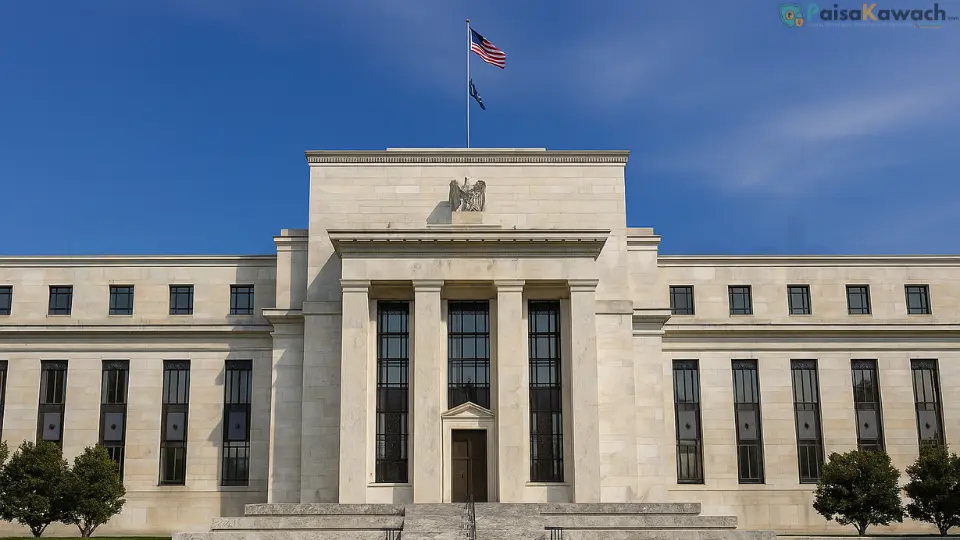 Why Federal Reserve Interest Rate Changes Impact the Entire World Economy
Next →
Why Federal Reserve Interest Rate Changes Impact the Entire World Economy
Next →
 How to Stay Productive at Work: 10 Habits That Truly Make a Difference in 2025