Currency Exchange Basics: Why ₹88.16 = $1 and How Forex Impacts Everyone
Introduction: Why Currency Exchange Matters
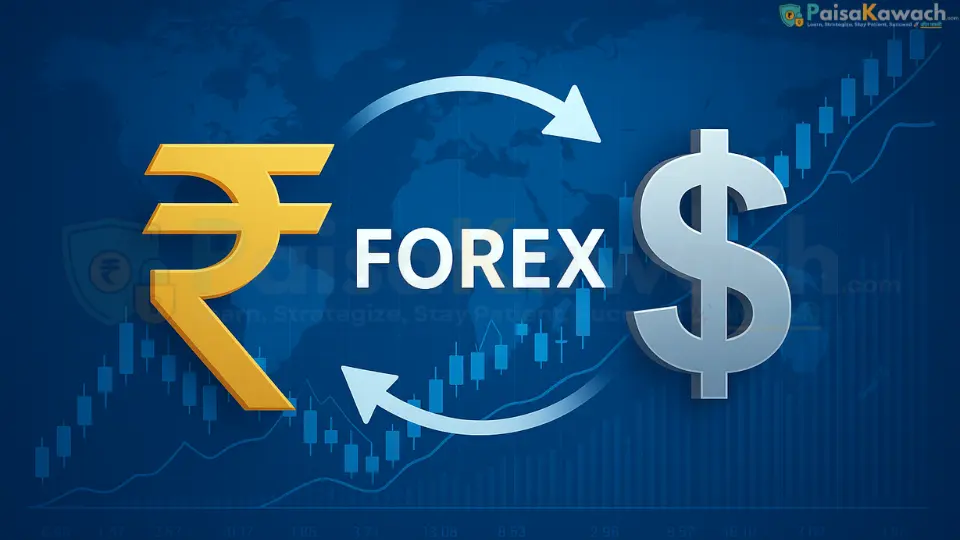
On September 15, 2025, the Indian Rupee is valued at ₹88.16 for every $1. This figure, flashing across news tickers and financial apps, is often met with a glance of passive acknowledgment or ignored entirely. For the vast majority, it is merely a number, a financial abstraction with little perceived connection to the rhythm of daily life. Yet, this single number, and the global forces that determine it, is one of the most powerful and underappreciated influencers on your personal economy. It dictates the price of the petrol that fuels your car, the cost of your dream overseas education, the value of your hard-earned savings, and the price tag on the smartphone in your pocket.
The question we so rarely stop to ask is a simple one: Why? Why does one U.S. dollar command eighty-eight Indian rupees? Why does this relationship change, sometimes dramatically, from one day to the next? The answers lie in the complex, dynamic, and fascinating world of foreign exchange (forex), a global marketplace where currencies are traded and values are determined.
This article is designed to demystify this world. Moving beyond textbook definitions, we will break down the mechanics of currency exchange into simple, study-friendly language. We will embark on a journey to understand the invisible forces—from central bank policies in Washington D.C. to oil rigs in the Middle East—that converge to set the value of the rupee. Whether you are a student preparing for an economics exam, an investor safeguarding your portfolio, or simply a curious citizen seeking to understand the globalized world, this guide will illuminate how the ebb and flow of currency values directly shape your financial reality.
What is Currency Exchange?
At its most fundamental level, currency exchange is the process of converting one nation's currency into another. It is the essential mechanism that enables global trade and finance. When you see a rate like ₹88.16 = $1, it is known as a bilateral exchange rate. This specific rate tells you the price of one U.S. dollar in terms of Indian rupees. In other words, it is the cost you must pay to buy one unit of another country's currency.
It is crucial to understand that this rate is not a static, government-ordained number. Instead, it is a price, much like the price of apples or a share of stock. And like any price in a free market, it is primarily determined by the relentless interplay of global demand and supply. When demand for U.S. dollars increases relative to its supply, its price (the exchange rate) goes up, meaning the rupee weakens (it takes more rupees to buy one dollar). Conversely, if demand for dollars falls or its supply increases, its price falls, and the rupee strengthens.
Beneath these forces of demand and supply lies a deeper current: economic confidence. A currency is ultimately a claim on a country's economy. Confidence in a nation's economic stability, growth prospects, political system, and legal institutions is a primary driver of demand for its currency.
Two Types of Exchange Rate Systems
Nations adopt different frameworks to manage their currency's value. The choice of system has profound implications for economic policy and stability.
- Fixed Exchange Rate: In this system, a country's government or central bank pegs its currency's value to another major currency (like the U.S. dollar or the euro) or a basket of currencies. The central bank actively maintains this fixed rate by buying and selling its own currency in the foreign exchange market. For instance, if the value of its currency is falling, the bank will sell its foreign reserves to buy its own currency, increasing demand and pushing the value back up. This system provides stability and predictability for international trade. However, it requires massive foreign reserve holdings and can deprive a country of using independent monetary policy to address domestic issues like unemployment. This system is rare among major economies today but is still used by Gulf nations like Saudi Arabia and the UAE, which peg their currencies to the dollar due to their oil-based economies.
- Floating Exchange Rate: This is the system followed by India, the United States, Japan, and most other developed nations. Here, the value of the currency is determined predominantly by the private market through supply and demand. A country's central bank may occasionally intervene to prevent excessive volatility, but it does not maintain a specific target rate. The primary advantage of a floating regime is that it allows monetary policy to be used for domestic stabilization. It also allows the currency to adjust naturally to economic shocks. The significant disadvantage is the potential for high volatility and uncertainty, which can discourage international trade and investment.
Why ₹88.16 = $1 Today? The Multifaceted Drivers of Exchange Rates
The specific value on any given day is the result of a complex cocktail of economic factors. Let's delve deeper into the five primary drivers that explain why the rupee sits at its current level against the dollar.
- Trade Balance (Current Account Balance): This is one of the most fundamental factors. India typically runs a trade deficit, meaning it imports more goods and services (like crude oil, electronics, and gold) than it exports (like software services, pharmaceuticals, and textiles). Imports must be paid for in foreign currency, usually U.S. dollars. Therefore, Indian importers must sell rupees and buy dollars to pay their foreign suppliers. This constant and high demand for dollars exerts upward pressure on the dollar's value. Conversely, Indian exporters receive dollars for their goods and convert them back to rupees, supplying dollars to the market. When imports vastly exceed exports, the net demand for dollars outstrips supply, leading to a depreciation of the rupee.
- Foreign Investments (Capital Flows): The movement of international capital is a powerful short-term driver. This occurs in two forms: Foreign Direct Investment (FDI) and Foreign Portfolio Investment (FPI). FDI is when a foreign company builds a factory or makes a long-term investment in India. This brings a sustained inflow of dollars, strengthening the rupee. FPI (or "hot money") is when foreign investors buy Indian stocks and bonds. This is far more volatile. When global sentiment is positive and Indian markets offer good returns, foreign investors pour money in, buying rupees to purchase assets and strengthening the currency. However, at the first sign of global risk (e.g., rising U.S. interest rates, a geopolitical conflict), these investors can pull out their money rapidly, selling Indian assets and converting rupees back to dollars. This massive sell-off of rupees causes its value to plummet.
- Global Oil Prices: As a net importer of over 80% of its crude oil, India's currency is exceptionally sensitive to oil prices. Crude oil is universally traded in U.S. dollars. When the global price of oil rises, India's import bill skyrockets. Indian oil companies need to scrounge up more dollars to pay for the same quantity of oil. This surge in demand for dollars directly and immediately weakens the Indian rupee. The relationship is so strong that the INR is often informally considered a petro-currency.
- U.S. Federal Reserve Policies: The U.S. Federal Reserve is the world's most influential central bank. Its decisions on interest rates have a global ripple effect. When the Fed raises interest rates, returns on U.S. assets like Treasury bonds become more attractive. Global investors, seeking higher and safer returns, move their capital from emerging markets like India to the United States. This "flight to safety" involves selling rupees and buying dollars, causing the rupee to weaken. Conversely, when the Fed cuts rates, it can make emerging markets more attractive, potentially strengthening currencies like the INR.
- Inflation and Growth Differentials: The theory of Purchasing Power Parity (PPP) suggests that exchange rates should adjust to equalize the price of a basket of goods across countries. If India's inflation rate is consistently higher than that of the United States, it means the rupee's domestic purchasing power is eroding faster than the dollar's. Over time, this will naturally lead to a depreciation of the rupee against the dollar to maintain parity. Furthermore, stronger economic growth in India can attract foreign investment (strengthening the rupee), but if that growth is seen as overheating and causing high inflation, it can have the opposite effect.
How Forex Impacts Daily Life: The Ripple Effect
The foreign exchange market is not a distant arena for financiers; it is intimately woven into the fabric of our daily lives. Its fluctuations create tangible winners and losers across the economy.
1. Petrol, Diesel, and Everyday Prices
This is the most direct and visible impact for most Indians. As established, India is a massive importer of crude oil. The landed cost of oil in India is determined by two variables: the international price of oil (in dollars) and the rupee-dollar exchange rate. Even if the global oil price remains stable, a weaker rupee makes importing that oil more expensive. This higher cost is immediately passed on to consumers through increased prices for petrol, diesel, and other petroleum products. Since diesel is the primary fuel for the nation's freight trucks, a rise in its price increases transportation costs for virtually every good—from vegetables and fruits to electronics and appliances. This triggers a wave of inflation that erodes the purchasing power of every household, hitting low and middle-income families the hardest.
2. Overseas Education and Travel
For students aspiring to study in the United States, UK, Canada, or Australia, the exchange rate is a critical financial variable. Tuition fees and living expenses are payable in the host country's currency. A weak rupee dramatically increases the cost of education. Let's take a detailed example: A university's annual tuition fee is $40,000. At an exchange rate of ₹75/$, the annual cost in rupees is ₹30 lakh. However, if the rupee depreciates to ₹88/$, the same tuition fee skyrockets to ₹35.2 lakh—an increase of ₹5.2 lakh per year! This can force families to recalculate budgets, take on larger loans, or even reconsider their options. Similarly, for tourists, a weak rupee makes international travel more expensive, as hotel stays, meals, and shopping all cost more when converted back into rupees.
3. Imported Goods
Walk into any electronics store. The prices of iPhones, Samsung TVs, German cars, Japanese cameras, and imported Swiss chocolates are all heavily influenced by the exchange rate. Most of these goods are either fully imported or assembled using imported components that are paid for in dollars. A depreciation of the rupee increases the cost for Indian importers and distributors, who then pass this cost on to consumers. This is why companies often announce price hikes following a period of significant rupee weakness. The era of "cheap imports" is directly tied to a strong domestic currency.
4. Investments and Stock Market
The Indian stock market and the rupee share a symbiotic, and sometimes volatile, relationship. Foreign Portfolio Investors (FPIs) are major players in the Indian equity markets. When the rupee is strong and stable, and Indian economic prospects look good, FPIs invest heavily, driving stock prices up. However, if global events cause these investors to pull out, they sell their Indian holdings. This selling has a double effect: it drives the stock market down, and the act of converting rupees back to dollars further weakens the rupee. A falling rupee can then spook other investors, creating a negative feedback loop. Furthermore, for an Indian investor holding a U.S. stock ETF, a weakening rupee actually boosts returns when the dollar value is converted back, while a strengthening rupee can diminish them.
5. Remittances
There is a flip side to the weak rupee story that benefits a significant segment of the population. India is the world's largest recipient of remittances, with millions of non-resident Indians (NRIs) sending money back home to their families. When the rupee weakens, their foreign currency earnings have more purchasing power in India. For instance, an NRI in the UAE earning AED 5,000 might send ₹90,000 home when the rate is AED 1 = ₹18, but would send ₹100,000 if the rate moved to AED 1 = ₹20. This provides a vital buffer and increased disposable income for millions of Indian households, stimulating local consumption and the economy.
The Global Side of Currency Exchange: A Web of Interdependence
Currency dynamics are a global game of give-and-take, where one country's strength can be another's challenge. A stronger U.S. dollar has contrasting effects: it makes American exports more expensive and less competitive on the global stage, potentially hurting U.S. manufacturing jobs. However, it also increases the purchasing power of American consumers and companies, allowing them to buy imported goods and raw materials more cheaply, which helps curb inflation in the U.S.
For emerging markets like India, the effects are also mixed. A weaker rupee makes Indian exports like IT services, textiles, and generic pharmaceuticals more competitive and attractive to foreign buyers, potentially boosting export-led sectors and creating jobs. However, as we've seen, it simultaneously makes crucial imports like oil, electronics, and defense equipment prohibitively expensive, widening the trade deficit and stoking inflation. Central banks must constantly walk this tightrope, balancing these competing interests when formulating economic policy.
The dramatic weakening of the Japanese yen in recent years provides a textbook global case study. The Bank of Japan (BoJ) maintained ultra-low interest rates to stimulate domestic growth, while other major central banks, like the U.S. Fed, were aggressively raising rates. This wide interest rate differential triggered a massive carry trade, where investors borrowed cheap yen to invest in higher-yielding U.S. assets, selling yen in the process and driving its value down.
Impact on Japan:
- Positive for Exporters: Companies like Toyota, Sony, and Nintendo saw their profits soar. Their products became cheaper for overseas buyers, boosting sales volumes. Furthermore, when their foreign earnings were converted back into yen, they resulted in windfall gains.
- Negative for Households: Japan is a resource-poor nation that imports most of its food and energy. The weak yen drastically increased the cost of living for ordinary Japanese citizens. The price of imported fish, meat, wheat, and fuel rose sharply, squeezing household budgets and causing political discontent.
This case perfectly illustrates the double-edged sword of currency valuation and the difficult trade-offs policymakers face in an interconnected global economy.
Forex Markets: The Colossal Arena Where Rates Are Decided
The foreign exchange market is not a physical place like the New York Stock Exchange. It is a decentralized, over-the-counter (OTC) global network of banks, brokers, institutions, and traders connected electronically. It is by far the largest financial market in the world, with a staggering daily trading volume exceeding $7.5 trillion – dwarfing the combined volume of all the world's stock markets.
This market operates 24 hours a day, five and a half days a week, as trading follows the sun across major financial centers: opening in Sydney, moving to Tokyo, then to London, and finally to New York before starting again. The key players in this vast ecosystem are:
- Central Banks: The most influential participants. Institutions like the Reserve Bank of India (RBI), the U.S. Federal Reserve (Fed), and the European Central Bank (ECB) can move markets single-handedly through their monetary policy decisions and direct intervention (buying or selling their currency to influence its value).
- Commercial and Investment Banks: They facilitate the majority of client transactions (for importers, exporters, etc.) and also engage in proprietary trading, making bets on currency movements for their own profit. They form the core of the interbank market.
- Multinational Corporations (MNCs): Companies like Apple, Reliance, and Toyota are constantly involved in forex markets to pay for imports, convert export revenues, and hedge their future currency exposures.
- Hedge Funds and Asset Managers: These institutional investors trade currencies to speculate on macroeconomic trends and to manage the currency risk of their international investment portfolios.
- Retail Forex Traders: A growing segment of individuals who speculate on currency price movements through online brokers. While their individual volumes are small, collectively they represent a significant force.
Why Exchange Rates Fluctuate Daily: The Pulse of Global News
The forex market is a discounting mechanism that reacts instantaneously to new information. The constant flow of economic data, political events, and breaking news creates perpetual volatility. Key triggers include:
- Economic Data Releases: Reports on GDP growth, employment figures, inflation (CPI), retail sales, and manufacturing output can cause immediate swings. A stronger-than-expected U.S. jobs report, for instance, might boost the dollar on expectations of a Fed rate hike.
- Geopolitical Events: Elections, wars, trade disputes, and diplomatic tensions create uncertainty. Uncertainty often leads to a "flight to safety," where investors sell risky emerging market currencies and buy perceived safe-havens like the U.S. dollar, Swiss franc, or Japanese yen.
- Central Bank Announcements: Every word uttered by a central bank governor is scrutinized for hints about future interest rate moves. These announcements are the highest-impact events on the forex calendar.
- Market Sentiment and Speculation: Often, movements are driven not by hard news but by shifts in trader psychology and herd behavior, leading to self-reinforcing trends and corrections.
Long-Term Outlook: Will the Rupee Keep Falling?
A look at history shows a long-term trend of depreciation for the rupee against the dollar. From near parity at independence in 1947 to ₹88.16 today, the decline seems alarming. However, this is not a sign of a failing economy but a natural outcome of several structural factors:
- Inflation Differential: As per PPP theory, higher average inflation in India compared to the U.S. necessitates a gradual depreciation to maintain equilibrium.
- Development and Demand: A fast-growing economy has an insatiable demand for capital goods and technology, much of which is imported, creating persistent demand for dollars.
- Global Reserve Currency Status: The U.S. dollar's role as the world's primary reserve currency creates inherent, structural demand that supports its value.
However, the future is not one of inevitable freefall. India possesses strong structural buffers that can cushion the rupee's decline and even lead to periods of strength:
- Robust Forex Reserves: The RBI maintains one of the largest stockpiles of foreign currency reserves in the world (over $600 billion). This war chest allows it to intervene effectively to smooth out volatile rupee moves and prevent panic-driven crashes.
- Strong Services Exports: India is a global powerhouse in IT and IT-enabled services, which generates a steady and growing inflow of dollars, offsetting some of the trade deficit from goods.
- Stable Remittance Inflows: The large, reliable flow of remittances provides a consistent source of dollar supply.
- Attractive Investment Destination: India's long-term growth story continues to attract both FDI and FPI, which supports the rupee.
The path of the rupee will likely be one of managed depreciation over the long term, interspersed with periods of stability and appreciation based on global risk sentiment and domestic economic reforms.
How You Can Protect Yourself: Practical Strategies
While individuals cannot control the forex market, they can take prudent steps to mitigate its risks and even capitalize on its movements.
For Students and Families Planning Overseas Education
- Start Early and Save: Begin saving in a dedicated corpus well in advance.
- Use a Forex Card: Load funds onto a multi-currency forex card when the exchange rate is favorable. This locks in the rate and protects you from future volatility for that amount.
- Consider Forward Contracts: For large, known future expenses (like a semester's tuition), banks allow you to book a forward contract, locking in today's exchange rate for a transaction that will happen months later, for a small fee.
- Dollar-Cost Averaging: If you are transferring money regularly for living expenses, consider transferring a fixed amount each month rather than a lump sum. This averages out the cost over time and reduces the risk of converting a large amount at a temporary peak.
For Businesses (Importers and Exporters)
- Hedging is Non-Negotiable: Use financial instruments like forward contracts, options, and futures to lock in exchange rates for future transactions. This eliminates uncertainty and allows for accurate financial planning.
- Currency Clauses: For long-term contracts, negotiate currency adjustment clauses that allow for price revisions if the exchange rate moves beyond a certain band.
- Natural Hedging: If possible, try to match currency inflows (revenue) with outflows (expenses). For example, an exporter could try to source some raw materials from a country whose currency moves in tandem with their export destination.
For Investors
- Diversify Globally: Allocate a portion of your portfolio to international assets. Investing in U.S. or global equity funds provides a natural hedge against rupee depreciation. If the rupee falls, the value of your foreign holdings in rupee terms rises.
- Invest in Export-Oriented Companies: Consider stocks of companies that earn a significant portion of their revenue in dollars (e.g., IT, pharma, specialty chemical companies). They tend to benefit from a weaker rupee.
- Gold and Dollar-Bonds: Gold has traditionally been a hedge against currency weakness. Similarly, some mutual funds offer schemes that invest in dollar-denominated bonds.
Conclusion
The exchange rate flashing on your screen is far more than a number; it is a vital sign of the nation's economic health and a powerful force shaping your personal financial well-being. Understanding the basics of currency exchange—the push and pull of demand and supply, the role of trade and investment, and the impact of global events—is no longer a niche skill but a essential part of financial literacy in an interconnected world.
From the fuel that powers our commute to the cost of our education, from the stability of our investments to the price of our daily groceries, the invisible hand of the forex market touches everything. Knowing why ₹88.16 = $1 today empowers you to make smarter financial decisions, protect your savings from volatility, and see the world through the revealing lens of global economics. It is the key to understanding not just the price of money, but the intricate and profound connections that bind economies, businesses, and households together in the 21st century.
Keep Reading: More Personal Finance Insights
 How Just ₹100 a Day Can Grow Your Wealth: Real-Life Investing That Works
Next →
How Just ₹100 a Day Can Grow Your Wealth: Real-Life Investing That Works
Next →
 Why Federal Reserve Interest Rate Changes Impact the Entire World Economy