Foreign Investors Pull ₹7,600 Crore From Indian Markets as 2026 Begins With Caution
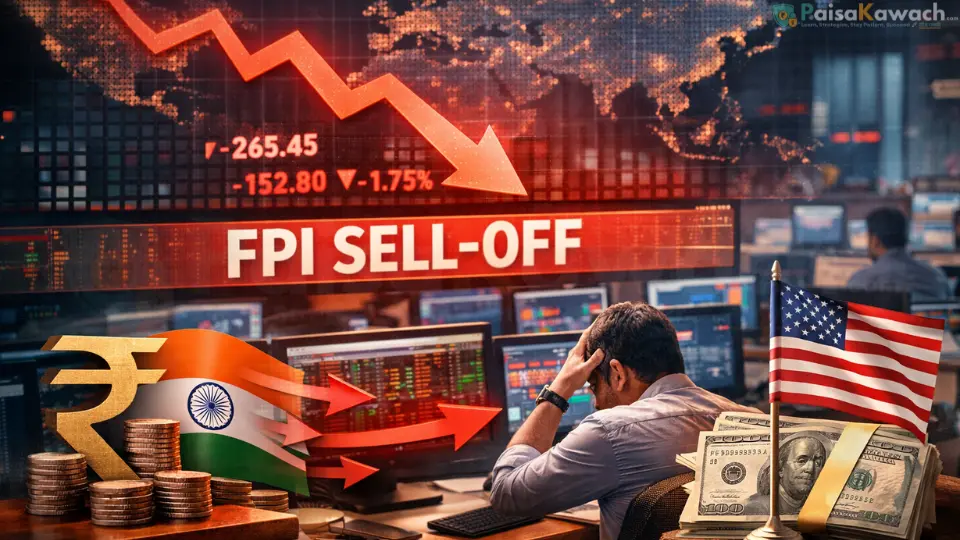
Foreign portfolio investors (FPIs) started 2026 on a cautious note, pulling significant capital out of Indian equity markets. In the first few trading sessions of the year, overseas investors offloaded shares worth more than ₹7,600 crore, signaling a shift toward risk aversion despite India’s relatively stable economic outlook.
Why FPIs Are Reducing Exposure to Indian Equities
The early selling pressure from foreign investors reflects a broader reassessment of global risk. While Indian markets entered the new year near record levels, international investors appeared hesitant to increase exposure amid uncertain global macroeconomic conditions.
Several factors have contributed to this cautious stance:
- Concerns around global interest rate trajectories
- Valuation sensitivity in emerging markets after a strong 2025 rally
- Persistent geopolitical and currency-related uncertainties
- Portfolio rebalancing at the start of the calendar year
Domestic Investors Provide Market Stability
Despite foreign selling, Indian equity markets have not seen sharp dislocations. Strong participation from domestic institutional investors (DIIs), including mutual funds and insurance companies, has helped absorb selling pressure and maintain market stability.
This divergence between foreign and domestic flows highlights a structural shift in Indian markets, where local capital increasingly plays a stabilizing role during periods of global uncertainty.
Sector Impact and Market Behavior
Foreign selling has been relatively selective, with pressure observed in large-cap stocks that typically attract higher FPI ownership. Financials, select IT names, and index heavyweights experienced increased volatility, though broader market breadth remained resilient.
Is This a Structural Concern for 2026?
Market participants caution against overinterpreting early-year outflows. India’s macro fundamentals—steady economic growth, improving corporate balance sheets, and sustained domestic investment—remain supportive over the medium term.
However, continued foreign selling could keep volatility elevated in the near term, especially if global risk sentiment remains fragile.
What Investors Should Watch Going Forward
- Global central bank policy signals
- Trends in the US dollar and bond yields
- Consistency of domestic institutional inflows
- Corporate earnings commentary during the ongoing results season
The interaction between global capital flows and domestic demand will likely define market behavior in the early months of 2026.
Keep Reading: More Insights You Might Like
 India Manufacturing PMI Slows to Two-Year Low in December, Signals Temporary Growth Moderation
Next →
India Manufacturing PMI Slows to Two-Year Low in December, Signals Temporary Growth Moderation
Next →
 India Crosses $50 Billion iPhone Export Milestone, Strengthening Its Global Manufacturing Role
Comments
No comments yet. Be the first to comment!