Global Markets Rattled as US-Iran Conflict Intensifies, Fed Rate Fears Mount – Monday, September 7, 2026

This article provides a comprehensive analysis of the day's major business and financial news, breaking down the key events, their immediate impact on various asset classes, corporate developments, and what investors can expect moving forward.
Geopolitical Crisis: US-Iran Conflict Escalates in the Strait of Hormuz
The geopolitical landscape has deteriorated sharply over the weekend, with tit-for-tat military strikes between the United States and Iran targeting vessels in and around the Strait of Hormuz. US forces struck three Iranian oil tankers on Saturday, including one off the coast of Kharg Island, near Iran's key oil export hub. In retaliation, the navy of Iran's Islamic Revolutionary Guard Corps (IRGC) said it targeted three oil tankers travelling through unauthorized routes in the Strait of Hormuz as well as three additional US vessels in other areas.
The Saturday attacks represented a "major escalation in the maritime conflict," according to maritime intelligence firm Marisks. "Commercial tankers are now being deliberately used as instruments of reciprocal economic pressure, substantially weakening the previous distinction between military confrontation and commercial shipping," the firm added.
Hormuz Disruptions Intensify Supply Fears
The Strait of Hormuz remains at the centre of the oil market's risk calculation. The waterway normally handles a significant share of global oil shipments, but tanker traffic has been severely disrupted amid the conflict. An average of just 10 commodity ships transited the strait per day over the past 10 days, the lowest since May, according to data from analytics firm Kpler.
- Mohsen Rezaei, the secretary of Iran's Supreme National Security Council, announced on Sunday that a restricted zone will be declared outside the Strait of Hormuz in the coming days.
- Only four vessels crossed the strait during one recent period, compared with a 10-day average of 13, though US officials said as many as 17 million barrels had transited on one day.
- The conflicting signals illustrate the central problem facing traders: the market has not completely lost physical supplies, but shipping remains unpredictable, keeping a geopolitical premium embedded in crude prices.
Oil Markets: Brent Crude Holds Near $97 on Supply Disruption Fears
The immediate impact of the military escalation has been a sustained spike in global crude oil prices. Brent crude futures climbed 52 cents, or 0.54%, to $96.80 a barrel, while US West Texas Intermediate crude was at $92.14 a barrel, up 66 cents, or 0.72%. As of 8:28 am Tokyo time, Brent crude was up 0.43% to $96.69, WTI crude up 0.60% to $92.03, and Murban crude at $103.30.
Brent ended last week at $96.28 a barrel, up 7.6%, while WTI rose nearly 10% to $91.48, as renewed US-Iran fighting heightened concerns about energy supplies. Oil posted its strongest weekly gain since July. Natural gas was down 1.5% to $2.929.
OPEC+ Keeps Output Unchanged, Analysts Warn of Further Upside
In a separate development, seven OPEC+ countries—Saudi Arabia, Russia, Iraq, Kuwait, Kazakhstan, Algeria and Oman—agreed at a virtual meeting on Sunday to keep their required oil production levels for October 2026 unchanged from September. The decision comes after OPEC+ increased production by around 188,000 barrels per day for September, completing the rollback of a voluntary production cut of around 1.65 million barrels per day introduced in 2023.
- Peter McGuire, Oil Expert & CEO-Australia at Trading.com, told Times Now Digital: "I don't think OPEC+ holding output quotas steady will have any impact on prices in the short term. It guarantees supply and prices are high due to geopolitical premium."
- ANZ analysts said in a note that a prolonged standoff, punctuated by calibrated military action by the US and Iran, appeared to be the most likely scenario and was likely to delay the path to full recovery of Middle East supply.
- "We then expect exports to remain constrained through the rest of 2026," ANZ added.
Monetary Policy: Fed Rate Hike Odds Surge After Strong Jobs Data
Compounding the geopolitical anxiety is a major shift in monetary policy expectations. The stronger-than-expected US jobs report for August has dramatically increased the probability of a Federal Reserve rate hike at the September 15-16 meeting. US employers added 162,000 jobs in August, well above estimates of around 50,000–56,000, while the July figure was revised higher.
Markets are currently pricing roughly a 57-62% probability of a September rate hike. The US 10-year Treasury yield climbed to 4.79%, while the 2-year yield rose more than 4 basis points to 4.377%, reaching its highest since January 2025. The 30-year yield was little changed at 5.245%.
Global Rate Outlook Darkens
Investors are increasingly anticipating an ECB rate hike to 2.75% this week, with another increase to 3% seen possible by December. Bank of America strategists warned that a September Fed hike could put further upside pressure on bond yields, weighing on equity multiples.
- US 10-year real bond yields, which are closely tied to Fed pricing and serve as the discount rate for global equities, could see further upside pressure on a September hike.
- Donald Trump has been pressuring the Fed to cut rates and threatening trade restrictions, but the strong jobs data has undermined the case for easing.
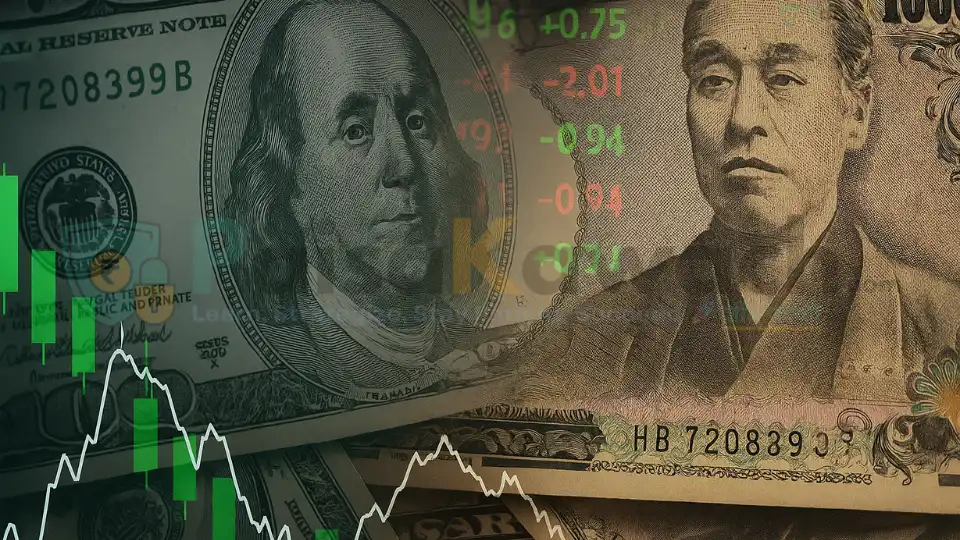
- The hawkish pivot has pushed the US dollar higher, putting additional pressure on emerging market currencies and assets.
Equity Markets: Sensex Opens Lower, IT Stocks Drag
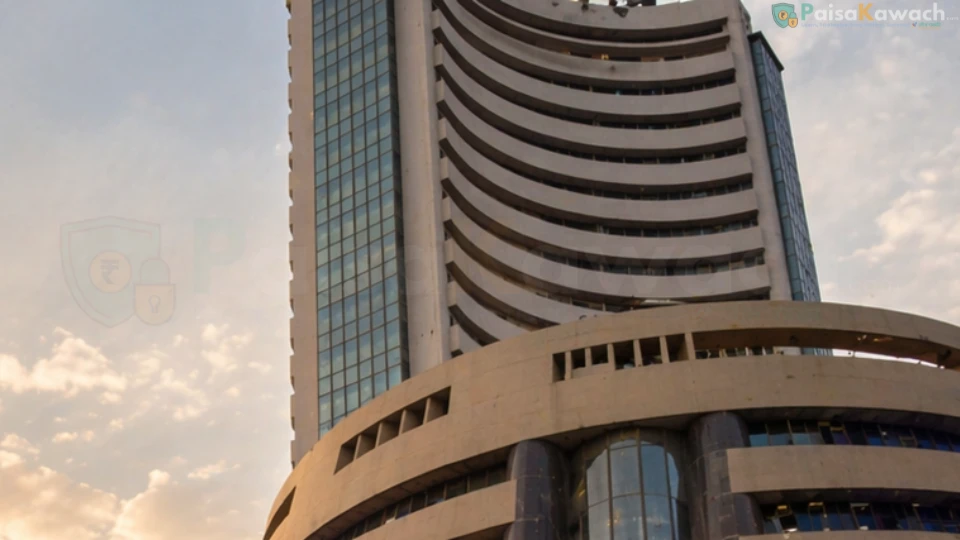
Indian equity markets began the trading week on a muted note, with both benchmark indices declining 0.2% at open. The Nifty opened at 23,883.15 and the Sensex opened at 76,446.05. By 9:16 am, the Sensex was trading 249.06 points or 0.33% lower at 76,266.37, while the Nifty 50 declined 57.30 points or 0.24% to 23,840.40.
The weakness follows Wall Street's tumble on Friday after the strong jobs data. The Dow Jones Industrial Average fell 271.86 points, or 0.51%, to 53,414.25. The S&P 500 declined 0.38% to 7,718.60, while the Nasdaq Composite slipped 0.29% to 26,506.99. US equity markets are closed Monday for the Labour Day holiday.
Asian Markets Rally but Cautious Tone Prevails
Asian equities advanced in early trade, with Japan's Nikkei 225 gaining over 2% and South Korea's Kospi jumping 3.18%. Australia's S&P/ASX 200 rose 0.36%. MSCI's broadest index of Asia-Pacific shares outside Japan was up about 0.9%, helped by optimism over global economic growth after the stronger-than-expected US jobs data.
- Top Nifty gainers: Eternal (+0.84%), Coal India (+0.66%), Bajaj Finance (+0.65%), Bharti Airtel (+0.55%)
- Top Nifty losers: Infosys (-1.99%), Tech Mahindra (-1.47%), Bajaj Auto (-1.33%), Wipro (-1.07%)
- Information technology stocks led the losses, with the IT sector sensitive to US economic conditions and rate expectations
Currency Markets: RBI Intervenes to Support Rupee
Currency markets reflected the broader risk-off sentiment. The Indian rupee opened at 94.39 to the dollar versus Friday's close of 94.49. The Reserve Bank of India likely intervened in the foreign exchange market on Monday, boosting the rupee to 94.42 per dollar amid rising oil prices.
The rupee remains vulnerable to sustained high oil prices, which could widen India's import bill and add to inflation concerns. A stronger dollar on Fed rate expectations and sustained FII outflows could keep the rupee under pressure in the coming sessions. On September 4, Foreign Institutional Investors sold Rs 3,111.94 crore worth of Indian equities, turning net sellers during Friday's session.
Commodities: Gold Edges Lower on Dollar Strength
Gold prices continued to face headwinds from a stronger US dollar and elevated Treasury yields. In the latest trading session, COMEX gold fell 0.11% to $4,471.60. The rate for 24-carat gold in India stood at Rs 1,54,790 per 10 grams, with the Delhi rate at Rs 1,54,940. The 18-carat gold price in India was Rs 1,16,090.
COMEX silver edged up 0.17% to 66.86, while silver prices in India stood at Rs 249.90 per gram or Rs 2,49,900 per kilogram. Analysts expect gold to remain under pressure as long as US bond yields and the dollar continue to strengthen on Fed rate expectations.
Corporate News: Major Deals, Approvals and Expansion Plans
Several significant corporate developments are unfolding that deserve investor attention.
Tata Motors Launches €3.82 Billion Offer for Iveco Group
Tata Motors launched an all-cash voluntary tender offer to acquire all common shares of Italian commercial vehicle maker Iveco Group for €14.10 per share, valuing the company at approximately €3.82 billion. The offer opens today, September 7, and Iveco shareholders will vote on the transaction at an extraordinary general meeting scheduled for October 16. Iveco's board has unanimously recommended the offer, and Exor has agreed to tender its 27% stake in Iveco's common shares, representing 43.19% of the voting rights. Tata Motors will need acceptance of 95% of the shares to complete the deal, though under certain conditions the threshold can fall to 80%. The company has signed a debt commitment letter with Morgan Stanley and MUFG Bank for bridge financing.
TCS to Build 1 GW AI Data Centre Campus in Hyderabad
Tata Consultancy Services subsidiary HyperVault has acquired 264 acres of land in Hyderabad to develop a large-scale AI data centre campus with capacity of up to 1 GW. The facility will feature high-density, liquid-cooled computing infrastructure and will support frontier AI companies and hyperscalers.
ICICI Bank Gets RBI Nod for LIC Stake Acquisition
The Reserve Bank of India has allowed LIC to acquire up to a 9.99% stake in ICICI Bank within one year. The approval is a key development for both the bank and the country's largest insurer.
Other Key Corporate Developments
- Maruti Suzuki launched the new Baleno with bookings starting at around Rs 11,000 and an ex-showroom price starting at approximately Rs 6.10 lakh.
- JSW Steel's consolidated crude steel production increased 3% year-on-year in August to 24.65 lakh tonnes, with capacity utilisation at 88%.
- Lupin received USFDA approval to market Modafinil Tablets used for treating excessive sleepiness, with annual sales of around $7.07 crore in the US.
- Rail Vikas Nigam received a Letter of Award worth approximately Rs 903 crore from an SJVN subsidiary for construction work.
- Mazagon Dock Shipbuilders secured an order worth around Rs 118 crore from Maharashtra State Electricity Transmission Co..
- Indian Bank received board approval to open a representative office in Dubai to expand its overseas operations.
- Hindustan Unilever is targeting a 22-24% EBITDA margin in the medium term and stepping up capital expenditure to 3% of its turnover.
- BEML entered into a strategic MoU with Universal MEP Projects and Engineering Services Limited, a wholly owned subsidiary of Voltas.
- SAIL's crude steel output rose by 8% year-on-year to 1.68 million tonnes in August 2026.
- Eicher Motors launched the Himalayan 440 adventure motorcycle at an ex-showroom price of around Rs 2.29 lakh.
- BVG India received SEBI approval to raise Rs 300 crore through an IPO to repay debt and fund growth.
Global Headlines: Russia-Ukraine Ceasefire, Tesla Cybercab
Russia and Ukraine Agree to Three-Day Ceasefire
In a rare diplomatic breakthrough, Russia and Ukraine have agreed to a three-day ceasefire to facilitate US-led peace negotiations. Russian President Vladimir Putin met with US President Donald Trump's envoys—Steve Witkoff and Jared Kushner—at the Kremlin for over three hours to discuss the details. Ukrainian President Volodymyr Zelenskyy announced on social media that Ukraine would stop strikes on Moscow until September 7 and expressed hope that Russia would take similar action against Kyiv. The Kremlin confirmed it would not launch air strikes on Kyiv from Saturday midnight. However, the New York Times reported that a full resolution remains distant.
Tesla Cybercab Faces Challenges After Launch
Tesla's shares fell 5.9% on Friday after the company's Cybercab robotaxi launch event failed to impress investors. The event was not live-streamed, was limited to invited guests only, and Tesla CEO Elon Musk did not appear. The two-seat, fully autonomous vehicle has no steering wheel or pedals and is expected to have lower operating costs than other Tesla vehicles. However, according to Tesla's website, Cybercab is only available for public test rides in limited parts of Austin, Texas, during specific hours, and Tesla's AI head Ashok Elluswamy said it would be about a month before the service operates 24/7. The US National Highway Traffic Safety Administration has also opened a probe into the rollout.
Key Takeaways and Market Outlook
As Monday, September 7, 2026, unfolds, the global financial landscape remains highly uncertain. The twin shocks of escalating US-Iran military conflict in the Strait of Hormuz and rising expectations of a Federal Reserve rate hike have created a volatile environment where risk assets are under pressure.
Speaking to Times Now Digital, G. Chokkalingam, Head of Research at Equinomics Research, said: "The domestic market is likely to remain weak today and perhaps even for the rest of the week due to renewed conflicts in West Asia and consequently elevated oil prices. Widening rainfall deficit, apart from selling in equities by FPIs will also add to the adverse sentiment. Most importantly two mega IPOs (NSE and Jio) and another 16 IPOs from small and mid-sized companies will limit liquidity available to the secondary markets and hence markets are likely to remain weak or at best stay sideways this week."
Dr. V K Vijayakumar, Chief Investment Strategist at Geojit Investments, noted: "The market has been drifting down for four weeks now. The present focus is on the IPO market rather than the secondary market. This is likely to continue throughout September."
Investors should brace for continued volatility in the coming days. The path forward will be shaped by several critical factors: the trajectory of US-Iran tensions and potential for further escalation or de-escalation; the Federal Reserve's decision at the September 15-16 meeting; the outcome of US-led peace negotiations between Russia and Ukraine; and how central banks in emerging markets respond to the strengthening dollar and rising oil import bills.
For now, oil remains the clear winner, while equities and emerging market currencies find themselves caught in the crossfire of geopolitical risk and monetary tightening.
Disclaimer: This article is based on publicly available information from various online sources. We do not claim absolute accuracy or completeness. Readers are advised to cross-check facts independently before forming conclusions.
Keep Reading: More Insights You Might Like

Comments
No comments yet. Be the first to comment!