Gold Prices Tumble in India as MCX Rates Fall ₹2,600 to ₹1.55 Lakh per 10 Grams
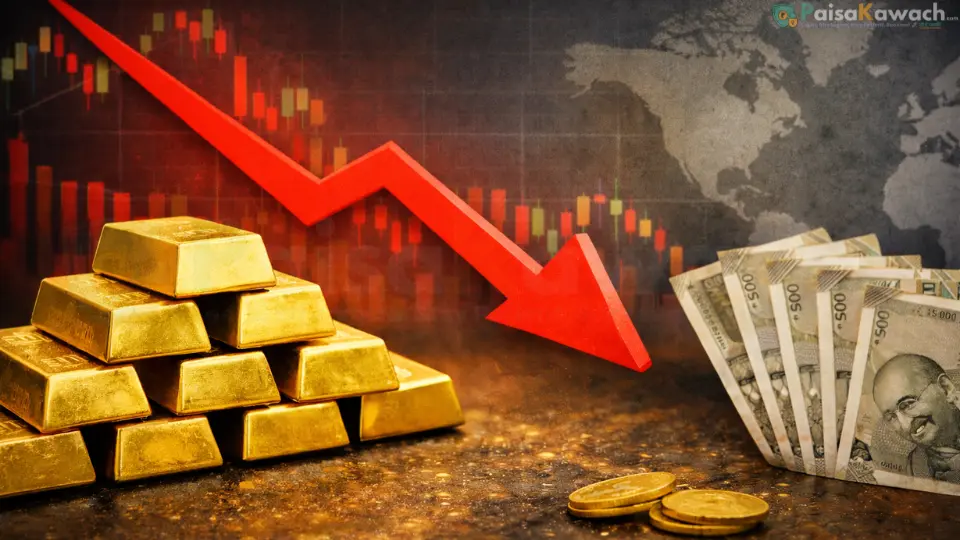
Gold Prices See Sharp Decline Across Indian Markets
Gold prices in India registered a notable decline on Friday, February 14, 2026, as MCX gold futures fell sharply by around ₹2,600 per 10 grams, trading near ₹1.55 lakh per 10 grams in several major cities. The sudden drop has drawn attention from investors, jewellers, and households alike, as gold remains a key financial and cultural asset in the country.
The decline comes amid shifting global market dynamics, including changing expectations around interest rates, currency movements, and short-term profit booking after gold’s recent rally to record highs.
Gold Price Snapshot
- MCX gold down by approximately ₹2,600 per 10 grams
- Current levels hovering around ₹1.55 lakh per 10 grams
- Weakness observed across major Indian cities
- Volatility driven by global cues and investor repositioning
What Triggered the Sudden Fall in Gold Prices?
Market analysts point to a combination of global and domestic factors behind the sharp correction. Strength in the US dollar, coupled with speculation around tighter global financial conditions, has reduced the immediate appeal of non-yielding assets like gold.
Additionally, after a strong upward run in recent weeks, some investors appear to be booking profits, leading to increased selling pressure in futures markets.
“Such sharp moves are typical when gold prices approach extreme levels. Short-term corrections do not necessarily change the long-term outlook,” noted a commodity market analyst.
Impact on Investors and Jewellery Buyers
For investors, the decline highlights the importance of managing volatility in commodity exposure. While short-term traders may face pressure, long-term holders often view such corrections as potential accumulation opportunities.
Jewellery buyers, on the other hand, may find some relief as prices ease ahead of upcoming wedding and festive demand, although overall gold levels remain historically elevated.
How Gold Is Performing Compared to Other Assets
Compared to equities, which have seen heightened volatility in recent sessions, gold continues to act as a relative stabiliser despite short-term fluctuations. However, unlike previous periods of market stress, the current correction suggests gold is responding more to global monetary cues than domestic risk sentiment.
Silver and other precious metals have also shown weakness, indicating a broader correction across the metals complex rather than an isolated move in gold.
What to Watch Next
Market participants will closely track global inflation data, central bank commentary, and currency movements in the coming days. Any shift in expectations around interest rates could influence the next directional move in gold prices.
According to BBC, precious metals globally have entered a phase of heightened volatility as investors reassess safe-haven demand against evolving economic indicators.
For now, experts advise caution in the short term while maintaining a balanced view on gold’s long-term role as a hedge against uncertainty.
Keep Reading: More Insights You Might Like
 Infosys Shares Slide as AI Disruption Fears Weigh on Earnings Outlook
Next →
Infosys Shares Slide as AI Disruption Fears Weigh on Earnings Outlook
Next →
 Indian IT Majors Under Pressure Despite AI Buzz as Global Tech Spending Slows
Comments
No comments yet. Be the first to comment!