India Holds Steady as Wall Street Wobbles: Weekly Market Report (Sept 1–5, 2025)
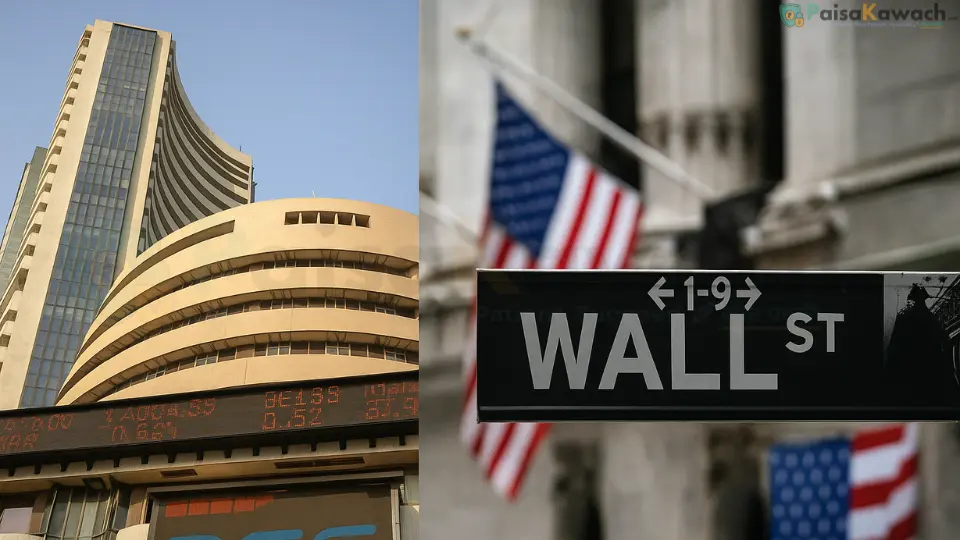
The first week of September 2025 closed with a tale of two markets: India’s equities displayed relative resilience with flat benchmarks but strong sectoral activity, while Wall Street stumbled as weak labor data rattled confidence. Global commodities and currencies added further complexity, reminding investors why September remains one of the most volatile months in financial history. Here’s the full, detailed wrap-up of market trends from September 1–5, 2025.
Indian Markets: Stability with Pockets of Strength
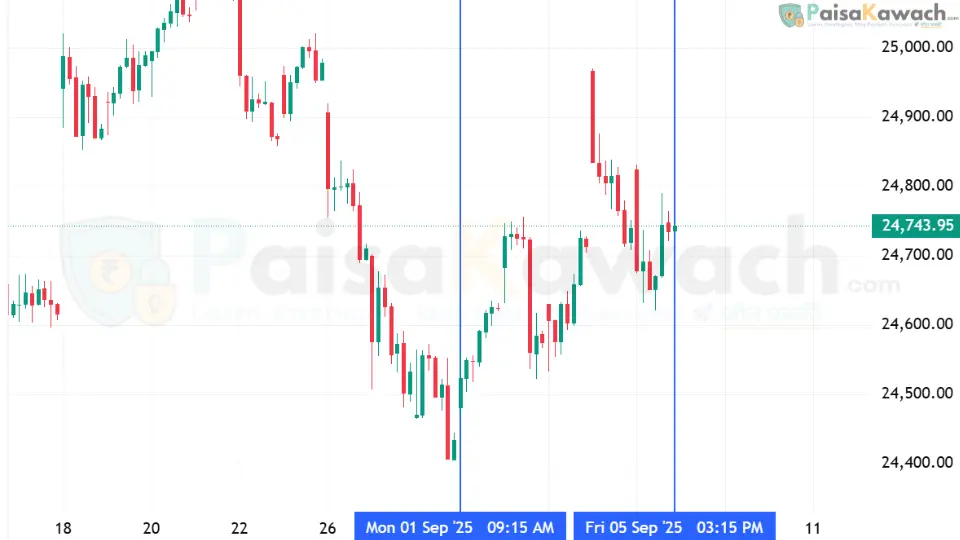
Nifty 50 candlestick chart showing flat index close with mixed bullish and bearish moves, Sept 1–5, 2025.
Indian equities experienced a subdued yet stable week, with the Sensex and Nifty 50 closing nearly unchanged. Despite the flat indices, action within individual sectors offered a more dynamic story.
Sectoral Performance
- Auto Stocks: Passenger and commercial vehicle makers advanced between 0.8% and 1.3%, buoyed by festive season demand expectations and strong August sales figures.
- Metals: Mining and steel stocks climbed around 1%, supported by a pickup in Chinese commodity demand and optimism around infrastructure spending.
- FMCG: Major consumer goods players came under pressure, losing 0.5–0.9% as input cost concerns and muted rural demand weighed on sentiment.
- IT: Large-cap software exporters remained weak amid global slowdown fears and cautious guidance from U.S. clients.
- Realty: Property developers faced profit-taking after weeks of strong gains, with the sector slipping about 0.7%.
Corporate & IPO News
The highlight came from the startup space: IPO-bound Oyo (Oravel Stays Ltd) announced a 1:1 bonus share issue after a 25% surge in its unlisted market valuation over the past month. This announcement, coupled with IPO buzz, lifted investor sentiment in India’s broader startup ecosystem.
Macro Developments
Shipping costs remained in focus, with carriers increasing rates sharply. Freight prices surged by ₹66,000–75,000 ($800–900) per container, sparking concerns of imported inflation that could spill over into the consumer price index in coming months. Meanwhile, foreign portfolio inflows provided some balance, helping Indian equities withstand global volatility.
Wall Street: Weak Jobs Data Shakes Confidence
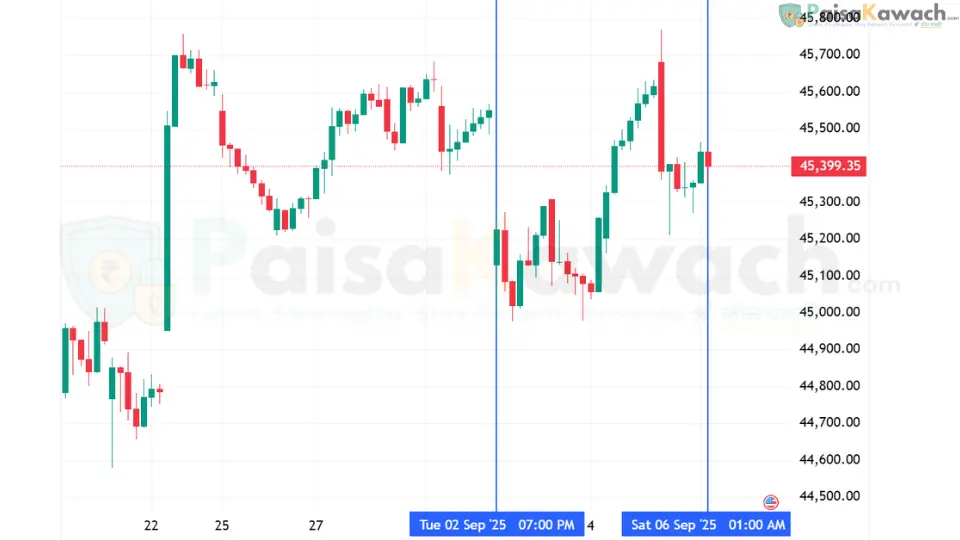
DJI candlestick chart reflecting a weekly decline with alternating bullish and bearish swings, Sept 2–6, 2025.
In contrast, U.S. markets had a more turbulent week. The S&P 500 slipped 0.3% on Friday to 6,481.50, the Dow Jones fell 0.5% to 45,400.86, and the Nasdaq edged higher by 1.1% for the week on Big Tech strength. The Russell 2000 small-cap index gained about 1%, indicating selective optimism.
Labor Market Concerns
The spotlight was firmly on the U.S. labor market. August’s jobs report showed just 22,000 new jobs versus expectations of 75,000, pushing the unemployment rate up to 4.3%, its highest since 2021. Manufacturing and government hiring were especially weak, hinting at a broad slowdown.
Policy Implications
The disappointing report reignited expectations that the Federal Reserve will deliver an aggressive rate cut at its upcoming September meeting—possibly as much as 50 basis points. Treasury yields dropped sharply, particularly on the two-year note, while demand for gold surged to new record highs as investors sought safety.
Oil Markets Rally Strongly
Commodities told a different story. Oil markets surged, with Brent crude jumping 4.8% to $88.49 and WTI rising 7.2% to $85.02. Supply-side curbs from OPEC+ producers combined with firm demand expectations, fueling the rally. For oil-importing nations like India, this raised fresh inflationary risks, while U.S. energy companies enjoyed a positive stock market reaction.
Global Investor Sentiment: Hedge Funds Defensive
Hedge funds began September with caution. Data showed reduced leverage and net selling in U.S. equities, reflecting defensive positioning. Interestingly, many funds redirected capital into Chinese equities, marking the largest buying spree since February 2025. Analysts see this as both a hedge against U.S. uncertainty and a bet on China’s cyclical recovery.
Emerging Market Highlights
- Nigeria’s Naira: The currency strengthened in both official and parallel markets, a rare development that provided breathing room for Africa’s largest economy.
- European Value Stocks: Outperformed U.S. benchmarks, showing that not all global equity gains are tech-driven. Investors rotated into cyclical and defensive European plays.
- AI and Tech Investment: In the U.S., capital expenditure on artificial intelligence and related infrastructure now accounts for more than 6% of GDP—a striking figure that underscores how much AI has become a macroeconomic force.
Looking Ahead
The coming weeks will test both Indian and U.S. markets. For India, resilient domestic demand and corporate earnings could cushion external shocks, but shipping cost inflation and oil prices remain potential risks. For the U.S., the Federal Reserve’s next move will be decisive in shaping global risk appetite. Investors will also keep a close watch on corporate earnings guidance and geopolitical developments that could add volatility.
In short, while India maintained relative calm in the first week of September, Wall Street’s labor market jitters reminded global investors that uncertainty remains the only certainty this month.
Keep Reading: More Insights You Might Like
 Elon Musk’s $1 Trillion Tesla Pay Package Shakes Global Markets
Next →
Elon Musk’s $1 Trillion Tesla Pay Package Shakes Global Markets
Next →
 SEBI Plans Automatic Window for Foreign Portfolio Investors to Boost Capital Inflows
Comments
No comments yet. Be the first to comment!