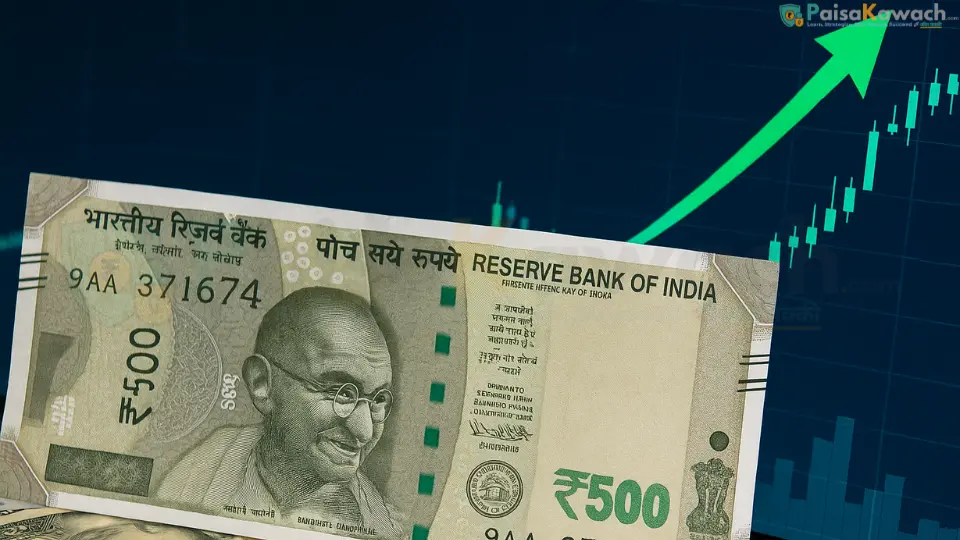
Strong U.S. Dollar Puts Pressure on Indian Markets as Investors Track Fed Signals

Global Dollar Strength Meets Indian Market Sensitivity
Global financial markets are closely watching developments in the United States as the U.S. dollar remains firm ahead of the release of Federal Reserve meeting minutes and key U.S. GDP data. This renewed strength in the dollar is shaping currency movements, capital flows, and market sentiment across emerging economies — with India among the most directly affected.
For Indian markets, the dollar’s trajectory is more than a global macro signal. It directly influences the rupee, foreign investment behavior, and expectations around domestic monetary policy.
Snapshot: Dollar Strength and India
- U.S. dollar holding gains ahead of Fed minutes and GDP data
- Indian rupee faces depreciation pressure
- Foreign investor flows remain cautious
- Inflation and policy outlook under watch
Why the U.S. Dollar Matters So Much for India
A strong U.S. dollar typically exerts downward pressure on the Indian rupee, especially during periods of global uncertainty. As global investors seek safety and higher yields in dollar assets, capital flows into emerging markets tend to slow or reverse.
This dynamic affects multiple layers of the Indian economy — from equity markets and foreign portfolio investment to trade balances and inflation management.
According to Reuters, emerging market currencies have come under pressure as investors position themselves ahead of key U.S. economic data and central bank guidance.
Impact on Rupee, Inflation, and Trade
A weaker rupee increases the cost of imports, particularly crude oil, which India relies on heavily. Higher import costs can feed into domestic inflation, complicating the Reserve Bank of India’s task of maintaining price stability.
At the same time, exporters may benefit from a softer rupee, as their overseas earnings translate into higher rupee revenues. This creates a mixed impact across sectors, with exporters gaining relief while import-dependent industries face margin pressure.
What This Means for Markets and Investors
Equity markets tend to remain cautious during phases of dollar strength, especially when foreign portfolio investors reduce exposure to risk assets. Volatility often increases, and defensive positioning becomes more common among investors.
Bond markets also react closely, as expectations around interest rates, inflation, and central bank responses evolve in response to currency movements.
What to Watch Next
Investors and policymakers will closely track the Federal Reserve’s tone in its upcoming minutes, along with U.S. growth data. Any signal of prolonged tight monetary conditions could keep the dollar firm for longer, sustaining pressure on emerging markets.
For India, the key variables to monitor include rupee movement, foreign capital flows, crude oil prices, and the Reserve Bank of India’s policy stance in the coming months.
Keep Reading: More Insights You Might Like
 Indian IT Majors Under Pressure Despite AI Buzz as Global Tech Spending Slows
Next →
Indian IT Majors Under Pressure Despite AI Buzz as Global Tech Spending Slows
Next →
 RBI Eases ECB Norms, Opening Door for Record $100 Billion Overseas Funding for India Inc
Comments
No comments yet. Be the first to comment!