The Deal That Could Actually Hold: Inside Trump's Iran Reversal and What It Means for India's Markets, Rupee, and Inflation
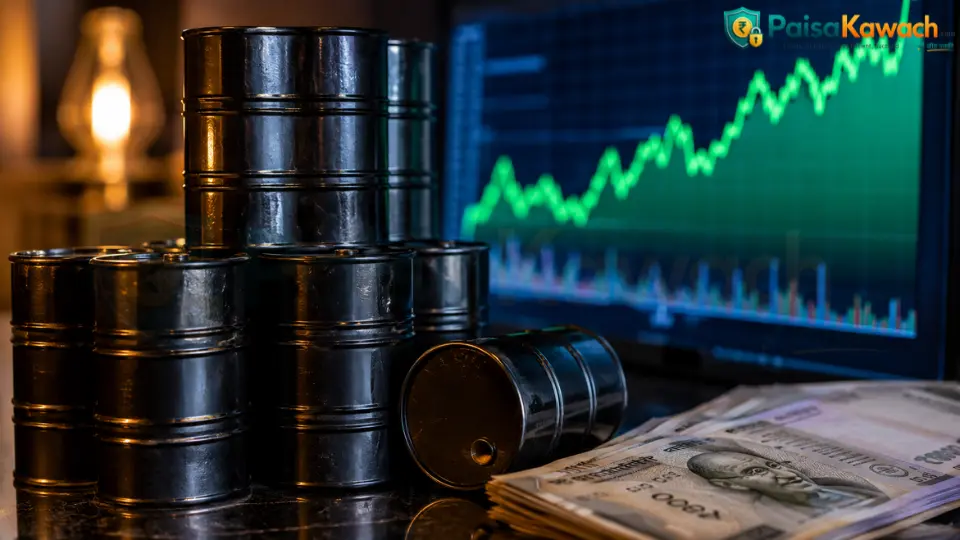
Some de-escalation announcements arrive quietly, buried in a diplomatic statement that takes days to fully parse. This one didn't. It arrived late on a Saturday night, on social media, in language built for maximum drama — and by Monday morning, it had already moved Indian stock futures, the rupee, and crude oil before markets had even properly opened. Whether this moment eventually gets remembered as the turning point that ended months of Middle East-driven market chaos, or as another false dawn in a conflict that has broken previous ceasefires within 48 hours, the immediate reaction tells you everything about how much the world — and India specifically — has been waiting for exactly this kind of news.
What Actually Happened Over the Weekend
President Trump announced early Sunday that he had canceled a planned, large-scale US attack on Iran's energy infrastructure — a strike that American media had reported was being prepared for the weekend, potentially alongside Israel. In a Truth Social post, Trump said Iran and other Middle Eastern countries had asked the US to "hold off any attack" because "the perimeters of a deal has been agreed to." He described the emerging agreement as including the "Immediate, Complete, and Total OPENING OF THE HORMUZ STRAIT, and an end to Iran's nuclear threat," adding that Israel had agreed to join the commitment.
The diplomatic pressure behind this reversal came from an unusually broad coalition. Saudi Crown Prince Mohammed bin Salman personally called Trump to voice concern over the strike plans, worried that Iran could respond to US attacks with retaliation against civilian infrastructure across the Persian Gulf. Qatar, the UAE, Turkey, and Pakistan all separately pressed both sides toward de-escalation. Secretary of State Marco Rubio added that Iran now appears more genuinely prepared to negotiate over both its nuclear program and Strait of Hormuz access, following the recent pressure campaign.
Why This De-escalation Looks Different From Previous Ones
This conflict has offered false hope before — a ceasefire in late July collapsed within 48 hours when Iran attempted a surprise attack on US troops. What separates this moment is the breadth of the coalition pushing for resolution. Previous pauses were largely bilateral, negotiated directly between the US and Iran with limited outside involvement. This one involved simultaneous, independent pressure from five separate regional and allied governments, several of which — Saudi Arabia in particular — have their own direct exposure to Gulf oil infrastructure and therefore a powerful incentive to see this genuinely resolved rather than merely paused.
- A coalition of five separate governments applying pressure simultaneously is structurally different from the narrower, more easily reversed bilateral pauses seen earlier in this conflict
- Saudi Arabia's direct involvement is particularly significant given the kingdom's own oil infrastructure has previously come under fire in this conflict, giving it a genuine stake in a durable resolution
- Rubio's assessment that Iran is "more prepared" to negotiate, rather than simply agreeing to another pause, suggests a possible shift in Tehran's underlying calculation rather than a purely tactical retreat
The Caution That Comes With the Celebration
None of this should be read as a done deal, and the clearest evidence of that sits inside Iran's own response. Iran's Fars International state news agency dismissed Trump's stated terms as a "wish list," a notably dismissive characterization for a government supposedly on the verge of a genuine agreement. Tehran has not formally confirmed the deal's outline, and Trump himself framed the cancellation as conditional — he agreed to hold off "subject to being able to rapidly make a DEAL," explicitly urging negotiators to "get to work, everybody, and get it DONE," language that reads more like a deadline than a resolved outcome.
This gap between the announcement's tone and its actual confirmed substance is the single most important thing to watch in the days ahead. A genuine, durable de-escalation and a temporary pause dressed up in more dramatic language produce very different outcomes for markets over the following weeks, even though they can look identical in the first 48 hours.
What Would Actually Confirm This Deal Is Real
Markets and analysts watching this situation closely will be looking for specific, verifiable signals rather than statements alone — formal confirmation from Iran's government rather than state media commentary, a visible reduction in tanker traffic risk through the Strait of Hormuz, and the absence of further incidents over the coming week, which has historically been the window in which previous pauses in this conflict have broken down.
- Iran's own state media dismissing the terms as a "wish list" signals genuine internal disagreement about whether these conditions are acceptable, not simply negotiating theater
- The absence of formal confirmation from Tehran's government, as opposed to state media commentary, leaves the deal's actual status genuinely unresolved
- Given this conflict's history of pauses collapsing within 48 hours, the coming week is the realistic window in which this de-escalation's durability will actually be tested
How India Reacted — Immediately and Directly
Whatever the ultimate durability of this deal turns out to be, Indian markets didn't wait to find out before reacting. At pre-open Monday, the Sensex surged 788 points, or 1.01%, to 78,883, while the Nifty jumped 189 points, or 0.78%, to 24,572 — a sharp, immediate move driven entirely by hopes for an end to West Asia hostilities. GIFT Nifty futures had already surged 180 points, or 0.74%, to 24,628 overnight as crude oil prices dropped in response to the news.
The rupee moved just as quickly. It opened 25 paise stronger against the dollar at 95.14, compared to Friday's close of 95.39 — a meaningful single-session move for a currency that had spent recent weeks under sustained pressure from elevated oil import costs. Adding a further, specific detail to watch: Iran's Foreign Minister Abbas Araghchi said negotiations about the management of the Strait of Hormuz with Oman are nearing completion, a signal that at least one concrete diplomatic track tied to this broader deal is showing real, verifiable progress independent of Trump's own statements.
Why India Has More at Stake in This Outcome Than Almost Any Other Major Economy
India's reaction wasn't simply sentiment following the global mood — it reflects genuine, direct economic exposure. India imports roughly 85% of its crude oil needs, and a meaningful share of that moves through or near the Strait of Hormuz. Every dollar increase in the price of crude translates fairly directly into a wider trade deficit, pressure on the rupee, and elevated inflation readings that complicate the Reserve Bank of India's policy calculations. This is precisely why India's market and currency reaction to Sunday's announcement was faster and sharper than a purely sentiment-driven bounce would suggest — this is a country with a direct, quantifiable financial stake in whether the Strait of Hormuz genuinely reopens.
- India's heavy dependence on imported crude means genuine, verified de-escalation would deliver direct, measurable relief to the trade deficit, the rupee, and inflation readings simultaneously
- The rupee's immediate strengthening against the dollar reflects markets pricing in reduced future oil-import costs, not simply a generic improvement in risk sentiment
- A genuine reopening of Hormuz shipping would specifically benefit India's refining and energy-import sector, which has been absorbing elevated costs for months
What Comes Next for Indian Markets
The most useful way to think about today's rally is as a real-time bet on a still-unconfirmed outcome. If Iran's government formally confirms the deal's terms in the coming days, and the Strait of Hormuz genuinely reopens without further incident, India stands to benefit disproportionately relative to less oil-dependent economies — a durable drop in crude prices flows almost directly into a stronger rupee, better inflation prints, and reduced pressure on the RBI's policy stance. If, instead, this pause follows the same pattern as previous ones and collapses within days, today's rally becomes a false start that markets will need to unwind just as quickly as they priced it in.
Given that history, the responsible read of today's strong opening isn't that the crisis is over — it's that markets, and India in particular, had been waiting so long for a credible off-ramp that even a still-unconfirmed one was enough to move prices immediately. Whether that reaction proves justified depends entirely on what Tehran does next, not on what was posted to Truth Social over the weekend.
Keep Reading: More Insights You Might Like
 The Week Big Tech Answered Back: Meta, Amazon, and Apple's Earnings Verdict, China's Slowdown, and How Indian Markets Actually Traded All Five Days
Next →
The Week Big Tech Answered Back: Meta, Amazon, and Apple's Earnings Verdict, China's Slowdown, and How Indian Markets Actually Traded All Five Days
Next →
 The Referendum, The Rocket, and The Contrarian Call: Three Tests Deciding Where AI Capital Goes Next
Comments
No comments yet. Be the first to comment!