US Election Shock, Iran Oil Crisis and AI Market Turmoil: 3 Global Developments That Could Change the World on November 5, 2026
The global economy is facing three major developments on November 5, 2026, as political changes in the United States, uncertainty surrounding the Iran conflict and growing concerns about artificial intelligence infrastructure influence international markets. These developments could affect global trade, energy security, inflation, investment decisions and the future of the technology industry.
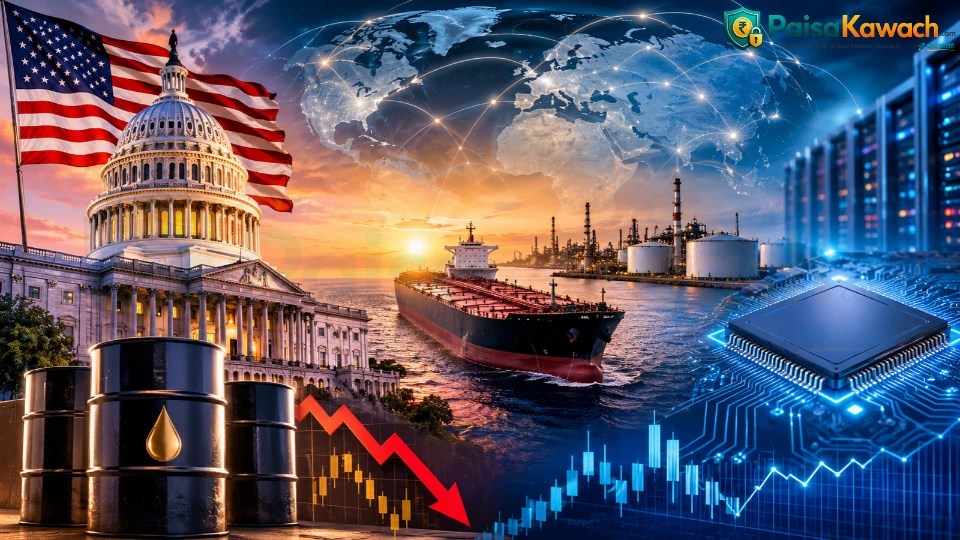
The US midterm elections have delivered a significant political setback to President Donald Trump, with Democrats gaining control of both chambers of Congress. Meanwhile, international crude oil prices have fallen sharply amid expectations that political pressure could encourage diplomatic progress in the Iran conflict. At the same time, AI and semiconductor stocks are facing fresh uncertainty as investors assess the potential impact of technology regulation and data-centre restrictions.
Together, these three developments could have consequences far beyond the United States, affecting businesses, governments, investors and consumers across the world. Here is a detailed look at the three global stories that matter today.
1. US Midterm Election Shock: Democrats Take Control of Congress and Global Markets Reassess Political Risks
The biggest political development influencing global markets on November 5 is the Democratic Party's strong performance in the 2026 US midterm elections. Democrats have secured control of both the Senate and the House of Representatives, creating a major political setback for President Donald Trump and changing the balance of power in Washington.
The result could make it more difficult for the administration to advance its legislative agenda during the remaining two years of its term. Issues such as international trade, tariffs, military spending, government budgets and foreign policy are likely to face greater congressional scrutiny.
The election has also attracted international attention because US political decisions influence global economic conditions. The United States is a major trading partner, financial centre and military power. Changes in its domestic policy can therefore affect economies across Europe, Asia and emerging markets.
Why the US Election Result Matters to the Global Economy
Investors are assessing whether the new political balance could reduce uncertainty around US policy or create a period of legislative gridlock. Greater congressional oversight may influence the administration's approach to international conflicts, trade negotiations and technology regulation.
- International trade and tariffs: Greater congressional opposition could complicate the administration's trade agenda and influence relationships with major trading partners.
- Foreign policy and security: Lawmakers may increase scrutiny of military decisions and the US approach to the Iran conflict and other international issues.
- Financial markets and investment: Uncertainty around government spending, taxes and future policies could influence stock markets, bond yields and international investment decisions.
What Could Happen Next?
Markets will closely monitor the administration's response and the priorities of the new Congress. Political negotiations over defence spending, international relations, government budgets and trade policy could become important drivers of market sentiment in the coming weeks.
The election result does not automatically reverse existing presidential policies. However, greater congressional opposition could make major legislative changes more difficult and increase pressure for negotiations on important domestic and international issues.
Global Impact: The new political balance in Washington could influence international diplomacy, global trade, defence policy, investment flows and financial-market confidence. Businesses worldwide will be watching for signs of policy changes before making major investment decisions.
2. Iran Conflict and Falling Oil Prices: Global Energy Security Remains Under Pressure
The second major global development is the continuing uncertainty surrounding the Iran conflict and its impact on international energy markets. The Middle East is one of the world's most important energy-producing regions, and any escalation involving Iran can affect crude oil supplies, shipping activity and international fuel prices.
One of the most strategically important locations is the Strait of Hormuz, a narrow maritime passage connecting the Persian Gulf with the Gulf of Oman. It is a critical route for international oil and gas shipments, particularly supplies travelling to major Asian energy-importing economies.
Concerns about disruption in this region can increase oil prices, shipping insurance costs and transportation expenses. However, markets have recently moved in the opposite direction as investors consider the possibility of diplomatic progress following the US election results.
Why Have Global Oil Prices Fallen?
International crude oil prices declined sharply following the US midterm election results. Brent crude futures settled at approximately $94.62 per barrel on November 4, representing a fall of around 8.7%. US West Texas Intermediate crude also declined, settling near $88.12 per barrel.
The market reaction reflects expectations that the new political balance in Washington could increase pressure on the administration to seek a diplomatic solution to the conflict. However, the decline in oil prices should not be interpreted as confirmation that the conflict has ended or that energy supplies have returned to normal.
- Diplomatic expectations: Investors are considering whether increased congressional scrutiny could encourage efforts to reduce tensions involving Iran.
- Energy supply concerns: The Strait of Hormuz remains strategically important, and any disruption could quickly change international oil-market expectations.
- Inflation and business costs: Sustained lower crude prices could reduce fuel, transportation and manufacturing expenses across many economies.
How Could Lower Oil Prices Affect India and the World?
Countries that depend heavily on imported crude oil could benefit if international prices remain lower. India is particularly sensitive to changes in global oil prices because it imports a substantial share of its petroleum requirements.
Lower crude prices could reduce India's import bill, ease inflationary pressure and support businesses that spend heavily on fuel and transportation. Airlines, logistics companies and some manufacturing industries could benefit from lower energy expenses.
However, domestic petrol and diesel prices do not necessarily fall immediately when international crude prices decline. Retail fuel prices are also influenced by taxes, refining margins, exchange rates and domestic pricing decisions.
For the wider global economy, a sustained decline in oil prices could provide relief to consumers and businesses. On the other hand, renewed military escalation or disruption to shipping through the Strait of Hormuz could reverse the recent market movement.
Global Impact: The Iran conflict remains a major risk to global energy security. The direction of oil prices will depend on diplomatic developments, regional security and the uninterrupted movement of energy supplies. A prolonged reduction in crude prices could support economic growth, while another supply shock could increase inflation worldwide.
3. AI and Semiconductor Market Turmoil: Technology Investors Reassess the Future of AI Infrastructure
The third major development concerns the artificial intelligence industry and the global semiconductor market. AI has become one of the biggest investment themes in the world economy, attracting enormous spending from technology companies, cloud service providers and data-centre operators.
Demand for advanced processors, memory chips, servers and networking equipment has created opportunities for semiconductor manufacturers and technology suppliers. However, investors are now reassessing the speed and cost of future AI infrastructure expansion following the US election results.
Democratic victories in important US states have increased attention on the political debate surrounding data-centre construction, electricity consumption, local infrastructure and environmental concerns. Investors are considering whether stronger regulatory scrutiny could delay some projects or increase operating costs.
Why Are AI and Semiconductor Stocks Facing Pressure?
Modern AI systems require enormous computing power. Building and operating large data centres involves significant investment in advanced chips, electricity supplies, cooling systems, land and network infrastructure.
If regulatory restrictions, electricity-grid limitations or permitting delays slow the construction of data centres, companies involved in the AI supply chain could face changes in their growth expectations.
- Data-centre expansion: Greater scrutiny of electricity consumption, land use and infrastructure could affect the pace of new data-centre projects.
- Semiconductor demand: Uncertainty about future AI investment could influence expectations for advanced processors, memory chips and server equipment.
- Technology valuations: Investors may reassess high-growth technology companies if infrastructure spending, operating costs or regulatory requirements change.
Why Did Asian Technology Markets Come Under Pressure?
Investor concerns have also affected major Asian stock markets. South Korea and Taiwan are particularly important to the global semiconductor supply chain because their companies play significant roles in memory chips, chip manufacturing and advanced electronics.
Reported market movements on November 5 showed the South Korean KOSPI falling approximately 4% and Taiwan's benchmark declining around 1.8%. Japan's Nikkei also moved lower during the reported trading session. Technology and semiconductor-related shares were among the companies facing selling pressure.
These movements reflect changing investor expectations rather than evidence that global demand for AI technology has disappeared. Artificial intelligence continues to have significant long-term potential across healthcare, finance, manufacturing, education, transportation and business services.
The key question is whether the enormous investment in AI infrastructure will generate sufficient returns to justify current spending and company valuations.
Global Impact: AI and semiconductor developments affect technology companies, manufacturers, electricity providers, investors and governments worldwide. Any slowdown in infrastructure investment could influence the global technology supply chain, while continued AI adoption could create new opportunities for productivity and economic growth.
Conclusion: Why These Three Developments Matter for the World Economy
The US election results, the Iran conflict and uncertainty in the AI industry are three different developments, but their economic consequences are closely connected.
Political changes in Washington could influence international diplomacy and trade policy. The future of the Iran conflict could determine whether oil prices remain lower or rise again because of supply disruptions. Meanwhile, changes in AI regulation and infrastructure investment could reshape the global technology industry.
For India, lower oil prices could offer economic relief, but renewed geopolitical tensions could create fresh risks for energy supplies, inflation and the rupee. Global technology-market volatility could also affect Indian IT companies, investors and businesses planning to expand their AI capabilities.
For investors and business owners, the most important approach is to monitor confirmed policy decisions, energy-market developments and corporate investment plans rather than react only to short-term market movements.
Overall Outlook: November 5, 2026, highlights how political decisions, geopolitical tensions and technological changes can influence the global economy at the same time. The next few weeks could be important in determining whether these developments lead to greater stability or another period of international market uncertainty.
Keep Reading: More Insights You Might Like

Comments
No comments yet. Be the first to comment!