How Inflation and Banking Are Connected: What Every Family Should Know
Introduction: Inflation, Banking, and Your Family’s Everyday Life
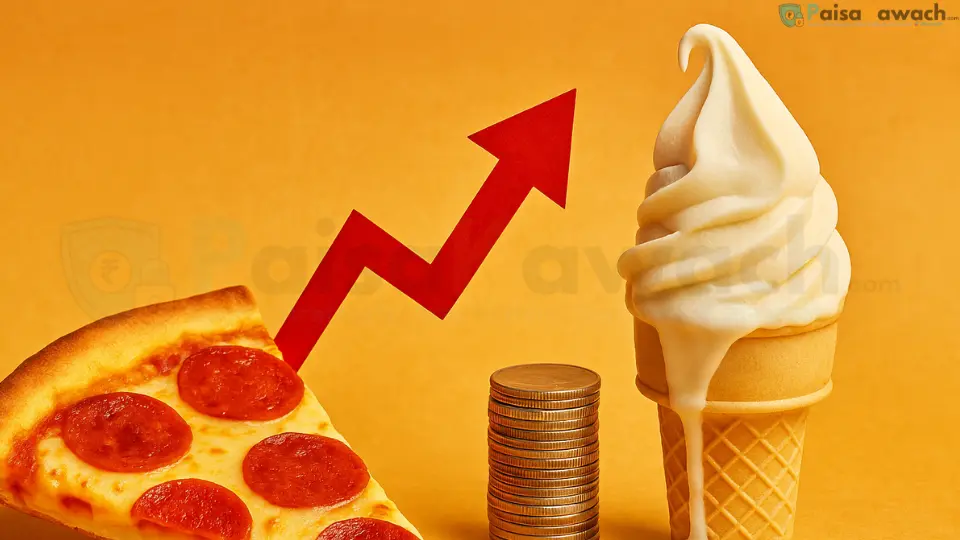
Imagine this: last year you bought a 5 kg packet of rice for ₹250 (about $3), and today the same packet, from the same brand, at the same supermarket, costs ₹310 ($3.70). That quiet, persistent ¥60 difference is the most tangible feeling of inflation for millions of families. It silently and relentlessly eats into your carefully planned monthly budget, making you feel like your hard-earned salary is shrinking, buying less of everything from groceries to gas each passing month. But here’s the hidden truth that often goes unnoticed—inflation isn’t just a simple story about rising prices due to supply chain issues or global events. It’s a complex economic phenomenon deeply, inextricably connected to how modern banks create money out of thin air, lend it out, and manage the entire financial system's liquidity. The interest rate on your home loan, the returns on your father's fixed deposit, and the loan that helped your neighbor start a small business are all threads in this vast tapestry. Understanding this intricate connection is not just academic knowledge; it's a powerful tool that can empower your family to make smarter financial choices, protect your savings, and navigate uncertain economic times with greater confidence and less anxiety. This knowledge transforms you from a passive observer of the economy into an active, prepared participant in your own financial future.
What Is Inflation? Explained in Simple, Relatable Words
In its most basic form, inflation is the sustained and broad increase in the general level of prices for goods and services in an economy over a period of time, usually measured per year. When inflation is present, the inevitable consequence is that the purchasing power of money falls. In other words, the ₹100 note in your wallet today simply buys less than the same ₹100 note did a year ago, and significantly less than it did a decade ago. It’s like an invisible tax on everyone who holds cash. To measure this, governments use a "basket of goods and services" that represents what a typical household consumes—from food grains, milk, and vegetables to clothing, transportation, healthcare, and entertainment. The price of this entire basket is tracked, and the percentage increase in its cost is the inflation rate, most commonly reported as the Consumer Price Index (CPI).
Why Does Inflation Happen? The Core Drivers Explained
Inflation is rarely caused by a single factor; it's usually a cocktail of several ingredients. Understanding these helps decipher the news and its impact on your life.
- Demand-Pull Inflation: This is classic "too much money chasing too few goods." When people and businesses have more money to spend (often due to easy bank credit or government stimulus), demand for products and services surges. If the economy cannot produce enough to meet this demand quickly enough, sellers can (and do) raise prices. A perfect example is the post-festive season surge in demand for the latest smartphone model. If supply is limited, prices skyrocket, and people are still willing to pay. On a macro scale, this happens across entire sectors.
- Cost-Push Inflation: This occurs when the costs of production inputs rise, forcing businesses to pass these higher costs on to consumers to maintain their profit margins. This can be triggered by a rise in the price of crude oil (increasing transportation and manufacturing costs), increased prices of raw materials (like metals or cotton), or a rise in wages negotiated by labor unions. A recent global example is the spike in edible oil prices due to supply disruptions from warring nations, which directly increased kitchen budgets worldwide.
- Imported Inflation: For a country like India, which imports over 80% of its crude oil needs, this is a massive factor. When the global price of oil, chemicals, fertilizers, or electronics increases, it directly increases the domestic cost of these items and everything that uses them. A weaker domestic currency (e.g., the rupee falling against the dollar) exacerbates this, making all imports more expensive.
- Monetary Inflation: This is where the banking system enters the picture directly. When a central bank, like the Reserve Bank of India (RBI), prints more currency or implements policies that drastically increase the amount of money circulating in the economy (a concept known as "money supply"), the value of each individual unit of currency can decrease if it outpaces economic growth. This is the fundamental link between banking actions and the price level.
- Built-In Inflation (The Wage-Price Spiral): This is a self-perpetuating cycle. As prices rise, workers demand higher wages to maintain their standard of living. When businesses pay these higher wages, their costs increase, leading them to raise prices again to protect profits, which in turn leads to further demands for wages. This cycle can be difficult to break once it sets in.
How Banks Fit Into the Story of Inflation: The Engine of the Economy
Banks are far more than just safe places to store money; they are the central nervous system of a modern economy and are absolutely at the heart of the inflation puzzle. Why? Because banks are the primary mechanism through which money is created and distributed via credit. This credit—in the form of home loans, car loans, personal loans, and business loans—is the fuel that powers consumption, investment, and economic growth. The availability and cost of this credit directly influence the level of demand in the economy. Too much easy, cheap credit can overheat the economy, creating asset bubbles and rampant demand-pull inflation. Conversely, too little, expensive credit can choke growth, lead to business failures, and cause unemployment. This delicate balancing act is the primary reason central banks like the Reserve Bank of India (RBI) and the U.S. Federal Reserve exist. Their most powerful tool is constantly adjusting interest rates to either stimulate borrowing (and thus the economy) or cool it down to control inflation.
The Core Connection: Interest Rates as the Thermostat
- Fighting High Inflation: When inflation rises persistently above a central bank's target range (e.g., 4% for the RBI with a +/- 2% tolerance), it signals an overheating economy. The bank's response is to increase its key policy rates (like the repo rate). This makes borrowing money more expensive for commercial banks, which in turn pass on this cost to consumers and businesses by raising their own lending rates (e.g., for home loans, car loans). Higher loan costs discourage new borrowing and spending, slowing down demand and, eventually, causing price rises to moderate.
- Fighting Low Growth/Deflation: Conversely, in a recession or period of low growth, the central bank cuts rates. This makes borrowing cheaper, encouraging businesses to take loans for expansion and families to take loans for buying houses and cars. This injected demand helps revive the economy.
- The Saver's Dilemma: Savings accounts and fixed deposits often offer slightly higher returns during high inflation periods as banks need to attract deposits. However, these returns are rarely high enough to truly beat inflation. If inflation is at 7% and your FD is giving 6.5%, you are still losing 0.5% of your purchasing power annually. This "negative real interest rate" is a hidden erosion of wealth.
The Ripple Effect: Impact of Inflation and Banking on Families
The abstract concepts of monetary policy translate into very real, tangible effects on every family's balance sheet and daily life.
1. The Kitchen Table: Groceries, School Fees, and Daily Living
Consider a typical middle-class family in a metropolitan city with a monthly grocery bill of ₹20,000. A sustained food inflation rate of 10%—not uncommon for volatile items like vegetables and pulses—means that in just one year, that same basket of groceries will cost ₹22,000. In two years, it balloons to over ₹24,000. This ¥4,000 extra per month must come from somewhere else in the budget—perhaps from the family's entertainment fund, their vacation savings, or their investment pool. Banks don't control the monsoon rains that affect vegetable prices, but their policies influence the entire chain. The cost of the loan the farmer took for seeds and fertilizer, the working capital loan for the food processing company, and the fuel cost for the transporter (tied to global oil prices and exchange rates) are all influenced by interest rates and eventually shape the final price tag on the milk packet and lentils at your local supermarket.
2. The Dream Home: Home Loans and EMIs
This is where the impact is most direct and painful for aspiring homeowners. Suppose a family takes a 20-year home loan of ₹50 lakh at a floating interest rate of 7% per annum. Their Equated Monthly Installment (EMI) would be approximately ₹38,765. Now, imagine the RBI, in a bid to combat stubbornly high inflation, undertakes a series of rate hikes, pushing the bank's lending rate to 9%. The family's EMI now recalculates and shoots up to approximately ₹45,000. This is an extra financial burden of ₹6,235 every single month. For a salaried family, this represents a significant pay cut in real terms. This is money that could have gone into their child's college fund, a much-needed family vacation, or simply building a larger emergency corpus. This direct hit to disposable income is a primary channel through which central bank policy cools demand in the economy.
3. Job Security and Entrepreneurship: Small Businesses and Salaries
Inflation creates a pincer movement for small and medium enterprises (SMEs). On one side, their input costs for raw materials, electricity, and logistics rise (cost-push inflation). On the other side, if the RBI is raising rates to control inflation, the cost of their critical working capital loans and credit lines also increases, squeezing their profitability. Faced with this double whammy, business owners are forced to make difficult choices: either raise the prices of their own products (fueling inflation further) or find ways to cut costs. Often, cost-cutting means postponing expansion plans, freezing hiring, or in worst-case scenarios, laying off employees. Therefore, a period of high inflation and tight monetary policy can directly translate into job insecurity and stagnant wages for many families, even if they themselves don't have a large loan.
4. The Quiet Erosion: Savings and Fixed Deposits
For risk-averse families, particularly seniors relying on interest income, high inflation is a silent thief. The traditional safe haven has been the bank Fixed Deposit (FD). However, the math is unforgiving. If the annual inflation rate is 7% and your FD is earning a pre-tax interest of 6%, you are effectively losing 1% of your capital's purchasing power each year. After accounting for tax on the interest income, the real loss is even greater. This means that even though the numerical value of your savings is increasing, its actual ability to buy goods and services is diminishing. This forces retirees to either dip into their principal capital or drastically reduce their standard of living, a heartbreaking choice after a lifetime of hard work and saving.
Behind the Curtain: How Central Bank Policies Shape Your Family Budget
Central banks like the RBI don't just randomly change interest rates. They use a sophisticated toolkit to manage the economy's money supply and ensure price stability, which is their primary mandate. Understanding these tools demystifies the news headlines.
- Repo Rate: This is the most powerful and widely watched tool. It is the rate at which the RBI lends short-term money to commercial banks. A change in the repo rate signals the RBI's policy stance and directly influences the interest rates that banks charge their customers.
- Reverse Repo Rate: This is the rate at which the RBI borrows money from commercial banks. It helps the RBI absorb excess liquidity from the banking system.
- Cash Reserve Ratio (CRR): This is the mandatory percentage of a bank's total deposits that it must maintain as reserves with the RBI. This money earns no interest. If the RBI wants to reduce the money available for lending, it can increase the CRR, effectively locking away a larger portion of bank deposits.
- Statutory Liquidity Ratio (SLR): This is the percentage of deposits that banks must maintain in safe and liquid assets like government securities, gold, or cash. Like CRR, an increase in SLR reduces the bank's ability to create loans.
- Open Market Operations (OMOs): This involves the RBI buying or selling government securities in the open market. When the RBI sells securities, it sucks money out of the system. When it buys them, it injects money into the system.
A Real-World Repo Rate Example
Imagine the RBI is concerned about inflation rising to 6.5%. In its bi-monthly policy review, it announces a 0.5% increase in the repo rate, taking it from 6.5% to 7.0%. Almost immediately, commercial banks raise their Marginal Cost of Funds-Based Lending Rate (MCLR). For a young family that had just started looking to buy a ₹10 lakh car on a 5-year loan, the monthly EMI they had calculated suddenly increases. This might be enough to make them postpone their purchase. As demand for cars falls across the economy, automobile manufacturers are forced to slow production and may even offer discounts and deals to attract buyers. This cooling of demand is exactly what the RBI intended—it helps stabilize, or even reduce, price rises in the automobile sector and the broader economy.
Navigating the Storm: Practical Steps Families Can Take During Inflationary Times
While we cannot control macroeconomic policy, we can absolutely control our personal microeconomy. Here are detailed, actionable strategies for families to not just survive but thrive during periods of high inflation.
1. Strategically Diversify Savings and Investments
Moving beyond traditional FDs is crucial. This doesn't mean taking wild risks, but making informed choices. * Equity Mutual Funds (MFs): Historically, equities have been one of the best hedges against inflation over the long term. As company revenues and profits nominally increase with inflation, so can their stock prices. A Systematic Investment Plan (SIP) in a diversified equity mutual fund allows families to invest small, regular amounts, averaging out market volatility. * Inflation-Indexed Bonds: Some governments issue bonds where the principal amount is adjusted according to inflation. This directly protects the investor's purchasing power. * Real Estate: Physical property values and rental income tend to rise with inflation over time. However, this requires significant capital and is not a liquid investment. * Gold: Gold has been a traditional store of value for centuries. It often performs well during periods of high inflation and economic uncertainty. This can be held physically (e.g., coins, bars) or through paper forms like Gold ETFs or Sovereign Gold Bonds (SGBs), which also offer interest.
2. Adopt a Prudent Approach to Debt
* Lock-in Low Rates: If you have a large outstanding loan (like a home loan) and interest rates are currently low, consider switching to a fixed-rate loan if possible, to shield yourself from future rate hikes. * Avoid High-Cost Unsecured Debt: Strictly avoid taking on new personal loans or running up large credit card bills during high-rate periods. The compounding interest on these can quickly become unmanageable. * Prepay Existing Debt: If you have surplus funds, consider making partial prepayments on your high-interest loans. The effective return on this prepayment is equal to the interest rate you save, which is often higher than what you might earn from a safe FD.
3. Master the Art of Smart Budgeting
* Track and Analyze: Use a budgeting app or a simple spreadsheet to track every rupee of income and expense for 2-3 months. You will be shocked to identify "leakages"—unnecessary subscriptions, impulsive purchases, and inefficient spending. * Prioritize Needs vs. Wants: Shift spending firmly towards essentials. Postpone the upgrade of non-essential electronics, reduce dining out, and find cheaper entertainment alternatives. * Bulk Buying and Smart Shopping: For non-perishable staples, consider buying in bulk to lock in prices. Always make a shopping list and stick to it to avoid impulse buys. Actively use comparison apps to find the best deals.
4. Become an Active Banking Customer
* Negotiate: Most people don't realize that banking is a competitive service. You can and should negotiate for a better interest rate on your loans, especially if you have a good credit score and a stable income history. * Shop Around: Don't be loyal to a bank that offers you poor service or uncompetitive rates. Regularly check if other banks are offering lower home loan rates or higher FD rates. The hassle of switching is often worth the long-term savings or gains. * Optimize Savings Accounts: Park your emergency fund in a high-yield savings account or a liquid fund instead of a regular savings account that offers minimal interest.
Conclusion: Why Understanding Inflation and Banking Empowers Families
Inflation is not merely an abstract economic term discussed on business news channels; it is a daily reality that actively shapes the quality of life for every single family. From the price of milk and bread on your table to the EMI on your dream home and the security of your job, the invisible forces of inflation and banking policies are deeply connected, pulling the strings of your financial well-being. By taking the time to understand this connection, families move from a state of anxious reaction to one of empowered preparation. You can save more effectively, borrow more wisely, invest more strategically, and prepare more robustly for economically uncertain times. In this context, knowledge is more than just power—it is financial resilience, security, and the key to ensuring your family's dreams remain achievable, no matter what the economic climate.
FAQs: Inflation and Banking Explained in Detail
Q1. How does inflation actually reduce the value of my family’s savings?
It's a process of silent erosion. Imagine you have ₹1,00,000 tucked away in a savings account for a future goal. If the annual inflation rate is 6%, you would need ₹1,06,000 next year just to buy the same basket of goods that ₹1,00,000 buys today. If your savings account only pays 3% interest, you will have ₹1,03,000 after one year. In nominal terms, you gained ₹3,000. But in real terms, you lost purchasing power because ₹1,03,000 is less than the ₹1,06,000 needed. You effectively lost ₹3,000 of value. This is why leaving large amounts of money in low-yield accounts is a guaranteed way to grow poorer over time.
Q2. Why do banks raise home and car loan rates when inflation is high? Isn't that hurting people?
Yes, it does hurt individual borrowers in the short term, and the central bank is aware of this painful trade-off. However, the goal is to prevent a larger economic crisis for everyone. If inflation is left unchecked, it can spiral out of control, leading to a scenario where the currency becomes nearly worthless, savings are wiped out, and the economy collapses (see: hyperinflation in Zimbabwe or Venezuela). By raising rates, the RBI is making borrowing expensive across the entire economy. This reduces demand for everything from cars and houses to factory equipment. As demand cools, businesses are forced to stop raising prices and may even offer discounts. This painful medicine is administered to cure the broader disease of high inflation, which, if untreated, would hurt far more people much more severely.
Q3. Can inflation ever be a good thing for my family?
Absolutely. Mild, stable, and predictable inflation (around 2-4%) is actually considered healthy and necessary for a growing economy. It encourages spending and investment. Why keep cash under your mattress if it will be worth less next year? It encourages people to put their money to work. Crucially, it allows for real wage growth. If you receive an annual salary hike of 8% and inflation is 4%, your real (inflation-adjusted) income has increased by 4%. This means your standard of living is improving. Deflation (falling prices), on the other hand, is dangerous as it encourages people to hoard cash, waiting for even lower prices, which cripples economic activity and leads to job losses.
Q4. What are the best ways for a middle-class family to practically protect themselves from inflation?
Protection requires a multi-pronged approach: 1. Invest in Appreciating Assets: Allocate a portion of your long-term savings to assets that historically outpace inflation, like equity-based investments (stocks, mutual funds). 2. Invest in Yourself: The best hedge against inflation is increasing your earning potential. Use this time to upskill, get a certification, or learn a new skill that can lead to a promotion or a higher-paying job. Your career is your most valuable asset. 3. Review and Adjust: Don't "set and forget" your investments. Review your portfolio annually to ensure it is aligned with beating inflation over your time horizon. 4. Build a Side Hustle: Creating an additional source of income can directly offset the increased cost of living.
Q5. How do banking policies actually affect job security for my parents or me?
The connection is direct for many. Consider a small manufacturing business owner. To manage daily operations—paying suppliers, managing inventory, meeting payroll—they rely on a working capital loan from a bank. If the RBI raises interest rates to combat inflation, the cost of that crucial loan increases. To maintain profitability, the business owner might have to: * Freeze hiring for new positions. * Postpone expansion plans (e.g., opening a new store or buying new machinery) that would have created jobs. * In a severe scenario, lay off existing employees to cut costs. Conversely, when the RBI cuts rates and credit is cheap, that same business owner is more likely to expand, invest, and hire more people, creating job opportunities and increasing overall economic vitality.
Keep Reading: More Personal Finance Insights
 The Power of Consistency: Small Daily Actions That Build Lifelong Success
Next →
The Power of Consistency: Small Daily Actions That Build Lifelong Success
Next →
 The Hidden Tax: How Soaring Global Shipping Costs Are Inflating Your Everyday Purchases
Comments
No comments yet. Be the first to comment!