The Power of Consistency: Small Daily Actions That Build Lifelong Success
Introduction: Why Consistency Beats Talent and Luck
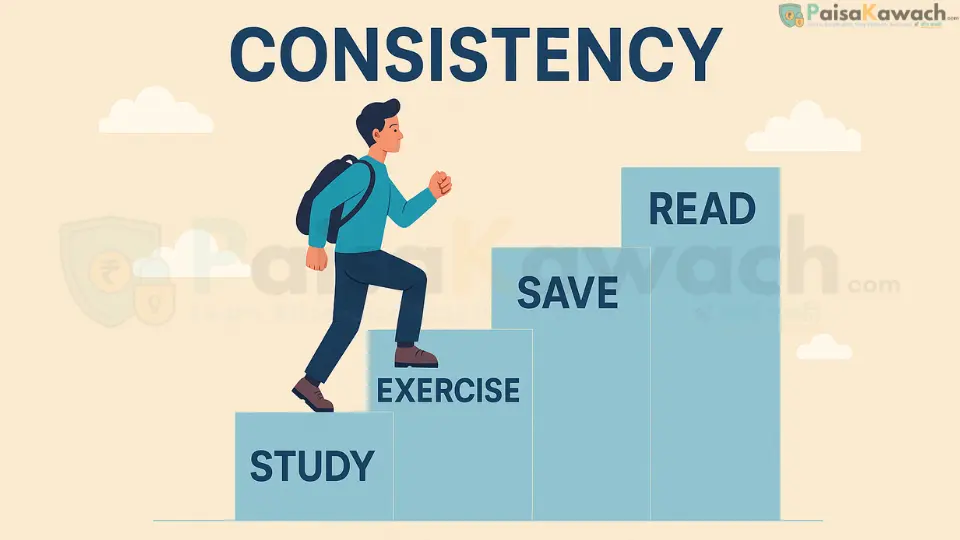
We often celebrate talent, luck, and sudden breakthroughs. But if you look closer at the world's most successful students, professionals, entrepreneurs, or athletes, you'll find a quieter truth: consistency is the real secret weapon. It's not about massive leaps; it's about steady steps. Small daily actions, when repeated over months and years, create compounding results that talent alone cannot match.
Think of it this way: Saving just ₹100 (≈ $1.20) daily seems insignificant. But over a year, that's ₹36,500 (≈ $440). Invest it wisely, and it can double, triple, or even build into lakhs over time. The same applies to studying, working out, writing, or building a business—small daily consistency turns ordinary efforts into extraordinary outcomes.
The Science of Consistency
Why the Brain Loves Routines
Our brains crave patterns. When we repeat a small action daily, the brain wires it into habit. Habits reduce decision fatigue, making success automatic instead of forced. That's why brushing your teeth takes no effort—it's consistent. Imagine if studying, saving, or exercising felt just as automatic.
The Compounding Effect
Consistency works like compound interest. Just as ₹10,000 (≈ $120) invested grows faster each year, daily habits multiply their impact over time. Reading 10 pages a day becomes 3,650 pages a year—roughly 15 books. Running 2 km daily equals 730 km annually. The numbers add up quietly but powerfully.
Small Daily Actions That Lead to Lifelong Success
1. Financial Habits
- Daily Saving: Keep aside ₹100–₹500 (≈ $1.20–$6) daily. This builds financial discipline and long-term security.
- Expense Tracking: Write down every rupee spent. Awareness reduces wasteful spending.
- Micro-Investing: Use apps that allow ₹10 (≈ $0.12) fractional investments in mutual funds or stocks daily. Over years, this builds wealth.
2. Learning Habits
- 10-Minute Study Rule: Read, revise, or learn a new concept daily. For students, this ensures subjects never pile up.
- Vocabulary Growth: Learn one new English word daily. That's 365 words a year, boosting communication skills.
- Skill Building: Practice coding, design, or public speaking for 20 minutes daily. Micro-practice compounds into mastery.
3. Health Habits
- 10 Push-ups a Day: Start small. Over a year, that's 3,650 push-ups. Fitness builds naturally.
- Hydration: Drink at least 2–3 liters of water daily. Small but life-changing for energy and focus.
- Sleep Routine: Going to bed and waking up at fixed times rewires the body for productivity.
4. Career & Business Habits
- Networking: Message one professional daily on LinkedIn. After a year, you'll have 365 valuable connections.
- Side Hustle Steps: Work 30 minutes daily on your side business. Tiny progress compounds into income streams.
- Daily Reflection: Write down what worked and what didn't. Business clarity improves with self-review.
Why Small Actions Matter More Than Big Ones
Many young adults and students fall into the trap of waiting for motivation. They study all night before exams, save only when they feel like it, or exercise in bursts. But this "all-or-nothing" approach burns out fast. The truth is, tiny consistent actions beat massive inconsistent efforts.
A student reading 10 pages daily will outperform someone cramming 300 pages overnight. A professional saving ₹100 daily ends up richer than someone investing ₹50,000 (≈ $600) once and never again. Consistency doesn't just build results—it builds identity.
Real-Life Examples of Consistency
Consider the story of Harish, a young software engineer from Bangalore. Despite working long hours at his tech job, Harish committed to writing just 300 words daily for his blog. This small habit seemed insignificant at first, but after two years of consistent writing, he had produced over 200,000 words of content. His blog gained traction, leading to a book deal and eventually a successful career as a technical writer. The compounding effect of his daily writing habit transformed his career trajectory in ways he never imagined when he started.
Then there's Priya, a college student who struggled with mathematics. Instead of cramming before exams, she began solving just five math problems daily. Within six months, her grades improved from C's to A's. More importantly, she developed genuine confidence in her mathematical abilities. Her consistent small efforts rebuilt her self-image as someone capable of mastering challenging subjects.
Successful companies also leverage the power of consistency. Consider how Amazon started as a simple online bookstore, consistently expanding its offerings over decades to become the everything store. Their consistent focus on customer experience and gradual expansion into new markets demonstrates how business success is often built through steady, consistent growth rather than explosive overnight changes.
The Psychology Behind Consistency
Understanding why consistency works requires examining human psychology. Our brains are wired to seek immediate gratification, which is why we often choose short-term pleasures over long-term benefits. Consistency helps rewire this tendency by creating small, achievable rewards along the journey toward larger goals.
The concept of "identity-based habits" reveals why consistency is so powerful. When you perform a small action consistently, you're not just achieving a result—you're building a new identity. A person who exercises daily doesn't just get fit; they become "a fit person." This shift in self-perception makes it easier to maintain consistent behavior because it aligns with how you see yourself.
Psychological research also shows that consistency reduces what's known as "cognitive load." When actions become habitual through consistency, they require less mental energy to perform. This conservation of willpower is crucial for long-term success, as mental fatigue often derails well-intentioned efforts at change.
Overcoming Barriers to Consistency
Despite understanding the value of consistency, most people struggle to maintain it. The primary obstacle isn't laziness but rather unrealistic expectations. People often attempt drastic changes that are unsustainable over the long term. The key to overcoming this barrier is to start with actions so small they seem almost trivial.
Another common barrier is the "all-or-nothing" mindset, where a single missed day is viewed as total failure. This perfectionist thinking derails consistency more than anything else. Successful consistent practitioners understand that missing a day is not failure—it's part of the process. The important thing is returning to the habit immediately, without self-judgment.
Environment design plays a crucial role in maintaining consistency. By structuring your surroundings to make good habits easier and bad habits harder, you dramatically increase your chances of staying consistent. This might mean preparing your workout clothes the night before, keeping healthy snacks visible, or using apps to block distracting websites during work hours.
The 1% Rule: How Tiny Improvements Create Massive Change
The concept of the 1% rule demonstrates the incredible power of consistency. If you can improve by just 1% each day, you'll be 37 times better after a year. This principle, known as the "aggregation of marginal gains," shows how small, consistent improvements accumulate into remarkable transformations.
British Cycling Team's success story perfectly illustrates this principle. When coach Dave Brailsford took over the team, he implemented a philosophy of seeking 1% improvements in everything they did—from bike mechanics to rider nutrition to sleep quality. These tiny gains, consistently applied, led the team to multiple Olympic gold medals and Tour de France victories.
Applying the 1% rule in your own life means focusing on small, sustainable improvements rather than dramatic overhauls. Instead of trying to completely transform your diet overnight, start by adding one vegetable to your dinner each day. Rather than attempting to write a book in a month, commit to writing one paragraph daily. These microscopic improvements seem insignificant in the moment but compound into life-changing results over time.
Consistency in Relationships and Personal Growth
While we often discuss consistency in terms of productivity and achievement, its power extends equally to relationships and personal development. Small, consistent gestures of appreciation—a daily text, a weekly date night, a monthly letter—build stronger connections than occasional grand gestures.
In personal growth, consistency matters more than intensity. Reading ten pages of a personal development book daily creates more transformation than reading an entire book in one sitting every few months. Similarly, practicing mindfulness for five minutes daily builds more awareness than occasional hour-long meditation sessions.
The consistency principle also applies to emotional regulation. Regularly checking in with your emotions—through journaling or reflection—builds emotional intelligence more effectively than occasional therapy sessions alone. This daily practice creates neural pathways that make emotional balance more automatic over time.
Technology and Consistency: Tools to Maintain Daily Habits
In our digital age, technology offers powerful tools to support consistency. Habit-tracking apps provide visual reinforcement of your streak, leveraging our brain's desire for continuity. Calendar blocking techniques help protect time for important consistent actions amidst busy schedules.
However, technology can also undermine consistency through constant interruptions and distractions. The key is to use technology intentionally—employing tools that support your consistency goals while minimizing those that fragment your attention. Digital minimalism, the practice of consciously reducing technology use to focus on what matters most, often enhances consistency in important areas of life.
Automation represents another technological approach to consistency. By automating financial investments, bill payments, and savings, you ensure these important actions happen consistently regardless of your daily motivation levels. This principle can be extended to other areas—meal preparation services ensure consistent healthy eating, while subscription services for books or learning materials maintain consistent education.
The Dark Side of Consistency: When to Break Patterns
While consistency is powerful, blind consistency can become problematic. Sometimes, consistent patterns need to be broken when they no longer serve your goals or well-being. The key is distinguishing between valuable consistency and rigid adherence to outdated habits.
Regular review periods help maintain healthy consistency. Setting aside time monthly or quarterly to evaluate your habits ensures they continue aligning with your evolving goals and values. This practice prevents consistency from becoming mere routine without purpose.
Successful people understand the balance between consistency and adaptability. They maintain consistency in their core principles and daily practices while remaining flexible in their strategies and approaches. This balance allows them to benefit from consistency's compounding effects without becoming trapped in outdated patterns.
Creating Your Consistency Action Plan
Implementing consistency begins with selecting one or two key areas for focus rather than attempting to change everything at once. Choose habits that align with your most important goals and that you can maintain even on difficult days.
The implementation intention strategy dramatically improves consistency success rates. This involves specifying exactly when, where, and how you'll perform your consistent action. Instead of "I'll exercise more," say "I'll walk for 20 minutes at 7 AM around my neighborhood park." This specificity removes decision fatigue and makes the action more automatic.
Tracking your consistency provides motivation through visual feedback. Whether using a simple calendar checkmark system or a sophisticated habit-tracking app, visually recording your consistency creates momentum and makes missed days more noticeable. This awareness alone often improves consistency rates.
Finally, building accountability systems enhances consistency. Sharing your goals with a friend, joining a community with similar aims, or working with a coach creates external reinforcement that helps maintain consistency during motivation dips. This social dimension transforms consistency from a solitary struggle into a shared journey.
Conclusion: Making Consistency Your Superpower
Consistency isn't a glamorous concept, but its transformative power exceeds that of talent, luck, or intense bursts of effort. By embracing small daily actions and maintaining them over time, you harness the compound effect that turns ordinary efforts into extraordinary results.
The journey toward consistency begins with a simple recognition: massive goals are achieved through small steps taken consistently. Whether building wealth, knowledge, health, or relationships, the principle remains the same—steady, persistent action creates results that dwarf occasional intense efforts.
As you move forward, remember that consistency is not about perfection. It's about direction. Missing a day here and there matters less than your overall commitment to returning to your chosen path. With this understanding, you can transform consistency from a discipline into a delight—from something you force yourself to do into something that defines who you are.
Your future self will thank you for the small consistent actions you take today. Start small, stay steady, and let the compound effect work its magic over time. Consistency truly is the secret weapon that separates extraordinary results from ordinary efforts.
Keep Reading: More Personal Finance Insights
 Why Do Prices Go Up? Inflation Explained with Pizza and Ice Cream
Next →
Why Do Prices Go Up? Inflation Explained with Pizza and Ice Cream
Next →
 How Inflation and Banking Are Connected: What Every Family Should Know
Comments
No comments yet. Be the first to comment!