Why Do Prices Go Up? Inflation Explained with Pizza and Ice Cream
Introduction: Why Pizza and Ice Cream Cost More Each Year
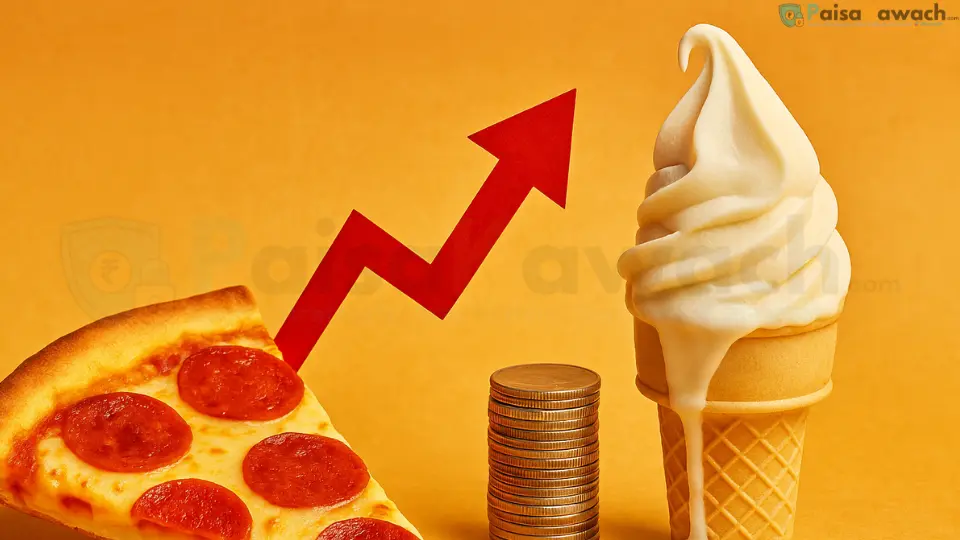
Have you ever noticed how your favorite pizza that once cost ₹200 (~$2.50) is now ₹250 (~$3), or how a scoop of ice cream at your local café seems to have shrunk in size while the price has grown? You’re not imagining it. This slow, steady creep in the cost of living is a universal economic experience, felt from the streets of Mumbai to the suburbs of Chicago. Prices of food, clothes, fuel, and nearly everything else keep rising over time. Economists call this phenomenon inflation.
But instead of presenting a dry, textbook definition, let's embark on a journey through the world of pizza and ice cream to unravel the mysteries of inflation. Using these everyday delights as our guide, we can transform complex economic principles into relatable, digestible concepts. After all, if we can explain the mechanics of a national economy with a pepperoni pizza or a vanilla cone, learning becomes not only simple but genuinely fun!
What Is Inflation? The Topping on Our Pizza
At its core, inflation is the sustained increase in the general price level of goods and services in an economy over a period of time. Put simply, it means that the purchasing power of money decreases over time. The same banknote buys you fewer goods and services than it did a month, a year, or a decade ago.
A Delicious Thought Experiment
Let's make this concrete with our tasty examples:
In 2015, you had ₹500 (~$6). That could comfortably buy you:
- One full medium pizza 🍕 for ₹300 (~$3.60)
- And two generous scoops of premium ice cream 🍦🍦 for ₹200 (~$2.40)
Now, fast forward to today. You walk into the same shop with the same ₹500 (~$6). You might only get:
- A single, smaller medium pizza for ₹400 (~$4.80)
- And just one scoop of ice cream for ₹100 (~$1.20)
This is why your grandparents often talk about how things were "cheaper in their time." A movie ticket that cost ₹5 (~$0.06) in the 1970s might cost ₹300 (~$3.60) today. It's not that the value of the movie has changed; it's the value of the currency that has.
Why Do Prices Go Up? The Pizza Ingredients Story
To understand why inflation happens, we need to think like a pizzeria owner. A pizza doesn't just magically appear. It's built from raw materials: flour, cheese, tomatoes, vegetables, spices, and maybe some meat. It requires a kitchen, an oven, electricity, and people to make it. If the cost of any of these inputs increases, the total cost of making the pizza rises. To stay in business, the owner must pass some of that increased cost on to you, the customer.
This microcosm of the pizza shop is a perfect analogy for the entire economy. Let's break down the main reasons, or "ingredients," of inflation.
The Main Reasons Behind Price Rise
- Rising Demand (Demand-Pull Inflation): Imagine a new viral video features your local pizzeria. Suddenly, everyone craves their pizza. The shop is overwhelmed with orders. The demand for their pizza now far exceeds their ability to supply it (they only have one oven and a limited number of chefs). What can they do? They can raise prices. This cools down demand slightly (some people will decide it's too expensive) and increases their revenue per pizza, which might eventually fund a second oven. This is demand-pull inflation—too much money chasing too few goods.
- Higher Production Costs (Cost-Push Inflation): Now, imagine a drought in Italy and Australia ruins the wheat harvest. The global price of flour skyrockets. Or, a disease affects dairy cows, making cheese and butter more expensive. The pizzeria owner now pays more for the exact same ingredients. Their cost to make each pizza has gone up through no fault of their own. To maintain their profit margin, they have no choice but to increase the menu price. This is cost-push inflation—prices rising because it costs more to produce things.
- Wage Growth: The staff at the pizzeria, facing their own higher costs for rent and groceries, demand a raise. The owner values them and agrees to increase their wages. While this is great for the employees, it represents a new, recurring cost for the business. To offset this, the price of pizza might need to see a small, permanent increase.
- Cost of Imported Goods: What if the pizzeria uses a special olive oil imported from Spain or pepperoni from the USA? If the value of the Indian Rupee falls against the Euro or the US Dollar (a concept called currency depreciation), those imported ingredients instantly become more expensive in rupee terms. Similarly, if global oil prices rise, the cost of delivering flour and cheese to the shop also goes up. This is a major source of inflation in countries that rely on imports.
- Government Policy & Taxes: The government might decide to add a new 5% "luxury food tax" on restaurant meals or increase the GST (Goods and Services Tax) rate. Alternatively, they might place a tariff (a tax on imports) on foreign cheese to protect local dairy farmers. These policy decisions directly increase the final price you pay at the counter.
Economic Jargon Decoded: Economists categorize these into demand-pull inflation (when demand rises faster than supply) and cost-push inflation (when production costs rise). Most real-world inflation is a complex mix of both.
Ice Cream Meltdown: Real-Life Examples of Inflation
Let's cool down with ice cream, the sweetest way to understand inflation. Imagine your favorite local parlor sold a rich, creamy scoop for ₹50 (~$0.60) last summer. You go back this year, and the sign now says ₹60 (~$0.72) per scoop. The cone might even be a bit smaller—a sneaky form of inflation called "shrinkflation." Why did this happen?
Deconstructing the Scoop: A Cost Breakdown
- Milk & Cream: The price of milk is volatile. It can increase due to higher feed costs for cows, droughts, or increased demand from other dairy product manufacturers.
- Sugar: Sugar is a globally traded commodity. Bad harvests in Brazil or India, the world's largest producers, can send sugar prices soaring worldwide.
- Energy Costs: Running industrial freezers 24/7 consumes a massive amount of electricity. If the per-unit cost of electricity goes up, the ice cream parlor's monthly bill can jump significantly, adding to their overhead.
- Labor: The servers and scoopers ask for a raise to keep up with their own cost of living. The owner agrees, adding to the wage bill.
- Rent: The landlord increases the annual rent for the shop space, citing higher property taxes and market rates.
- Packaging: Even the cost of the paper cups or waffle cones might have increased if the price of paper pulp or flour has gone up.
Faced with this avalanche of rising costs, the shop owner has two choices: absorb the cost and see their profits melt away like ice cream in the sun, or pass a portion of it on to the customer. The latter is almost always the necessary business decision. And just like that, your sweet escape costs a little more.
How Inflation Impacts Everyday Life
Inflation isn't an abstract concept confined to economics textbooks; it's a powerful force that touches every single aspect of our daily lives, often in subtle ways.
- For Families & Households: The family budget is the frontline of inflation's impact. The monthly grocery bill for the same basket of goods—milk, bread, vegetables, cooking oil—creeps higher. School fees increase annually, often above the inflation rate. The cost of a monthly bus pass or a tank of fuel for the car eats up a larger chunk of disposable income. Families are forced to make tough choices: perhaps they buy fewer branded goods, opt for a less expensive cut of meat, or postpone a vacation.
- For Students: Your pocket money buys less. The ₹100 (~$1.20) that used to cover a snack and a bus ride might now only cover the snack. The cost of textbooks, stationery, and cafe meals with friends rises steadily. For students managing their own budgets, inflation is a rapid, practical lesson in personal finance.
- For Workers & Salaried Employees: The most frustrating experience is when your salary remains static while prices climb. This means your real income (your purchasing power) is actually falling, even if your nominal income (the number on your paycheck) stays the same. An annual raise that is lower than the rate of inflation is effectively a pay cut in real terms.
- For Savers: Inflation is the silent enemy of the saver. If you have ₹10,000 (~$120) sitting in a savings account that offers 3% interest per year, but inflation is running at 5%, your money is actually losing value. After one year, you'll have ₹10,300 (~$124) in your account, but the goods that cost ₹10,000 a year ago now cost ₹10,500. Your purchasing power has been eroded. This is why people seek out investments (like stocks or mutual funds) that have the potential to outpace inflation.
- For Businesses: Companies face higher costs for raw materials, energy, and shipping. They must decide whether to absorb these costs (hurting their profits), pass them on to customers (which might make them less competitive), or find ways to increase efficiency. Uncertainty about future inflation can also make businesses hesitant to invest in new projects or hire more staff.
Is Inflation Always Bad? Not Really
Here’s the twist that often surprises people—a healthy economy needs a small, controlled amount of inflation. It's like the salt in our pizza dough; too little and it's bland, too much and it's ruined. Economists and central banks, like the Reserve Bank of India (RBI) or the US Federal Reserve, often aim for a target inflation rate of around 2-4%.
The "Good" Side of Inflation
Low and stable inflation is generally seen as a sign of a growing economy. Why?
- It Encourages Spending and Investment: If you know your money will be worth less next year, you are more likely to spend it now or invest it in something that will grow, rather than stuff it under your mattress. This consumer spending and business investment drive economic growth.
- It Allows Wages to Adjust: It's easier for companies to give employees a 3% raise in a 2% inflation environment than to give a 3% pay cut in a world of 0% inflation. Nominal wage cuts are fiercely resisted, but slight inflation allows for real wage adjustments (e.g., a 2% raise when inflation is 3% is a gentle 1% real cut) without the psychological blow.
- It Prevents Deflation: This is crucial. Deflation—a general decrease in prices—is actually more dangerous than moderate inflation. If people believe things will be cheaper tomorrow, they postpone spending. This crash in demand forces businesses to lower prices further, cut wages, and lay off workers, leading to a destructive economic spiral and recession. Japan's "Lost Decade" is a prime example of the perils of deflation.
The "Bad" Side of Inflation
Inflation becomes a problem when it is:
- Too High (Hyperinflation): When inflation spirals out of control, reaching monthly rates of 50% or more, it leads to the complete collapse of a currency's value. People's life savings become worthless overnight. The economy reverts to barter systems.
- Too Volatile: If the inflation rate jumps around unpredictably, it creates extreme uncertainty. Businesses cannot plan for the future, and long-term investing grinds to a halt.
- Not Matched by Wage Growth: If prices rise faster than wages, the standard of living declines for most people, leading to social unrest and increased inequality.
Think of a pizza with the perfect amount of cheese—it's delicious and motivating (good inflation). Now think of a pizza that's been absolutely buried in salt—it's inedible and destructive. That’s what runaway inflation feels like to an economy.
Historical Lessons: When Prices Went Out of Control
History provides stark warnings of what happens when the delicate balance of inflation is lost.
Germany (Weimar Republic) in the 1920s
Perhaps the most famous case of hyperinflation. To pay for the massive costs of World War I and reparations, the German government printed money with little to no backing. At its peak in 1923, prices doubled every few hours. People were paid twice a day and would rush to spend their money immediately before it became worthless. Stories abound of people using wheelbarrows full of banknotes to buy a loaf of bread or burning money for heat because it was cheaper than firewood. This economic chaos created deep social resentment that contributed to the rise of extremism.
Zimbabwe in the 2000s
Due to a combination of disastrous land reform policies, collapse in agricultural production, and massive printing of money to fund government spending, Zimbabwe experienced a catastrophic hyperinflation. At its height in November 2008, the annual inflation rate was a staggering 89.7 sextillion percent (that's 89.7 followed by 20 zeros). The central bank issued a 100 trillion Zimbabwean dollar note, which was barely enough to buy a bus ticket. The economy completely dollarized, as people abandoned the local currency.
Venezuela in the 2010s-2020s
A more recent example, driven by a collapse in oil revenue (its main export), poor economic policies, and excessive money printing. Hyperinflation led to widespread hunger, a collapse of the healthcare system, and a massive refugee crisis, with millions fleeing the country. It's a tragic, modern reminder of the human cost of economic mismanagement.
India in the 1970s
While not hyperinflation, India faced severe inflation in the 1970s, particularly during the 1973 oil crisis. The price of oil quadrupled globally, sending shockwaves through an import-dependent country. The cost of fuel, fertilizers, and transportation skyrocketed, which in turn pushed up the price of every essential good, from food to clothing. This period left a deep scar on the national memory, making the Indian public and policymakers particularly sensitive to fuel and food price inflation even today.
Inflation Today: Why It Matters in 2024 and Beyond
The post-COVID-19 world has been a masterclass in global inflation dynamics. The pandemic triggered a perfect storm:
- Supply Chain Disruptions: Factory shutdowns, port closures, and a shortage of shipping containers caused massive delays and skyrocketing costs for moving goods around the world.
- Shift in Demand: With people stuck at home, spending shifted from services (like travel and dining out) to goods (like home office equipment and exercise bikes), overwhelming the supply chains for those products.
- Government Stimulus: Massive government support packages, while crucial for helping people and businesses survive, put more money into the economy, increasing demand.
- The Ukraine War: This conflict disrupted supplies of key commodities like wheat, sunflower oil, and natural gas from two of the world's major producers, pushing global food and energy prices to record highs.
- Climate Change: Extreme weather events, from droughts to floods, have damaged harvests and disrupted mining operations, adding to cost-push pressures.
In 2024, while the peak of this inflationary wave has passed in many countries, prices for essentials like housing, energy, and food remain significantly higher than pre-pandemic levels. Central banks are walking a tightrope, raising interest rates to cool down inflation without triggering a deep recession.
How to Outsmart Inflation (Student & Family Tips)
While we can't stop inflation, we can build strategies to mitigate its impact on our personal finances.
For Students
- Start Financial Literacy Early: Understand the difference between saving and investing. A piggy bank saves, but its value melts. A savings account might barely keep up. Learning about long-term investing is key.
- Budget with Inflation in Mind: When planning your monthly expenses for outings, snacks, and books, assume things will cost 5-10% more than last year. It's better to be pleasantly surprised than short on cash.
- Invest in Yourself: The best investment you can make as a student is in your skills and education. This increases your future earning potential, which is the ultimate hedge against inflation.
For Families
- Smart Shopping: Compare prices, use loyalty programs, buy non-perishable items in bulk when on sale, and consider store brands over name brands.
- Create a Needs vs. Wants Budget: Track your spending to identify areas where you can cut back on non-essential "wants" to afford the rising cost of "needs."
- Invest, Don't Just Save: Park emergency funds in safe, liquid accounts. For long-term goals (like retirement, a child's education), you need assets that have historically outpaced inflation:
- Equities (Stocks): Owning shares of companies means you own a piece of a business that can raise its prices with inflation.
- Real Estate: Property values and rental income tend to rise over time with inflation.
- Inflation-Indexed Bonds: Some government bonds, like India's Inflation-Indexed National Savings Securities-Cumulative (IINSS-C) or the US Treasury Inflation-Protected Securities (TIPS), adjust their principal value based on inflation.
- Review Your Finances Annually: Your salary, investment strategy, and budget shouldn't be on autopilot. Revisit them every year to ensure they are keeping pace with the changing economic environment.
Fun Analogy: Inflation as Melting Ice Cream
Imagine you buy a perfect, cold scoop of ice cream for ₹60 (~$0.72) on a hot day. This scoop represents the purchasing power of your ₹60. Now, you get distracted and don't eat it right away. You let it sit in the sun. Slowly, it begins to melt. After 15 minutes, you no longer have a full scoop—you have a sad, melted puddle. You still have the value of the cone (you can drink it!), but you've lost the form and the enjoyment you paid for.
That’s what inflation does to money. If you leave your cash sitting idle, its value "melts" over time. The only way to prevent this is to "eat it" (spend it on necessary goods) or, more wisely, to "put it in the freezer" (invest it in assets that will grow and preserve its value against the heat of inflation).
Conclusion: Pizza, Ice Cream, and Smarter Choices
The next time you notice your favorite pizza slice or ice cream scoop costing a little more, you'll see beyond the price tag. You'll understand the complex global dance of supply and demand, of production costs and monetary policy, all reflected in that simple transaction.
Inflation is a constant, powerful economic force. We cannot avoid it, but by understanding its causes, history, and effects, we are empowered to make smarter, more informed choices. Whether you're a student managing your first allowance, a family planning a monthly budget, or an aspiring investor, this knowledge is your best tool for building a secure financial future in a world where prices, inevitably, will always creep upwards.
Keep Reading: More Personal Finance Insights
 Electricity and the Internet: The Beating Heart of Modern Stock Exchanges
Next →
Electricity and the Internet: The Beating Heart of Modern Stock Exchanges
Next →
 The Power of Consistency: Small Daily Actions That Build Lifelong Success
Comments
What you're describing is often referred to as 'greedflation' or 'profit-led inflation,' and it's a very real conversation happening among economists right now. While our article focused on the two classic economic models (demand-pull and cost-push), the role of corporate pricing power is a crucial third factor in the current landscape.
The idea is that in certain concentrated industries where a few big companies dominate, they have more power to raise prices beyond just covering their increased costs, boosting their profit margins. It's not just following the rules of competition; it's sometimes about having the power to change them.
We wanted to keep the explanation with pizza and ice cream simple for an introductory post, but you've perfectly set the stage for a fantastic follow-up article diving deeper into this very topic. Thanks again for the thoughtful comment—this is exactly the kind of discussion we love to see!