India Budget 2026 Economic and Policy Developments: Key Signals for Growth, Markets, and Fiscal Strategy

Introduction: What Changed in Budget 2026 and Why It Matters
The Union Budget 2026 marks a critical inflection point for India’s economic strategy, balancing growth ambitions with fiscal discipline in a challenging global environment. Presented amid slowing global demand, volatile capital flows, and domestic expectations for jobs and infrastructure, the Budget has quickly become a focal point for investors, businesses, and policymakers.
While the government has reiterated its commitment to long-term growth through capital expenditure and structural reforms, concerns around higher borrowing and market-related tax changes have triggered sharp reactions in equities and bonds. Understanding the deeper economic and policy signals is essential to assess where India’s economy may be headed next.
Key Economic and Policy Announcements in Budget 2026
Higher Government Borrowing to Fund Growth
One of the most closely watched elements of Budget 2026 is the government’s decision to raise market borrowing to finance infrastructure-led growth. The borrowing programme is among the highest on record, reflecting the state’s intent to support capital expenditure even as global conditions remain uncertain.
The government argues that sustained public investment is necessary to crowd in private capital, boost employment, and maintain India’s growth momentum over the medium term.
Strong Push for Infrastructure and Capital Expenditure
Capital expenditure has once again been positioned as the backbone of the Budget. Allocations toward roads, railways, logistics, housing, and energy transition projects signal continuity in policy direction.
- Focus on transport and logistics to reduce supply-chain costs
- Support for urban infrastructure and affordable housing
- Increased spending on power and renewable energy ecosystems
Market-Linked Tax Measures Raise Concerns
Changes related to securities transaction taxes and derivatives trading have emerged as a sensitive point for financial markets. These measures, aimed at improving revenue visibility and curbing speculative excesses, have been perceived by traders as increasing transaction costs.
The immediate market response suggests that while the intent may be regulatory stability, short-term liquidity and sentiment have been affected.
Budget 2026: Snapshot
- Policy stance: Growth-focused with fiscal caution
- Borrowing: Elevated to fund infrastructure-led expansion
- Capex: Continued priority across roads, railways, and energy
- Markets: Volatility triggered by tax and borrowing concerns
- Outlook: Medium-term positive, near-term cautious
What This Means for Investors and Financial Markets
For investors, Budget 2026 delivers mixed signals. On one hand, sustained capital expenditure and reform continuity support India’s long-term growth narrative. On the other, higher borrowing raises concerns about bond yields, fiscal pressure, and crowding out of private investment.
Equity markets have reacted sharply in the short term, particularly in sectors sensitive to trading volumes and interest rates. Bond markets, meanwhile, are closely monitoring the supply impact of increased government issuances.
Sector-Wise Implications and Comparisons
Infrastructure and Core Industries
Infrastructure, cement, capital goods, and engineering companies remain relative beneficiaries compared to consumption-heavy sectors. Continued government spending provides visibility, similar to trends seen in previous post-pandemic budgets.
Financial Markets vs. Global Peers
Compared with other emerging markets, India’s fiscal expansion remains growth-oriented rather than purely populist. However, higher borrowing places India closer to peers facing bond market pressure, making global interest rate trends a key variable.
Policy Credibility and Global Perception
From a global perspective, policy continuity and reform intent remain strengths. According to :contentReference[oaicite:0]{index=0}, international investors continue to view India as one of the more stable large emerging economies, though fiscal discipline will remain under scrutiny.
What to Watch Next: The Road Ahead
In the weeks ahead, market focus is expected to shift from headline numbers to execution. Key indicators to track include government bond yields, private capex announcements, inflation trends, and signals from the Reserve Bank of India.
If revenue collections remain strong and growth holds up, concerns around borrowing may ease. However, sustained volatility could force recalibration in future policy communication.
Keep Reading: More Insights You Might Like
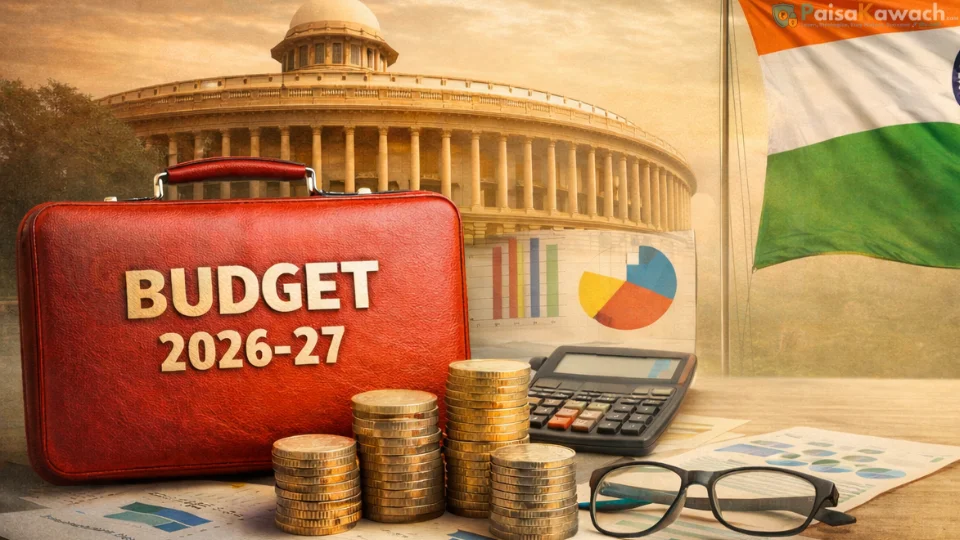 Union Budget of India 2026–27: Detailed Breakdown With Income Tax Slabs and Economic Implications
Next →
Union Budget of India 2026–27: Detailed Breakdown With Income Tax Slabs and Economic Implications
Next →
 India–US Trade Deal Boosts Market Sentiment, Signals New Phase in Bilateral Economic Ties
Comments
No comments yet. Be the first to comment!