Union Budget of India 2026–27: Detailed Breakdown With Income Tax Slabs and Economic Implications
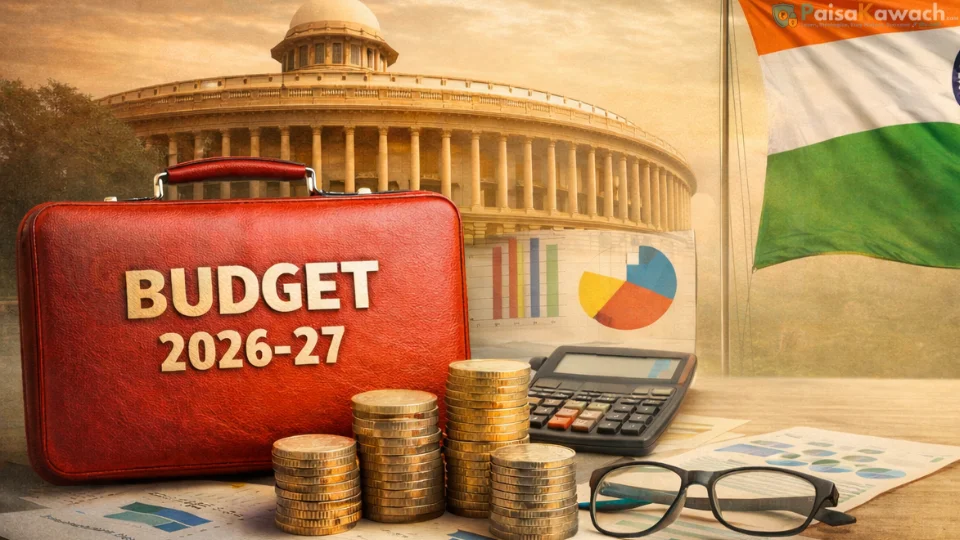
Introduction: What Happened and Why It Matters
On 1 February 2026, India’s Finance Minister presented the Union Budget 2026-27 in Parliament, setting the government’s fiscal priorities for the year ahead. Against the backdrop of a stabilising economy and a growth projection in excess of expectations, the budget maintained existing income tax structures while implementing procedural reforms and targeted policy measures to bolster infrastructure, social welfare, and industrial competitiveness. The absence of changes to core tax slabs has been a focal point of discussion among taxpayers and analysts alike.
Key Budget Highlights
The 2026-27 Union Budget emphasises continuity and stability across fiscal policy, with the government retaining existing tax regime rates and focusing on growth drivers such as capital expenditure, rural development, and manufacturing incentives. Real GDP growth estimates remain robust, supported by strong private investment expectations and sustained infrastructure allocation.
- No change in income tax slabs for FY 2026-27 under both old and new regimes.
- Income Tax Act, 2025 to be implemented from 1 April 2026, simplifying compliance and filing.
- Fiscal deficit target set at ~4.3% of GDP.
- States’ tax share retained at 41% for 2026–31.
- Capex allocation increased to support infrastructure and strategic sectors.
Income Tax Slabs: Complete Breakdown for FY 2026-27
Unlike some preceding years, the Union Budget 2026-27 did not introduce new tax slab rates. Taxpayers will continue to have the option to select between the old and new tax regimes based on their financial profile and deductions.
New Tax Regime (Optional) – FY 2026-27
- ₹0 – ₹4,00,000: No tax
- ₹4,00,001 – ₹8,00,000: 5%
- ₹8,00,001 – ₹12,00,000: 10%
- ₹12,00,001 – ₹16,00,000: 15%
- ₹16,00,001 – ₹20,00,000: 20%
- ₹20,00,001 – ₹24,00,000: 25%
- Above ₹24,00,000: 30%
Old Tax Regime (Optional) – FY 2026-27
- ₹0 – ₹2,50,000: No tax
- ₹2,50,001 – ₹5,00,000: 5%
- ₹5,00,001 – ₹10,00,000: 20%
- Above ₹10,00,000: 30%
Both regimes attract an additional 4% health and education cess on the calculated tax. The government also reiterated the standard deduction levels and adjusted various threshold points for compliance, but core rates remained unchanged.
Key Tax Policy Changes Beyond Slabs
- Income Tax Act, 2025 to streamline processes and reduce litigation from 1 April 2026.
- STT on derivatives increased to discourage speculative trading.
- TCS and TDS adjustments on certain remittances to improve compliance.
- Extended filing window for revised returns to 31 March 2026.
Impact on Individuals and Markets
For salaried individuals and middle-class taxpayers, the most immediate takeaway is the absence of new tax rate reliefs. This has tempered short-term consumption sentiment among households. At the same time, procedural improvements and the new Income Tax Act aim to reduce compliance burdens over the next fiscal year. Financial markets, particularly equity indices, have reflected mixed reactions, with some volatility in banking and consumption stocks post-budget.
Sector Comparisons: Winners and Considerations
While income tax slabs remained unchanged, other segments such as infrastructure, healthcare, rural livelihoods, and strategic manufacturing received enhanced focus. Capital expenditure increases and targeted incentives may benefit sectors tied to long-term economic expansion more than consumer discretionary industries in the immediate term.
Outlook: What to Watch Next
- Implementation of the Income Tax Act, 2025 and its effect on dispute resolution and compliance timelines.
- State finances tracking the 41% tax share arrangement through 2031.
- Sector-wise impact of capex and support to technology, manufacturing, and renewable sectors.
- Reactions in the upcoming corporate earnings and consumer credit data as fiscal sentiment unfolds.
The broader narrative of the 2026-27 Budget points toward structural stability with emphasis on sustainable growth rather than short-term fiscal shifts. A balanced approach to tax policy continues to be central to the government’s economic framework as India pursues higher growth benchmarks.
Keep Reading: More Insights You Might Like
 India Markets Open on Sunday for Union Budget 2026, Marking Rare Trading Session
Next →
India Markets Open on Sunday for Union Budget 2026, Marking Rare Trading Session
Next →
 India Budget 2026 Economic and Policy Developments: Key Signals for Growth, Markets, and Fiscal Strategy
Comments
No comments yet. Be the first to comment!