India Pre-Market Outlook for 25 March 2026: Global Cues Mixed, Range-Bound Setup Expected
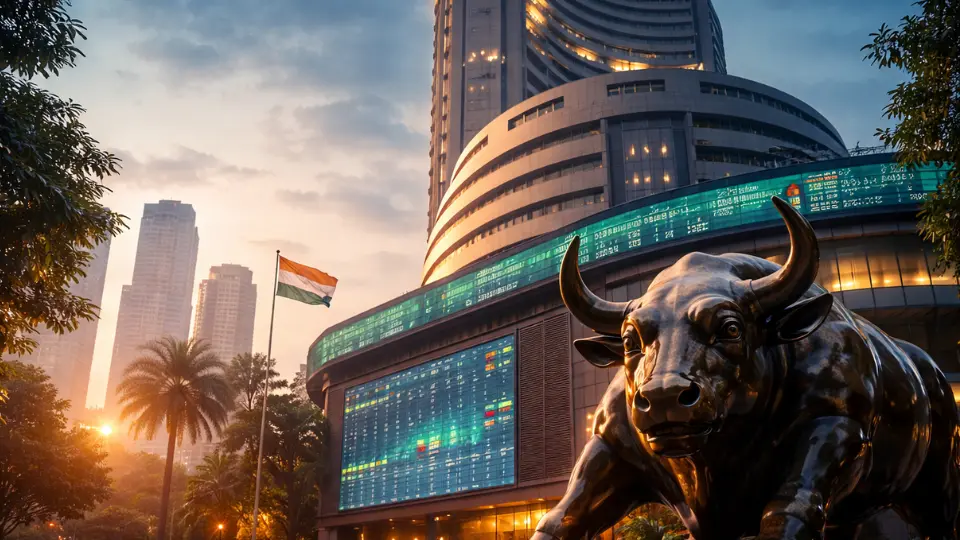
Market Context (Global → India Linkage)
As Indian markets approach the trading session of 25 March 2026, the global backdrop presents a balanced yet non-committal structure. There is no dominant directional force emerging from international markets, and this absence of strong cues is likely to influence the nature of participation in domestic equities.
US markets closed on a mixed note, reflecting sectoral divergence rather than broad-based conviction. While technology-oriented stocks displayed relative resilience, other segments of the market showed signs of hesitation. This divergence typically indicates that institutional flows are becoming selective rather than aggressive, with capital rotating instead of expanding risk exposure.
The absence of a strong directional close in the US suggests that global investors are currently operating within a framework of caution, but not fear. This distinction is important. Markets that are cautious tend to avoid aggressive positioning, but they do not necessarily unwind risk. This often results in slower, rotational market behavior rather than sharp directional trends.
From a macro perspective, US bond yields remained stable. This is a critical variable for global markets, as it directly impacts valuation models, liquidity expectations, and capital flows across asset classes. Stability in yields indicates that markets are not currently repricing inflation or monetary policy expectations in a meaningful way.
For emerging markets like India, stable US yields are generally constructive in the sense that they reduce the risk of abrupt foreign capital outflows. However, stability alone does not create momentum—it merely removes a potential source of volatility.
The Dollar Index continues to hold firm, reflecting steady demand for the US currency. A firm dollar typically signals a degree of caution in global liquidity conditions. While it does not immediately translate into risk-off sentiment, it does limit the extent of aggressive inflows into emerging markets. This creates an environment where domestic factors and internal flows play a larger role in driving price action.
Crude oil prices are trading within a stable range, which is a neutral factor for the Indian economy. As a major importer of crude, India is sensitive to sharp movements in oil prices. Stability in energy markets removes an important layer of uncertainty related to inflation and fiscal dynamics.
Volatility indicators remain subdued, suggesting that global markets are not pricing in immediate risk. Low volatility environments typically support orderly trading conditions, but they can also lead to reduced opportunity at the index level due to the lack of strong directional movement.
Asian Market Developments
In early Asian trading hours, the overall tone remains balanced. Japanese markets are showing a mild positive bias, supported by currency stability and relatively firm global cues. However, this strength is not broad enough to establish a strong regional trend.
Chinese markets, including both mainland indices and Hong Kong, are trading in a largely flat manner. This reflects continued caution in the region, with participants awaiting clearer economic or policy signals before committing to directional positions.
The lack of momentum across Asian markets reinforces the broader global theme—markets are stable, but not trending. This kind of environment typically translates into contained price action rather than expansionary moves.
Primary Global Trigger
The key global variable remains the trajectory of US bond yields and the broader interpretation of inflation trends. While yields are currently stable, market participants continue to monitor them closely for any signs of deviation.
Even in the absence of immediate movement, this factor continues to anchor global positioning. Stability in yields is currently preventing sharp reallocations across asset classes, thereby contributing to the overall equilibrium seen in global markets.
Implications for Indian Markets
Given the current global setup, Indian markets are likely to enter the session without a strong external bias. The absence of directional triggers typically results in a neutral opening, where early price discovery is influenced more by local flows than global momentum.
Institutional behavior in such environments tends to be measured. Rather than deploying capital aggressively, participants often focus on selective opportunities. This leads to a market structure where individual stocks or sectors may show movement, but the broader index remains contained within a defined range.
Domestic flows, including both institutional and non-institutional participation, are expected to play a key role in shaping intraday dynamics. In the absence of strong global cues, internal liquidity becomes the primary driver of price action.
Market Structure Expectations
The current environment suggests that the market may exhibit the following characteristics during the session:
- A neutral to slightly balanced opening, reflecting mixed global cues
- Range-bound movement at the index level, with no strong expansion in volatility
- Stock-specific action driven by individual triggers, earnings expectations, or sectoral rotation
- Limited follow-through in directional moves due to lack of broad participation
- Intraday rotations across sectors rather than sustained trends
Such conditions often require a shift in focus from index-level expectations to micro-level analysis. When markets are not trending, opportunities tend to become more fragmented and localized.
Liquidity and Participation Dynamics
Liquidity conditions appear stable, but not expansionary. This distinction is important because stable liquidity supports market functioning but does not necessarily drive momentum. Without a meaningful increase in participation, markets tend to remain within established ranges.
Foreign institutional flows are likely to remain sensitive to global cues, particularly movements in the dollar and bond yields. Meanwhile, domestic institutional flows may provide stability, but are unlikely to drive aggressive directional moves in the absence of supporting triggers.
Retail participation, while structurally strong in the Indian market, typically has a limited impact on broader index direction in such environments. Instead, it contributes more to stock-specific volatility.
Sectoral and Rotational Behavior
In a non-trending market, sectoral rotation often becomes more prominent. Capital tends to move between sectors in search of relative opportunities rather than absolute returns. This creates short-lived pockets of strength and weakness, without establishing a sustained trend.
Such rotation is usually influenced by micro factors such as news flow, earnings expectations, and relative valuation positioning. As a result, sector leadership may remain inconsistent throughout the session.
Conclusion
The global environment heading into 25 March 2026 does not present a strong directional signal for Indian markets. Stability across key macro indicators, including bond yields, currency strength, and energy prices, suggests a controlled and balanced setup.
In the absence of strong triggers, the market is likely to function within a range-bound structure, with price action driven more by internal dynamics than external momentum. This environment typically favors selective participation and emphasizes the importance of stock-specific analysis over broad market assumptions.
Overall, the session is expected to reflect equilibrium rather than expansion, with limited directional conviction at the index level.
This is contextual market information, not investment advice.
Keep Reading: More Insights You Might Like
 India Faces Liquidity Crunch and Inflation Risk: Why March 24, 2026 Could Be a Turning Point for Markets
Next →
India Faces Liquidity Crunch and Inflation Risk: Why March 24, 2026 Could Be a Turning Point for Markets
Next →
 India Faces Double Pressure: Banking Liquidity Crunch and Rising Oil Prices Fuel Inflation Concerns
Comments
No comments yet. Be the first to comment!