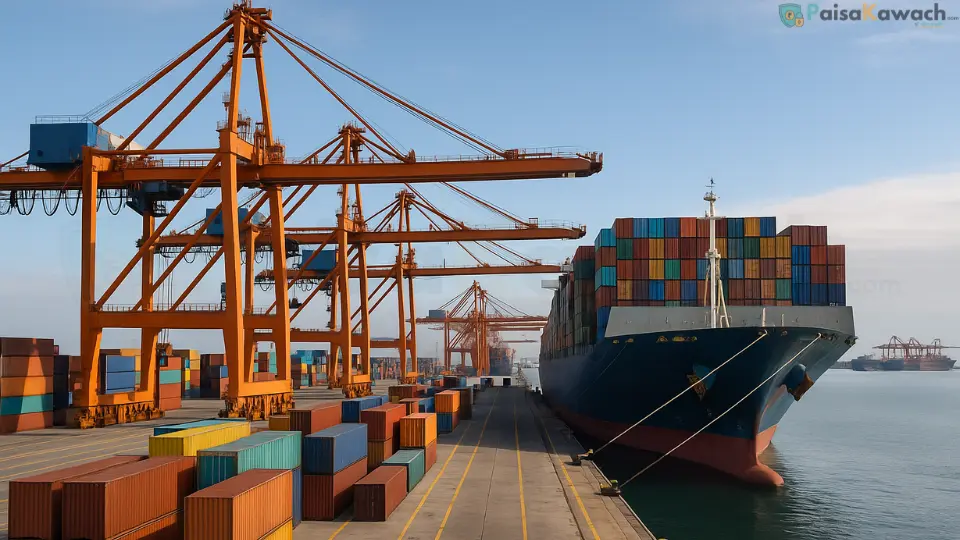
India Faces Double Pressure: Banking Liquidity Crunch and Rising Oil Prices Fuel Inflation Concerns

India Confronts Twin Economic Pressures
India’s economic landscape is currently navigating a challenging phase as two powerful forces converge—tightening liquidity in the banking system and rising global crude oil prices. Individually, each of these factors has the potential to influence markets and economic growth. Together, they create a complex environment that could shape India’s financial trajectory in the coming months.
As of late March 2026, the Indian banking system has entered a noticeable liquidity deficit, while global oil prices have surged due to escalating geopolitical tensions in the Middle East. This combination is raising serious concerns around inflation, interest rates, credit availability, and overall economic stability.
Understanding the Liquidity Crunch in India
Liquidity in the banking system refers to the availability of funds that banks can use to lend to businesses and consumers. For much of the past year, India operated under comfortable liquidity conditions, supporting steady credit growth and economic expansion. However, this situation has shifted rapidly.
Recent data indicates that the system has moved into a liquidity deficit of over ₹65,000 crore. This shift is not merely technical—it has real implications for borrowing costs, lending activity, and market sentiment.
Key Drivers of the Liquidity Tightening
- Tax Outflows: Large GST and advance tax payments by corporates have drained funds from the banking system.
- RBI Forex Intervention: The Reserve Bank of India has been selling dollars to stabilize the rupee, which absorbs rupee liquidity.
- Seasonal Factors: End-of-financial-year adjustments typically tighten liquidity.
As a result, overnight money market rates have climbed above the RBI’s policy rate—an indication that banks are competing for funds. This is a clear sign of stress in short-term liquidity conditions.
Snapshot: India’s Current Economic Stress
- Liquidity deficit: ₹65,000+ crore
- Short-term rates above policy rate
- Crude oil prices rising sharply
- Inflation risks increasing
- Markets volatile and cautious
Rising Oil Prices: A Major Inflation Trigger
At the same time, global crude oil prices have surged significantly due to geopolitical tensions in the Middle East. For India, which imports more than 80% of its crude oil requirements, this presents a major macroeconomic challenge.
Oil prices influence nearly every segment of the economy. When crude prices rise, the effects are felt across transportation, manufacturing, agriculture, and consumer goods.
How Rising Oil Prices Impact the Economy
- Higher Fuel Costs: Increased petrol and diesel prices raise transportation and logistics expenses.
- Cost-Push Inflation: Businesses pass on higher costs to consumers, pushing up overall inflation.
- Pressure on Rupee: Higher import bills increase demand for dollars, weakening the rupee.
- Fiscal Stress: Government may face pressure to reduce taxes or increase subsidies.
If oil prices remain elevated for an extended period, inflation could rise beyond the Reserve Bank of India’s target range, complicating monetary policy decisions.
The Combined Impact: Why This Situation Is Critical
The real concern lies not in either liquidity tightening or rising oil prices alone, but in their simultaneous occurrence. Together, they create a challenging environment often referred to as “stagflationary pressure”—where growth slows while inflation rises.
Here’s how these forces interact:
- Tight liquidity increases borrowing costs
- Higher oil prices push inflation upward
- RBI may be forced to keep interest rates higher for longer
- Economic growth could slow due to reduced spending and investment
This combination can weigh heavily on both corporate earnings and consumer sentiment, making it a critical phase for the economy.
According to Reuters, India’s liquidity deficit and rising oil prices are key factors influencing market volatility, with investors closely watching the RBI’s next move.
Impact on Markets and Investors
Financial markets have already begun reacting to these developments. Equity markets are experiencing heightened volatility, with benchmark indices witnessing sharp swings. Banking stocks, in particular, are under pressure due to concerns over liquidity and interest rates.
At the same time, sectors sensitive to fuel costs—such as aviation, logistics, and FMCG—are facing margin pressures. On the other hand, energy companies and oil producers may benefit from higher crude prices.
Sector-Wise Impact
- Banking: Pressure due to tighter liquidity and rising cost of funds
- Auto & FMCG: Higher input costs affecting demand and margins
- IT & Pharma: Relatively stable due to global exposure
- Oil & Gas: Benefiting from higher crude prices
For investors, this environment calls for caution, diversification, and a focus on fundamentally strong companies.
Will RBI Step In? Policy Options Explained
The Reserve Bank of India now faces a delicate balancing act. On one hand, it must ensure sufficient liquidity in the banking system. On the other, it must control inflation driven by rising oil prices.
Possible RBI Actions
- Open Market Operations (OMO): Buying government bonds to inject liquidity
- Repo Operations: Providing short-term funds to banks
- Policy Rate Decisions: Delaying rate cuts or maintaining higher rates
Any action taken by the RBI will have a direct impact on markets, borrowing costs, and overall economic sentiment. Investors are closely watching for signals from the central bank in upcoming policy communications.
Global Factors Amplifying the Situation
India’s current challenges are being amplified by global developments. The Middle East conflict has disrupted oil supply expectations, while global central banks continue to maintain cautious monetary policies.
In addition, foreign institutional investors (FIIs) are adjusting their positions in emerging markets, leading to capital outflows and increased market volatility.
This interconnected global environment means that India’s economic outlook is closely tied to external developments beyond its control.
What to Watch in the Coming Weeks
The direction of India’s economy and markets will depend on several key factors:
- Movement in global crude oil prices
- RBI’s liquidity management measures
- Inflation data and trends
- FII investment flows
- Corporate earnings outlook
Any positive developments—such as easing oil prices or timely RBI intervention—could stabilize markets. Conversely, prolonged pressure could extend volatility.
Conclusion: A Crucial Test for Economic Stability
India is currently facing a critical test as liquidity tightening and rising oil prices converge. While the economy remains fundamentally strong, the short-term challenges cannot be ignored.
For policymakers, the focus will be on maintaining stability without derailing growth. For investors and businesses, the priority will be navigating uncertainty with caution and adaptability.
The coming weeks will be decisive in determining whether these pressures ease or evolve into a more sustained economic challenge. Either way, this period will play a significant role in shaping India’s economic outlook for 2026.
Keep Reading: More Insights You Might Like
 India Pre-Market Outlook for 25 March 2026: Global Cues Mixed, Range-Bound Setup Expected
Next →
India Pre-Market Outlook for 25 March 2026: Global Cues Mixed, Range-Bound Setup Expected
Next →
 Stock Market Closed Today for Ram Navami: What It Means for Investors and What to Expect Next
Comments
No comments yet. Be the first to comment!