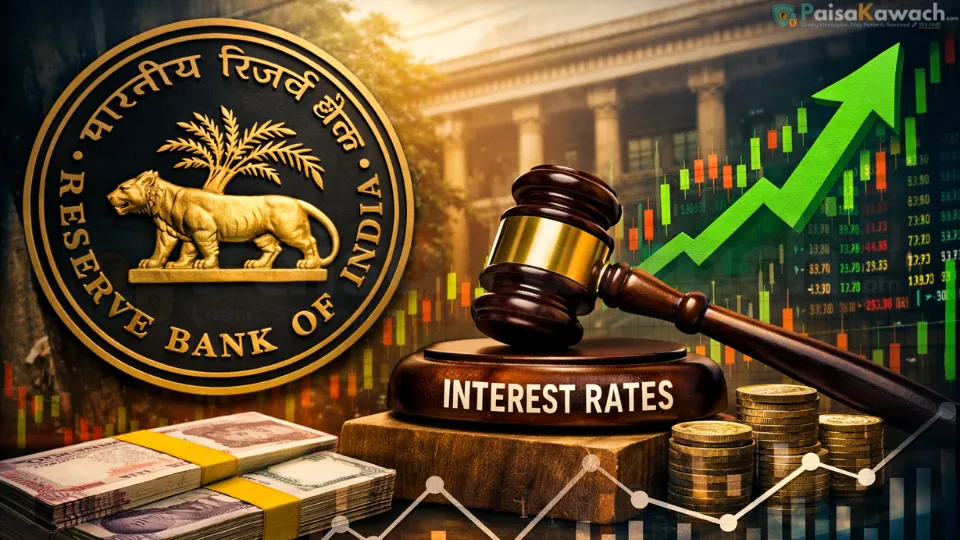
US Inflation Surges on Iran War Energy Shock, TCS Posts Record Deal Wins, India Markets Slide — Full Market Briefing 10 April 2026

Friday, April 10, 2026 is one of the most data-heavy days of the quarter for global financial markets. The US Bureau of Labor Statistics released the March Consumer Price Index this morning — the first inflation print to fully capture the energy shock from the US-Iran war. Simultaneously, India's markets are digesting the TCS Q4 FY26 earnings beat from last evening, the Sensex's second consecutive session of decline, and a ceasefire that remains deeply fragile. This briefing covers every significant development across geopolitics, macroeconomics, Indian equities, and corporate earnings.
1. Geopolitics: US–Iran Ceasefire Remains Fragile — Vance Heads to Islamabad
The two-week ceasefire announced on April 8 by President Trump continues to hold nominally, but the underlying tensions have not resolved. Iran's Parliament Speaker Mohammad-Bagher Ghalibaf stated on April 9 that three clauses of the ceasefire proposal had already been contravened, with Tehran accusing Israel of continuing its operations against Hezbollah in Lebanon and the US of violating multiple deal terms. Iranian media briefly reported that tanker traffic through the Strait of Hormuz was being suspended again, though the White House called those reports false.
The most significant diplomatic development today is the confirmation that US Vice President JD Vance will lead the American negotiating team at talks scheduled in Islamabad on Saturday, April 12. Vance will be joined by special envoys Steve Witkoff and Jared Kushner. Iran had reportedly requested Vance specifically, expressing distrust of Witkoff and Kushner over what Tehran described as misrepresentation of its positions. The outcome of Saturday's Islamabad talks is now the single most important geopolitical event on the global calendar for the coming 48 hours.
- Ceasefire technically in effect but Iran alleges 3 clause violations as of April 9
- VP Vance to lead US team at Islamabad talks on Saturday April 12 alongside Witkoff and Kushner
- Israel continuing operations against Hezbollah in Lebanon, which Iran cites as a deal breach
- Strait of Hormuz partially open — early vessel movements confirmed by MarineTraffic but normalisation is incomplete
- US House Democrats attempted War Powers Resolution at Thursday's pro forma session; effort expected to fail with Republican opposition
- Brent crude currently around $108 per barrel — up ~3% this week despite ceasefire, reflecting ongoing supply uncertainty
Analysts at Evercore ISI have cautioned that unresolved structural issues — ballistic missile programs, sanctions relief terms, and regional proxy activity — make a durable resolution within two weeks extremely unlikely. Markets remain in a holding pattern, pricing in uncertainty rather than resolution. Any breakdown in Islamabad talks over the weekend could trigger a sharp risk-off move when Asian markets open on Monday.
2. US March CPI 2026 — The Iran War's Inflation Footprint
The Bureau of Labor Statistics released the March 2026 Consumer Price Index this morning at 8:30 AM ET — the most closely watched economic data release of the week. This is the first CPI report to fully incorporate the price shock from the US-Iran war, which began on February 28 and sent oil prices above $100 per barrel through most of March. The February CPI, by contrast, was pre-conflict data that showed a relatively benign 2.4% annual inflation rate.
Market consensus ahead of the release was for a sharp acceleration. Economists across major institutions had forecast headline CPI to rise approximately 0.9% month-on-month and 3.4% to 3.7% year-on-year — the largest annual increase since April 2024. Core CPI, which excludes volatile food and energy, was expected to rise a more modest 0.3% month-on-month and approximately 2.7% year-on-year, reflecting that the war's direct impact has been concentrated in energy rather than broad-based goods and services.
- February CPI (prior reading): +0.3% month-on-month, +2.4% year-on-year
- March CPI consensus forecast: +0.9% month-on-month, +3.4% to +3.7% year-on-year
- Core CPI consensus forecast: +0.3% month-on-month, +2.7% year-on-year
- Bank of America Securities forecast: +0.91% month-on-month headline, citing 10.6% jump in energy prices
- Cleveland Fed Nowcast projected annual CPI jumping from 2.4% in February to approximately 3.16% in March
- JP Morgan noted tariff pass-through to food prices is adding inflationary pressure independent of energy
- Glenmede estimated oil price increase from Hormuz disruptions could add approximately 0.8% to inflation over the next year
The Federal Reserve's position is unchanged and well understood by markets. The Fed held its benchmark rate at 3.50–3.75% at the March 18 FOMC meeting, explicitly citing the war's simultaneous impact on both its inflation and employment mandates as making policy assessment difficult. An April 29 rate cut is considered off the table by virtually all economists. As of Wednesday, only 15.4% of market participants were pricing in even a quarter-point cut by September, according to CME FedWatch data. The path back to rate cuts depends on whether inflation decelerates in the second half of 2026 as oil prices normalise — an outcome that is entirely contingent on a durable resolution to the conflict.
3. US GDP Q4 2025 Final Estimate — Economy Was Already Slowing
The US Bureau of Economic Analysis released the third and final estimate of Q4 2025 GDP on April 9, revealing that economic growth had already been decelerating meaningfully before the Iran war began. Real GDP grew at an annualised rate of just 0.5% in the October to December 2025 quarter — revised down 0.2 percentage point from the second estimate of 0.7%, and a dramatic deceleration from Q3 2025 growth of 4.4%. The downward revision was primarily driven by private inventory investment, particularly in wholesale trade.
Alongside the GDP data, the February PCE price index — the Federal Reserve's preferred inflation gauge — was also released on April 9. It showed a 2.8% annual rise, unchanged from January. Core PCE, excluding food and energy, came in at 3.0% annually, slightly down from 3.1%. On a monthly basis, core PCE rose 0.4%. Critically, this PCE data predates the war and does not yet capture any of the energy shock that has reshaped the inflation outlook since late February.
- US Q4 2025 GDP (final): +0.5% annualised — second consecutive downward revision
- Q3 2025 GDP for comparison: +4.4% annualised
- February PCE: +2.8% year-on-year; Core PCE: +3.0% year-on-year (pre-war data)
- Full year 2025 GDP growth: +2.1%, down from +2.8% in 2024
- Q4 GDP was partly impacted by federal government shutdown from October to November 2025, which subtracted approximately 1.0 percentage point from growth
- Q1 2026 GDP advance estimate is scheduled for April 30 — expected to reflect further slowdown due to war impact
The combination of slowing growth and accelerating inflation presents the Federal Reserve with a genuine policy dilemma. Raising rates to fight inflation risks further depressing an already-slowing economy, while cutting rates risks entrenching inflationary pressures. Most economists expect the Fed to remain on hold through mid-2026, with rate cuts only becoming possible if the ceasefire holds and oil prices normalise materially.
4. TCS Q4 FY26 Actual Results — Strong Beat Across All Parameters
Tata Consultancy Services announced its Q4 FY26 financial results on the evening of April 9, delivering a strong beat against street expectations across revenue, profit, deal wins, and margins. The results have set a constructive tone for India's IT sector earnings season, with Wipro (April 16), HCL Tech (April 21), and Infosys (April 23) all reporting in the coming two weeks.
TCS reported consolidated net profit of Rs 13,718 crore in Q4 FY26, up 12% year-on-year from Rs 12,224 crore. On a sequential basis, profit surged 29% from the Q3 FY26 figure of Rs 10,657 crore, which had been heavily distorted by one-time charges related to new labour codes and legal provisioning. Revenue from operations rose 10% annually to Rs 70,698 crore — ahead of the consensus estimate of Rs 69,932 crore. In constant currency terms, revenue grew 1.2% sequentially.
- Net Profit Q4 FY26: Rs 13,718 crore — up 12% year-on-year, up 29% quarter-on-quarter
- Revenue Q4 FY26: Rs 70,698 crore — up 10% year-on-year, up 5.4% quarter-on-quarter
- EBIT Margin Q4 FY26: 25.3% — up 10 basis points quarter-on-quarter
- Deal TCV Q4: $12 billion — including 3 mega deals; among the highest-ever quarterly TCV for TCS
- Full Year FY26 TCV: $40.7 billion — including 5 mega deals for the full year
- Annualised AI Revenue: Crossed $2.3 billion in Q4 FY26
- Final Dividend: Rs 31 per share declared; total FY26 shareholder payout of Rs 39,571 crore
- Full Year Operating Margin: 25% — up 70 basis points year-on-year, highest in four years
- Full Year Net Margin: 19.8% — up 80 basis points year-on-year, highest in four years
- Client metrics: $100M+ clients up by 2 to 66; $50M+ clients up by 9 to 139; $1M+ clients up by 65 to 1,397
CEO K. Krithivasan said the company reported its third consecutive quarter of sequential revenue growth, supported by three mega deals and the highest quarterly TCV in company history. The management highlighted that FY26 was a pivotal year for enterprise AI adoption and noted that annualised AI revenues surpassing $2.3 billion demonstrates accelerating deployment of AI solutions across client organisations. TCS acknowledged that macroeconomic headwinds — including the Middle East conflict and its supply chain implications — continue to cloud the near-term outlook, but expressed confidence in sustained client conviction in technology investment. The stock had risen 1.2% during Thursday's regular session ahead of the results announcement.
5. Indian Markets — April 9 Close and April 10 Outlook
Dalal Street gave back a significant portion of its ceasefire-driven April 8 rally during Thursday's session. The Sensex closed at 76,632 — down 931 points or 1.20% — as renewed doubts about ceasefire durability pushed oil prices higher and prompted a fresh wave of FII selling. Financials bore the brunt of the correction, with HDFC Bank, ICICI Bank, Kotak Mahindra Bank, and SBI each falling approximately 2%. Defence stocks, including Bharat Electronics Limited, and metals bucked the broader trend and posted gains. IT stocks were broadly resilient, supported by pre-result optimism around TCS.
For April 10, markets will open with the TCS earnings beat as a positive domestic catalyst and the US CPI data as a key global variable. If the CPI comes in broadly in line with expectations — reflecting an energy-driven spike without broad-based core acceleration — markets may find it manageable. A significant upside surprise in core CPI, however, could trigger a risk-off reaction by reinforcing expectations of an extended Fed pause.
- Sensex close April 9: 76,632 — down 931 points (-1.20%)
- Nifty 50 (intraday April 9 at 14:06): 23,776 — down 221 points (-0.92%)
- USD/INR futures (April 10): 92.51
- FII activity April 7: Net sellers at Rs 8,692 crore; DII: Net buyers at Rs 7,979 crore
- India VIX had eased below 20 on April 8 but is expected to tick higher again given renewed ceasefire uncertainty
- Key Nifty resistance: 24,100; key support: 23,800
- TCS Q4 beat should provide support to the Nifty IT index; broader market direction contingent on US CPI and oil price reaction
- Brent crude above $100 per barrel remains the primary headwind for India's import bill, current account, and rupee
Analysts at Motilal Oswal noted that market sentiment remains highly sensitive to global cues and that the direction for the near term is contingent on developments in the US-Iran conflict and movements in global energy prices. The RBI, which kept the repo rate unchanged at 5.25% at its April 8 meeting, has cited elevated energy prices and Hormuz disruptions as drags on domestic production in FY27. Any material escalation in oil prices from current levels would compound pressure on India's fiscal position and household purchasing power.
6. Global Markets Snapshot — April 10
US equity futures are pointing to a modestly positive open as of this morning. The S&P 500 is trading around 6,825, the Dow at 48,239, and the Nasdaq at 22,799. The VIX — Wall Street's fear gauge — has eased back below 20 to 19.92, suggesting that the ceasefire, however fragile, has provided enough cover for immediate risk appetite to stabilise. Gold is trading at approximately $4,800 per troy ounce. Bitcoin is around $72,008. The 10-year US Treasury yield is at 4.29%.
- S&P 500: ~6,825 (+0.63%)
- Dow Jones: ~48,239 (+0.69%)
- Nasdaq: ~22,799 (+0.73%)
- VIX: 19.92 (-5.32%) — back below the 20 mark
- Gold: ~$4,800 per troy ounce (+0.49%)
- Bitcoin: ~$72,008 (+1.08%)
- Brent Crude: ~$108 per barrel (up ~3% on the week)
- US 10-Year Treasury Yield: 4.29%
- Q1 2026 S&P 500 sector performance: Energy (+37.91%) led all sectors; Financials (-9.40%), Consumer Discretionary (-8.55%), and Technology (-7.57%) were the biggest laggards
BlackRock Investment Institute noted this week that the Strait of Hormuz normally transports approximately 20% of the world's oil and liquefied natural gas. Brent crude futures are in steep backwardation — spot prices near $108 while December futures are around $78 — indicating that markets expect prices to normalise if the conflict resolves, but are demanding a significant risk premium for near-term barrels.
What to Watch Over the Next 72 Hours
The three events that will define market direction going into next week are clear. First, the actual March CPI print released this morning — if energy-driven headline inflation comes in at or above 3.7% year-on-year while core remains contained, markets may interpret it as manageable and consistent with a second-half Fed cut. A core upside surprise above 3.0% would be more damaging. Second, the Islamabad talks on Saturday — any signals of a durable framework emerging would provide significant relief to oil markets, Indian imports, and global risk appetite. A breakdown in talks would do the reverse. Third, TCS management commentary from last evening's earnings call will set the tone for Wipro, HCL Tech, and Infosys results over the coming two weeks, with the IT sector's FY27 growth outlook and AI revenue trajectory now under the spotlight.
Keep Reading: More Insights You Might Like
 US-Iran Ceasefire Fractures, India Elections Voting Underway, TCS Q4 FY26 Results Today — April 9 2026 Market Briefing
Next →
US-Iran Ceasefire Fractures, India Elections Voting Underway, TCS Q4 FY26 Results Today — April 9 2026 Market Briefing
Next →
 Sensex Surges 1,200 Points as Oil Prices Fall and Global Optimism Returns on April 15, 2026
Comments
No comments yet. Be the first to comment!