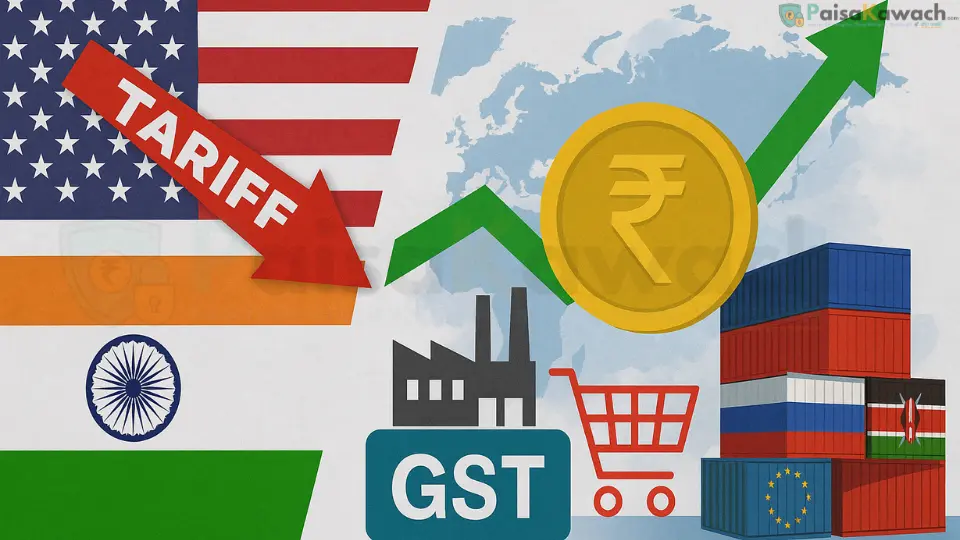
US Prepares New Tariffs on 16 Major Trading Partners Including India: What It Means for Indian Exports, Jobs and the Economy
World Business News Today, 25 November 2026: Imagine an Indian company manufacturing products for American customers. It has invested in machinery, hired workers, signed export contracts and planned its production for the coming months.
Suddenly, the company receives worrying news: the United States may introduce another round of import tariffs on goods from India and several other major economies.
What happens next?
Will American buyers demand lower prices? Could Indian exporters lose orders to competing countries? And could these trade restrictions eventually affect manufacturing jobs, stock markets and India's economic growth?
These are important questions as the United States prepares to announce the findings of a major trade investigation covering 16 economies, including India.
According to Reuters reporting published on 24 November 2026, the US administration is preparing additional tariff measures after investigating what it describes as excess industrial production capacity among major trading partners.
The development has become a significant international business story on Wednesday, 25 November 2026, because any new duties could influence international trade, manufacturing supply chains, business investment and prices.
For India, the stakes are particularly important because the United States is a major destination for Indian exports.
However, one fact must be clear from the beginning: the proposed new tariff rates for India have not yet been officially confirmed in the reporting available for this article.
Let's understand what Washington is planning, why India is included and what Indian businesses, workers and investors should watch next.
Published: 25 November 2026 | Category: International Business and Economic News | Coverage: US Tariffs, India-US Trade, Exports, Manufacturing and Indian Economy | Reading Time: Approximately 9 Minutes
US Tariff News: The 30-Second Summary
- Major development: The United States is preparing to release the findings of a Section 301 trade investigation involving 16 major trading partners.
- India included: India is explicitly among the economies covered by the investigation.
- Main issue: Washington alleges that certain foreign government policies contribute to excess industrial production capacity and disadvantage American manufacturers.
- New duties possible: Additional US tariffs could be proposed on selected imports, with rates varying by country and product.
- India impact: Indian exporters could face higher costs, tougher competition and greater uncertainty over future orders.
- Important clarification: The exact India-specific rates, affected products and implementation dates remain unconfirmed.
Quick Navigation
- 1. What Is the New US Tariff Plan?
- 2. Which 16 Trading Partners Are Involved?
- 3. Why Is the US Investigating Industrial Overcapacity?
- 4. How Could the Tariffs Affect India?
- 5. Impact on Indian Jobs, Stocks and the Rupee
- 6. What Happens to the India-US Trade Deal?
- 7. How a Tariff Works: Simple Example
- 8. Frequently Asked Questions
- 9. Your Opinion Matters
1. US Prepares New Tariffs: What Exactly Is Happening?
The United States is preparing another potential round of import duties as part of its broader effort to protect domestic manufacturing and respond to what it considers unfair international trade practices.
Reuters reported that the administration could soon publish the findings of an investigation examining alleged excess industrial capacity in 16 trading partners.
The investigation has been conducted by the Office of the United States Trade Representative, commonly known as USTR.
The findings could result in proposals for additional import tariffs on certain products entering the American market.
What Has Been Confirmed?
- USTR initiated the relevant investigation on 11 March 2026.
- India and 15 other economies are covered.
- The investigation examines government policies and industrial practices that the US believes may disadvantage American commerce.
- Reuters reported on 24 November that the administration was preparing to release its findings imminently.
- New tariffs are a possible outcome of the investigation.
What Is Still Uncertain?
- The final additional tariff rate applicable to Indian goods.
- The precise products and industries that would face new duties.
- Whether all investigated countries would face additional tariffs.
- The official implementation timetable.
- Whether negotiations could change the proposed measures before they take effect.
This distinction matters because an investigation, a tariff proposal and a tariff already being collected are three different stages.
For example, a business should not assume that a newly discussed tariff is already payable simply because reports say an announcement is expected soon.
2. Which 16 Major Trading Partners Are Under Investigation?
According to the US Trade Representative's official announcement, the investigation covers 16 economies, including the European Union as one collective trading partner.
- India
- China
- European Union
- Japan
- South Korea
- Mexico
- Vietnam
- Taiwan
- Thailand
- Malaysia
- Indonesia
- Singapore
- Switzerland
- Norway
- Bangladesh
- Cambodia
These economies are important participants in global manufacturing, international investment and cross-border trade.
Many supply American companies and consumers with industrial products, machinery, electronics, textiles and other manufactured goods.
However, being included in the investigation does not automatically mean every country will receive the same tariff treatment.
Reuters reported that country-specific measures were under consideration, and some economies might not face immediate additional duties.
Why Is This a Worldwide Economic Story?
International supply chains connect manufacturing businesses across multiple countries.
A product sold in the United States may contain components manufactured in Asia, raw materials supplied from another region and engineering work performed elsewhere.
When a major consumer market changes import duties, companies may reconsider where they purchase components, assemble products and invest in factories.
This means tariff decisions can have consequences beyond the countries directly targeted.
3. What Is Section 301, and Why Is America Concerned About Excess Industrial Capacity?
The US investigation is being conducted under Section 301 of the Trade Act of 1974.
Section 301 allows US authorities to examine foreign government practices that may be considered unreasonable, discriminatory or harmful to American commerce.
Depending on the findings and applicable procedures, the United States may consider trade-related responses, including additional duties.
What Does Excess Industrial Capacity Mean?
Imagine a country has factories capable of manufacturing one million units of a product every year.
But domestic customers purchase only 600,000 units.
The remaining production may be exported to international markets.
That situation is not automatically evidence of unfair trade. Many internationally competitive industries intentionally produce goods for export.
However, the US argues that some foreign industrial policies, including certain subsidies or incentives, may encourage production beyond market demand and put American manufacturers at a disadvantage.
Why Does the US Want to Restrict Certain Imports?
The administration says it wants to support American production, protect industrial employment and reduce reliance on overseas manufacturing.
Officials argue that some international production patterns can weaken domestic industries.
Critics of tariff increases, meanwhile, warn that import duties can raise costs for American consumers and businesses that depend on foreign products.
Both considerations are important when evaluating the economic consequences.
How Can Tariffs Help or Hurt an Economy?
- Potential benefit: Domestic producers may become more competitive against higher-priced imports.
- Potential benefit: Governments may gain leverage in negotiations over trade policies.
- Potential risk: Importers may face higher purchase costs.
- Potential risk: Consumers may pay more for some products.
- Potential risk: Trading partners may respond with their own restrictions.
- Potential risk: Businesses may delay investments while waiting for tariff clarity.
The overall effect depends on the products covered, the tariff rates, available alternatives and how businesses respond.
4. What Could the New US Tariffs Mean for Indian Exports?
India's inclusion in the investigation makes this particularly important for Indian exporters and manufacturers.
The United States is a major market for Indian merchandise exports, and many Indian businesses depend on American buyers.
Financial Express reported that India's merchandise exports to the US reached approximately $59.52 billion during April to October 2026, representing growth of about 14.48% compared with the same period a year earlier.
That illustrates why even a potential change in trade policy deserves attention.
Which Indian Industries Should Watch the Investigation?
The investigation has addressed manufacturing sectors in which the US alleges concerns about excess capacity or trade patterns.
Indian reporting has highlighted sectors including steel, textiles, solar products, petrochemicals, construction materials, health-related goods and automotive products.
However, their inclusion in discussions or investigative materials does not establish that all products in these categories will face new tariffs.
- Textiles and apparel: Exporters could face price pressure if new duties cover relevant products.
- Steel and metal products: Manufacturers should watch how any new measures interact with existing sector-specific duties.
- Automotive products: Component suppliers may need to review pricing and customer contracts.
- Solar products: Manufacturers could face changes in competitiveness if additional duties apply.
- Petrochemicals: Exporters may need to reassess costs and market opportunities.
- Health-related manufactured goods: Businesses should monitor final product-level coverage rather than assume all goods are affected.
Could Indian Exports Become More Expensive in America?
Yes, if additional duties are imposed on relevant goods.
Import tariffs are generally collected from the importing party under US customs rules.
But the economic burden can be shared in different ways through negotiations, lower supplier prices, reduced margins and higher consumer prices.
For example, an American buyer might demand a discount from an Indian manufacturer to compensate for a new duty.
Alternatively, the importer may absorb some of the cost or pass it on to customers.
The result depends on market competition and individual business contracts.
Could Indian Businesses Lose Orders?
That is a potential risk, not a confirmed outcome.
If a product becomes significantly more expensive after duties, buyers may consider suppliers in countries with more favourable tariff arrangements.
But switching suppliers is not always easy.
Quality standards, delivery times, production capacity and established business relationships also affect purchasing decisions.
In some industries, India may remain competitive even with higher tariffs.
Could India Gain Opportunities Despite the Tariff Threat?
Possibly.
If tariff rates differ across countries, businesses may shift sourcing toward suppliers that face lower overall costs.
Indian exporters could benefit in particular product categories if India secures more favourable treatment than competing markets.
Conversely, less favourable treatment could weaken India's relative competitiveness.
The key factor is not only India's tariff rate but also how it compares with the rates applied to competing exporters.
PaisaKawach Takeaway: The biggest question for Indian exporters is not simply whether tariffs increase. It is whether Indian products remain competitive compared with alternatives from other countries.
5. Could New US Tariffs Affect Indian Jobs, Stock Markets and the Rupee?
The possible impact extends beyond individual exporters.
International trade connects manufacturing, transportation, logistics, banking and investment.
A major change in US import policy could influence several parts of India's economy.
Impact on Indian Manufacturing Jobs
Export-oriented industries employ workers across factories, packaging, warehousing, shipping and supply-chain operations.
If overseas orders decline over a sustained period, some businesses may slow hiring, reduce overtime or delay expansion.
However, the scale of any effect would depend on actual tariff measures, customer demand and the ability of companies to find alternative markets.
Impact on Indian Stock Markets
Shares of export-oriented companies can react to developments affecting their international sales and profitability.
Investors may reassess future earnings expectations if they believe additional tariffs could reduce margins or order volumes.
But share-price movements are also influenced by broader market conditions, valuations and company-specific performance.
- Export-oriented manufacturers may face uncertainty over future demand.
- Logistics companies could be affected if trade volumes change.
- Businesses with diversified international markets may have different risk exposure.
- Investors may favour companies with stronger pricing power and resilient margins.
- Market reactions could change rapidly as official details become available.
Could the Indian Rupee Be Affected?
Changes in exports and international investment flows can influence demand for foreign currency.
If a significant trade shock affects export revenue or investor confidence, it could place pressure on the rupee.
However, currency movements also depend on interest rates, oil prices, global dollar strength, capital flows and RBI market operations.
There is no basis for predicting a specific rupee movement solely from the proposed tariffs.
Will Indian Consumers Pay More?
Not necessarily, and not directly in every case.
US import tariffs primarily affect the cost of goods entering the American market.
The impact on Indian consumer prices would generally be indirect, through changes in production, currency movements, company costs or wider trade conditions.
Some Indian businesses might even redirect products toward other markets if US demand weakens.
6. What Happens to India-US Trade Negotiations?
The potential new tariff measures arrive while India and the United States have been negotiating trade arrangements.
According to Indian financial reporting, New Delhi has sought greater clarity about US tariff policies as part of efforts to secure favourable market access.
This makes the upcoming investigation findings important for negotiations.
Why Are Relative Tariff Rates Important?
Imagine two countries exporting similar products to the United States.
If one country faces a lower overall duty than the other, its products may become relatively more competitive.
Therefore, Indian negotiators may focus on how any new measures compare with tariffs applied to other major exporters.
Reuters reported that existing tariff caps under certain US trade agreements were expected to be respected, although detailed outcomes for India had not been established.
Could India Negotiate Better Terms?
Negotiations may create opportunities to address trade concerns, seek product-specific treatment or clarify future market access.
But their outcome cannot be predicted before official announcements and agreements.
India's position will depend on commercial interests, policy priorities and negotiations with the United States.
Does India Have to Accept Every American Tariff Proposal?
No. Countries can contest trade allegations, provide evidence, negotiate and consider responses through available diplomatic and legal mechanisms.
The Indian government has disputed aspects of the US investigation's underlying assumptions, according to Financial Express reporting.
The final policy outcome will depend on the US process and subsequent interactions between governments.
7. How Does a Tariff Work? A Simple Example for Indian Readers
Suppose an Indian manufacturer exports a product to an American importer at a customs value of $100.
Assume, purely for illustration, that a 10% import duty currently applies.
The duty would be $10, subject to the applicable customs rules and calculation basis.
Now imagine an additional 15-percentage-point duty is introduced and applies cumulatively.
The combined illustrative rate would become 25%, producing a duty of $25 on the same $100 customs value.
- Illustrative product customs value: $100.
- Existing hypothetical duty: 10%, equal to $10.
- Additional hypothetical duty: 15 percentage points.
- Illustrative combined rate: 25%.
- Illustrative combined duty: $25.
The importer would generally be responsible for paying the applicable US customs duties.
It could then negotiate with the supplier, absorb some of the cost or increase its selling price.
This example is not a statement of the actual tariff rate on any Indian product. Real tariff calculations depend on product classification, existing duties, exemptions and the legal design of any new measures.
Why Are Businesses Concerned Even Before New Tariffs Begin?
Trade uncertainty can affect decisions long before a final duty takes effect.
Companies may postpone orders because they do not know what future import costs will be.
Exporters may hesitate to agree to long-term prices.
Manufacturers may delay factory investment while waiting for policy clarity.
That is why anticipated tariffs can influence business sentiment even before any additional payment is collected.
8. Could the New Tariffs Trigger Another Global Trade War?
That depends on the final measures and the reactions of trading partners.
If the United States imposes substantial additional duties, affected governments may seek negotiations, challenge the measures or introduce trade responses of their own.
However, retaliation is not automatic.
Some countries may prioritise negotiated arrangements to preserve trade relationships.
A broader escalation could increase uncertainty for international manufacturers, importers and investors.
Potential Worldwide Consequences
- Higher costs for some imported products in the United States.
- Changes in global manufacturing and sourcing decisions.
- Possible supply-chain adjustments across Asia and Europe.
- Greater uncertainty for international investment and industrial planning.
- Potential trade negotiations or disputes between major economies.
- Different competitive outcomes across exporting countries.
The scale of these effects cannot be established until official measures are announced and implemented.
9. Frequently Asked Questions About the New US Tariffs
Has the United States Already Imposed New Tariffs on India on 25 November 2026?
The latest reporting reviewed for this article describes an expected announcement following the Section 301 investigation. It does not establish a final, newly implemented India-specific tariff rate.
Why Is India Included Among the 16 Trading Partners?
The US investigation examines alleged structural excess production capacity and certain government policies in major manufacturing economies. India is among the economies officially included in the inquiry.
Which Indian Products Could Be Affected?
Manufacturing sectors mentioned in the investigation and related Indian coverage include textiles, steel, solar products, petrochemicals and some other manufactured goods. Actual tariff coverage remains subject to official decisions.
Will All 16 Countries Face the Same Tariff Rate?
Not necessarily. Reuters reported that country-specific measures were being considered and that different trade arrangements could influence the final rates.
Are Tariffs Paid by Indian Exporters or American Importers?
US customs duties are generally paid by the importer of record. The economic cost may subsequently be shared through price negotiations, lower margins or higher selling prices.
Could These Tariffs Reduce Jobs in India?
Employment risks could arise if affected exporters experience a sustained decline in orders. But any actual impact will depend on final duties, product demand and how companies adapt.
Will the New Tariffs Affect Indian Mutual Funds?
They could influence the outlook for companies with significant US export exposure. However, diversified mutual funds are affected by many other economic and market factors.
Could India Benefit From Changes in Global Supply Chains?
Potentially. Companies may adjust sourcing depending on the relative tariffs and competitiveness of different markets. India would benefit only where its overall commercial position becomes more attractive.
What Is the Difference Between Section 301 and a Normal Import Duty?
Section 301 is a US legal mechanism for investigating and responding to certain foreign trade practices. Ordinary import duties may arise under different tariff schedules or legal authorities. Their application and interaction depend on the relevant rules.
When Will the New Tariff Rates Be Announced?
Reuters reported that findings could be released imminently, but the precise official announcement and implementation timetable were not confirmed in the reporting used for this article.
10. What Should Indian Exporters and Investors Watch Next?
With official findings expected, several developments could determine the real impact of the proposed measures.
- Official USTR announcement: Whether findings and proposed tariff measures are published.
- Product coverage: Which goods and tariff classifications are included.
- Country-specific rates: How India compares with major competing exporters.
- Implementation dates: Whether businesses receive time to adjust before duties take effect.
- India-US negotiations: Whether discussions provide greater clarity or more favourable market access.
- Business responses: How exporters, importers and manufacturers adjust pricing and sourcing.
Investors should avoid treating a reported tariff proposal as a final legal measure.
Companies most directly affected will depend on the actual products and duty rates identified in official documents.
11. Your Opinion Matters: Will New US Tariffs Hurt or Help India?
Now we want to hear from PaisaKawach readers.
The United States says it wants to strengthen domestic manufacturing, but Indian exporters are concerned about additional trade barriers.
What do you think India should prioritise?
- Option A — NEGOTIATE: India should focus on securing better trade terms with the United States.
- Option B — DIVERSIFY: India should reduce dependence on any single export market.
- Option C — STRENGTHEN MANUFACTURING: India should focus on productivity, competitiveness and domestic industrial growth.
- Option D — ALL THREE: Negotiations, diversification and stronger manufacturing should move forward together.
Comment A, B, C or D below and explain your choice in one sentence.
For example: "D — India should negotiate better tariffs while developing alternative export markets and improving manufacturing competitiveness."
We would also like to hear from exporters, small business owners, students, investors and manufacturing professionals.
Do you believe India can become more competitive in global trade despite rising international tariffs?
Share your opinion in the PaisaKawach comment section.
12. Final Analysis: A New Global Trade Challenge for India
November 25, 2026, marks another important moment in international trade policy.
The United States is preparing to release the findings of an investigation that could lead to additional tariffs on imports from 16 major trading partners, including India.
The proposed measures could influence global manufacturing, international supply chains and business investment.
For India, the biggest concerns involve export competitiveness, employment in affected industries and uncertainty over future trade conditions.
However, the outcome is not yet settled.
Final tariff rates, affected product categories, implementation dates and negotiation results remain essential missing details.
India's long-term response may involve strengthening export competitiveness, developing multiple overseas markets and seeking favourable trade arrangements.
The important lesson is that global economic policy can directly influence businesses far beyond the country announcing it.
PaisaKawach Final Takeaway: New US tariff proposals create significant uncertainty for India's exporters, but the real economic impact will depend on official measures and how India compares with competing manufacturing economies. Readers and investors should distinguish confirmed policy decisions from expected announcements.
Which strategy should India prioritise: NEGOTIATE, DIVERSIFY or STRENGTHEN MANUFACTURING? Join the discussion below.
Sources and Further Reading
- Reuters — US Administration Prepares New Tariffs Following Industrial Capacity Investigation, 24 November 2026
- Office of the United States Trade Representative — Official Section 301 Investigation Announcement, 11 March 2026
- Financial Express — New US Tariff Concerns and India's Export Competitiveness, 24 November 2026
- Indian Express — US Tariff Investigation Covers India and Other Major Trading Partners, 25 November 2026
- New Indian Express — US Preparing New Tariff Measures, 25 November 2026
Stay connected with PaisaKawach for international business news, economic policy updates, stock-market developments and important global stories explained through their impact on India.
Disclaimer: This article is published for news, educational and informational purposes. New tariff measures described here were under consideration or expected in the reporting checked. Final India-specific rates, product coverage and implementation dates were not confirmed. Illustrative calculations are hypothetical and do not represent actual customs liabilities. This article is not personalised investment, legal or trade-compliance advice.
Keep Reading: More Insights You Might Like

Comments
No comments yet. Be the first to comment!