Sensex Slips to 73,123 as BPCL Profit Falls 21%, Q2 Earnings Take Centre Stage
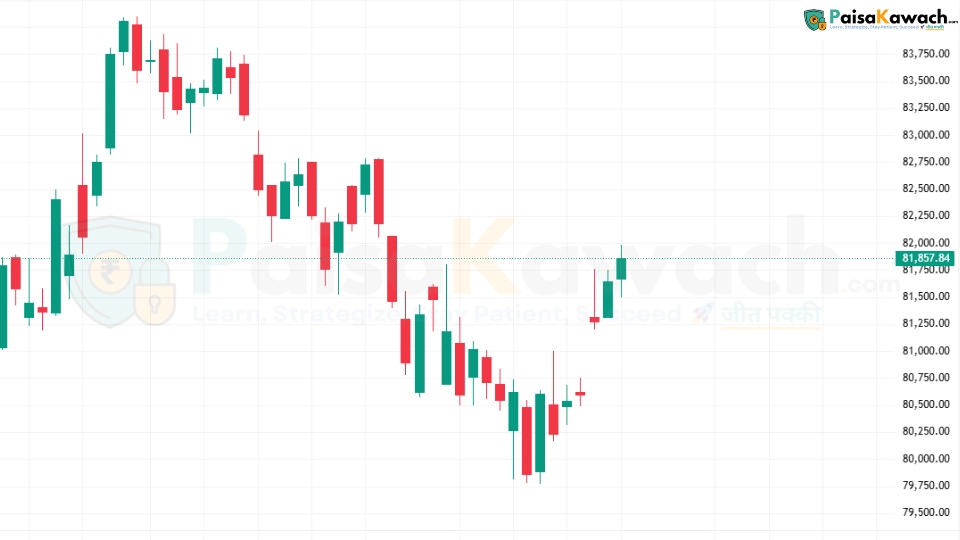
Indian equity markets ended the week on a weak note, with the Sensex closing at 73,123.83, down 125.56 points, and the Nifty settling near 22,600, down 0.39%, as persistently high crude oil prices and escalating Middle East tensions kept investors cautious. The broader market fared far worse than the benchmarks — the Nifty Smallcap 100 plunged nearly 3% and the Nifty Midcap 100 fell 2.21%, with roughly 460 of the 500 most-tracked stocks closing in the red.
With the exchanges closed on Saturday, 24 October 2026, the day's business focus has shifted entirely to Q2 FY27 corporate earnings, where a clear divergence is emerging: banks are reporting on credit growth and margin stability, while oil marketing companies are absorbing the margin squeeze from crude prices hovering near six-month highs.
BPCL Q2 Results: Profit Falls 21% as Crude Prices Bite
The most closely watched result of the day came from Bharat Petroleum Corporation Limited (BPCL), which reported a 21% year-on-year decline in Q2 net profit to ₹4,863 crore, even as revenue rose nearly 30% year-on-year. EBITDA fell 13.37%, a direct reflection of compressed refining and marketing margins as crude input costs climbed.
Why BPCL's numbers matter for the wider market
BPCL's results are the first clear earnings-level confirmation of what the market has been pricing in for weeks: high crude oil is not just a macroeconomic headache for India, it is now visibly eroding the profitability of the country's oil marketing companies. With Brent crude closing at $116.72 per barrel on Friday — up 3.14% and near its highest level since April — the pressure on HPCL and IOCL, which report later, is unlikely to ease.
- Revenue up, profit down: A near 30% revenue jump alongside a 21% profit fall shows volumes are holding but per-unit margins are collapsing — the classic signature of an input-cost shock.
- EBITDA down 13.37%: Operating profitability deteriorated, meaning the damage is at the core business level, not from one-off items or tax adjustments.
- Sector-wide read-across: BPCL's numbers set a weak template for HPCL and IOCL results, and explain why oil marketing stocks have been among the worst performers through October.
Banking Earnings in Focus: Kotak, AU SFB, IDFC First
Saturday's earnings calendar is dominated by the banking sector, with Kotak Mahindra Bank, AU Small Finance Bank, and IDFC First Bank all scheduled to report Q2 FY27 results. The market will be watching three specific metrics across these lenders.
What analysts are looking for
After a fortnight of weakness in financial stocks, banking results offer the market its best chance of a positive surprise. However, the macro backdrop — a weak rupee, elevated oil, and a smallcap sell-off — means even strong numbers may struggle to lift sentiment decisively.
- Net interest margins (NIM): With deposit costs still elevated, any compression at Kotak or IDFC First would signal that the rate cycle is hurting lenders more than expected.
- Asset quality: Slippages in unsecured retail and microfinance books — particularly relevant for AU Small Finance Bank — will be scrutinised for early stress signs.
- Credit growth guidance: Commentary on H2 loan growth will matter more than the Q2 print itself, given the market's sensitivity to demand signals.
Other Q2 Results and Pharma Sector Divergence
Beyond banking and oil, today's earnings slate includes JK Cement, Castrol India, Kajaria Ceramics, and Netweb Technologies. In the pharmaceutical space, brokerage HDFC Securities flagged a sharp divergence in recent results: Torrent Pharma's Q2 EBITDA grew 54% year-on-year, driven by the JB Chemicals integration, while Dr. Reddy's saw EBITDA decline 27% year-on-year as US sales fell and India growth failed to offset margin pressure.
Pharma: a two-speed sector
The Torrent-versus-Dr. Reddy's contrast is a useful signal for investors. Companies that have completed value-accretive acquisitions are growing operating profit at rates that defy the sector's generic pricing pressures, while those more exposed to the US generics market continue to struggle. This divergence is likely to persist into H2 FY27.
- Torrent Pharma: 54% EBITDA growth on JB Chemicals consolidation — inorganic growth is delivering where organic growth is slow.
- Dr. Reddy's: 27% EBITDA decline on weak US sales — the US generics overhang remains unresolved.
- Investor takeaway: Stock selection within pharma now matters more than sector allocation, given the widening gap between acquisition-led and US-dependent business models.
The Macro Backdrop: Oil, Rupee, and What Comes Monday
Saturday's earnings are playing out against an unforgiving macro backdrop. Brent crude closed the week at $116.72 per barrel, up 3.14% and near a six-month high, driven by Houthi attacks on Saudi oil facilities and disruption risk in the Strait of Hormuz. The rupee remains under pressure, with mid-market reference rates on 24 October indicating roughly ₹94.94 per US dollar (indicative data, not the RBI reference rate).
High crude directly worsens India's import bill and current account position, increases dollar demand, and feeds imported inflation — which in turn constrains the RBI's room to cut rates. Friday's stock market reaction captured this precisely: large-caps held relatively steady, but small and mid-caps, which are more sensitive to domestic liquidity and growth expectations, were sold aggressively.
What to watch when markets reopen on Monday
The weekend will be dominated by earnings analysis and oil price news flow. Any further escalation in the Middle East will pressure the rupee and oil marketing stocks at Monday's open; conversely, a stabilisation in crude would give the market room to respond positively to strong banking results.
- Oil is the single biggest variable: A Brent print above $120 would likely trigger another broad risk-off session; a retreat toward $110 would relieve pressure on OMCs and the rupee alike.
- Banking results as a sentiment test: If Kotak and IDFC First deliver stable margins and clean asset quality, financials could lead a modest rebound on Monday.
- Smallcap stress deserves attention: A near-3% fall in the Smallcap 100 in a single session is a warning sign; sustained weakness there would signal deeper liquidity concerns beyond oil.
Regional and Policy Developments
Away from the earnings calendar, two regional developments are worth noting. The 15th India Industrial Fair (Gandhinagar Udyam 2026) opened on 23 October with over 500 exhibitors across 12 industries, running until 26 October and aimed at promoting MSME cooperation and innovation. Meanwhile, MSME organisations in Ghaziabad are preparing protests, accusing central and state authorities of neglecting entrepreneur concerns related to pollution norms and the UP industrial development authority.
On the regulatory front, recent RBI and SEBI measures remain in effect, including the RBI's reduction of the export proceeds repatriation period from 15 months to 9 months, and SEBI's revised position limit and penalty rules for commodity derivatives — both relevant for exporters and commodity traders managing currency and price risk in the current environment.
The Bottom Line
Today's India business picture is one of earnings divergence under macro strain. BPCL's 21% profit decline confirms that high crude is now hitting corporate bottom lines, not just inflation prints. The banking results due today offer the market its best hope of offsetting that negativity, but with the Sensex at 73,123, the smallcap index down nearly 3% on Friday, and Brent near $117, sentiment will remain fragile until oil retreats or earnings decisively surprise on the upside. For investors, the message from this week is clear: watch the crude price before watching the ticker.
Keep Reading: More Insights You Might Like

Comments
No comments yet. Be the first to comment!